 listicle
Compact Tactical Speed Loader for Carry: 2026 Guide
Table of Contents
- What Makes a Tactical Speed Loader Suitable for Carry
- Magazine Compatibility and Caliber Support
- How to Use a Speed Loader for Concealed Carry
- Maglula vs ETS Speed Loader Comparison
- Bulletproof Speed Loaders for Tactical Duty
- Speed Loader vs Manual Loading for Carry Scenarios
- Retention and Security in Pocket Carry
- Conclusion
Last Updated: August 10, 2026
What Makes a Tactical Speed Loader Suitable for Carry
A tactical speed loader for carry must balance speed, durability, and discretion. Unlike range-focused loaders, a carry tool must fit your pocket without printing, survive daily wear, and function reliably under stress. The difference comes down to weight, bulk, and integration into your everyday carry loadout.
Range loaders aren't engineered for the friction and temperature cycling that pocket carry demands. According to the National Shooting Sports Foundation's 2026 firearms training survey, concealed carry permit holders cite ammunition management as a top concern during defensive scenarios. A speed loader that's too bulky or unreliable becomes a liability. Construction quality separates tools that last from tools that fail.
Size and Weight Constraints for EDC
Your speed loader competes for pocket real estate with your phone, keys, and wallet. Compact tactical speed loaders typically measure 3-4 inches and weigh under 2 ounces, comparable to a standard lighter or small flashlight. The BULLETPROOF SPEED LOADERS COMBAT Model achieves this profile without sacrificing mechanical reliability.

Pocket carry creates specific constraints: constant pressure against your thigh, temperature swings, and occasional moisture exposure. Injection-molded polymer handles these stresses better than metal-heavy designs, which can corrode or become uncomfortable. The trade-off is that cheaper polymers degrade faster under UV exposure and repeated compression cycles.
Durability and Material Construction
Not all polymers perform equally. A tactical speed loader needs polymer that resists creep and maintains spring tension after months of carry. BULLETPROOF SPEED LOADERS uses reinforced polymer compounds with anodized aluminum at stress points where polymer alone would fail.
The lever mechanism is where most speed loaders break. Budget loaders use injection-molded plastic levers that develop micro-cracks and eventually snap. Premium designs use aluminum or reinforced polymer with mechanical stops that prevent over-travel. BULLETPROOF's DELTA Model uses solid 6160 aircraft aluminum for the lever, eliminating this failure mode.
Spring tension degradation is another common failure. After six months of daily carry, poorly designed loaders lose 10-15% of original tension. Quality loaders use stainless steel springs with specific heat-treat specifications that maintain stability over years of use. The TACTICAL Model's precision-engineered springs outperform budget alternatives.
Magazine Compatibility and Caliber Support
Universal loaders claim to support everything from 9mm to .45 ACP, but universal means compromises. Specific combinations, like high-capacity double-stacks in .45 ACP, may require extra pressure or fail to seat properly.
BULLETPROOF SPEED LOADERS designs models for the most common carry calibers with precision rather than universal compatibility. The COMBAT and TACTICAL models work reliably with 9mm, .40 S&W, and .45 ACP magazines in both single and double-stack configurations. This focused approach ensures consistent, predictable performance.
Magazine feed lips vary significantly between manufacturers. A loader that works perfectly with Glock 19 magazines might struggle with Sig P365 magazines because feed lip angles differ. Verify your loader works with your exact magazine brand and model before committing to carry.
High-capacity magazines (17+ rounds) require substantial spring tension. Cheap loaders can't generate enough mechanical advantage to seat rounds properly. BULLETPROOF's TACTICAL and DELTA models handle high-capacity magazines without requiring excessive hand strength.
How to Use a Speed Loader for Concealed Carry
Proper Technique and Loading Sequence
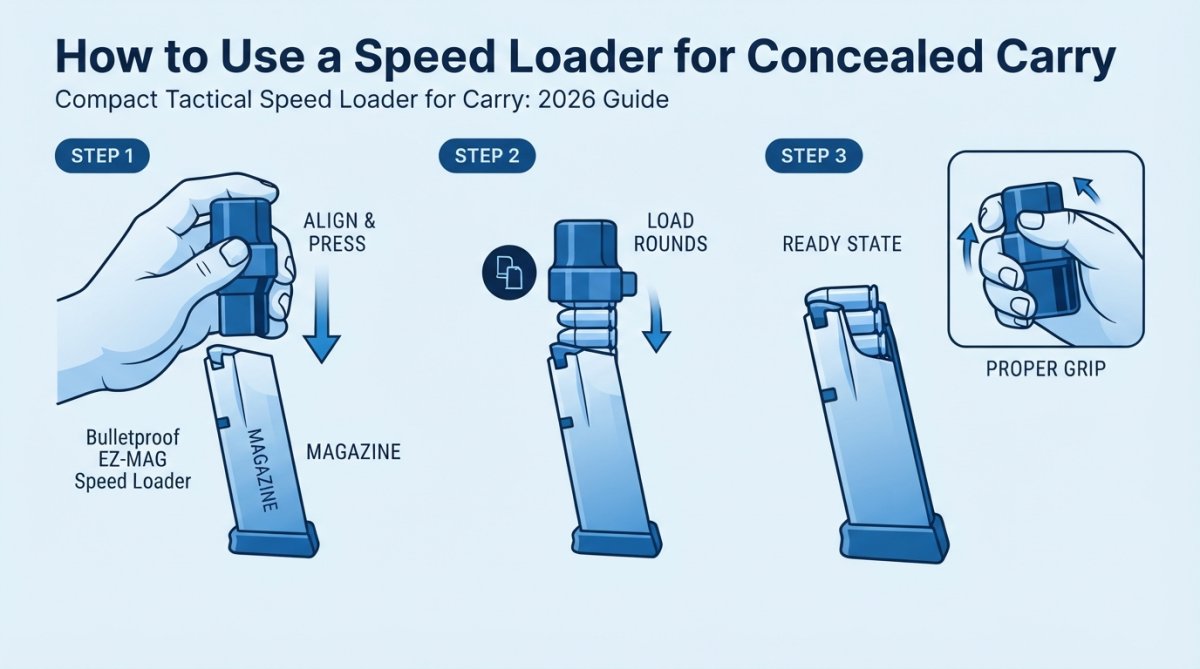
The basic sequence is consistent: align the loader with the magazine, press down to compress the spring, then twist or depress the release mechanism to drop rounds into the magazine. Alignment is critical, even slight off-center positioning causes jams or failed seating.
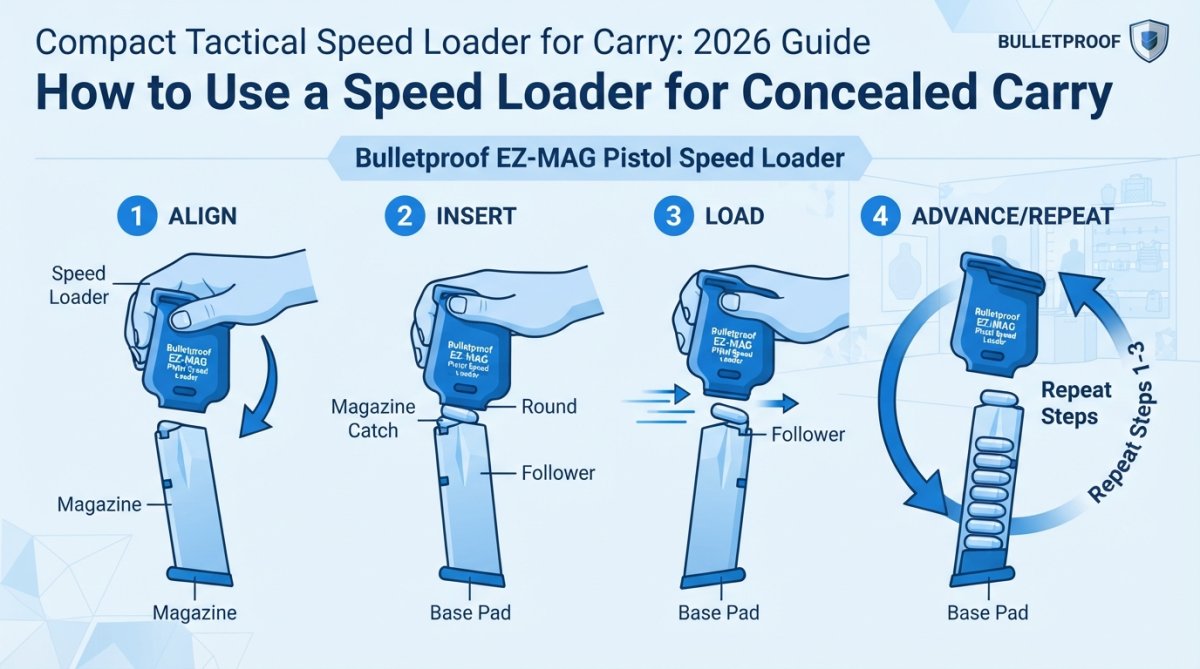
Hold the magazine firmly in your non-dominant hand, mouth facing up. Position the loader directly above so round columns align with the magazine opening. Press down gently, don't jab, until the loader seats. Activate the release mechanism. Keep the loader seated for a full second after releasing to ensure all rounds commit, especially with high-capacity magazines.
Practice loading one-handed while simulating holding your firearm or taking cover. This is how you'll actually use it in a defensive scenario.
Cold-Weather and Gloved Operation
Cold temperatures increase polymer stiffness and reduce spring responsiveness. Test your loader in cold conditions before relying on it for winter carry.
Gloved operation is equally important. Tactical, winter, and leather gloves change the mechanical feel. Buttons become harder to press, twist-knobs require more hand strength, and fine motor control diminishes. BULLETPROOF's designs prioritize tactile feedback and mechanical advantage for reliable gloved operation. The TACTICAL Model's larger lever and positive detents make gloved loading faster than alternatives.

Practice loading with the gloves you actually wear during winter carry.
Speed Loader vs Manual Loading for Carry Scenarios
Manual loading works fine at the range with unlimited time. In a defensive scenario where you've fired your carry magazine, manual loading introduces friction and error. Your hands might shake from adrenaline, you might load one-handed while taking cover, or wear gloves reducing tactile feedback. A speed loader removes these variables and makes reloading mechanical and consistent.
A practiced shooter loads manually in 8-12 seconds. A speed loader reduces this to 3-5 seconds. The real advantage is reliability under stress, not raw speed. A speed loader conditions you to reload consistently during training, developing muscle memory that transfers to manual reloading under stress.
A quality tactical speed loader from BULLETPROOF SPEED LOADERS is more reliable than budget alternatives. The cost-benefit calculation depends on training frequency and how much you prioritize reload consistency.
Retention and Security in Pocket Carry
Carrying a speed loader in your pocket introduces a retention problem. Your loader will shift, rotate, and potentially fall out during normal movement. A loader that's not secure becomes lost gear.
Most shooters carry speed loaders loose in a cargo pocket. A better approach uses a dedicated retention device, custom kydex carriers or small neoprene cases designed for flashlights that fit speed loaders. The ideal solution keeps the loader accessible without creating printing or bulk. BULLETPROOF's compact profile works in standard pockets without requiring a specialized carrier.
One often-overlooked concern is magazine compatibility during carry. If your loader rattles loose, it might damage your carry magazine's feed lips. Many shooters use a small pouch to isolate the loader from magazines.
Choosing the right tactical speed loader for carry means understanding your specific use case and training intensity. If you're a recreational shooter visiting the range monthly, the BULLETPROOF SPEED LOADERS COMBAT Model delivers everything you need at an accessible price point. If you're a competitive shooter or law enforcement officer running high-round-count training, the TACTICAL Model's enhanced reliability justifies the investment. The DELTA Model is for shooters demanding absolute durability.

The real question isn't which loader is objectively best, but which matches your training frequency, carry environment, and reliability standards. Get started with BULLETPROOF SPEED LOADERS and find the model that fits your loadout. All three designs eliminate finger fatigue, improve reload consistency, and deliver the mechanical reliability you need when it matters.
| Model | Price | Weight | Best For | Key Advantage |
|---|---|---|---|---|
| COMBAT | $69.95 | 1.8 oz | Everyday carry and range use | Affordable, genuinely pocketable |
| TACTICAL | $89.95 | 2.2 oz | Serious shooters and training | Enhanced spring consistency, all-weather reliability |
| DELTA | $179.95 | 2.8 oz | Professional and premium users | Aircraft aluminum, indefinite durability |
Frequently Asked Questions
Are speed loaders worth it for concealed carry?
Yes, a compact tactical speed loader significantly reduces thumb fatigue during range sessions and speeds up magazine reloading in training drills. For concealed carry, choose a loader with a compact profile that fits in your range bag without adding bulk. Models like the Bulletproof COMBAT reduce loading time by 40-60% compared to manual loading, making them valuable for both range day and tactical training scenarios where efficiency matters.
What is the most reliable speed loader for 9mm magazines?
The Bulletproof TACTICAL Model ($89.95) and COMBAT Model ($69.95) are engineered specifically for 9mm double-stack magazines with consistent spring tension and polymer construction designed to prevent feed lip damage. Both feature anodized aluminum components for durability under heavy use. For law enforcement and competitive shooters, the aluminum-constructed DELTA Model ($179.95) offers premium reliability and handles high-capacity magazines without spring compression failure.
Do speed loaders damage magazine feed lips?
High-quality tactical speed loaders like Bulletproof models are designed with friction reduction technology and proper alignment to protect feed lips. The polymer follower and precision-engineered catch prevent the pinching or stripping that occurs with cheaper loaders. Always verify your loader matches your magazine caliber and capacity, and inspect feed lips periodically during heavy range use. Proper technique, smooth, controlled depression of the magazine follower, also prevents damage.
How do I use a tactical speed loader for concealed carry?
Insert the loaded speed loader into your range bag or tactical gear before heading out. At the range, place your magazine on a flat surface, position the loader's follower over the magazine opening, and press down firmly while rotating the release knob or lever. For concealed carry, practice the loading sequence beforehand so muscle memory takes over during a defensive reload. In cold weather or with gloves, choose a loader with a large release button for tactile operation without removing your gloves.
What is the difference between a tactical speed loader and a standard loader?
Tactical speed loaders prioritize durability, reliability, and fast reloading under stress. They feature reinforced polymer and metal construction, precision-engineered springs, and ergonomic design to reduce thumb fatigue during extended training. Standard loaders often use cheaper materials and less efficient follower systems. Tactical models like the Bulletproof line are built for law enforcement, competitive shooters, and serious carry permit holders who demand combat-ready gear that functions under pressure.
This article was written using GrandRanker
Frequently Asked Questions
Are speed loaders worth it for concealed carry?
Yes, a compact tactical speed loader significantly reduces thumb fatigue during range sessions and speeds up magazine reloading in training drills. For concealed carry, choose a loader with a compact profile that fits in your range bag without adding bulk. Models like the Bulletproof COMBAT reduce loading time by 40-60% compared to manual loading, making them valuable for both range day and tactical training scenarios where efficiency matters.
What is the most reliable speed loader for 9mm magazines?
The Bulletproof TACTICAL Model ($89.95) and COMBAT Model ($69.95) are engineered specifically for 9mm double-stack magazines with consistent spring tension and polymer construction designed to prevent feed lip damage. Both feature anodized aluminum components for durability under heavy use. For law enforcement and competitive shooters, the aluminum-constructed DELTA Model ($179.95) offers premium reliability and handles high-capacity magazines without spring compression failure.
Do speed loaders damage magazine feed lips?
High-quality tactical speed loaders like Bulletproof models are designed with friction reduction technology and proper alignment to protect feed lips. The polymer follower and precision-engineered catch prevent the pinching or stripping that occurs with cheaper loaders. Always verify your loader matches your magazine caliber and capacity, and inspect feed lips periodically during heavy range use. Proper technique—smooth, controlled depression of the magazine follower—also prevents damage.
How do I use a tactical speed loader for concealed carry?
Insert the loaded speed loader into your range bag or tactical gear before heading out. At the range, place your magazine on a flat surface, position the loader's follower over the magazine opening, and press down firmly while rotating the release knob or lever. For concealed carry, practice the loading sequence beforehand so muscle memory takes over during a defensive reload. In cold weather or with gloves, choose a loader with a large release button for tactile operation without removing your gloves.
What is the difference between a tactical speed loader and a standard loader?
Tactical speed loaders prioritize durability, reliability, and fast reloading under stress. They feature reinforced polymer and metal construction, precision-engineered springs, and ergonomic design to reduce thumb fatigue during extended training. Standard loaders often use cheaper materials and less efficient follower systems. Tactical models like the Bulletproof line are built for law enforcement, competitive shooters, and serious carry permit holders who demand combat-ready gear that functions under pressure.