 listicle
What Accessories Does a Beginner Really Need in a Range Bag?
Last Updated: October 29, 2026
Quick Summary
A beginner's range bag needs eye and ear protection first, then a pistol speed loader for faster magazine loading, and a first-aid kit. Pack ammunition matching your firearm's caliber, two magazines, paper targets, and basic cleaning tools. Range bag accessories should be organized so safety gear stays easy to reach.
- Eye and ear protection are non-negotiable on every range trip, since hearing and vision damage can be permanent.
- The Bulletproof Pistol Speed Loader costs $34.95 and uses a two-step loading process.
- Bring a first-aid kit in a dedicated pouch to handle minor cuts, scrapes, and burns.
- Confirm the caliber on your firearm before buying ammunition, and buy modest quantities first.
- Carry chamber flags, which show the firearm is clear and support safe handling.
Table of Contents
- Start With the Non-Negotiables: Eye and Ear Protection
- Pistol Speed Loader Benefits for Your First Range Trips
- Shooting Range Safety Gear List: First-Aid and Emergency Supplies
- Ammunition, Magazines and Targets: What to Pack
- Cleaning and Maintenance Tools Worth Carrying
- How to Organize a Range Bag for Safe, Fast Access
- Building Your Starter Kit Around Essentials and Upgrades
- Frequently Asked Questions
Walking into your first range session with a stuffed bag and no plan is a common mistake. Most new shooters pack in a hurry, forget the one thing they actually needed, and spend the afternoon fumbling with a magazine that refuses to load. A well-chosen set of range bag accessories fixes most of that. Here is what a beginner really needs, what you can skip for now, and how to keep it all organized.
Quick Picks:
- Eye and ear protection: Non-negotiable on every trip
- Pistol speed loader: The best upgrade for reloading speed and thumb comfort
- First-aid kit: Small, cheap, and worth carrying every time
Start With the Non-Negotiables: Eye and Ear Protection
Eye and ear protection come first, and the reason is simple: hearing and vision damage from a single session can be permanent. Indoor ranges are especially loud, and many of them require shooters to wear both earplugs and earmuffs at once. That practice, often called doubling up, is worth adopting from your first visit.
Pack shooting glasses that are rated for impact and keep a spare pair in the bag. Pack two sets of hearing protection too, since one usually gets lost or left on a bench. Keep these items easy to reach so you never shoot without them.
Pistol Speed Loader Benefits for Your First Range Trips
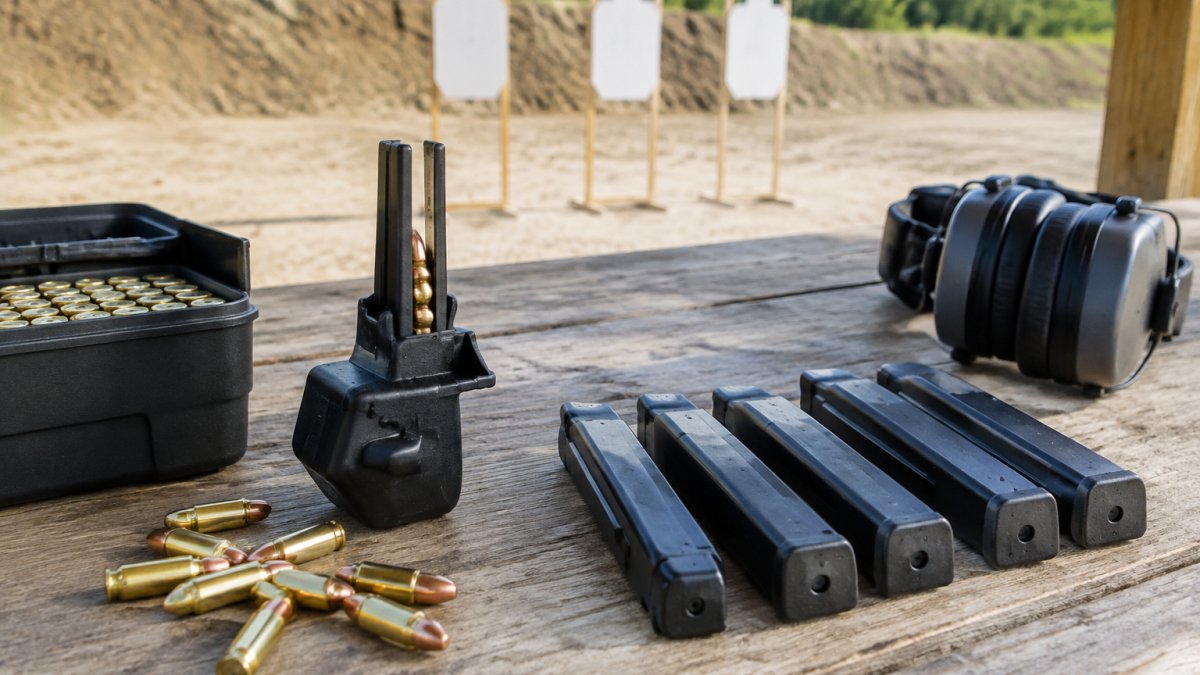
Loading magazines by hand is slow, and it wears on your thumbs quickly. A pistol speed loader can make seating rounds faster and easier on your hands. For a beginner who wants to get more trigger time per session, that difference adds up.
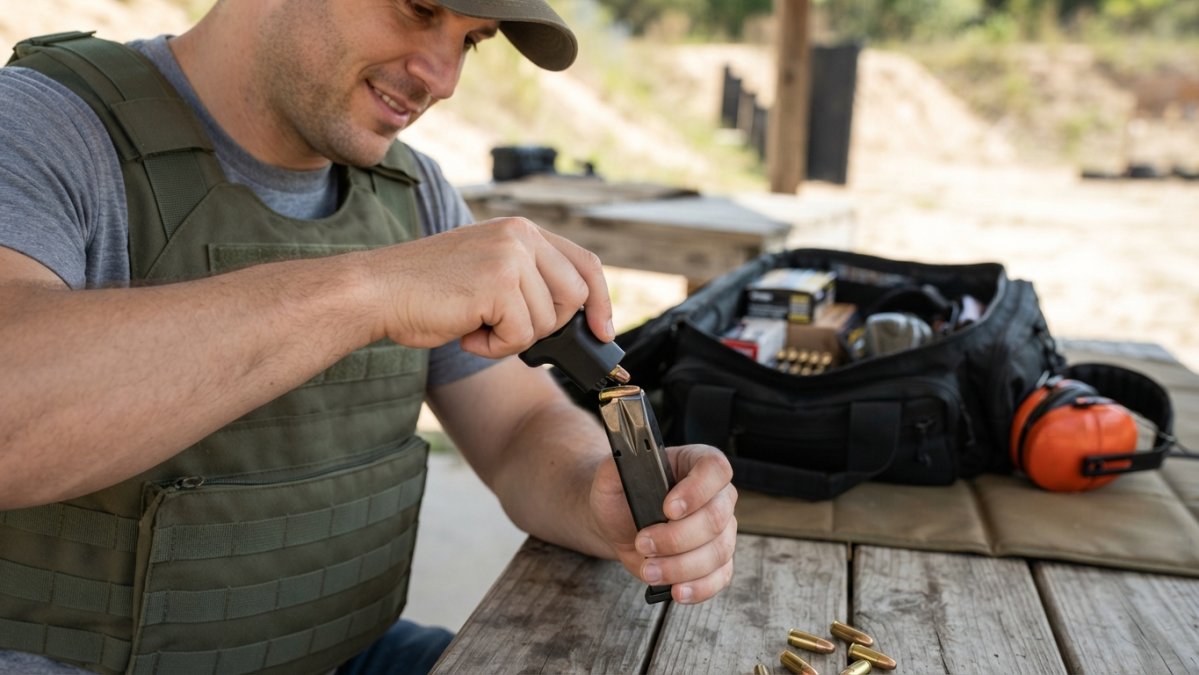
The Bulletproof Pistol Speed Loader, priced at $34.95, is made from superior polymer materials and fits many popular pistols. Its listing describes a two-step loading process: insert the magazine, then feed and push. Its listing states it is designed to save your thumbs and avoid tired or sore fingers while loading. If you plan to shoot a lot of 9mm or other high-capacity magazines, this is one of the most useful accessories you can add to your bag.

The article's loading upgrade is easier to compare at a glance:
| Item | Value | Note |
|---|---|---|
| Bulletproof Pistol Speed Loader | $34.95 | Made from superior polymer materials |
| Compatibility | Many popular pistols | Fits many popular pistols |
| Loading process | Two steps | Insert magazine, then feed and push |
| Main benefit | Saves thumbs | Avoids tired or sore fingers |
Shooting Range Safety Gear List: First-Aid and Emergency Supplies
Minor injuries happen at ranges more often than people expect: scrapes, burns from hot brass, cuts from a sharp edge on a target stand. A basic first-aid kit covers these situations.
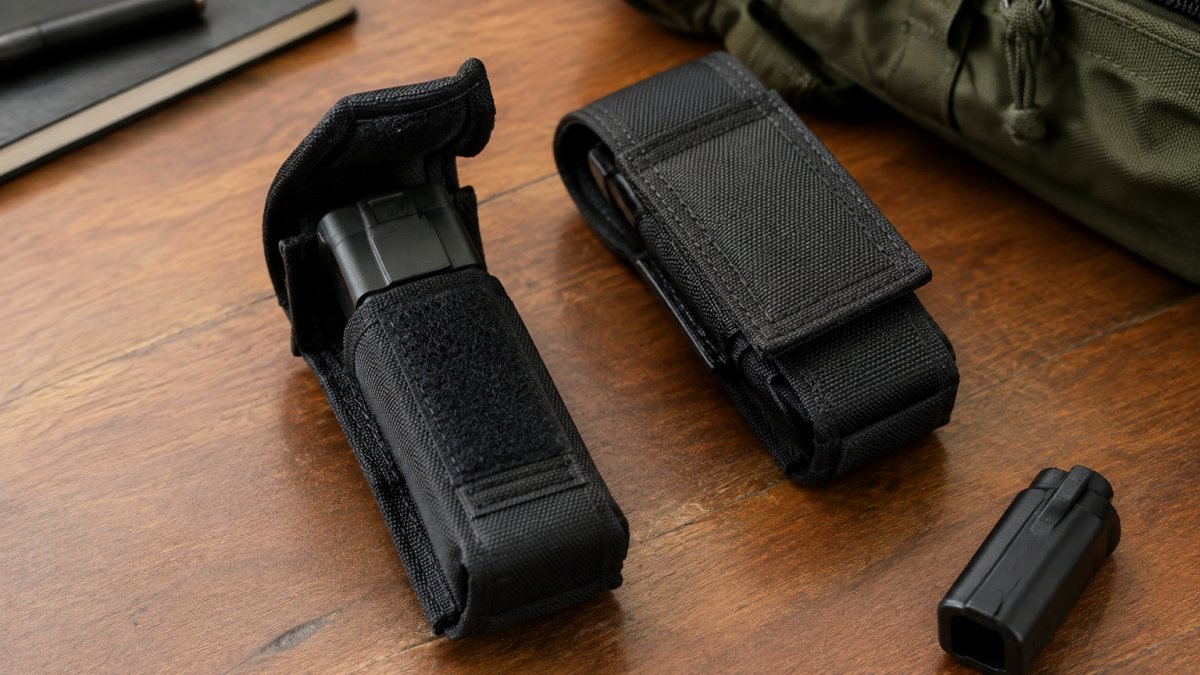
Store the kit in a dedicated pouch so it stays put and is easy to find among your range bag accessories. Check the contents after each trip and replace anything you used. Knowing where your kit is before you need it is the point.
Ammunition, Magazines and Targets: What to Pack
This is where beginners overspend or underpack. The goal is not to bring everything you own, it is to bring exactly what your session requires, plus a small margin for error. Packing with that mindset saves money and keeps your bag light.
Ammunition: match the caliber, then buy in modest quantities. Confirm the caliber stamped on your firearm or the rental before you leave home; a box of the wrong ammunition is money wasted and a safety hazard if forced. For a first session, bring enough rounds to practice fundamentals without exhausting your budget. Buy ammunition in the smallest box that covers your session rather than bulk packs, so you can test what your firearm cycles reliably before committing to a larger purchase.
Magazines: bring more than you think you need. Two magazines is a practical minimum; carrying more can help on a longer session. For a first visit with a rented firearm, ask the range how many magazines come with the rental and whether you can bring your own, some facilities require you to use their magazines with their guns. If you are buying magazines for a firearm you own, confirm they are the correct model and capacity for your state and range; capacity rules vary, and a range officer will check.
Targets: simple, legal, and range-approved. Paper targets are the safest default. Bring a few more than you plan to use, new shooters often shoot through targets faster than expected. A simple target stand or binder clips to attach paper to the range's backer will save you from improvising. Rules vary by facility: some ranges sell targets on-site and prohibit outside targets, and some restrict certain target types. Confirm before you arrive so you do not carry a stack of targets you cannot use.
Rental-specific packing. If you are renting a firearm for your first visit, you generally do not need to bring ammunition or magazines, the range supplies them, often as part of a rental package. What you should bring is your own eye and ear protection (rental protection is often basic and shared), a notebook to record what you shot and how it felt, and your first-aid kit.
Bulletproof Pistol Speed Loader →
Budget reality check. A realistic starter ammunition and target budget for one session is modest: a box or two of practice ammunition and a pack of paper targets. Resist the urge to buy bulk ammunition or premium self-defense rounds before you know what your firearm likes.
Keep ammunition, magazines, and targets in separate compartments or pouches so nothing shifts or spills during transport. Never transport loaded magazines loose in the same pocket as other gear, and follow the range's rules on how magazines may be carried to the firing line.
Cleaning and Maintenance Tools Worth Carrying
Firearm maintenance does not require a full workbench on the range. A short set of items covers most maintenance needs: a bore snake, light lubricant, and chamber flags. Chamber flags are especially important because they show that a firearm is clear before you handle it, which supports safe handling at the bench and during packing. For a fuller list, see these essential maintenance tools for competitive shooters.
A small microfiber cloth and a compact cleaning kit round out the basics. Keep the list short for your first trips. You can add specialized tools later as you learn which maintenance tasks your firearm needs.
How to Organize a Range Bag for Safe, Fast Access
Organization is not about neatness, it is about speed and safety. A bag arranged with intention lets you find your eye protection without digging, keeps ammunition away from your firearm during transport, and makes it obvious when something is missing at the end of the session.
Layer by frequency and weight. Put the items you touch most, eye protection, hearing protection, magazines, and your speed loader, in the top or outer pockets where you can reach them without opening the main compartment. Store heavier items like cleaning supplies, a full first-aid kit, and spare ammunition at the bottom, where they will not shift when you lift the bag.
Separate firearms, ammunition, and small accessories. Use distinct compartments or pouches for each category. Firearms should travel unloaded, in a case or dedicated compartment, and separated from ammunition. Small items, earplugs, chamber flags, a microfiber cloth, a pen, belong in a pouch or zippered pocket so they do not migrate into the main compartment and scratch or obstruct other gear.
Follow transport and range rules. Transport your firearm unloaded and in accordance with the laws of your state and the policies of the range you are visiting. Rules on how firearms, ammunition, and magazines may be carried to the firing line vary by facility; confirm them before your first visit. Many ranges require firearms to be cased and unloaded until you are at the firing line, and some require chamber flags to be visible whenever a firearm is not in active use.
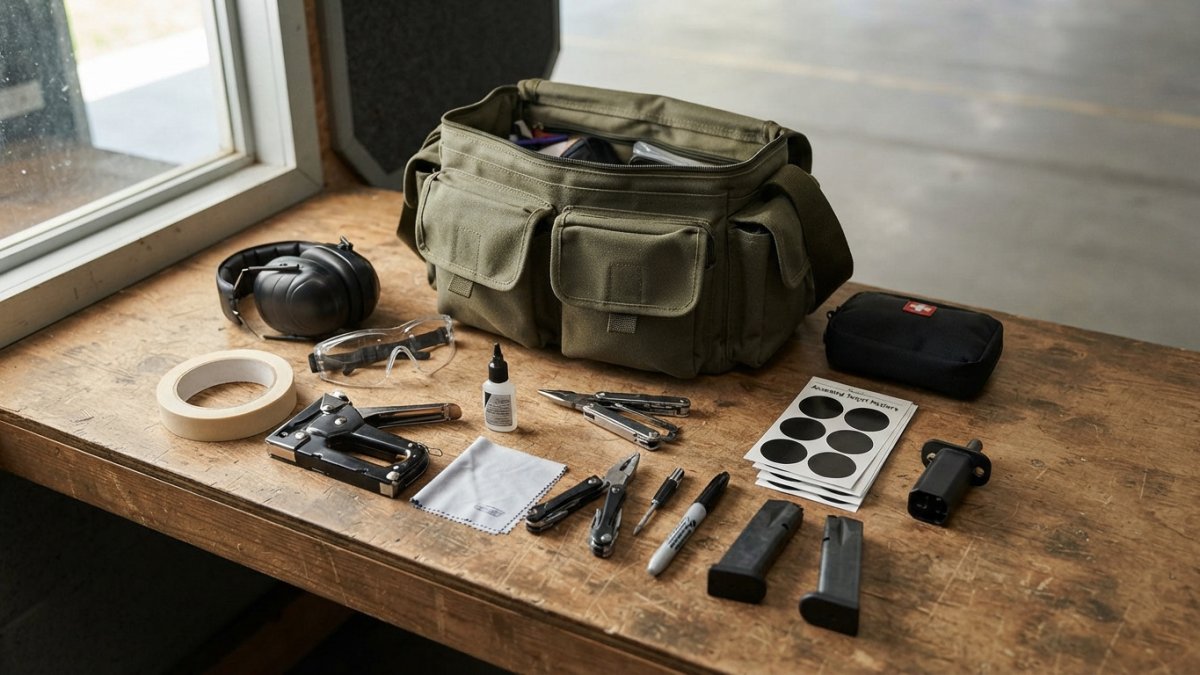
Build a pre-departure check. Before you leave home, run a quick mental or written checklist: eye protection, hearing protection, ammunition, magazines, speed loader, first-aid kit, targets, cleaning basics, water. A bag with designated spots makes this check fast because you can see what is missing rather than feeling around for it. Keep a small laminated checklist in an outer pocket if you tend to forget items.
Bag construction matters more than brand. Reinforced stitching, heavy-duty zippers, and a padded base matter most on a bag you carry often. A bag with too many compartments can be as frustrating as one with too few, look for a main compartment, at least two outer pockets, and a dedicated pouch or sleeve for eye and hearing protection.
Post-session reset. After each trip, take five minutes to clean your gear, restock anything you used from the first-aid kit, and put every item back in its designated spot. Record a short note about what you shot and what you need to replace before the next session. A bag that is reset after every trip is a bag that is ready when you are.
Building Your Starter Kit Around Essentials and Upgrades
Start with the essentials: eye and ear protection, a first-aid kit, compatible ammunition, two magazines, targets, and a basic cleaning setup. If you are new to the sport, this guide to starting competitive pistol shooting explains how to build your kit around it. These items cover safety and let you shoot comfortably on day one. Once you have that foundation, add upgrades that improve speed and comfort. A pistol speed loader is the most common first upgrade, and it earns its place quickly if you shoot regularly.
Spend your budget in that order. A reasonable starter kit covers the safety items first, then adds loading and maintenance tools as your practice grows. Check range rules before you buy anything specialized, and review what the range provides so you do not duplicate it. After each session, clean your gear, check what you used, and replace it before your next trip.
Frequently Asked Questions
What should a beginner bring to the shooting range?
A beginner should bring eye and ear protection, ammunition, magazines, targets, a basic first-aid kit and a chamber flag for safe handling. Hearing protection is especially important at indoor ranges, where many shooters double up with earplugs and earmuffs. Start with safety gear and core shooting items, then add optional tools as you learn what you actually use on the range. Keeping the first trip simple helps you focus on safe handling and fundamentals rather than carrying more gear than you need.
What are the most important safety items for a range bag?
Eye protection and hearing protection come first, because they are the essentials every shooter needs. A trauma-focused first-aid kit is the next priority, since it covers minor injuries that can happen at any range session. A chamber flag also belongs in the bag, since it shows that a firearm is safe to handle. These items form a shooting range safety gear list that every beginner should review before each trip, along with any range-specific rules posted at the facility.
Do I need a dedicated speed loader in my range bag?
A speed loader is useful if you shoot high volumes or find magazine loading tiring on your thumbs. The Bulletproof Pistol Speed Loader ($34.95) fits many Glock and Sig models and loads a full magazine in a few steps, reducing finger fatigue. Beginners can start without one and add a loader once they know how much time at the range goes to loading. Check that your magazine model is listed as compatible before buying.
How much does a basic range bag setup cost?
A basic setup can start with core safety items, then add tools as needed. Bulletproof's current loaders range from the Pistol Speed Loader at $34.95 to the Speed-Loader COMBAT Model at $69.95, the TACTICAL Model at $89.95 and the Tier-1 AR-15 model at $199.95. Budget for eye and ear protection, a first-aid kit and ammunition first, and buy a speed loader only if your loading volume justifies the cost.