 ultimate-guide
How to Start Competitive Pistol Shooting: 2026 Guide
Table of Contents
- What You Need Before Your First Match
- How to Find Local Shooting Matches
- Choosing the Best Competition Pistol for Beginners
- Your Competitive Shooting Gear List
- Training Drills for Competitive Pistol Shooting
- Understanding Match Divisions and Scoring
- Your First Match: A Walkthrough
- Frequently Asked Questions
Last Updated: September 25, 2026
What You Need Before Your First Match
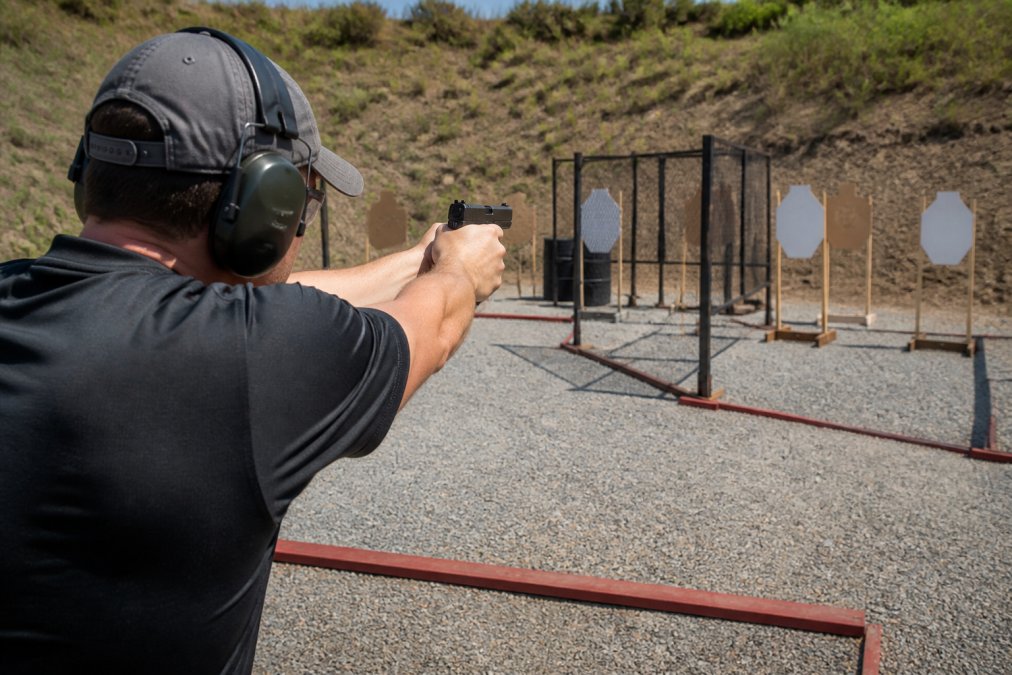
Competitive pistol shooting is a timed sport where shooters engage paper and steel targets from a holster, scoring points for accuracy and speed. Getting started requires only a safe handgun, eye and ear protection, and a willingness to learn the range commands that govern every stage. This guide from BULLETPROOF SPEED LOADERS covers the full path from your first range visit to your first scored match.

Essential safety gear and range commands
Eye and ear protection are mandatory at every match, and most ranges require them before you even enter the parking area. Beyond that, you need a strong-side holster that covers the trigger guard and a belt sturdy enough to hold it in place during movement.
- "Range is clear", you may handle your firearm
- "Make ready", load, chamber, and holster
- "Are you ready?", respond verbally if ready
- "Standby", expect the timer to beep within seconds
- "If finished, unload and show clear", the stage is over
How to Find Local Shooting Matches
The fastest route to finding matches is searching your regional practical shooting club listings and the official match registration platforms most clubs use. Most clubs post their monthly match schedule online, and many welcome walk-on beginners who arrive early for a new-shooter briefing.
USPSA vs. IDPA: Which is right for you?
The two dominant formats differ in philosophy. USPSA emphasizes speed and freestyle stage planning, while IDPA leans toward defensive scenarios with more prescriptive rules on cover and reloads.
| Feature | USPSA | IDPA |
|---|---|---|
| Focus | Speed and accuracy | Defensive realism |
| Stage planning | Freestyle, your choice | Prescribed tactics |
| Gear rules | More permissive | Closer to carry gear |
| Best for | Shooters who like problem-solving | Shooters who want carry-relevant practice |
Choosing the Best Competition Pistol for Beginners
If you shoot a lot of practice rounds, a speed loader saves your thumbs. The Bulletproof EZ-MAG Pistol Speed Loader fits popular models including the Glock 17, 19, and 45, plus the Sig P320 and P365, and loads a full magazine in two steps. It is backed by a lifetime repair, replace, or refund warranty.

Your Competitive Shooting Gear List
A practical competitive shooting gear list is short: pistol, three magazines, a holster, magazine pouches, a belt, eye and ear protection, and a range bag. Everything else is optional until you know what you actually need.
Speed loaders and magazine management
Reloading by hand between stages gets old fast, especially with stiff new magazine springs. A quality speed loader reduces finger fatigue and keeps your practice sessions longer. Bulletproof Speed Loaders builds combat-ready models, including the COMBAT Model and the TACTICAL Model with its anodized aluminum lever and mag release button, both designed for range days and harsher conditions.

Training Drills for Competitive Pistol Shooting
Dry fire practice is the highest-return training you can do, and it costs nothing. Ten minutes a day of drawing, acquiring a sight picture, and pressing the trigger builds the muscle memory that live fire alone cannot. The key is structure: a drill without a par time or a rep count is just fidgeting with your gun.
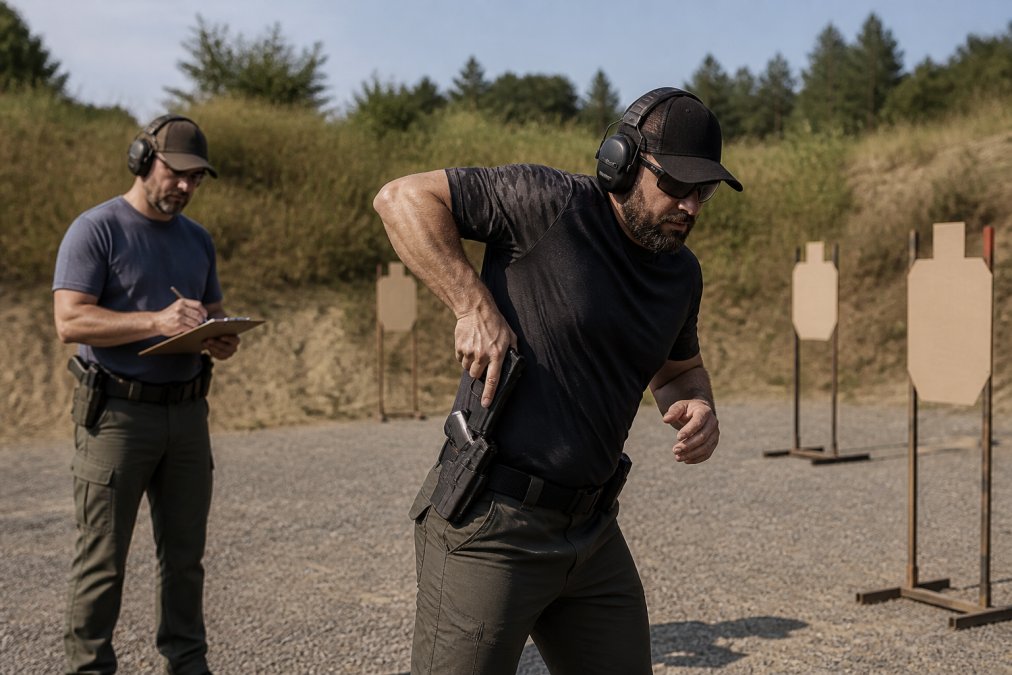
The four core drills (and how to actually run them)
- Holster draw. Start with your hands at shoulder height, not your sides. On the beep, draw, acquire a sight picture, and press one dry shot. Run 10 reps per set, three sets. Use a shot timer or a phone app with a par-time feature; set the par time two-tenths of a second slower than your current best and shrink it as you get consistent. Most new shooters land around 1.8-2.2 seconds from beep to first shot within a few weeks of daily practice.
- Magazine changes. Practice both a slide-lock reload (empty gun) and a speed reload (round in the chamber, magazine still seated). Do 10 of each per session. Keep your gun in your workspace, roughly chest height, muzzle generally downrange, and bring the fresh magazine to the gun rather than the gun to the magazine. Watch the magazine well, not your belt.
- Target transition. Set two targets 3-5 yards apart at 7-10 yards. On the beep, fire one dry shot on target A, then one on target B. Your eyes should arrive on target B before the gun does. Run 15 reps. This is where most of your match time is won or lost.
- Recoil management (live fire). Fire 5-round strings at 7 yards, focusing on a clean sight picture after each shot rather than on the target. 50-100 rounds per session is plenty. Film one string from the side with your phone to see how much the muzzle actually moves.
Add physical conditioning (the angle most guides skip)
Competitive pistol shooting is a physically demanding sport disguised as a stationary one. You hold a pistol at arm's length, crouch behind cover, move between shooting positions, and stay stable under a timer, all of which reward grip strength, hip and ankle mobility, and core stability. A simple weekly routine that pays off:
Bulletproof EZ-MAG Pistol Speed Loader →
- Grip: dead hangs or a grip trainer, 3 sets of 20-30 seconds, twice a week.
- Mobility: deep bodyweight squats and hip openers, 2 sets of 10, before dry fire.
- Stability: single-leg balances and plank variations, 3 sets of 30 seconds, twice a week.
Where the real time comes from
The difference between a mid-pack shooter and a fast one is rarely raw trigger speed. It is movement efficiency and stage planning: how few steps you take between positions, how early you reload, and how quickly you settle into a stable stance. Dry fire builds the mechanics; walkthroughs and video review build the decisions. Budget your practice time accordingly, roughly 70% mechanics, 30% stage planning.
Understanding Match Divisions and Scoring
Match divisions group shooters by equipment so a stock pistol never competes against a custom race gun. Choosing the right division for your gear keeps you competitive from day one.
Your First Match: A Walkthrough
Arrive early, tell the match director it is your first match, and ask to be squadded with experienced shooters. Most clubs assign a mentor to new shooters, and that single step removes most of the anxiety. Bring water, a snack, and a chair, you will spend more time waiting than shooting.
Here is how your first match unfolds:
- Registration. Sign in, pay the match fee, declare your division. Ask which squad has the most experienced shooters and request it.
- New-shooter briefing. Safety rules and range commands review. Pay attention, this is where disqualifications are prevented.
- Stage briefing. The range officer explains the course of fire, round count, and any procedurals.
- Walkthrough. You plan your route, your reload points, and your target order. Walk it twice if you can.
- Shooting. You run the stage under the timer. The range officer runs you through the commands you memorized.
- Scoring. Targets are scored, and you help tape and reset. Stay to help, it is how you learn the stages and meet people.
Managing match nerves (the part nobody tells you)
Match anxiety is the number one reason new shooters do not come back. It is not a character flaw; it is a predictable response to being watched, timed, and scored for the first time. A few things that reliably help:
- Reframe the goal. Your only job at match one is to be safe and finish. Score is irrelevant. Tell yourself that out loud before you step to the line.
- Build a pre-stage routine. The same three or four actions every time, check your magazines, check your holster, take one slow breath, say "ready" when you are. Routine crowds out panic.
- Use the walkthrough. Physically walk your plan. Nerves shrink when the stage is not a surprise.
- Watch one shooter before you. Seeing the stage run once by someone else makes it feel ordinary.
- Expect the beep to feel loud. It always does the first time. Take one extra breath after "Standby" if you need it, the timer does not start until the beep.
Post-match analysis: how to actually improve
- Write down three things. One thing that went well, one thing that went wrong, and one thing you will change next time. Keep it to a single page.
- Review your scores by stage. Look at your hit factor on each stage, not just your overall placement. A stage where you tanked usually points to a specific skill, a reload, a transition, or movement, not to "being bad."
- Watch video if you have it. A phone propped on a range bag is enough. Watch for footwork, muzzle movement, and where your eyes go. Most shooters are surprised by how much they move their feet without needing to.
After the match, write down what went wrong and what felt good. That short review is how shooters improve faster than their peers.
Frequently Asked Questions
What is a good beginner competition shooting pistol?
A good beginner competition pistol is a full-size 9mm with low recoil and high magazine capacity. Popular options include the Glock 17, Sig P320, and CZ P10. These models work well with the Bulletproof EZ-MAG Pistol Speed Loader, which fits Glock 17, 19, 22, 23, 26, 27, 34, 35, 45, 47 and many Sig, Springfield, Ruger, CZ, and Beretta magazines. Choose a pistol you already shoot well, then upgrade later as you learn your division rules.
How do I get into competition shooting?
To get into competition shooting, first find a local USPSA or IDPA club through their official websites. Attend a match as a spectator to see the range commands, safety check, and stage briefing process. Then register for a beginner-friendly match, bring your pistol, eye and ear protection, and at least three magazines. You do not need expensive gear to start; a reliable pistol and a good holster are enough for your first few matches.
Do I need special gear to start competitive shooting?
You do not need special gear to start competitive shooting, but a few items make the experience smoother. You need a safe pistol, a strong-side holster, magazine pouches, eye and ear protection, and at least three magazines. A speed loader like the Bulletproof EZ-MAG Pistol Speed Loader ($34.95) saves your thumbs during long practice sessions. As you progress, you can add a competition belt and better holster based on your division rules.
What are the main differences between USPSA and IDPA?
USPSA and IDPA differ in scoring, stage design, and gear rules. USPSA uses hit factor scoring, rewards speed and accuracy, and allows more gear customization. IDPA focuses on defensive shooting, uses time-plus scoring, and has stricter rules on holsters and magazine changes. Both use a classification system and safety check. Visit a match from each organization to see which style fits your goals before you register.