 listicle
Signs Your Pistol Speedloader Needs Replacement
Table of Contents
- Signs Your Pistol Speedloader Needs Replacement
- Signs of Magazine Spring Fatigue
- Feed Lip Deformation and Alignment Issues
- Troubleshooting Speed Loader Feeding Issues
- Pistol Magazine Maintenance Tips to Extend Life
- When to Repair Versus Replace
- Material Fatigue and Lifecycle Metrics
- Frequently Asked Questions
Last Updated: September 28, 2026
Signs Your Pistol Speedloader Needs Replacement
Understanding the signs your pistol speedloader needs replacement can turn a smooth reload into a reliable one when seconds matter most. Understanding when your speedloader needs replacement isn't just about convenience, it's about reliability when it counts. Understanding when your speedloader needs replacement isn't just about convenience, it's about reliability when it counts.
Your speedloader experiences repetitive stress with every load cycle, tension on the spring, compression of the follower, engagement of feed lips. Over time, this wear degrades performance. The question is whether you'll catch the warning signs before it fails when it matters most.
Visual Inspection Checklist
Start with what you can see. A thorough visual inspection reveals most problems before they become critical failures.
Check these elements:
- Follower condition: Look for cracks, splits, or permanent deformation.
- Feed lips alignment: Hold the magazine to light. Lips should be parallel and symmetrical.
- Spring compression: Press down with your thumb. It should return smoothly without hesitation or grinding.
- Polymer integrity: Examine for stress fractures around stress points.
- Lever and catch mechanism: Check that moving parts operate smoothly.
- Surface wear patterns: Look for deep scratches, gouges, or discoloration.
Visible damage is your first warning. If you spot cracks in the polymer or visible deformation of the follower, replacement is the safest choice. Attempting repairs on structural damage rarely restores full reliability.
Performance Red Flags
Performance problems often precede visible damage. Excessive force to seat rounds indicates internal friction from mechanical wear or misalignment. Normal operation should feel smooth with moderate, consistent pressure.
Rounds that don't seat fully or fall out suggest follower damage or feed lip deformation, a critical red flag that creates dangerous chamber conditions.
A smooth speedloader is nearly silent. Clicking, grinding, or scraping noises indicate internal wear, debris, or mechanical damage, often preceding visible failure.
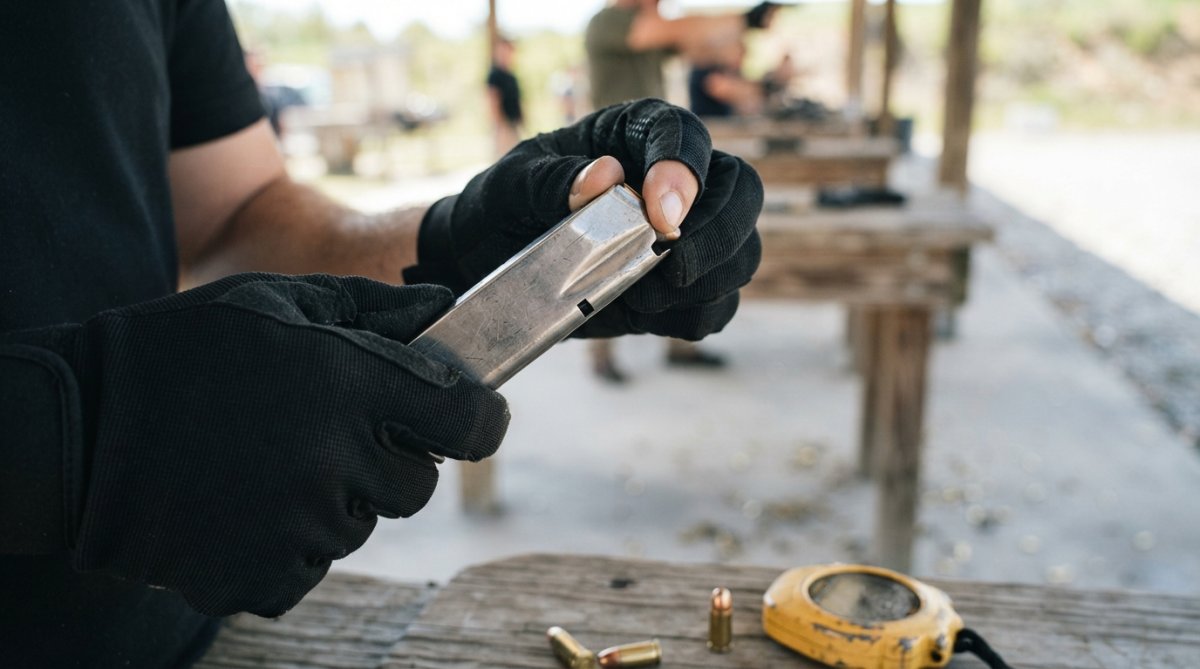
Signs of Magazine Spring Fatigue
Magazine spring fatigue develops gradually through normal use, but the warning signs vary depending on the spring's material composition and the speedloader design applying load to it. Understanding the progression helps you catch failure before it affects reliability.
How Spring Fatigue Progresses
Magazine springs (music wire or stainless steel) lose elastic memory through repeated compression cycles. Over thousands of cycles, the metal's crystalline structure degrades and the spring loses its ability to return to its original height.
This degradation is not linear. Springs often function normally for months or years, then fail rapidly once the fatigue threshold is crossed.
Early Warning Signs
Increased loading resistance is often the first indicator. If your speedloader now requires noticeably more force to seat rounds than it did previously, the spring is losing compression. Compare the feel to a new magazine; the difference becomes obvious.
Inconsistent round seating follows. Rounds seat at different depths or some bind while others load easily, because the weakening spring no longer maintains consistent pressure across all loading positions.
Audible changes accompany degradation. A healthy spring makes a smooth, quiet sound. A fatigued spring may produce a dull thud, grinding, or hesitant "stick-slip" sounds, indicating the spring is no longer moving smoothly.
Testing Spring Condition
Press down on a fully loaded magazine with moderate thumb pressure. A healthy spring should push back with firm, consistent resistance and return smoothly to its original position. The resistance should feel the same whether you're at the top of the magazine or the bottom.
A fatigued spring exhibits weak resistance, inconsistent feel at different compression points, slow or incomplete rebound, or grinding sensations.
Compare the feel to a new magazine if possible.
Environmental Factors Accelerating Spring Fatigue
Spring fatigue accelerates in harsh conditions: high temperatures reduce steel yield strength, extreme cold causes brittleness, and moisture/salt exposure causes corrosion. Shooters in humid, coastal, or salt-spray environments should inspect springs monthly. Professional and law enforcement users should replace springs every 12-18 months regardless of apparent condition.
Spring Fatigue vs. Other Problems
To isolate spring fatigue: (1) clean the magazine with compressed air and dry cloth, (2) test hand-loading to rule out loader issues, (3) compare to a known-good magazine, (4) press the spring 10-20 times and note if resistance changes. Decreased resistance after repeated compression or inconsistent feel indicates spring fatigue.
Feed Lip Deformation and Alignment Issues
Feed lips are precision-engineered to guide rounds with exact tolerance. Deformed lips won't grip rounds consistently, causing binding or failure to feed.
Troubleshooting Speed Loader Feeding Issues
Feeding problems can originate from the loader, the magazine, or the combination of both. Systematic troubleshooting identifies the source.
Loading Resistance and Jamming
Excessive resistance indicates binding. Test by hand-loading: if hand-loading is smooth but the loader creates resistance, the loader mechanism is the problem. If both create resistance, the magazine has an issue, feed lip misalignment, spring fatigue, or debris.
Carbon Buildup and Debris Impact
Ammunition residue and debris accumulate inside magazines, increasing friction. Regular cleaning prevents this, flush with compressed air or dry cloth every few range sessions. Gradual resistance increase over weeks typically indicates debris accumulation; cleaning often resolves the problem.
Pistol Magazine Maintenance Tips to Extend Life
Preventative maintenance significantly extends the life of both your magazine and your speedloader. These practices are simple but effective.
Rotate your magazines. Distribute wear evenly across your collection.
Inspect springs regularly. Check monthly if you shoot frequently.
Avoid extreme temperatures. Store in climate-controlled environments when possible.
When to Repair Versus Replace
Repairable issues: Carbon buildup, minor corrosion, worn basepad.
Non-repairable issues: Cracked polymer, bent feed lips, damaged follower, fatigued spring, structural cracks.
| Problem | Severity | Action |
|---|---|---|
| Minor scratches | Low | Continue use, monitor |
| Carbon buildup | Low | Clean and inspect |
| Slight resistance increase | Medium | Test spring, consider replacement |
| Visible feed lip bend | High | Replace magazine |
| Cracked polymer body | Critical | Replace immediately |
| Weak spring compression | High | Replace magazine |
Material Fatigue and Lifecycle Metrics
Understanding how different speedloader materials degrade helps you predict failure and choose equipment that matches your usage pattern. Polymer and metal speedloaders fail through different mechanisms, and recognizing the warning signs specific to each material keeps your gear reliable.
Polymer Speedloader Degradation
Most speedloaders use reinforced polymer (typically acetal copolymer or nylon) for the body and follower. Polymer degrades through three primary mechanisms: mechanical stress cycling, UV exposure, and thermal cycling.
Metal Speedloader Advantages and Limitations
Anodized aluminum resists corrosion and maintains dimensional stability longer than polymer but can develop micro-cracks in high-stress areas. Steel is more durable but heavier and prone to corrosion if the finish is compromised.
Visual Indicators of Micro-Crack Formation
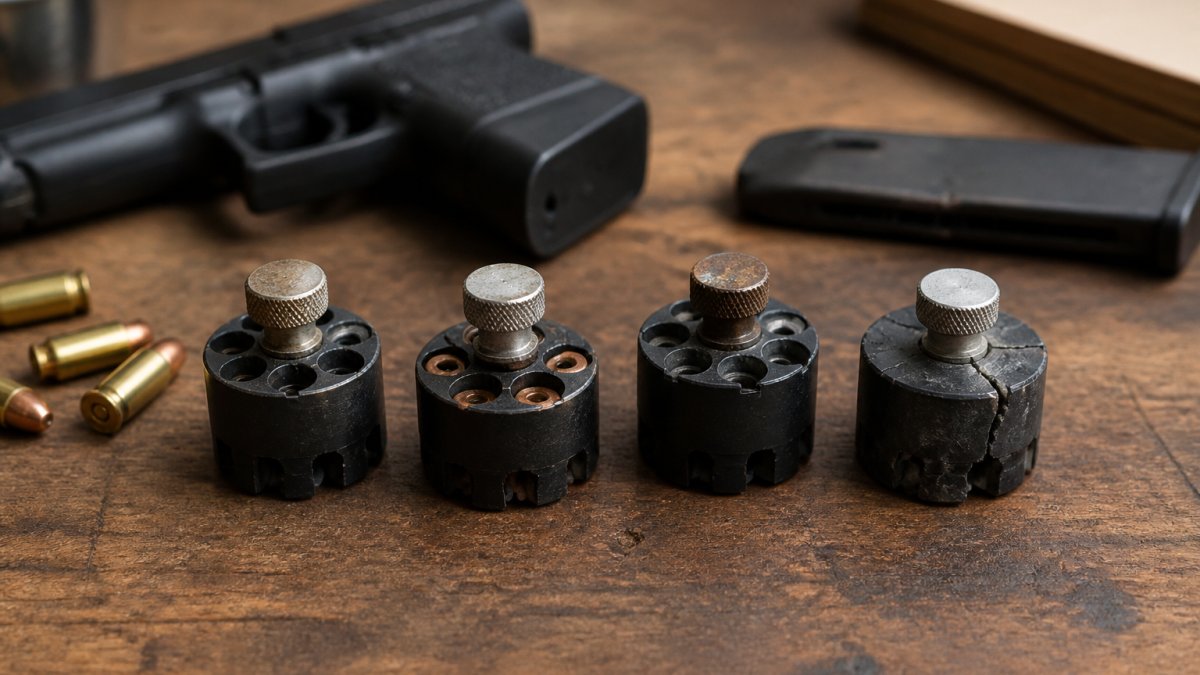
Stress-line patterns (faint white lines radiating from high-stress points) indicate molecular-level failure, the loader may still function but failure is imminent. Discoloration (yellowish, brownish, or chalky appearance) indicates UV or thermal damage and increased brittleness. Surface crazing (dull, frosted texture) indicates structural failure and requires immediate replacement. Permanent deformation (warping, lever not returning fully, follower at an angle) indicates the polymer has lost elasticity and is near end of life.
Lifecycle Metrics and Preventative Replacement
Estimated replacement intervals: Light shooters (100-300 rounds/month): polymer 5-7 years, metal 8-10 years. Moderate shooters (500-1,000 rounds/month): polymer 3-5 years, metal 6-8 years. Heavy shooters (2,000+ rounds/month): polymer 18-24 months, metal 4-5 years. Professionals (5,000+ rounds/month): polymer 12-18 months, metal 3-4 years. Environmental factors (heat, humidity, salt spray) can cut timelines in half; proper storage can extend them 20-30%.
Safety Implications of Speedloader Failure
When a speedloader fails during use, the most common result is double feed: two rounds enter the chamber simultaneously, jamming the firearm. This occurs when a damaged follower or weakened spring fails to position rounds correctly, allowing the next round to advance before the previous one is fully chambered.
Double feeds are dangerous because:
- The firearm becomes inoperable until the jam is cleared
- Clearing a double feed requires removing the magazine and manually extracting both rounds
- In a defensive scenario, this creates a critical delay
- Repeated attempts to clear a double feed can damage the firearm's feed ramp or extractor
Storage and Environmental Factors
Store speedloaders in a cool, dry environment away from direct sunlight. A climate-controlled closet or safe is ideal. Avoid storing speedloaders in vehicles, where temperature swings are extreme, or in damp basements, where humidity accelerates corrosion and polymer degradation.
Frequently Asked Questions
How often should you replace your pistol speedloader?
Replacement frequency depends on usage intensity. Replacement frequency depends on usage intensity. Inspect your speedloader every 6-12 months and replace it when you notice spring compression loss, feed lip wear, or loading resistance. The Bulletproof EZ-MAG Pistol Speed Loader comes with a lifetime warranty, so defects are covered, but normal wear from friction and polymer degradation is expected over time.
Can a faulty speedloader cause magazine feeding issues?
Yes. A worn speedloader with deformed feed lips or misaligned followers can transfer that damage to your magazines, causing double feeds, stovepipes, or jamming during cycling. If your speedloader's internal geometry has shifted due to polymer degradation or spring fatigue, it may not seat rounds correctly, creating tolerance problems that cascade into feeding failures. Always inspect your magazines after using a worn loader, and replace the speedloader immediately if you notice binding or resistance during loading.
What are the common signs of wear and tear on a speedloader?
Common wear indicators include visible cracks or stress marks on the polymer body, discoloration from heat or UV exposure, reduced spring compression making loading easier than normal (a sign of spring fatigue), scratches on the feed lips, and a loose or rattling follower. Tactile signs include increased friction during loading, difficulty fully compressing the spring, and rounds not seating flush. Performance decline, needing extra force to load, or the loader failing to grip magazines securely, signals material fatigue and the need for replacement.
How does spring fatigue affect speedloader performance?
Spring fatigue reduces the mechanical force needed to compress magazine springs, compromising the loader's ability to seat rounds firmly and consistently. As polymer and metal components degrade from repeated cycling, the spring loses tension, creating tolerance gaps between the loader and magazine. This leads to loading resistance, incomplete round seating, and potential jamming. A fatigued spring also fails to maintain uniform pressure across the magazine, causing uneven feeding and reliability issues that worsen over time until replacement is necessary.