 how-to
Why Magazine Feed Lips Break: Prevention & Repair
Table of Contents
- Why Magazine Feed Lips Break: Core Causes
- How to Load 9mm Magazines Faster Without Damaging Feed Lips
- Identifying Cracked or Warped Feed Lips: Visual Inspection
- Magazine Feed Lip Adjustment and Tolerance Specs
- Preventative Maintenance Schedule and Environmental Factors
- Common Feeding Malfunctions and How to Diagnose Them
- When to Replace a Magazine and Repair Limitations
- Conclusion
Last Updated: August 25, 2026
Why Magazine Feed Lips Break: Core Causes
Feed lips break due to material stress, mechanical impact, and improper storage. They guide each cartridge into the chamber with precision, and when compromised, feeding malfunctions follow immediately.
Material Fatigue in Polymer vs. Metal Construction
Polymer magazines dominate the market due to affordability, but polymer creep, gradual deformation under sustained stress, degrades feed geometry over 12-18 months of regular use. Metal magazines resist creep but are susceptible to stress fractures from repeated loading cycles that eventually propagate into complete fractures.
Impact Damage and Stress Fractures
Dropping a loaded magazine creates enough force to crack polymer feed lips or bend metal ones out of tolerance. Stress fractures in metal typically start where the lip connects to the magazine body. Polymer feed lips deform and compress rather than crack cleanly, warping the angle at which cartridges are presented to the bolt carrier group.
Spring Tension and Long-Term Storage Effects
Magazine springs lose pressure over time, causing weak feeding. Excessive spring tension accelerates polymer creep and metal fatigue. Heat weakens polymer's molecular bonds, accelerating deformation; cold can cause brittleness (nist.gov). A magazine left fully loaded in a hot environment experiences accelerated creep. New springs exert maximum pressure during the first 50-100 rounds, determining whether feed lips maintain geometry or begin to deform (peer-reviewed research).
How to Load 9mm Magazines Faster Without Damaging Feed Lips
Improper loading technique accelerates feed lip damage by applying lateral pressure that deforms them. Speed loaders like the EZ-MAG from BULLETPROOF SPEED LOADERS reduce hand fatigue and protect magazines from aggressive finger loading wear.
Proper Loading Technique and Cartridge Seating
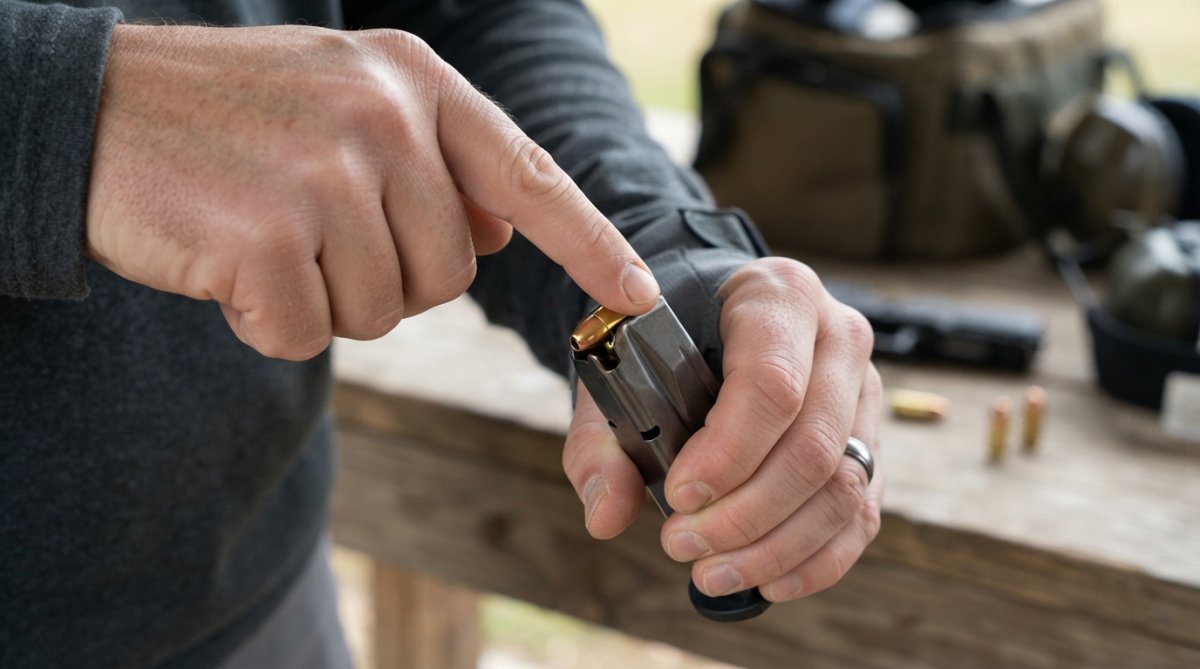
Position the cartridge so the rim is centered between the feed lips before applying downward pressure. Apply force straight down, not at an angle, keeping your thumb aligned with the magazine spine to minimize lateral stress. The cartridge should seat smoothly with moderate pressure; significant resistance indicates the magazine is damaged or the spring has weakened.
Using Speed Loaders to Reduce Hand Fatigue
Speed loaders eliminate hand fatigue that leads to aggressive loading. When tired, shooters apply more force and load at angles, damaging feed lips. A speed loader maintains consistent, controlled pressure throughout loading, protecting feed lip geometry regardless of magazine quantity. The BULLETPROOF SPEED LOADERS EZ-MAG applies even pressure across the cartridge stack, preventing lateral forces that damage feed lips. Using a speed loader can significantly reduce loading time compared to manual loading.
Identifying Cracked or Warped Feed Lips: Visual Inspection
Identifying feed lip damage early prevents malfunctions and extends magazine life. A systematic visual inspection takes less than a minute per magazine.
Signs of Structural Damage and Deformation
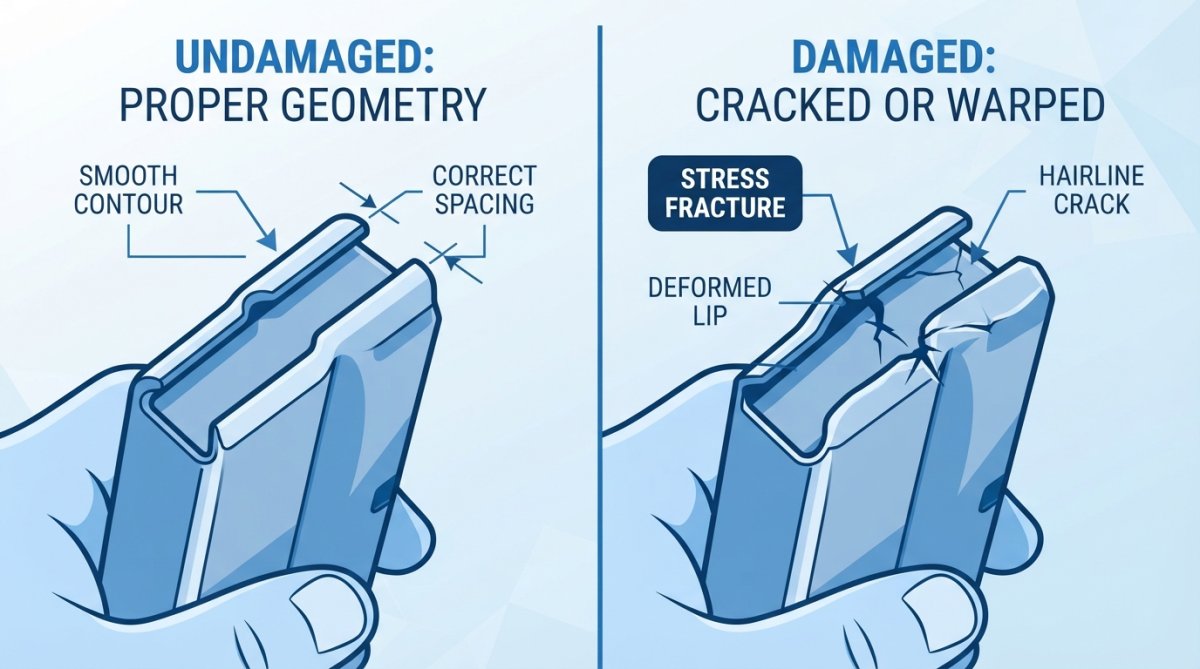
Examine feed lips under bright light for visible cracks in metal (appearing as dark lines perpendicular to the lips) or discoloration in polymer indicating compression or stretching. Check symmetry, feed lips should be parallel and equidistant from center. Even 1-2 millimeters of difference causes feeding malfunctions (nist.gov).
Flex the feed lips gently; they should move slightly and return immediately. Stiff lips that don't return completely indicate lost elasticity; excessive movement indicates compromised integrity. Inspect the junction where the feed lip connects to the magazine body, the most common failure point. Any damage here means the magazine should be retired.
Testing Feed Geometry for Reliability
Load five dummy rounds and observe how each seats. Cartridges should slide smoothly with minimal resistance. Cycle the magazine through your firearm's feed ramp and watch how cartridges are presented. They should be perfectly centered and angled to slide cleanly into the chamber.
Magazine Feed Lip Adjustment and Tolerance Specs
Some feed lip damage can be corrected through adjustment, but the tolerance window is narrow, typically 0.5-1.0 millimeters.
Understanding Load Capacity and Rim Engagement
The cartridge rim must engage both feed lips simultaneously. Spacing that's too wide allows the rim to slip; spacing too narrow causes binding. Feed lip angle determines cartridge presentation, even 2-3 degrees off causes nose dive or double feed. Load capacity and feed geometry are directly related; exceeding rated capacity permanently deforms feed lips.
When Adjustment Is Possible vs. When to Replace
Minor adjustments are possible if damage is recent and small. However, most feed lip damage cannot be reliably corrected. Polymer that has deformed cannot be reshaped without cracking. Metal with stress fractures should not be adjusted. If a magazine shows feeding malfunctions, replacement is the safer choice.
Preventative Maintenance Schedule and Environmental Factors
Preventative maintenance extends magazine life and prevents most feed lip failures.
Storage Best Practices to Prevent Polymer Creep
Store magazines unloaded when possible. Fully loaded magazines stored for months accelerate polymer creep and weaken springs. Temperature control matters significantly, polymer magazines stored above 80°F experience accelerated creep. Store magazines in cool, dry locations away from direct sunlight. Humidity promotes corrosion of metal feed lips and springs; apply protective oil if storing metal magazines in humid conditions. Unload magazines at least monthly to allow springs to relax and maintain consistent tension.
Inspection Intervals and Break-In Periods
Inspect magazines monthly if you shoot regularly, quarterly if occasionally. Replace any showing visible cracks, permanent deformation, or feeding issues. New magazines require a break-in period of 50-100 rounds where feed lips and springs are stressed to maximum tolerance. Retire magazines that develop feeding issues repeatedly.
| Maintenance Task | Frequency | Time Required | Priority |
|---|---|---|---|
| Visual inspection | Monthly (regular use) | 30 seconds per magazine | High |
| Function test with dummy rounds | Quarterly | 2-3 minutes per magazine | High |
| Unload stored magazines | Monthly | 5 minutes per magazine | Medium |
| Clean feed lips and springs | Semi-annually | 5 minutes per magazine | Medium |
| Replace worn springs | As needed (2-3 years) | 10 minutes per magazine | Medium |
Common Feeding Malfunctions and How to Diagnose Them
Feeding malfunctions have distinct signatures that identify root causes.
Double Feed, Stovepipe, and Nose Dive Issues
Double feed occurs when two cartridges chamber simultaneously, indicating feed lips are too wide or spring tension is weak. Stovepipe occurs when a fired case gets caught between the bolt carrier group and magazine, usually from weak spring tension rather than feed lip damage. Nose dive occurs when the cartridge tip strikes the feed ramp before the rim reaches the bolt, indicating feed lip geometry is wrong.
Mechanical Failure vs. Operator Error
Test a questionable magazine in multiple firearms. If it malfunctions in all of them, the magazine is damaged. If it only malfunctions in one firearm, the issue might be with that firearm's feed ramp. Operator error causes occasional malfunctions that disappear with improved technique; mechanical failure causes consistent, repeatable malfunctions regardless of technique.
When to Replace a Magazine and Repair Limitations
Replace a magazine if it shows visible cracks, permanent deformation, or consistent feeding malfunctions. The cost of replacement is minimal compared to malfunction risk. Repair attempts often cause more damage than they prevent. Keep backup magazines in rotation so no single magazine bears all wear.
BULLETPROOF SPEED LOADERS EZ-MAG helps prevent the damage that leads to magazine replacement by eliminating aggressive hand loading that accelerates feed lip wear. Speed loaders protect magazines while improving loading speed, directly extending magazine life and improving performance.
Magazine feed lips break because of material fatigue, impact damage, improper loading technique, and environmental stress. Prevention is far more effective than repair. A systematic maintenance schedule, proper storage, correct loading technique, and speed loaders that protect magazines from wear will extend magazine life and ensure reliable feeding. Add BULLETPROOF SPEED LOADERS EZ-MAG to your gear and eliminate the hand fatigue that leads to aggressive loading and accelerated feed lip wear.
Frequently Asked Questions
Q: What are the signs of damaged magazine feed lips?
A: Damaged feed lips show visible stress fractures, bending, or warping along the magazine spine where cartridges seat. Look for cracks in polymer magazines or discoloration in metal feed lips. Functionally, damaged feed lips cause feeding malfunctions like double feed, stovepipe, or nose dive failures. A magazine with compromised feed lip geometry will fail to properly engage the cartridge rim, resulting in unreliable cycling. Inspect visually under bright light and feel the feed lips carefully for any sharp edges or gaps.
Q: How do I prevent magazine feed lips from breaking during loading?
A: Use proper loading technique: apply steady, even pressure when seating cartridges rather than forcing them. Speed loaders reduce hand fatigue and distribute pressure more evenly than manual loading, which decreases stress on feed lips. Avoid dropping loaded magazines or striking the feed lips against hard surfaces. Store magazines unloaded or at reduced capacity to prevent spring tension from causing polymer creep and deformation. Rotate magazines regularly to avoid long-term stress fractures from sustained compression.
Q: Can you repair bent magazine feed lips?
A: Minor adjustments to feed lip geometry are possible for metal magazines using careful bending techniques, but this requires precision and risks permanent damage. Polymer magazines cannot be reliably repaired once feed lips crack or warp. Attempting DIY adjustment often introduces tolerance misalignment that causes worse feeding malfunctions. Most professionals recommend replacement rather than repair, especially for duty or competition use where reliability is critical. If feed lip damage is minor and the magazine is not essential, test it thoroughly before trusting it in a firearm.
Q: How long can magazines stay loaded before spring tension damages feed lips?
A: Magazines can stay loaded indefinitely without permanent damage if stored properly in cool, dry conditions. However, sustained spring tension over months or years can cause polymer creep and material fatigue, gradually weakening feed lip structural integrity. Metal magazines are less susceptible to this degradation. To minimize risk, rotate your magazine inventory regularly and store high-use magazines unloaded when not in active service. Inspect springs and feed lips every 6-12 months for signs of deformation or stress fractures, especially if magazines are stored under pressure or in extreme temperatures.
This article was written using GrandRanker
Frequently Asked Questions
Q: What are the signs of damaged magazine feed lips?
A: Damaged feed lips show visible stress fractures, bending, or warping along the magazine spine where cartridges seat. Look for cracks in polymer magazines or discoloration in metal feed lips. Functionally, damaged feed lips cause feeding malfunctions like double feed, stovepipe, or nose dive failures. A magazine with compromised feed lip geometry will fail to properly engage the cartridge rim, resulting in unreliable cycling. Inspect visually under bright light and feel the feed lips carefully for any sharp edges or gaps.
Q: How do I prevent magazine feed lips from breaking during loading?
A: Use proper loading technique: apply steady, even pressure when seating cartridges rather than forcing them. Speed loaders reduce hand fatigue and distribute pressure more evenly than manual loading, which decreases stress on feed lips. Avoid dropping loaded magazines or striking the feed lips against hard surfaces. Store magazines unloaded or at reduced capacity to prevent spring tension from causing polymer creep and deformation. Rotate magazines regularly to avoid long-term stress fractures from sustained compression.
Q: Can you repair bent magazine feed lips?
A: Minor adjustments to feed lip geometry are possible for metal magazines using careful bending techniques, but this requires precision and risks permanent damage. Polymer magazines cannot be reliably repaired once feed lips crack or warp. Attempting DIY adjustment often introduces tolerance misalignment that causes worse feeding malfunctions. Most professionals recommend replacement rather than repair, especially for duty or competition use where reliability is critical. If feed lip damage is minor and the magazine is not essential, test it thoroughly before trusting it in a firearm.
Q: How long can magazines stay loaded before spring tension damages feed lips?
A: Magazines can stay loaded indefinitely without permanent damage if stored properly in cool, dry conditions. However, sustained spring tension over months or years can cause polymer creep and material fatigue, gradually weakening feed lip structural integrity. Metal magazines are less susceptible to this degradation. To minimize risk, rotate your magazine inventory regularly and store high-use magazines unloaded when not in active service. Inspect springs and feed lips every 6-12 months for signs of deformation or stress fractures, especially if magazines are stored under pressure or in extreme temperatures.