 listicle
Buy Tactical Speed Loader Online: 2026 Guide
Table of Contents
- What Makes a Tactical Speed Loader Worth Buying
- How to Use a Speed Loader: Step-by-Step Technique
- Universal Magazine Loader vs. Caliber-Specific Models
- Reducing Thumb Strain and Hand Fatigue
- Bulletproof Speed Loader Models: Combat, Tactical, Delta, and Tier-1
- Durability, Material Construction, and Cold Weather Performance
- Troubleshooting Common Speed Loader Issues
- Conclusion
Last Updated: August 8, 2026
What Makes a Tactical Speed Loader Worth Buying
A tactical speed loader is a mechanical device that rapidly loads ammunition into magazines without using hand strength. If you shoot regularly or compete, you've experienced the fatigue and pain from manually loading dozens of rounds. A quality speed loader eliminates that problem.
The real value is consistency and durability. A well-engineered loader compresses magazine springs uniformly, prevents feed lip damage, and works reliably in cold weather and high-volume scenarios. Unlike budget alternatives that jam or strip feed lips, BULLETPROOF SPEED LOADERS delivers performance when it matters most.
Whether a speed loader is worth buying depends on shooting frequency. If you load magazines once monthly, you probably don't need one. If you're shooting 500+ rounds per session or training for competition, a tactical speed loader becomes essential gear. It protects your hands and equipment.
The market offers loaders from $20 budget options to premium models exceeding $200. Some work fine with 9mm but struggle with .40 caliber or .45 ACP high-capacity magazines. Others fail in cold weather or after months of heavy use. BULLETPROOF SPEED LOADERS models are engineered for durability and universal compatibility, which is why they're trusted by competitive shooters and law enforcement trainers.
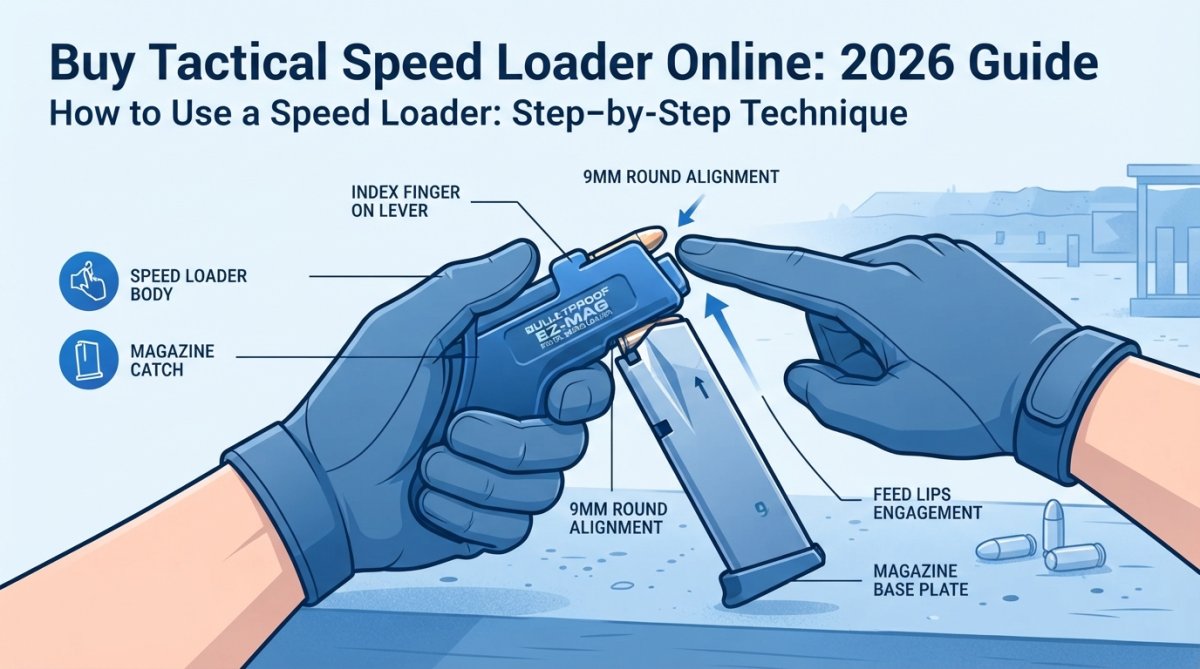
How to Use a Speed Loader: Step-by-Step Technique
Loading with a speed loader requires proper technique to avoid damaging magazines or slowing yourself down.
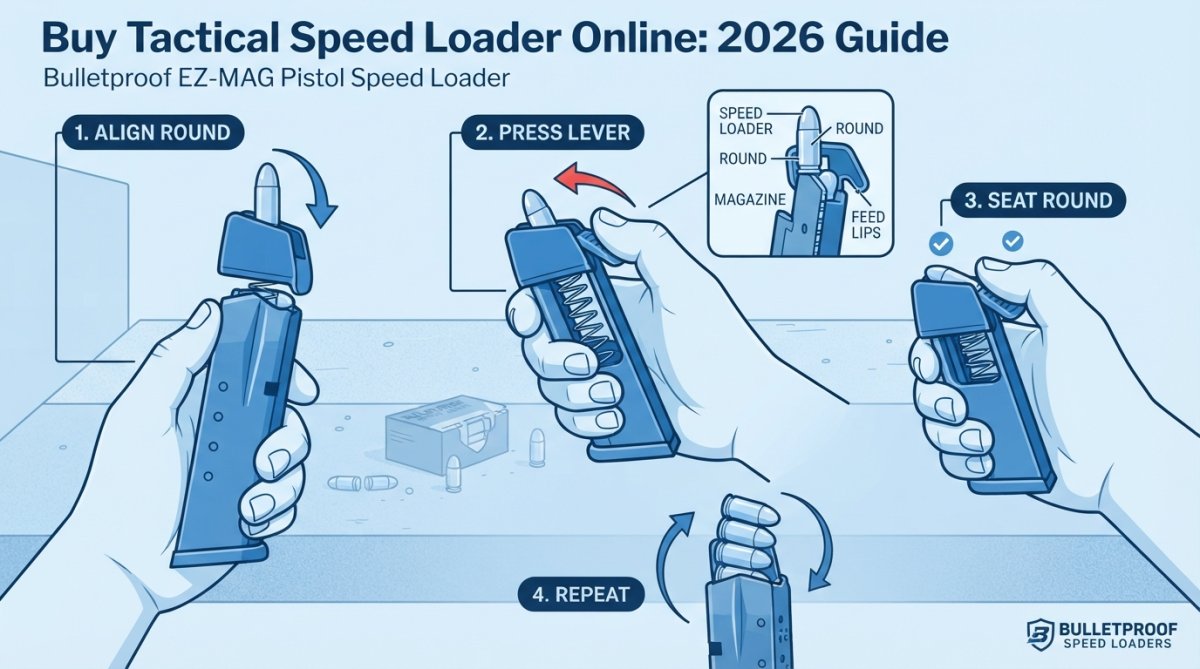
Step 1: Position the Magazine Place your magazine on a flat surface or hold it firmly in your non-dominant hand with feed lips facing upward. The magazine must be stable; any movement during loading causes misalignment.
Step 2: Load Ammunition into the Loader Insert individual rounds into the speed loader's chamber. For pistol loaders, rounds load one at a time. For rifle loaders, you can load multiple rounds in sequence. Ensure each round is fully seated before proceeding.
Step 3: Align the Loader with the Magazine Position the speed loader directly above the magazine's feed lips. Alignment must be precise; the loader's output should align exactly with the magazine's opening to prevent rounds from striking feed lips at an angle.
Step 4: Engage the Release Mechanism Most speed loaders use a lever, button, or knob to release rounds. Apply steady, controlled pressure. Do not jab or slam the release; smooth, deliberate motion prevents feed lip damage and ensures proper seating.
Step 5: Verify Proper Seating After each round loads, confirm it's fully seated in the magazine. Rounds should sit flush without binding. If a round doesn't seat smoothly, stop and check alignment.
Step 6: Repeat Until Magazine is Full Continue loading until the magazine reaches capacity. Most tactical shooters load to one round below maximum to reduce spring pressure and improve reliability.
Common mistakes include rushing the process, misaligning the loader, and applying excessive pressure. Speed comes naturally once you develop muscle memory; don't sacrifice technique for speed during initial sessions.
Universal Magazine Loader vs. Caliber-Specific Models
A universal loader works across multiple calibers and magazine types. A caliber-specific model is engineered for one cartridge or magazine platform.
Universal Loaders: Versatility and Flexibility
Universal loaders like the ETS C.A.M. Loader for Rifles ($25.45 - $34.99) work with AR-15, AR-10, AK-47, and dozens of other rifle platforms. For pistol shooters with multiple guns, a universal pistol loader from ETS works with 9mm and .40 caliber in both single and double-stack magazines.
The advantage is obvious: one loader handles multiple firearms. If you own three different rifles or shoot both 9mm and .40 ACP, a universal loader eliminates buying separate tools. The cost-per-gun is lower, and you carry less gear to the range.
The tradeoff is precision. Universal loaders achieve broad compatibility through adjustable mechanisms or flexible designs. They work adequately across calibers but are optimized for none of them.
Caliber-Specific Loaders: Optimized Performance
Caliber-specific loaders are engineered for one cartridge and magazine type. The Caldwell AR Mag Charger ($50.99 - $55.99) is built specifically for .223/5.56 in AR-15 magazines. It accepts 50 rounds directly from ammo boxes and loads five rounds per stroke with auto-advance. It's faster and more intuitive than a universal loader because every component is tuned for that specific cartridge and spring tension.
The disadvantage is clear: you need multiple loaders if you shoot different calibers.
Which Should You Choose?
If you shoot one primary caliber and occasionally dabble in others, a caliber-specific loader is the right choice. The performance advantage is tangible, especially in competitive environments. If you actively shoot three or more different calibers regularly, a universal loader makes financial and practical sense. You'll sacrifice some optimization but gain consistency and reduce gear weight.
At BULLETPROOF SPEED LOADERS, we recommend matching your loader to your primary firearm. If you're a 9mm competitor with occasional .40 ACP range sessions, buy a 9mm-optimized loader.
Reducing Thumb Strain and Hand Fatigue
Manual magazine loading causes thumb strain, blister formation, and repetitive stress injuries. A speed loader eliminates this entirely.
Loading by hand requires sustained pressure on the magazine's follower while pushing each round downward against spring tension. After 20 rounds, your thumb starts burning. After 100 rounds, your hand is fatigued. After 500 rounds across multiple magazines, you're experiencing genuine pain.
A speed loader transfers that work to a mechanical system. Instead of fighting spring tension with finger strength, you use a lever or button that applies force through mechanical advantage. The ETS C.A.M. Loader is specifically marketed as preventing "magthumb," the colloquial term for thumb pain from manual loading.
For law enforcement and military personnel, this matters operationally. Officers who spend hours at the range during qualification can't afford hand fatigue affecting shooting performance. A speed loader ensures they're training with fresh hands.
Small-handed shooters and those with limited grip strength gain the most from speed loaders. The device does the work your hands can't do alone, democratizing high-volume shooting.
Bulletproof Speed Loader Models: Combat, Tactical, Delta, and Tier-1
BULLETPROOF SPEED LOADERS offers four distinct models engineered for different use cases and budgets.
BULLETPROOF COMBAT Model ($69.95)
The COMBAT model is the entry point into BULLETPROOF SPEED LOADERS' lineup. It's built from durable polymer with a straightforward design optimized for everyday range use. This model works well for shooters who value affordability without sacrificing reliability.
BULLETPROOF TACTICAL Model ($89.95)

The TACTICAL model combines polymer construction with anodized aluminum components on the lever, mag release button, and catch. This hybrid approach delivers better longevity than the COMBAT while keeping costs reasonable.
BULLETPROOF DELTA Model ($179.95)
The DELTA is machined from solid 6160 aircraft-grade aluminum with jet-black polymer lever, button, and catch. Aircraft aluminum is significantly more durable than standard aluminum and resists wear from repeated use.
This model is built for professionals and serious competitors.
BULLETPROOF TIER-1 Model ($199.95)
The TIER-1 is engineered for AR-15 platforms and designed for operators who demand the highest performance. It combines premium materials with specialized design for rifle magazine loading. This model is purpose-built for competitive rifle shooters, tactical trainers, and military/law enforcement professionals.
Choosing Between Models
Start with the COMBAT or TACTICAL if you're new to speed loaders. Both are reliable and affordable. Upgrade to the DELTA if you shoot competitively or train regularly. Choose the TIER-1 only if you're an AR-15 specialist who demands maximum performance.
Durability, Material Construction, and Cold Weather Performance
Material matters. A speed loader made from cheap polymer will crack or warp after months of use. One built from aircraft aluminum will outlast your firearms.
Polymer Construction
Budget speed loaders use standard polymer that degrades under UV exposure, temperature extremes, and mechanical stress. A polymer loader left in a hot car can warp. Repeated use in cold weather can make it brittle.
The BULLETPROOF COMBAT model uses engineered polymer specifically chosen for thermal stability and impact resistance. It resists warping and maintains structural integrity through temperature swings from freezing to 120°F.
Aluminum Construction
Aircraft-grade aluminum (6160) is the gold standard for tactical gear. It resists corrosion, handles temperature extremes, and withstands repeated impact without degrading. The BULLETPROOF DELTA and TIER-1 models use 6160 aluminum for their primary structures. This material choice explains the higher price, but it delivers decades of reliable service.

Cold Weather Performance
Speed loaders must function in cold weather. Polymer can become brittle in extreme cold, and metal components can develop condensation when transitioning from cold outdoor conditions to warm indoor spaces.
The BULLETPROOF TACTICAL and DELTA models are engineered for cold weather reliability. Shooters report reliable performance from these models in sub-zero conditions. Standard polymer loaders sometimes fail in extreme cold when the material becomes inflexible and the release mechanism sticks. If you shoot in winter climates regularly, invest in a TACTICAL or DELTA model.
Troubleshooting Common Speed Loader Issues
Loader Jams or Binds
If the loader resists when you press the release button, the problem is usually misalignment. Reposition the loader directly above the magazine and try again. If jamming persists with proper alignment, the magazine might be damaged. Check the feed lips for dents or bending. A bent feed lip will catch on the loader's output every time. Replace the magazine if damaged.
Rounds Don't Seat Properly
Rounds that don't fully seat indicate either misalignment or a magazine problem. Ensure the loader is positioned correctly and the magazine's spring isn't damaged. Check that rounds are oriented correctly with the bullet tip facing upward. If a specific round won't seat, try different ammunition to isolate the problem.
Lever or Release Button Sticks
Sticky release mechanisms usually indicate dirt or corrosion. Clean the loader with a soft brush and dry cloth. If stickiness persists, apply a small amount of silicone lubricant to moving parts. Avoid oil-based lubricants, which attract dirt. For polymer loaders, stickiness sometimes results from thermal expansion in extreme temperatures.
Feed Lip Damage
If your magazine's feed lips are damaged after using a speed loader, the problem is almost always forcing rounds with excessive pressure. Speed loaders should load smoothly. If you're fighting resistance, stop and check alignment. Never force a round into a magazine.
Cold Weather Failures
If your loader fails in cold weather, you're likely using a budget polymer model. Upgrade to a TACTICAL or DELTA model engineered for temperature extremes.
Buying a tactical speed loader means choosing between models based on your shooting frequency, primary caliber, and durability requirements. BULLETPROOF SPEED LOADERS offers options across multiple price points, all engineered for reliability and tactical performance. Whether you're a recreational shooter seeking hand fatigue relief or a competitive athlete demanding maximum speed, a quality speed loader transforms your range experience. The investment pays dividends through reduced hand strain, faster loading, and equipment that won't fail when it matters most. Start with the COMBAT or TACTICAL model, and upgrade to the DELTA or TIER-1 as your shooting demands increase.
Caldwell shooting equipment specifications
ETS Group universal magazine loader product documentation
Podavach rifle speed loader engineering specifications
Frequently Asked Questions
How do I choose the right speed loader for my magazine type?
Match the speed loader to your magazine caliber and platform. Pistol loaders work with 9mm, .40 caliber, and .45 ACP magazines in single or double-stack configurations. Rifle loaders handle AR-15, AK, or other platforms. The Bulletproof TACTICAL Model works across common pistol calibers, while the DELTA and TIER-1 models serve specialized rifle applications. Check your magazine's feed lips and capacity before purchasing to ensure compatibility.
Will a universal magazine loader damage my magazine feed lips?
Quality speed loaders, including Bulletproof models, are engineered to avoid feed lip damage. They distribute loading pressure evenly across the magazine body rather than concentrating force on the feed lips. However, using worn-out loaders or forcing rounds at incorrect angles can cause damage. Always position rounds straight into the magazine and avoid twisting or angling the loader during the loading process.
Can I use a universal speed loader for both pistol and rifle magazines?
Most universal loaders are caliber-specific, not platform-agnostic. A universal pistol loader works across 9mm and .40 caliber magazines but not rifle platforms. Similarly, universal rifle loaders handle multiple rifle calibers and platforms (AR-15, AK, etc.) but not pistol magazines. The Bulletproof Speed Loader TACTICAL Model is optimized for pistol applications, while the DELTA and TIER-1 models serve rifle shooters.
Are tactical speed loaders worth the investment compared to manual loading?
Yes, for high-volume shooting and competitive matches. Speed loaders reduce loading time by 50-70% and significantly decrease thumb strain and hand fatigue. Law enforcement and competitive shooters report faster range sessions and less repetitive stress injury risk. For casual shooters firing 100-200 rounds per session, the benefit is moderate. For those shooting 500+ rounds or competing regularly, the investment pays for itself in comfort and efficiency within months.
This article was written using GrandRanker