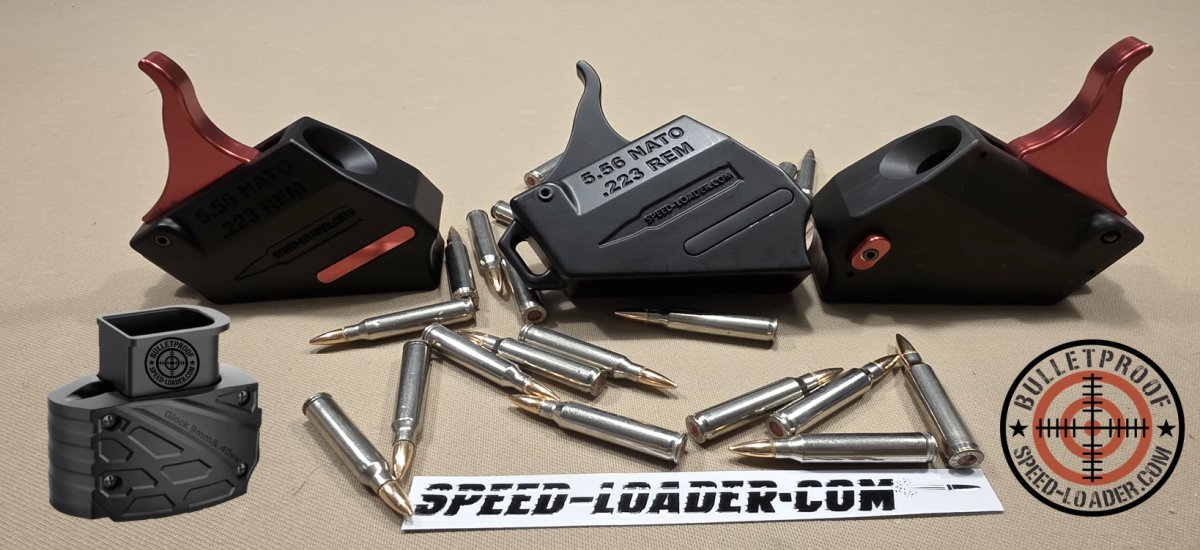
 listicle
Reliable Magazine Speed Loader Reviews: Top Picks for 2026
Table of Contents
- What Is a Magazine Speed Loader and Why It Matters at the Range
- How We Evaluated These Reliable Magazine Speed Loader Reviews
- Bulletproof Speed Loaders Model Comparison: COMBAT, TACTICAL, and DELTA
- Universal vs. Caliber-Specific Magazine Speed Loaders: Which Should You Buy
- How to Use a Magazine Speed Loader Correctly Every Time
- Speed Loader Benefits for Arthritis and Hand Injury Recovery
- Long-Term Wear, Cold Weather Performance, and Aftermarket Baseplate Compatibility
- Reliable Magazine Speed Loader Reviews: Final Verdict and Who Should Buy What
Last Updated: August 4, 2026
Finding reliable magazine speed loader reviews online is harder than it should be. Most guides skim the surface, compare products on looks alone, and skip the details that matter: feed lip safety, cold weather grip, compatibility with aftermarket baseplates, and durability after sustained use. BULLETPROOF SPEED LOADERS has built its entire product line around those details, and this guide breaks down every factor you need before you buy.
The real differentiators are mechanical advantage, material durability under sustained spring tension, and ergonomics for users with limited hand strength. Below, we'll show you exactly how the COMBAT, TACTICAL, Tier-1 models stack up, when a universal loader makes sense versus a caliber-specific one, and which option is right for your use case.

Bulletproof Speed-Loader COMBAT Model
Quick Picks:
- Best Overall for Range Days: COMBAT Model ($69.95) - durable polymer, zero-fuss operation
- Best for Competitive Shooters: TACTICAL Model ($89.95) - anodized aluminum lever for sustained high-volume use
- Best for Professionals and Heavy Use: Tier-1 Model ($199.95) - aircraft-grade aluminum, built to outlast everything else
What Is a Magazine Speed Loader and Why It Matters at the Range
A magazine speed loader is a mechanical device that presses rounds past the feed lips and follower of a pistol or rifle magazine, eliminating the thumb strain that builds up after loading dozens of rounds by hand. Loading a full 17-round 9mm magazine by hand requires overcoming spring tension that increases with every round. By round 12 or 13, most shooters are fighting the spring at an awkward angle, exactly when feed lip damage happens. A quality speed loader redirects that force through a mechanical lever, protecting both you and the magazine.
The practical payoff is significant: faster reloads mean more rounds downrange in the same session. For competitive shooters running drills, that efficiency compounds across every stage. For law enforcement running high-volume training, it's the difference between a productive session and a sore hand that limits performance for days afterward.
According to ATF firearms commerce and industry data, pistol handguns consistently represent the largest category of firearms manufactured and sold in the United States, which means demand for pistol magazine accessories continues to grow.
How We Evaluated These Reliable Magazine Speed Loader Reviews
Criteria: Durability, Compatibility, Ergonomics, and Loading Speed
Producing honest reliable magazine speed loader reviews requires a structured evaluation framework. These four criteria drove every assessment in this guide.
Durability examines material construction under sustained use. Polymer components flex under repeated loading cycles; aluminum does not. Compatibility covers both caliber range and magazine-specific fit. Ergonomics addresses grip comfort, lever positioning, and accessibility for users with arthritis or reduced hand strength. Loading speed measures how quickly a shooter can go from loose rounds to a fully loaded magazine, including the break-in period and long-term consistency as components wear.
Criterion | What We Tested | Why It Matters |
|---|---|---|
Durability | Material under 500+ loading cycles | Predicts long-term value |
Compatibility | Standard and aftermarket baseplates | Avoids mid-session failures |
Ergonomics | One-handed operation, grip comfort | Critical for arthritis users |
Loading Speed | Rounds per minute, break-in period | Core performance metric |
Function at low temperatures | Relevant for outdoor ranges |
Bulletproof Speed Loaders Model Comparison: COMBAT, TACTICAL, and DELTA
Three models cover the full range of shooter needs, from recreational range days to professional tactical training. The differences between them reflect genuine material and mechanical distinctions that matter under sustained use.
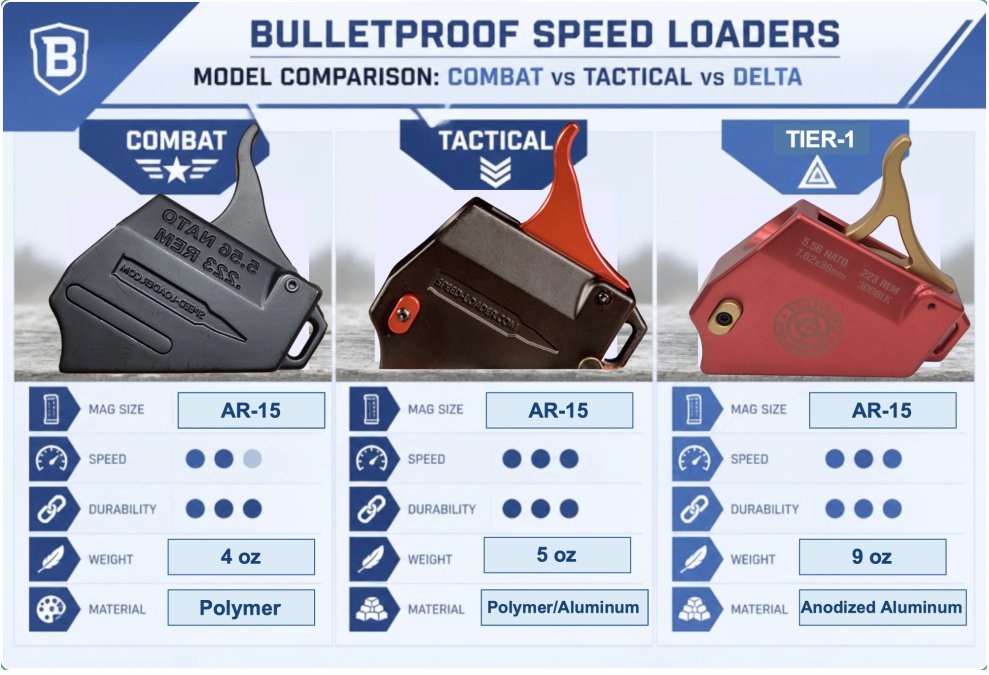
Close-up of three AR-15 magazine speed loaders arranged side by side on a weathered wooden range bench, showing polymer and anodized aluminum construction details under natural daylight
COMBAT Model ($69.95): Best Entry Point for Range Days
The COMBAT Model is built entirely from durable polymer, which keeps the price accessible without sacrificing the mechanical advantage that makes a speed loader worth owning. This is the right choice for recreational firearm enthusiasts who shoot a few hundred rounds per month and want a reliable tool that handles standard pistol magazines without fuss.
Pros:
- Lightweight and compact for range bag portability
- Durable polymer handles standard range conditions
- Lowest entry price at $69.95
Cons:
- Polymer lever generates slightly more friction than aluminum alternatives under high-volume use
- Less suited for extended professional training sessions
TACTICAL Model ($89.95): Anodized Aluminum Lever for Serious Shooters
The TACTICAL Model upgrades the lever, mag release button, and catch to anodized aluminum while retaining the durable polymer body. The aluminum lever transfers force more precisely, reduces friction at the contact point, and holds its geometry under sustained loading cycles where a polymer lever may wear.

Bulletproof Speed-Loader TACTICAL Model
Competitive shooters running high round counts will notice the difference immediately. At $89.95, the TACTICAL Model sits at a sensible price point for anyone who shoots more than once a week or participates in USPSA, IDPA, or similar competitive formats.
Pros:
- Anodized aluminum lever reduces friction and increases precision
- Handles sustained high-volume loading without degradation
- Better grip comfort in varied conditions
Cons:
- Slightly heavier than the all-polymer COMBAT Model
- Aluminum components require occasional inspection for anodizing wear under very heavy use
Tier-1 Model ($199.95): Aircraft-Grade Aluminum for Heavy-Use Professionals
The TIER-1 Model is machined from a solid block of 6160 aircraft-grade aluminum, with a lightweight durable polymer lever, button, and catch. For law enforcement, military, and security professionals running thousands of rounds through training cycles, the TIER-1's aluminum body is the right call. Aircraft-grade aluminum does not flex, does not fatigue, and does not degrade in cold weather the way polymer might.

Bulletproof Speed-Loader DELTA Model
Pros:
- Aircraft-grade 6160 aluminum body for maximum durability
- Performs consistently across temperature ranges including cold weather
- Built for professional high-volume training environments
Cons:
- Highest price point in the lineup
- Heavier than polymer alternatives, though still compact
Universal vs. Caliber-Specific Magazine Speed Loaders: Which Should You Buy
Universal magazine speed loaders claim to work across multiple calibers and magazine types. Caliber-specific loaders are engineered for a defined range of magazines and optimized for that fit. For shooters running a single caliber, a well-designed caliber-specific loader will always outperform a universal one on loading speed and feed lip safety.
The case for universal loaders is real when you own multiple calibers or share equipment at a range. The tradeoff is that universal loaders often struggle with high-capacity magazines where spring tension is highest.
The BULLETPROOF SPEED LOADERS lineup is engineered for pistol and AR-15 magazine compatibility across the most common handgun and AR-15 calibers, with the mechanical advantage to handle stiff springs in double-stack full-size frame magazines.
How to Use a Magazine Speed Loader Correctly Every Time
Step-by-Step Loading Technique for Double-Stack 9mm Magazines
Using a speed loader correctly takes about five minutes to learn and pays dividends every range session.
- Hold the magazine firmly in your non-dominant hand with the feed lips facing up and the spine resting against your palm.
- Place the first round into the loader's channel with the bullet facing forward, matching the magazine's feed direction.
- Position the loader over the magazine so the round sits directly above the follower.
- Press the lever with a smooth, controlled motion. Avoid jerking, which can cause the round to seat at an angle.
- Confirm seating before loading the next round.
- Continue loading at a steady pace. Speed comes naturally after the first few magazines.
- Check capacity against the magazine's rated capacity. Overloading damages the spring and follower.
Shooter's hands demonstrating proper grip technique while pressing a 9mm round into a double-stack pistol magazine using a speed loader on a black rubber range mat under indoor range lighting
Common Mistakes That Damage Feed Lips and How to Avoid Them
The most common mistake is forcing the loader when a round doesn't seat cleanly. Feed lips are precision-machined; lateral force deforms them. If a round resists, remove it and re-seat the loader rather than applying more pressure at an angle. A close second is using a loader that doesn't match the magazine's caliber or width.
Speed Loader Benefits for Arthritis and Hand Injury Recovery
For shooters managing rheumatoid arthritis, osteoarthritis, or recovering from hand surgeries, loading a magazine by hand can be genuinely painful and, in some cases, medically inadvisable. A speed loader shifts that force to a lever mechanism, which distributes the load across the palm and larger muscle groups rather than concentrating it on the fingertips and thumb. Many shooters with arthritis report being able to complete full range sessions they had previously cut short due to hand pain.
According to CDC data on arthritis prevalence among US adults, arthritis affects a substantial portion of American adults, and the firearm-owning population is not exempt. For users with small hands, the ergonomics of the loader matter as much as the mechanical advantage. The COMBAT and TACTICAL models are designed for one-handed operation with a grip that accommodates a range of hand sizes.
Post-surgical recovery is another use case worth addressing. Hand and wrist surgeries often restrict the pinch and grip strength needed for manual magazine loading for weeks or months. A speed loader can extend the period during which a recovering shooter can train, maintaining skills during rehabilitation.
Long-Term Wear, Cold Weather Performance, and Aftermarket Baseplate Compatibility
Polymer loaders develop micro-abrasions at the contact points over hundreds of loading cycles. This is normal and manageable with the COMBAT Model. Under very high volume, polymer wear at the lever pivot point can introduce slop in the mechanism. The anodized aluminum components in the TACTICAL Model resist this wear pattern, and the aircraft-grade aluminum body of the TEIR-1 Model essentially eliminates it.
Cold weather performance is a legitimate concern for outdoor range shooters in northern states and for law enforcement operating in cold environments. Polymer becomes more brittle below freezing, which increases the risk of cracking under impact or under the stress of a stiff spring. The DELTA Model's aluminum construction is unaffected by cold temperature cycling, making it the right choice for year-round outdoor professional use.
Aftermarket baseplate compatibility is a gap most speed loader reviews ignore. Many competitive shooters run extended baseplates from aftermarket manufacturers to increase magazine capacity. The BULLETPROOF SPEED LOADERS lineup is designed to function with the magazine held in a neutral grip, which accommodates standard and extended baseplates without modification.
Reliable Magazine Speed Loader Reviews: Final Verdict and Who Should Buy What
The right speed loader is not the most expensive one. It's the one that matches your use pattern, your physical needs, and your magazine inventory.
For recreational shooters and concealed carry holders who visit the range weekly, the COMBAT Model at $69.95 is the correct choice. Competitive shooters running USPSA, IDPA, or similar formats should move to the TACTICAL Model at $89.95. Law enforcement, military, and security professionals who run high round counts in training, operate in cold weather environments, or need gear that matches the durability standard of their other equipment should specify the DELTA Model at $179.95.
Model | Price | Body Material | Lever Material | Best For |
|---|---|---|---|---|
COMBAT | $69.95 | Polymer | Polymer | Range days, concealed carry holders |
TACTICAL | $89.95 | Polymer | Anodized aluminum | Competitive shooters, frequent range use |
TEIR-1 | $199.95 | Aircraft-grade aluminum | Polymer | Law enforcement, cold weather, heavy duty |
The decision isn't just about price. It's about matching the loader's material spec to your use environment. A polymer loader in a professional duty context will fail before its time. An aircraft-grade aluminum loader for occasional recreational use is overkill. BULLETPROOF SPEED LOADERS built three distinct models precisely because those use cases are genuinely different.
Loading magazines by hand is a limitation, not a requirement. Thumb strain, feed lip damage, and cut-short range sessions are problems a quality speed loader solves permanently. BULLETPROOF SPEED LOADERS offers three models built for distinct use cases, from the durable polymer COMBAT for everyday range work to the aircraft-grade aluminum TIER-1 for professional high-volume training. Add the model that matches your use pattern to your loadout and get back to focusing on what actually matters downrange.
Frequently Asked Questions
Do magazine speed loaders damage feed lips or harm the magazine?
A quality magazine speed loader is designed to apply controlled pressure against the follower or the round itself, not the feed lips. Cheaper loaders with poor tolerances can slip and score the feed lips over time. Loaders built with precise fitment and smooth polymer or anodized aluminum contact surfaces reduce that risk significantly. Always verify that the loader is seated squarely on the magazine before pressing each round to avoid lateral stress on the lips.
Is a magazine speed loader worth buying for regular range days?
For anyone shooting more than two or three magazines per session, a reliable magazine speed loader pays for itself quickly in reduced thumb strain and faster reloading efficiency. Stiff springs on new or high-capacity double-stack magazines make hand-loading genuinely painful after 50 to 100 rounds. A speed loader transfers that mechanical load away from your thumb, letting you focus on technique rather than fighting spring tension. Competitive shooters and law enforcement trainers especially benefit from the consistent loading speed.
What is the best magazine speed loader for small hands and 9mm pistols?
Compact polymer speed loaders with a low-profile push-to-load design work best for shooters with smaller hands. The key is a loader that does not require a wide palm grip to generate enough mechanical advantage against the spring. Models that use the magazine and down force, like the Bulletproof EZ-MAG pistol loader, reduce the grip force needed so hand size becomes less of a limiting factor. Verify caliber compatibility before purchasing, since 9mm, .40 cal single-stack and double-stack magazines may have different follower geometries.
How do speed loader benefits for arthritis compare to loading by hand?
Hand-loading a stiff magazine requires repeated pinching and downward thumb pressure, which directly aggravates the joints most affected by arthritis, specifically the carpometacarpal joint at the base of the thumb. A speed loader redirects that force through a lever or push-button mechanism, so the hand squeezes rather than pinches, spreading load across a larger surface. Shooters with arthritis or recovering from hand injuries consistently report being able to complete full range sessions that would otherwise be cut short by pain.
This article was written using GrandRanker