 ultimate-guide
Essential Gear for Concealed Carry Permit Holders (2026)
Table of Contents
- The Essential Gear for Concealed Carry Permit Holders: A Full Breakdown
- The Best Concealed Carry Holster for Beginners
- Choosing the Right Gun Belt for Concealed Carry
- How to Dress for Concealed Carry Without Printing
- Medical and Trauma Gear Every Permit Holder Should Carry
- Firearm Accessories, Reloading Gear, and EDC Essentials
- Safety, Training, and Psychological Preparedness for Concealed Carry
- Concealed Carry Insurance Options: What Permit Holders Need to Know
Last Updated: August 2, 2026
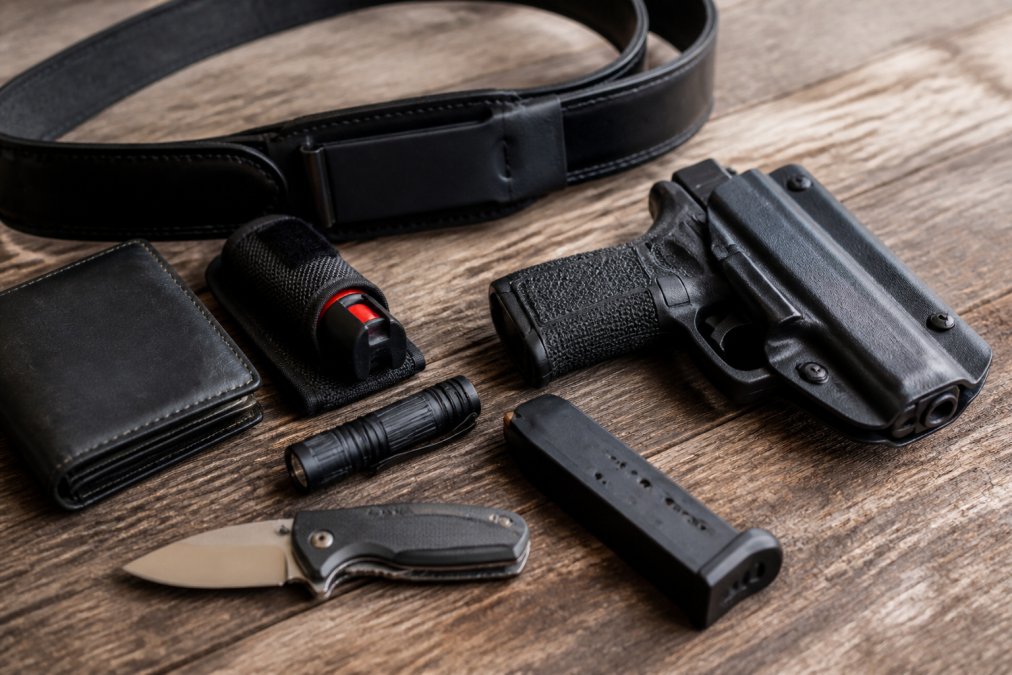
Getting your concealed carry permit is the first step. Knowing the essential gear for concealed carry permit holders is what actually keeps you prepared, legal, and safe every day after that. This guide from BULLETPROOF SPEED LOADERS breaks down every piece of equipment you need, from the holster on your hip to the medical kit in your pocket, and explains why each item earns its place in your loadout.
Most new permit holders focus entirely on the firearm and ignore the support system around it. A quality pistol inside a cheap holster on a flimsy belt is a liability, not an asset. Below, we cover every category of essential carry gear, how to match it to your body type and lifestyle, and where new carriers consistently make expensive mistakes.
The Essential Gear for Concealed Carry Permit Holders: A Full Breakdown
Concealed carry is a system, not a single item. The essential gear spans five core categories: the holster, the gun belt, clothing and concealment, medical trauma gear, and firearm accessories including reloading tools. Each category affects the others. A holster that doesn't fit your belt will shift during the day. Clothing that doesn't account for your carry method will cause printing. Skipping a tourniquet because it feels excessive is the kind of decision people regret once.
Here is a quick-reference summary of the core gear categories, what each one does, and who it matters most for:
| Gear Category | Primary Function | Who Needs It Most |
|---|---|---|
| IWB/OWB Holster | Retention and concealment of the pistol | Every permit holder |
| Dedicated Gun Belt | Supports holster weight without sagging | Anyone carrying IWB or OWB |
| Concealment Clothing | Prevents printing, allows fast draw stroke | Daily carriers |
| Trauma/Medical Kit | Stops bleeding in emergencies | All permit holders |
| Magazine Pouch + Speed Loader | Fast reload under stress | Competitive shooters, LEO, daily carriers |
| Eye and Ear Protection | Range safety during training | Anyone training regularly |
Gear that fails during daily use will fail when it matters most. Buy once, buy right.
The Best Concealed Carry Holster for Beginners
The best concealed carry holster for beginners is a quality inside-the-waistband holster with adjustable retention, full trigger guard coverage, and a reinforced mouth that stays open during reholstering. Those three features are non-negotiable.
A common mistake beginners make is buying a universal or one-size-fits-many holster. These almost always fail on retention. Your firearm should click into place and require deliberate effort to draw.
IWB vs. OWB: Which Carry Method Fits Your Lifestyle
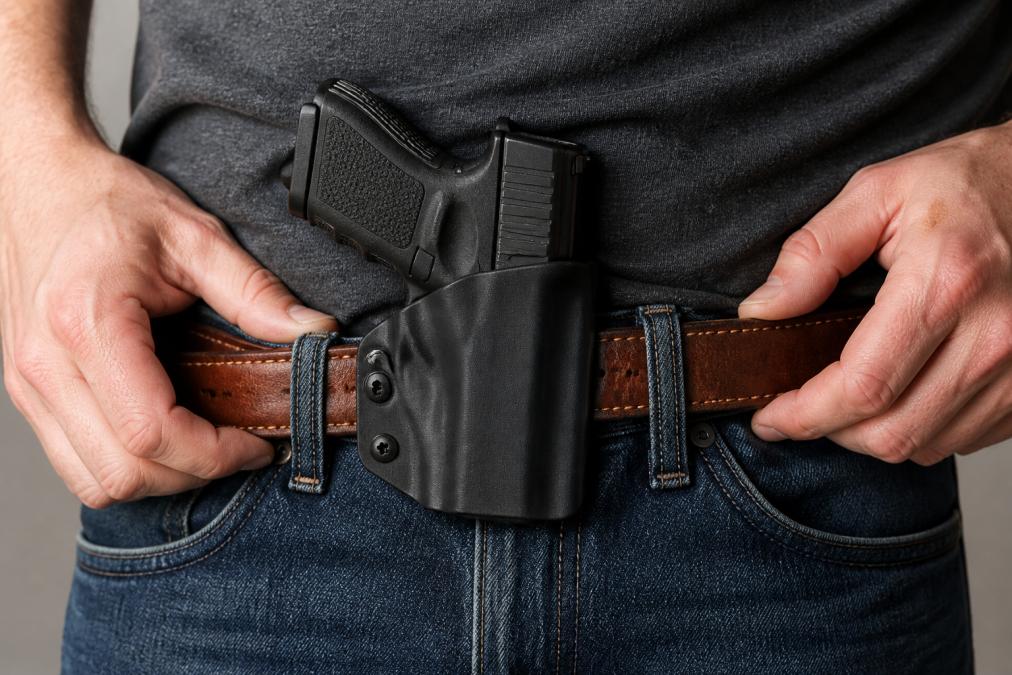
Inside-the-waistband carry places the holster between your pants and your body, offering better concealment at the cost of some comfort. Outside-the-waistband carry sits on the exterior of the belt, which is more comfortable and allows a faster draw stroke, but requires a cover garment to conceal the firearm.
For daily civilian carry, IWB is the standard starting point. For range work, competition, or open carry in states that permit it, OWB is often preferred.
Appendix Carry: Pros, Cons, and Who It Works For
Appendix carry positions the holster at roughly the 1 o'clock position, in front of the hip. It offers fast access, excellent concealment under a t-shirt, and keeps the firearm in your line of sight. The drawback: the muzzle points toward the femoral artery during the draw. This method demands a quality holster with full trigger guard coverage and consistent training.
Appendix carry works best for slender to athletic builds. Carriers with a larger midsection often find it uncomfortable for extended wear.
Choosing the Right Gun Belt for Concealed Carry
A standard dress belt or casual belt will flex, sag, and shift under the weight of a loaded pistol and holster, making the entire carry system unstable and uncomfortable. A dedicated gun belt is stiff enough to hold the holster in a fixed position all day without requiring constant adjustment.
The key spec to look for is rigidity. Leather gun belts with a reinforced inner core and a sturdy buckle, or purpose-built nylon tactical belts with a polymer stiffener, are the two most common options. Belt width matters: your holster's belt loops or clips are designed for a specific width, typically 1.5 inches. Match the widths exactly.
How to Dress for Concealed Carry Without Printing
How to dress for concealed carry without printing comes down to one principle: break up the outline of the firearm. Printing occurs when the shape of the pistol is visible through clothing, most often at the grip.
Practical adjustments that work:
- Wear fabrics with a slight texture or pattern, which scatter the eye and reduce visible outlines
- Size up one size in shirts worn over an IWB holster
- Choose darker colors for the cover garment when possible
- Avoid synthetic stretch fabrics directly over the carry position
The goal is to look completely unremarkable.
Body Type Specifics: Adjusting Your Loadout for Your Frame
Body type directly affects which carry position and holster style works best.
- Slender builds: Appendix carry and 3 o'clock IWB both work well. Slim-profile holsters reduce printing significantly.
- Athletic/muscular builds: Strong-side IWB at 3-4 o'clock is generally most comfortable.
- Larger midsection: Appendix carry is typically uncomfortable. Consider 4-5 o'clock IWB, kidney carry, or a quality OWB holster with a longer cover garment.
- Shorter torso: Compact pistols conceal significantly better than full-size. A higher ride height on the holster keeps the grip from digging into the ribs when seated.
You may need to try two or three carry positions before finding the one that's genuinely comfortable for a full day. That's normal.
Medical and Trauma Gear Every Permit Holder Should Carry
A permit holder who carries a firearm for self-defense but carries no medical gear has thought only halfway through the problem. Gunshot wounds require immediate intervention. Severe arterial bleeding is fatal in under five minutes, and EMS arrival in many areas can exceed ten minutes.
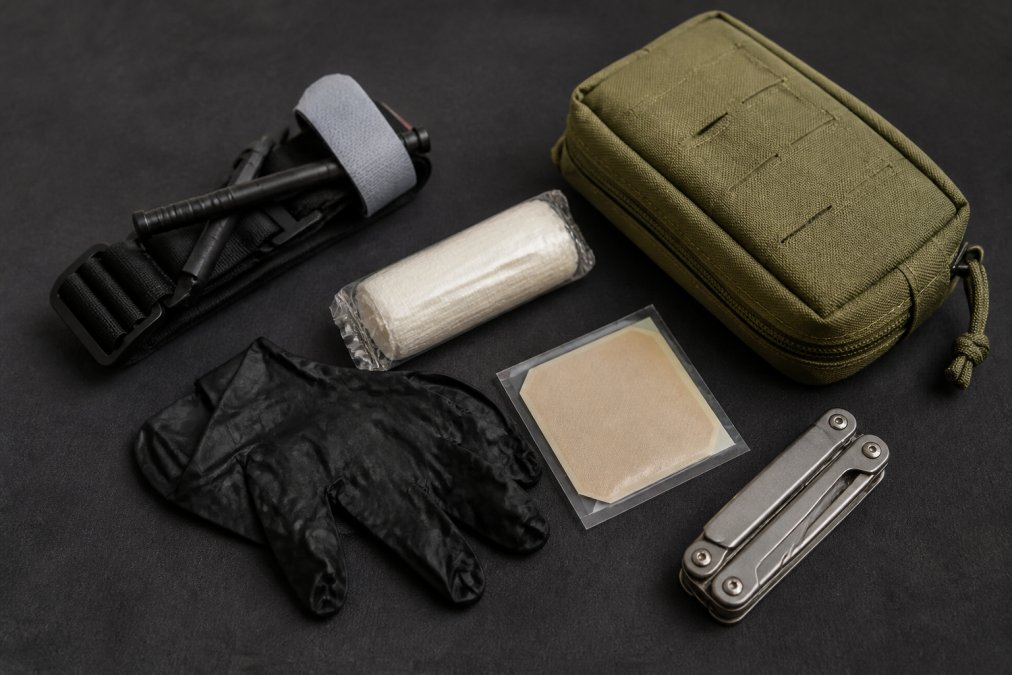
The minimum medical kit for a daily carrier includes:
- A tourniquet, specifically a CAT or SOFTT-W, both proven in field use
- Compressed gauze or hemostatic gauze for wound packing
- A chest seal for penetrating torso wounds
- Nitrile gloves
- A compact pouch to keep everything accessible
According to STOP THE BLEED campaign resources from the American College of Surgeons, bystander hemorrhage control training significantly improves survival outcomes in penetrating trauma. Carrying the gear is only half the equation. Know how to use it.
Firearm Accessories, Reloading Gear, and EDC Essentials
The core firearm accessories that belong in a daily carry loadout are a magazine pouch, a quality speed loader for range and training use, and a reliable multi-tool. Secondary items, including weapon lights and red dot sights, are worth adding as your training progresses, but they also increase the profile of the pistol and may complicate concealment.
For reloading efficiency during training and competition, BULLETPROOF SPEED LOADERS' EZ-MAG pistol speed loader is built specifically for this. It handles standard 9mm magazines effectively for shooters of all hand sizes, including those with smaller hands who find traditional thumb-intensive loading painful over extended range sessions. The EZ-MAG is compact enough to fit in a range bag without taking up meaningful space.
A magazine pouch on the support-side hip is the standard EDC configuration for carriers who want a reload option. Kydex single-magazine pouches offer the best retention and lowest profile.
Budget-Tier vs. Premium Gear: What Actually Matters
Spend more on:
- The holster. Cheap holsters have inconsistent retention and poor trigger guard coverage. This is a safety item, not a commodity.
- The gun belt. A $30 belt will fail. A purpose-built belt at a higher price point lasts years.
- Medical gear. A certified CAT tourniquet costs more than a knockoff for a reason.
Budget options are acceptable for:
- Magazine pouches for range use
- Eye and ear protection for recreational shooting
- Multi-tools and EDC accessories
If the item is in the direct path between you and a threat, or between you and bleeding out, do not cut corners on it.
Safety, Training, and Psychological Preparedness for Concealed Carry
Safety protocols and training are not a one-time checkbox. Carrying a firearm daily changes your legal and ethical responsibilities in ways that a permit class covers only at the surface level. The USCCA's concealed carry training resources and similar organizations offer ongoing coursework that goes well beyond the minimum state requirements.
Carrying a firearm means pre-deciding, before any incident occurs, how you will respond to specific threat scenarios. This is called a pre-commitment strategy, and it is standard in professional defensive training. Carriers who have not worked through these mental scenarios are more likely to hesitate or overreact under stress.
Practical training priorities for new permit holders:
- Fundamentals of marksmanship at the range, minimum monthly
- Draw stroke practice from your actual carry holster
- Force-on-force or scenario-based training at least once per year
- Dry-fire practice at home with a verified-unloaded firearm
Maintenance and Hygiene: Keeping Your Carry Gear Ready
Carry gear degrades in ways that range gear does not. A firearm carried IWB is exposed to body heat, sweat, and movement every day. This accelerates corrosion on the pistol, degrades holster materials, and can compromise retention over time.
Monthly maintenance for a daily carry setup:
- Field strip and clean the carry pistol, paying attention to the feed ramp and extractor
- Inspect the holster for wear at the retention points and trigger guard
- Check the gun belt for delamination, cracking, or loss of rigidity
- Rotate carry ammunition every six to twelve months
Kydex holsters are more resistant to sweat than leather, but leather holds up better under repeated draw strokes without developing sharp edges. Both materials require periodic inspection.
Concealed Carry Insurance Options: What Permit Holders Need to Know
Concealed carry insurance is a legal defense coverage product that helps permit holders cover attorney fees, bail, and civil liability costs following a defensive use of force incident. It is not traditional insurance in the regulatory sense; most products are structured as membership programs or legal service agreements.
According to the U.S. Concealed Carry Association's overview of self-defense coverage, coverage structures vary significantly between providers, particularly around whether the policy covers criminal defense costs upfront or reimburses after the fact. Upfront coverage is meaningfully better in a high-stakes situation where legal fees begin immediately.
Key factors to evaluate when selecting a concealed carry insurance program:
- Criminal defense coverage: Does it cover attorney fees from the first day, or only after an acquittal?
- Civil liability coverage: Many incidents result in civil suits even after criminal charges are dismissed
- Coverage cap: What is the maximum benefit, and is it sufficient for a serious trial?
- Multi-state validity: Confirm coverage applies in every state where you carry
Review the actual membership agreement, not just the marketing summary, before committing. State laws governing defensive use of force vary considerably, and some states have a higher litigation risk than others. The Giffords Law Center's state gun law database is a useful reference for understanding the legal landscape in your specific state.
Assembling the right loadout for daily carry takes more than picking a pistol and a holster. The full system, from a dedicated gun belt and concealment clothing to medical gear and legal protection, is what separates a prepared permit holder from one who is technically armed but practically underprepared. For the reloading and range training side of that system, BULLETPROOF SPEED LOADERS offers combat-ready speed loading solutions including the EZ-MAG pistol speed loader, built for reliability under heavy training use and compact enough for daily carry bags. Add BULLETPROOF SPEED LOADERS and build the complete tactical loadout your permit actually demands.
Frequently Asked Questions
What are the essential accessories for a first-time concealed carrier?
A first-time concealed carrier needs a quality holster with full trigger guard coverage, a dedicated gun belt with a sturdy buckle, at least one spare magazine with a magazine pouch, and a compact medical kit including a tourniquet. Eye and ear protection belong in your range bag for training. Start with these core items before adding accessories. Getting the foundational concealed carry gear right matters far more than loading up on extras early on.
How do I choose the right holster for concealed carry?
Match the holster to your carry method first. IWB holsters sit inside the waistband and reduce printing; OWB holsters ride outside and offer easier access. Look for full trigger guard coverage, adjustable retention, and a design built for your specific pistol model. Your body type also affects the decision: slimmer frames often do better with appendix carry or a 3 o'clock IWB position, while larger frames may find 4-5 o'clock IWB more comfortable for all-day concealment.
Do I need specialized clothing for concealed carry?
You do not need a tactical wardrobe, but standard clothing choices affect concealment significantly. Structured fabrics, patterns, and slightly looser cuts reduce printing. Untucked shirts work well for IWB carry. Avoid thin, clingy materials that outline the firearm. For colder months, a light jacket or flannel shirt adds a natural cover garment. The goal is clothing that fits your normal lifestyle while keeping the pistol hidden and accessible.
What should I look for in a concealed carry belt?
A dedicated gun belt must be stiffer than a standard dress belt. Look for reinforced construction, a sturdy buckle rated for the weight of your firearm and holster, and a width that matches your holster's belt loops, typically 1.5 inches. Leather and nylon are both viable materials. A belt that flexes or sags will shift your holster throughout the day, affecting both comfort and draw stroke consistency. Treat the belt as load-bearing equipment, not an afterthought.
Is a concealed carry permit required to carry a firearm in my state?
Requirements vary by state. Some states have adopted constitutional carry, allowing permit-free concealed carry for eligible residents. Others require a state-issued concealed carry permit before carrying a concealed firearm in public. Even in constitutional carry states, obtaining a permit is worth considering because it enables reciprocity in other states that require one. Always verify current laws in your state and any state you plan to travel through, as regulations change and penalties for non-compliance are serious.
What concealed carry insurance options should permit holders consider?
Concealed carry insurance programs, sometimes called self-defense coverage plans, help cover legal costs if you use your firearm in a defensive situation. Programs vary widely in what they cover: some pay attorney fees upfront, others reimburse after the fact. Key factors to compare include coverage limits, whether criminal defense is included, bail bond coverage, and civil suit protection. Prices and terms differ across providers, so read the policy details carefully before enrolling. This coverage is separate from homeowners or renters insurance.
What is the 3-3-3 rule in self-defense?
The 3-3-3 rule is a general self-defense guideline suggesting most defensive encounters happen within 3 yards, last about 3 seconds, and involve 3 rounds fired. It is a training heuristic, not a guarantee of how any real incident unfolds. Its value lies in focusing practice on close-range, fast-draw scenarios rather than long-range marksmanship. Permit holders should train with this context in mind, prioritizing draw stroke speed, target acquisition at close distances, and decision-making under stress.
This article was written using GrandRanker