 comparison
5 Tactical Speed Loader Performance Features to Compare
Last Updated: October 24, 2026
Quick Summary
Tactical speed loader performance depends on three key factors: compatibility with your firearm and magazine type, loading speed that cuts hand-loading time from 20-30 seconds to 5-10 seconds, and durable construction at stress points like feed lips and alignment guides. Choosing the right loader means matching these features to your shooting frequency and platform.
- The Bulletproof Pistol Speed Loader handles most major brands including Glock, Sig, Springfield XD, and Ruger across 9mm, .40 S&W, and .380 calibers.
- A speed loader reduces full magazine load time to 5-10 seconds compared to 20-30 seconds for hand-loading, saving roughly a minute or more across an eight-stage competition match.
- Loaders fail primarily at feed-lip contact surfaces, push lever interfaces, alignment guides, and spring-loaded catches after hundreds of cycles of heavy use.
- Polymer construction suits regular range use, while anodized aluminum at stress points extends durability for frequent shooters, and aircraft-grade aluminum offers maximum wear resistance for professionals.
Table of Contents
- What Makes Tactical Speed Loader Performance Matter
- Speed Loader Compatibility: Matching Your Firearm and Magazine
- Pistol Magazine Speed Loader Design and Loading Mechanism
- Speed Loader Loading Speed: Seconds Matter in Competition and Carry
- Speed Loader vs Speed Strip: When Each One Makes Sense
- Construction Materials and Durability Under Real Use
- Choosing Your Speed Loader: A Performance Comparison
- Frequently Asked Questions
What Makes Tactical Speed Loader Performance Matter
When seconds count, reload speed separates competitive shooters from the pack. The difference between a mediocre reload and a fast one often comes down to one thing: your tool.
Speed loaders solve a real problem. Hand-loading magazines is slow, tiring, and leaves your thumbs sore.
Comparing tactical speed loader performance features means knowing what matters under pressure: how a loader handles your firearm, whether it loads fast enough for competition, and whether it survives months of heavy use.
Speed Loader Compatibility: Matching Your Firearm and Magazine
Compatibility is where many shooters waste money. A loader that doesn't fit your magazines is useless, however well-engineered.
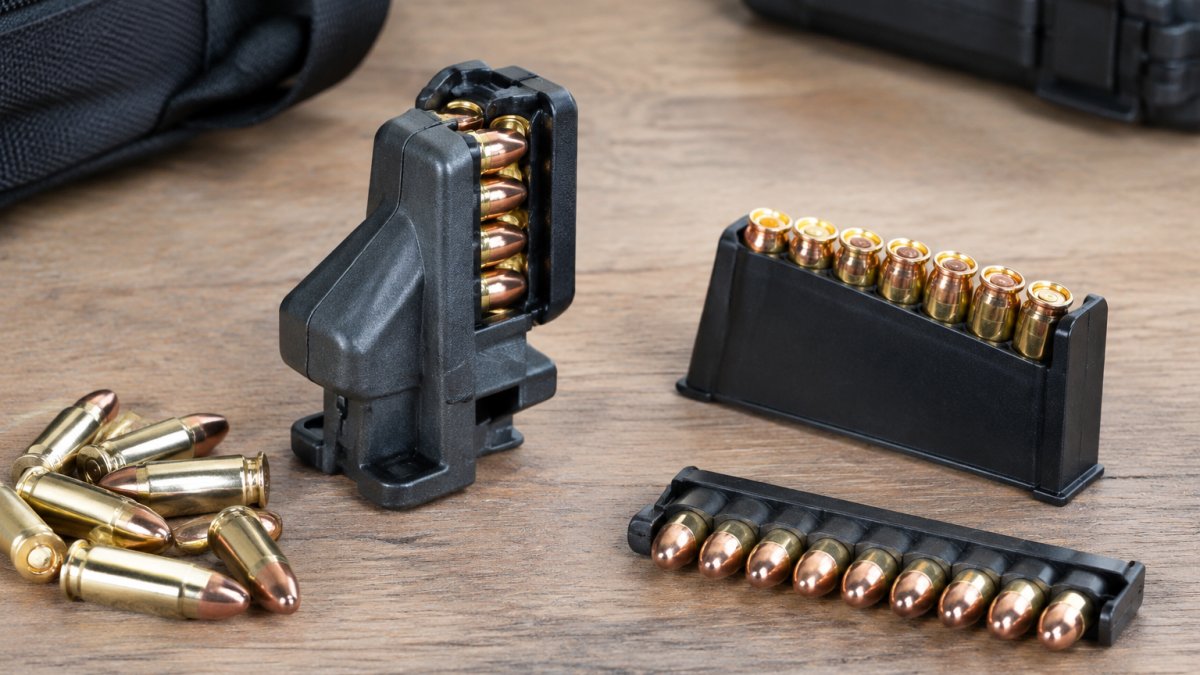
Magazine compatibility depends on three things: caliber, magazine width, and feed lip design. A 9mm single-stack loads differently than a .45 ACP double-stack, and a Glock magazine differs from a Sig P320 magazine. The Bulletproof Pistol Speed Loader handles most major brands, Glock, Sig, Springfield XD, Ruger, CZ, Beretta, because it accommodates their standard magazine geometries. It fits 9mm, .40 S&W, and some .380 rounds across those platforms.
But here's where most guides get it wrong: universal doesn't mean everything. Some magazine designs, particularly Canik and H&K models, have feed lip angles or spring tensions that resist standard loaders.
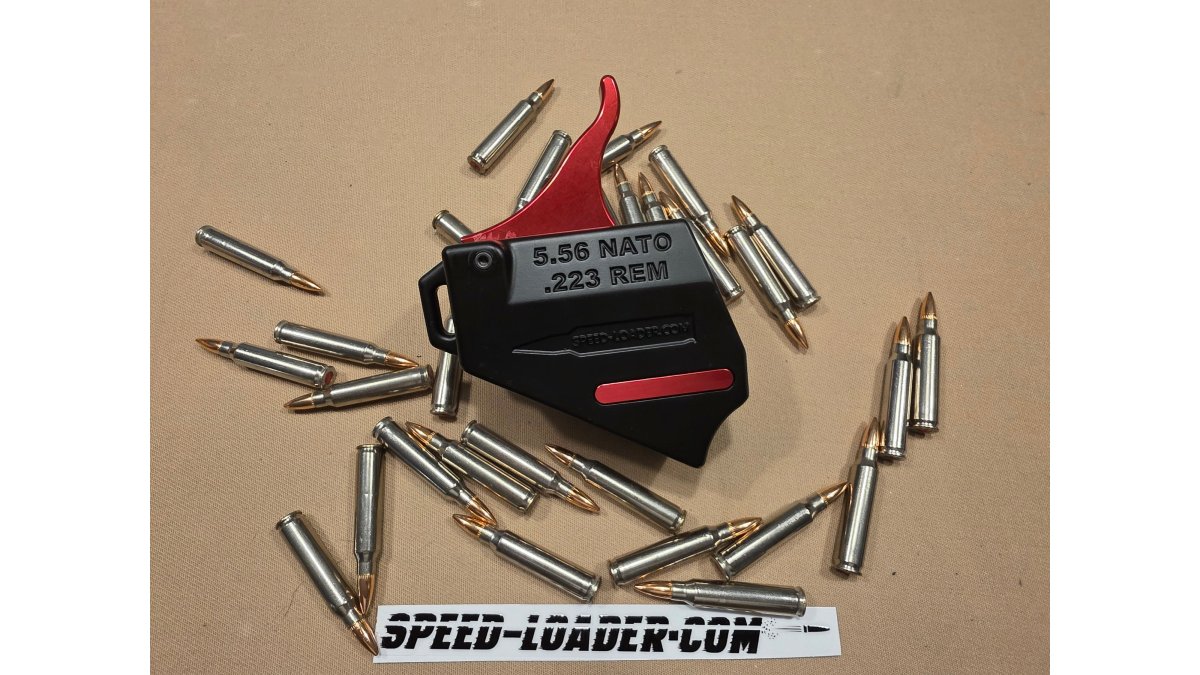
The Bulletproof Tier-1 Model takes a different approach entirely. It's engineered specifically for AR-15 platforms and handles 5.56 NATO.223 REM, 300 BLACKOUT, 7.62X39MM, and 6MM ARC.
Pistol Magazine Speed Loader Design and Loading Mechanism
The loading mechanism is where performance becomes visible. A well-designed loader uses two simple steps: insert the magazine, push rounds down. A poorly designed one demands awkward angles, excessive hand strength, or constant repositioning.
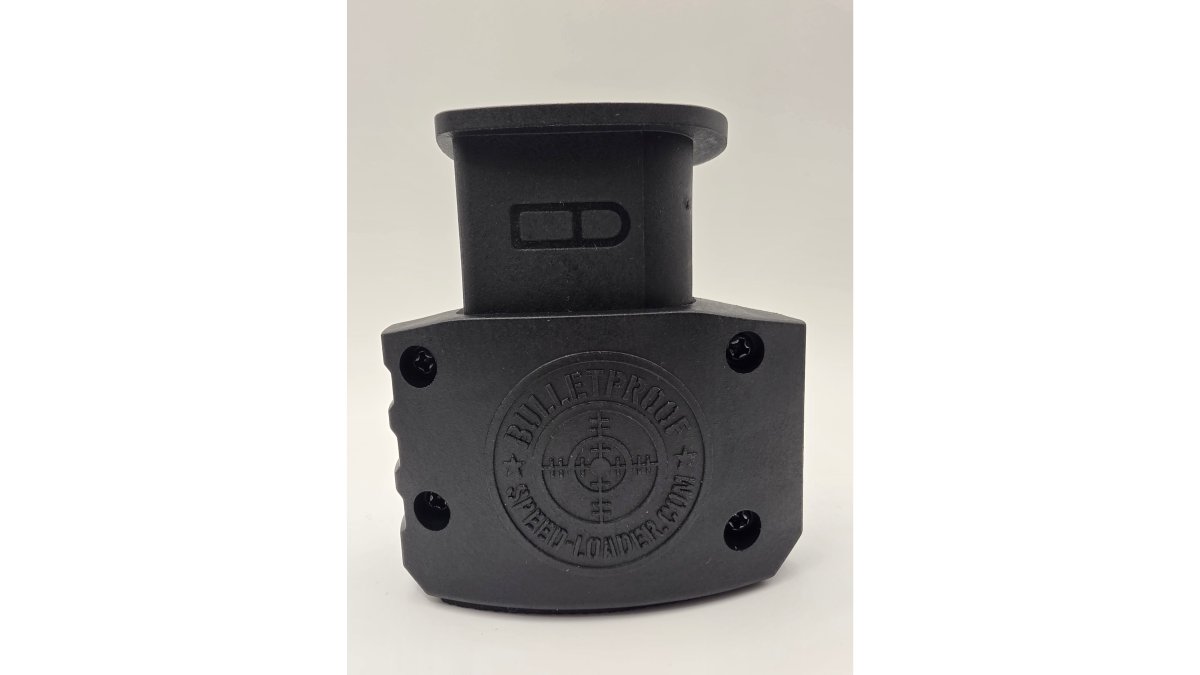
The Bulletproof Pistol Speed Loader uses a straightforward two-step design: insert the magazine, then feed and push. No complex levers, no learning curve.

Design quality shows up in two areas: alignment and feed lip protection. Alignment keeps rounds centered as they enter the magazine, preventing misfeeds. Feed lip protection stops the loader from scraping or damaging the magazine's feed lips, a common failure point with cheaper loaders.
Quality construction prevents this.
For those experiencing loading problems, troubleshooting pistol magazine loading issues covers quick fixes when your loader isn't working as expected.
Speed Loader Loading Speed: Seconds Matter in Competition and Carry
Loading speed matters most in competitive shooting, where every second counts between stages.
A hand-loaded magazine takes most shooters 20-30 seconds when done carefully; a speed loader cuts that to 5-10 seconds.
The Bulletproof Pistol Speed Loader achieves this speed through mechanical efficiency.
Carry shooters benefit differently.
For shooters focused on competition, best magazine speed loaders for competitive shooting provides detailed recommendations for your specific discipline.
Speed Loader vs Speed Strip: When Each One Makes Sense
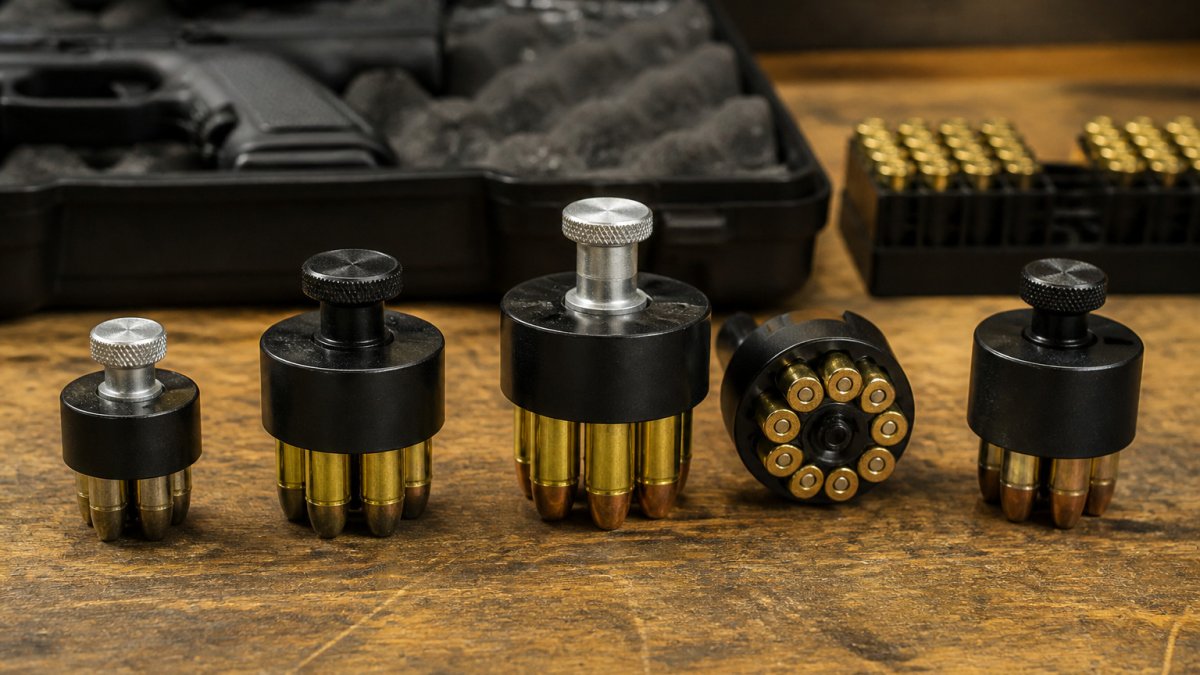
This distinction trips up new shooters because "speed loader" covers two equipment categories. Separate them first: revolver speed loaders (which hold a full cylinder's worth of rounds and release them into the chambers at once) and magazine loaders (which compress a magazine spring so rounds feed in quickly). A speed strip is a third tool, a flat, flexible carrier that feeds rounds into a cylinder or magazine one or two at a time. Compare like with like.
The three tools side by side
| Tool | What it feeds | Typical full load time | Bulk and carry | Best use |
|---|---|---|---|---|
| Magazine loader | Detachable-box magazines (pistol or rifle) | About 5-10 seconds for a full magazine | Bulky; usually two-handed; range bag or pocket | Range sessions, competition, high-volume practice |
| Revolver speed loader | Revolver cylinders | A few seconds for a full cylinder | Compact but rigid; needs a pouch or pocket | Defensive revolver reloads, competition |
| Speed strip | Revolver cylinders or magazines, a round or two at a time | Roughly 15-20 seconds for a full load | Very flat; disappears into a pocket | Concealed-carry backup ammunition, minimal bulk |
The speed-versus-portability trade-off, quantified
A magazine loader earns its keep when you load many magazines in one session. If a hand load takes 20-30 seconds and a loader brings that to 5-10, a four-reload stage saves roughly a minute or more, compounding across an eight-stage match. That is the case for carrying the bulk.
A speed strip earns its keep when space is the constraint. It lies flat in a pocket without printing, weighs little, and asks nothing of your hand strength.
Bulletproof Speed-Loader COMBAT Model →
Reliability differences that show up in practice
Loaders typically fail two ways: misalignment (a round enters at an angle and jams) or feed-lip contact (the tool scrapes the magazine's lips over repeated cycles). Speed strips fail differently, a round can slip free of a worn strip, and re-seating a partially fed round costs time. Neither tool is "more reliable" in the abstract; each has a characteristic failure mode to practice recovering from. Deliberately induce a misaligned round and time your recovery, that number matters more than your best-case time.
How to choose
- Loading at the range or in competition: a magazine loader, because volume and speed dominate and carry bulk is irrelevant.
- Carrying a revolver for defense: a revolver speed loader for the primary reload, with a speed strip as flat backup ammunition.
- Carrying concealed with minimal bulk: a speed strip, accepting the slower, more deliberate load.
- Most shooters: both a loader for practice and a strip for backup, because they solve different problems.
For shooters focused on competition, best magazine speed loaders for competitive shooting provides detailed recommendations for your specific discipline.
Construction Materials and Durability Under Real Use
Materials determine how long a loader survives heavy use, but "durable" is meaningless without knowing where it wears out. Judge construction by identifying the high-stress contact points, then asking what each material does there over hundreds of cycles.
Where loaders actually fail
Failures cluster at a few points rather than appearing everywhere:
- Feed-lip contact surfaces, the part of the tool that meets the magazine's feed lips. Cheap or soft materials can scrape or peen the lips over time, which is a magazine problem, not just a loader problem.
- The push/lever interface, where your hand applies force. This is where flex, cracking, or rounded edges show up first.
- Alignment features, the guides that keep rounds centered. Once these wear, misalignment and jam rates climb.
- Spring-loaded catches and releases, small parts that take repeated snap loads and can lose tension or bind.
Evaluate any loader at these four points first. A tool overbuilt everywhere except the alignment guides will still fail where it counts.
What each material buys you
Polymer is lightweight, affordable, and resists heat and scratches well. At contact points it is the softer common material, so watch for feed-lip and alignment wear. A sound choice for regular range use and moderate volume.
Polymer with anodized aluminum at the stress points, as in the Bulletproof TACTICAL Model, with aluminum on the lever, mag release button, and catch, puts the harder material where force and wear concentrate while keeping weight down.
Precision-machined 6160 aircraft-grade aluminum throughout, as in the Bulletproof Tier-1 Model, is the most wear-resistant option, favored by high-volume competitors and professionals.
A repeatable way to judge durability
Rather than trusting a materials claim, test the wear points yourself:
- Pick one magazine and one ammunition type and keep them constant so you are measuring the loader, not the magazine.
- Log cycles in blocks, for example, 50 loads, then inspect the feed lips, alignment guides, and push interface for scraping, flex, or rounding.
- Record failures, not just successes, count misaligned rounds, dropped rounds, and any load that needed a second attempt, and note recovery time.
- Repeat with gloves and in low light so the durability test also captures handling degradation.
The real difference shows up after months of heavy use: a polymer loader may show contact-point wear, while an aluminum loader often performs close to day one. For law enforcement or security professionals running regular training cycles, that consistency is what the higher cost buys.
For those experiencing loading problems, troubleshooting pistol magazine loading issues covers quick fixes when your loader isn't working as expected.
Choosing Your Speed Loader: A Performance Comparison
| Model | Construction | Best For | Price |
|---|---|---|---|
| Bulletproof Pistol Speed Loader | Polymer | Glock, Sig, Springfield (most 9mm/.40) | $34.95 |
| Bulletproof COMBAT Model | Polymer | Range use, everyday carry, budget-conscious | $69.95 |
| Bulletproof TACTICAL Model | Polymer + Aluminum | Competition, frequent shooting, durability focus | $89.95 |
| Bulletproof Tier-1 Model | Aircraft-grade Aluminum | AR-15 platforms, professional use, extreme durability | $199.95 |
Your choice depends on three factors: firearm platform, shooting frequency, and budget.
For most pistol shooters, the Bulletproof Pistol Speed Loader delivers everything you need: it handles the most common firearms and magazines, loads fast, and costs $34.95.
If you want better durability and shoot regularly, the Bulletproof COMBAT Model ($69.95) adds strong polymer construction for range and tactical use.
Competitive shooters should consider the Bulletproof TACTICAL Model ($89.95).
AR-15 shooters have one clear choice: the Bulletproof Tier-1 Model ($199.95).
Choosing the right tactical speed loader means matching performance features to your needs.
Frequently Asked Questions
What features should you compare when choosing a tactical speed loader?
Focus on five key areas: compatibility with your specific firearm and magazine type, loading speed (how many rounds per second), construction material and durability, ergonomic design for your hand size, and reliability under repeated use. The Bulletproof Pistol Speed Loader ($34.95) works with most major pistol brands including Glock, Sig, Springfield XD, and Beretta, while the Tier-1 Model ($199.95) specializes in AR-15 platforms with aircraft-grade aluminum construction. Test any loader with your actual magazines before relying on it for competition or carry.
How do you know whether a speed loader is compatible with your firearm?
Check the loader's specifications against your magazine's feed lip width, spring tension, and overall dimensions. The Bulletproof Pistol Speed Loader fits Glock 17-47, Sig P229, P320, P365, Springfield XD, Ruger SR9, CZ P10, and Beretta models with 9mm and .40 S&W, but does not work well with most Canik or H&K magazines. For AR-15 platforms, the Tier-1 Model loads 5.56 NATO, .223 REM, 300 Blackout, 7.62x39mm, and 6mm ARC. Always verify fit with your specific magazine before purchasing, as universal loaders sometimes fail with certain feed lip designs or spring pressures.
Are pistol speed loaders faster than loading magazines by hand?
Yes, when used correctly. A pistol magazine speed loader reduces hand fatigue and speeds up the loading process significantly compared to loading rounds one at a time by thumb. The Bulletproof Pistol Speed Loader uses a two-step design: insert the magazine into the loader, then push rounds into the magazine using the loader's mechanism rather than your thumb. This approach is faster and eliminates the thumb soreness that comes from loading high-capacity magazines or stiff springs, especially important for competitive shooters or law enforcement running high-volume training.
What is the difference between a speed loader and a speed strip?
A speed loader is a device that holds multiple rounds and feeds them into a magazine using a mechanical mechanism, designed for quick reloading at the range or in competition. A speed strip is a flat, flexible carrier that holds rounds in a line for quick access during reloading, but you still insert each round manually into the magazine. Speed loaders are faster for high-volume loading and reduce finger fatigue, making them better for range sessions and tactical use. Speed strips are lighter, more compact, and better suited for concealed carry where minimal bulk matters. For tactical speed loader performance, a dedicated loader outperforms a strip in both speed and ergonomics.