 ultimate-guide
Best Concealed Carry Positions for Different Body Types
Table of Contents
- Quick Comparison: Carry Positions by Body Type
- Appendix Carry vs Strong Side Hip: Which Fits Your Frame
- Cross-Draw, Shoulder, and Ankle Carry for Specific Needs
- How to Prevent Printing With Concealed Carry
- Holster Cant and Ride Height Explained
- Troubleshooting Carry Positions by Body Type and Mobility
- Conclusion: Matching Your Carry Position to Your Daily Carry
- Frequently Asked Questions
Last Updated: September 16, 2026
Quick Comparison: Carry Positions by Body Type
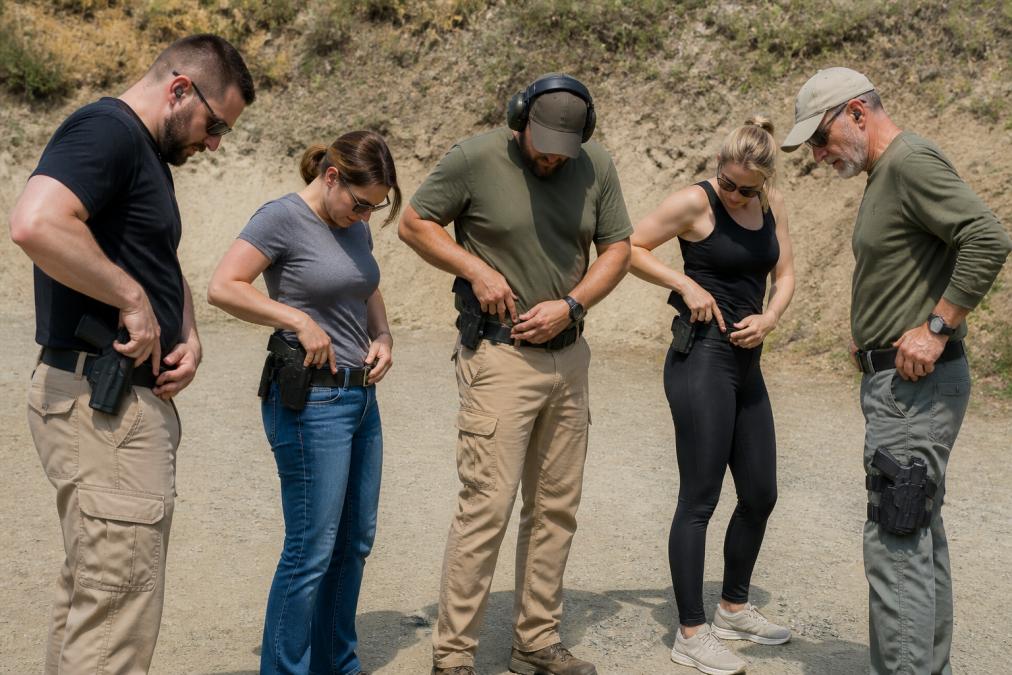
Choosing among the best concealed carry positions for different body types starts with one hard truth: no single position works for every frame. A position that disappears on a tall, lean shooter often prints badly on a shorter, heavier build. The right answer depends on your torso length, waistline shape, shoulder mobility, and how you dress.

This guide from BULLETPROOF SPEED LOADERS breaks down each major carry position by body type, so you can match the rig to your frame.
Use this quick reference table to narrow your options, then read the detailed sections below.
| Carry Position | Best Body Type | Concealment | Draw Speed | Main Trade-off |
|---|---|---|---|---|
| Appendix (AIWB) | Lean to average, longer torso | Excellent | Fastest | Uncomfortable when seated if heavy |
| Strong-Side Hip | Most builds, especially heavier | Good | Fast | Prints with tight shirts |
| Cross-Draw | Seated shooters, limited shoulder reach | Moderate | Slower | Sweeping motion on draw |
| Shoulder | Broad shoulders, jacket wearers | Good under cover | Moderate | Requires a cover garment |
| Ankle | Deep concealment, seated desk work | Excellent | Slowest | Poor access while standing |
The three positions most carriers actually run are appendix, strong-side hip, and a specialty rig for a specific need.
Appendix Carry vs Strong Side Hip: Which Fits Your Frame
The appendix carry vs strong side hip debate comes down to three measurements you can take at home: torso length, waistline shape, and thigh-to-belly geometry. Appendix carry places the holster inside the waistband at the front of the body, between the belt buckle and the strong-side hip. Strong-side hip carry sits at the 3 to 5 o'clock position along the hip bone.
This is not a preference question. It is a geometry question, and your frame answers it before your taste does.
Run the three-point self-check first
Before you buy either rig, run this five-minute diagnostic.
- Torso length. Measure from the top of your beltline to your armpit. A longer torso (roughly 17 inches or more) gives appendix carry room to tuck the grip below the ribcage. A shorter torso pushes the grip into the ribs, where it prints.
- Waistline shape. Check your side profile in a mirror. If your belly sits flush with or behind your chest line, appendix carry has a natural pocket to hide the grip. If your midsection projects forward, the holster gets pushed outward and the grip tips away.
- Thigh-to-belly gap. Sit with your feet flat. If your thigh presses into your beltline, an appendix rig will dig in every time you sit, the most common reason heavier and shorter carriers abandon appendix carry.
Pass all three and appendix is usually the better concealment and draw-speed choice. Fail the thigh-to-belly or waistline check, and strong-side hip at 4 o'clock is the more reliable start.
Appendix Inside the Waistband (AIWB) Pros and Cons
Appendix inside the waistband carry puts the firearm at the front of the waistline, angled slightly toward the centerline. It is the fastest position to draw from because the hand travels the shortest distance to the grip.
Pros:
- Fastest draw speed of any waistline position
- Easy to monitor and defend with the arms in a natural position
- Conceals well under an untucked shirt on lean frames with a longer torso
- Works with a sub-compact or compact pistol
- Grip stays inside your natural silhouette, so a cover garment does not have to do as much work
Cons:
- Can dig into the stomach or thigh when seated, especially for heavier builds or shorter torsos
- Requires strict trigger guard discipline on the draw
- Prints on shorter torsos when the grip rides above the beltline
- A protruding midsection tips the grip outward, which is a concealment problem no holster adjustment fully fixes
A common mistake is buying an appendix rig before testing it seated in a car. Sit in the holster for ten minutes. If you feel thigh pressure or the grip tips away, that rig will not work for your frame no matter how you adjust it.
Strong-Side Hip Carry (3-5 o'clock) Pros and Cons
Strong-side hip carry places the holster along the hip, behind the point of the hip bone. It is the most widely used position because it works across the widest range of frames and is most likely to survive the three-point self-check.
Bulletproof Concealed Carry Tactical →
The frame-by-frame verdict
- Lean, longer torso, flat midsection: Appendix wins on both concealment and speed.
- Athletic with a narrow waist and broad chest: Appendix conceals well, but expect the grip to flare; a wedge or claw helps.
Cross-Draw, Shoulder, and Ankle Carry for Specific Needs
Cross-draw, shoulder, and ankle carry solve narrow problems the two waistline positions cannot.
How to Prevent Printing With Concealed Carry
Fix printing in this order:
- Adjust the cant. Angling the grip toward the body pulls the butt of the firearm inward.
- Lower the ride height. A holster that sits too high pushes the grip above the beltline, where it prints against a shirt.
- Change the cover garment. A patterned or darker shirt breaks up the outline better than a solid, light color.
- Add a wedge or claw. These accessories push the grip into the body and rotate it away from the shirt.
- Match the holster to the body. A holster built for a different frame will print no matter how you adjust it.
Holster Cant and Ride Height Explained
Holster cant and ride height explained in plain terms: cant is the angle of the holster relative to your belt, and ride height is how high or low it sits on your waistline.
| Adjustment | Effect on Concealment | Effect on Draw Speed | Best For |
|---|---|---|---|
| Forward cant (10-15°) | Improves | Slightly slower | Strong-side hip |
| Neutral cant | Neutral | Fast | Appendix |
| Low ride height | Improves | Slower | Deep concealment |
| High ride height | Worse | Faster | Competition, open carry |
Troubleshooting Carry Positions by Body Type and Mobility
Troubleshooting carry positions by body type and mobility starts with matching the rig to your actual frame and range of motion, not a chart.
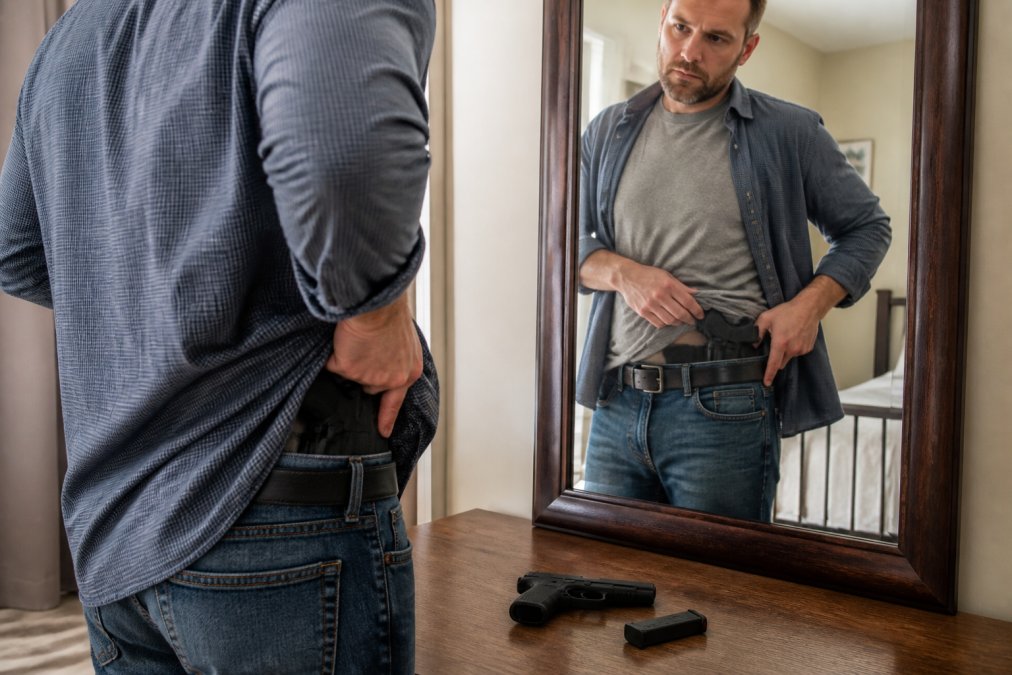
Diagnose the failure, then apply the fix
Work through the symptom that matches your situation.
Symptom: The grip prints against your shirt when you stand still.
- Cause: The grip is riding above the beltline, or the holster has too little cant.
- Fix: Lower the ride height one notch and add 10-15 degrees of forward cant.
Body-type scenarios and the position that fits
- Short torso: The grip tends to ride above the beltline.
When mobility changes the answer
For carriers with physical limitations, the priority shifts from speed to reliable access.
Conclusion: Matching Your Carry Position to Your Daily Carry
The right concealed carry positions for different body types come down to testing, not theory.
Frequently Asked Questions
Which concealed carry position is the most concealable?
Appendix inside the waistband (AIWB) is the most concealable for many people because the firearm sits flat against the torso and the natural drape of a shirt hides it well. That said, concealment depends on your body frame, holster cant, and clothing. Someone with a shorter torso may print more with AIWB and get better results from strong-side hip carry at 3-5 o'clock. There is no single best concealed carry position for everyone, so test a few setups with your actual daily clothing before committing.
Is appendix carry suitable for all body types?
No. Appendix carry works well for many people with an average or athletic build, but it can be uncomfortable or print noticeably for those with a larger midsection or a shorter torso. For those body types, a strong-side hip carry or a cross-draw setup often conceals better and draws more comfortably. The deciding factors are torso length, waistline shape, and how your clothing drapes. Adjust holster cant and ride height first, then switch positions if appendix still does not work.
How do I adjust holster cant and ride height to reduce printing?
Cant is the angle the holster sits on your belt; ride height is how high or low the firearm sits relative to your waistline. For hip carry, a 15-20 degree cant tucks the grip into your side and reduces printing. For appendix carry, a slight reverse cant or neutral cant keeps the grip close to your body. Lowering ride height hides the grip but can slow your draw, so find the balance where you can still get a full firing grip. Test each adjustment with your daily cover garment.
What should I look for in a holster if I have a larger frame?
Look for a holster with adjustable cant and ride height so you can tune the angle to your waistline. A wider backing or a hybrid design spreads pressure and keeps the firearm from digging into your side. Strong-side hip carry at 3-5 o'clock usually conceals better than appendix for a larger frame because the firearm sits behind the curve of your body. Pair it with a sturdy belt and a cover garment that hangs away from your torso rather than clinging to it.