 ultimate-guide
How to Choose a Concealed Carry Holster for Appendix Carry
Table of Contents
- Quick Comparison: Key Appendix Carry Holster Features
- Best Appendix Carry Holster Features to Look For
- How to Adjust Holster Ride Height for Your Body
- Benefits of a Holster Claw and Wedge for Concealment
- How Belt Stability and Body Type Affect Appendix Carry Holster Fit
- Safety Considerations for Appendix Carry
- Holster Maintenance and Hardware Checks for Appendix Carry
- Frequently Asked Questions
Last Updated: September 23, 2026
Quick Comparison: Key Appendix Carry Holster Features
Knowing how to choose a concealed carry holster for appendix carry comes down to four features: trigger guard coverage, adjustable tension, ride height, and a concealment claw or wedge. These determine whether a holster disappears under a shirt or prints with every step.
The table below maps each feature to what it does for you.
| Feature | What It Does | Why It Matters for AIWB |
|---|---|---|
| Trigger guard coverage | Fully encloses the trigger | Prevents accidental discharge during re-holstering |
| Adjustable tension | Controls how tightly the holster grips | Balances retention against a smooth draw stroke |
| Ride height | Sets how deep the gun sits below the belt | Affects grip access and grip printing |
| Claw or wedge | Pushes the grip into your body | Reduces printing without changing your clothing |
Best Appendix Carry Holster Features to Look For
The best appendix carry holster features solve specific problems: the gun moving, the grip printing, and the trigger being exposed. Everything else is preference.
A common mistake is prioritizing color, brand, or price before geometry.
Trigger Guard Coverage and Passive Retention
Full trigger guard coverage is non-negotiable for appendix carry, because the muzzle points toward your femoral artery and upper thigh when seated.
Passive retention means the holster holds the firearm through shape and tension alone, with no strap or thumb break. Kydex shells mold tightly around the trigger guard and ejection port; a proper "click" on insertion confirms the shell has locked onto the gun.
Active retention adds a mechanical release, such as a thumb-activated hood. For most concealed carry permit holders, passive retention is sufficient and faster. Law enforcement and security professionals often need active retention because their firearm is more exposed during physical encounters.
Kydex Shell and Adjustable Tension
Kydex is a thermoplastic that holds its molded shape under heat and pressure, which is why makers use it for shells that must grip a specific firearm model.
Adjustable tension comes from screws that compress the shell against the gun: tighten for retention, loosen for a smoother draw.
Tension screws loosen with daily carry, so check them monthly. A holster that felt perfect in March can feel loose by June.
How to Adjust Holster Ride Height for Your Body
Ride height is the vertical position of the holster relative to your belt line, and adjusting it is the fastest fix for comfort problems. Most quality appendix holsters use clips or loops with multiple mounting holes so you can move the shell up or down.
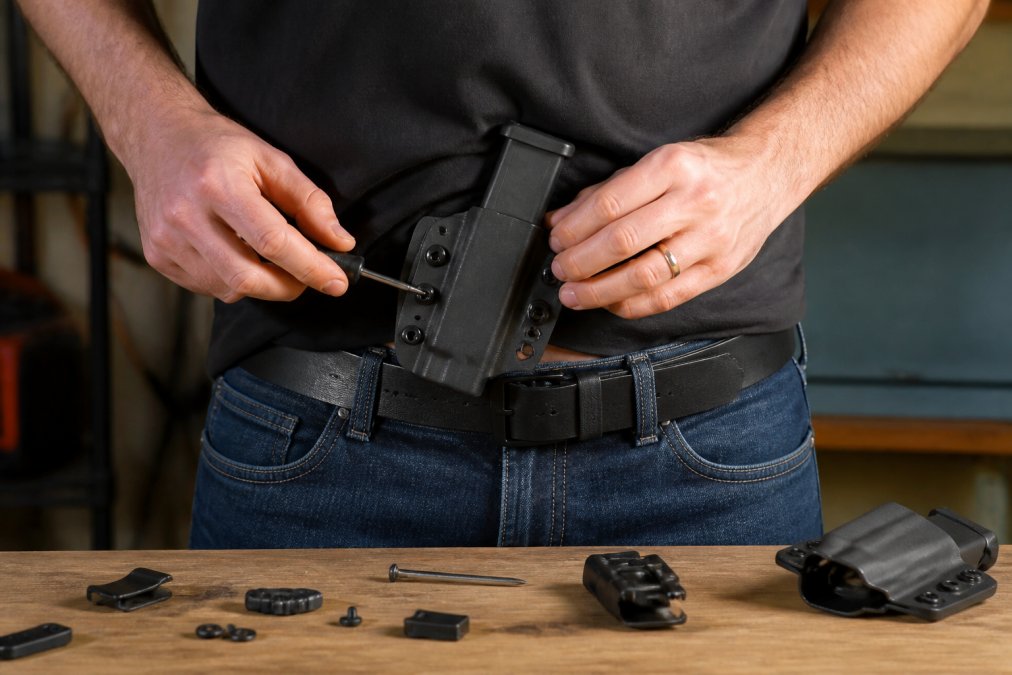
Higher ride height exposes more of the grip above the belt, speeding up your draw but increasing grip printing. Lower ride height tucks the grip behind the belt line for better concealment at the cost of a slower, more awkward draw.
The Movement Test: Bending, Sitting, and Driving
Most guides say adjust ride height for concealment. Adjust it for movement first instead, because a holster that conceals perfectly but digs into your thigh every time you sit will not stay on your belt.
Appendix carry places the holster at the hip hinge point, where your body folds when you bend, squat, or sit, so ride height directly controls how much it interferes with movement.
- Bend test. Stand and bend forward at the waist as if picking something up off the floor. If the muzzle end of the holster jams into your thigh or groin, raise the holster one set of mounting holes.
- Sit test. Sit in a hard chair with your feet flat. If the grip digs into your ribs or the muzzle presses hard into your thigh, raise the holster. If the grip disappears below your belt and you cannot get a full firing grip, lower it.
- Drive test. Sit in your actual driver's seat, not a kitchen chair. Reach for the pedals and turn the wheel. The holster should not shift, rotate, or create a sharp pressure point. If it does, a wedge adjustment or a ride height change is usually the fix.
Finding the Right Cant Angle for Appendix Carry
Cant angle is the tilt of the holster from vertical. Appendix carry usually works best with a slight forward cant, roughly 10 to 15 degrees, angling the grip toward your dominant hand.
Ride Height and Your Wardrobe
The practical rule: set cant first, then ride height using the bend, sit, and drive tests, then fine-tune with a claw or wedge. That order solves comfort and concealment together instead of trading one for the other.
Benefits of a Holster Claw and Wedge for Concealment
A holster claw and wedge are two separate add-ons that solve two separate concealment problems, and knowing which fixes which is the difference between a holster you wear daily and one that lives in a drawer.
How Claws and Wedges Change Your Range of Motion
Most guides treat claws and wedges as pure concealment tools. They are also movement tools, and that is where the trade-offs show up.
Matching Claws and Wedges to Your Wardrobe
Holster selection happens inside the clothes you actually wear, and the right claw-and-wedge setup changes with the season.
Compatibility and Buying Order
Not every holster accepts a claw. Check that your shell has mounting holes before you commit; buying without claw compatibility and wanting one later means buying twice.
How Belt Stability and Body Type Affect Appendix Carry Holster Fit
Belt stability matters more than most carriers expect. A flimsy belt lets the holster shift, rotate, and sag, causing printing and inconsistent draws no matter how good the holster is.
Safety Considerations for Appendix Carry
Safety in appendix carry comes down to two habits: never re-holster in a hurry, and always verify the trigger guard is clear before the gun goes back in.
Check these points before every carry:
- Trigger guard fully covered with no gap
- No clothing, shirt tail, or drawstring caught inside the holster mouth
- Retention screw tension verified by a quick tug test
- Claw and wedge hardware tight and undamaged
- Belt stiff enough to hold the holster in place when you bend
Holster Maintenance and Hardware Checks for Appendix Carry
Set a monthly maintenance routine and stick to it:
- Check every screw and post with the correct driver, and add a small amount of thread locker if the maker recommends it.
- Inspect the holster shell around mounting holes and clip attachment points for hairline cracks.
- Wipe the inside of the shell clean, since dust and grit accelerate wear on the finish of your firearm.
- Test passive retention with a gentle inversion shake over a soft surface.
- Replace worn clips rather than bending them back into shape.
BULLETPROOF SPEED LOADERS builds combat-ready gear for carriers who train seriously, and the same principle applies to holsters: reliability comes from matching the equipment to your body and your routine, then maintaining it. Our EZ-MAG pistol speed loader and tactical accessories support the range and training side of that routine, so your carry gear and your practice gear work together.
Frequently Asked Questions
What holster features are essential for appendix carry?
The most critical features are full trigger guard coverage, passive retention with adjustable tension, and a claw or wedge for grip tucking. A kydex shell holds its shape better than leather. Look for adjustable ride height and cant angle so you can tune the appendix carry holster to your body. Belt loops or clips should be sturdy enough to prevent shifting during the draw stroke.
How do I determine the right ride height for appendix carry?
Start with the holster sitting so the grip is just above your belt line. If the grip digs into your stomach when you sit, raise the ride height. If the muzzle presses into your thigh, lower it. Adjust one set of screws at a time and test by sitting, standing, and drawing. The goal is a ride height that lets you get a full grip without the holster shifting.
Is a claw or wedge necessary for appendix carry holsters?
Not strictly necessary, but highly recommended for most body types. A claw pushes the grip toward your body to reduce printing. A wedge tilts the muzzle away from your stomach for comfort and better concealment percentage. If you carry a compact pistol and wear fitted clothing, a claw and wedge make a noticeable difference in concealment.
How can I ensure my holster is safe for appendix carry?
Safety starts with full trigger guard coverage and a holster that retains the firearm during movement. Check that no clothing or foreign objects enter the trigger guard when re-holstering. Inspect holster hardware regularly for loose screws or cracks. Never carry a firearm with an exposed trigger, and practice your draw stroke slowly until it becomes muscle memory.
Appendix carry rewards carriers who adjust before they buy again. If your holster prints, digs in when you sit, or slows your draw, the fix is usually ride height, cant, a claw, or a stiffer belt, not a new shell. BULLETPROOF SPEED LOADERS makes gear for shooters who want durable, combat-ready equipment, including the EZ-MAG pistol speed loader and tactical carry accessories built for daily use. Get started with BULLETPROOF SPEED LOADERS and build a carry setup you can trust when it matters.