 ultimate-guide
Carbon Fiber Tactical Wallets: Benefits & Real Performance
Table of Contents
- What Carbon Fiber Tactical Wallets Actually Are
- Strength and Lightweight Construction
- Carbon Fiber Wallet Pros and Cons
- Carbon Fiber vs Leather Wallet: Key Differences
- Does a Carbon Fiber Wallet Provide RFID Protection
- Why Slim Tactical Wallets Matter for Concealed Carry
- Maintenance and Long-Term Performance
- Frequently Asked Questions
Last Updated: October 12, 2026
What Carbon Fiber Tactical Wallets Actually Are
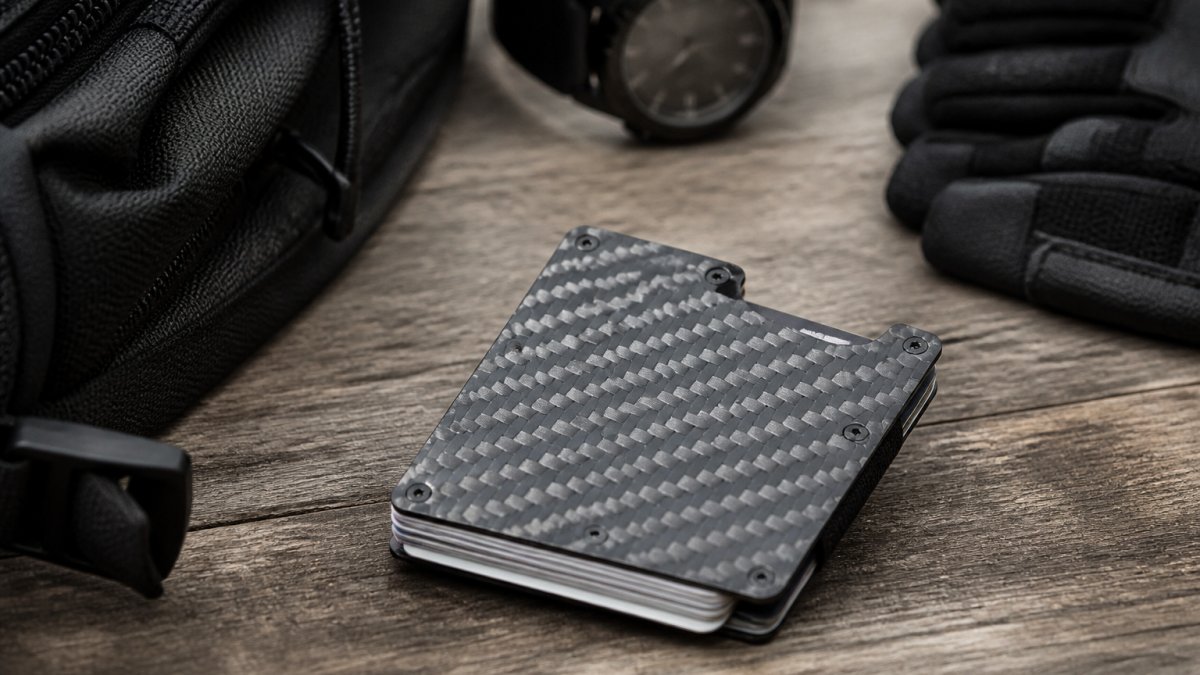
A carbon fiber tactical wallet is a slim, minimalist wallet precision-engineered from high-strength carbon-fiber composite, delivering maximum durability with minimal bulk.
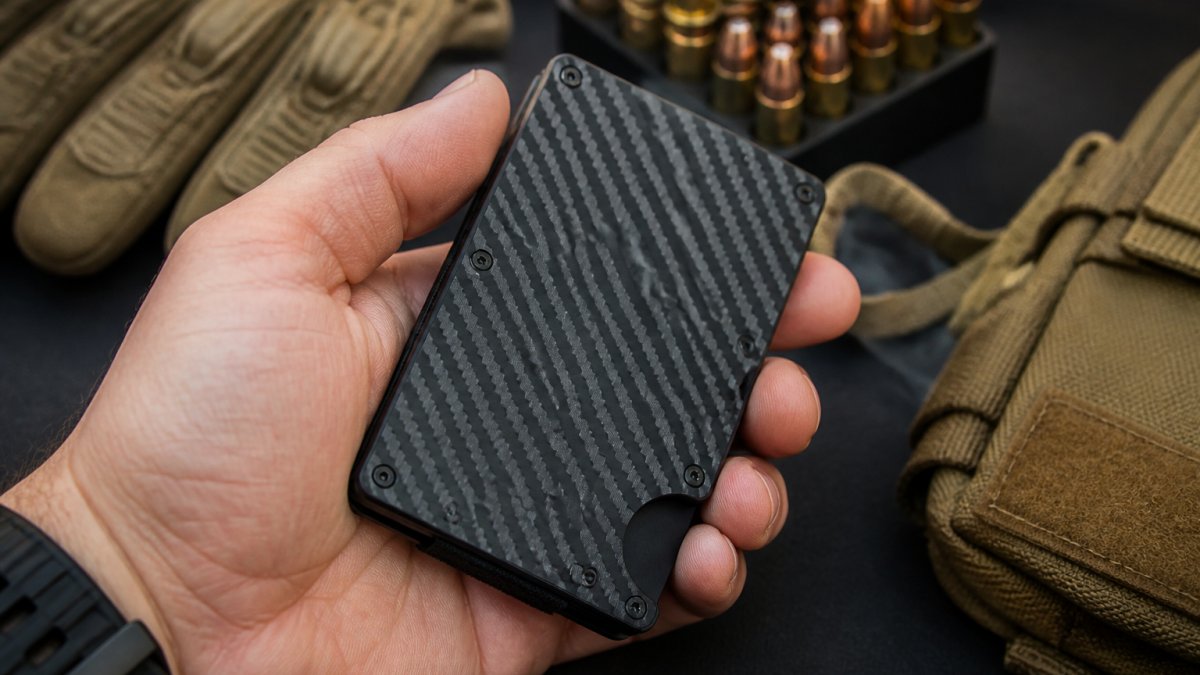
Carbon fiber wallets are engineered for professionals who refuse compromises between capacity and pocket weight.
The material is a composite of carbon fibers bound in a resin matrix, creating exceptional tensile strength relative to weight.
What separates carbon fiber from other slim wallet materials is its rigidity.
The Bulletproof Concealed Carry Tactical Wallet ($29.95) exemplifies this design philosophy, precision-machined from lightweight aircraft-grade carbon fiber with integrated RFID blocking and a built-in money clip.

Strength and Lightweight Construction
Carbon fiber delivers an unmatched strength-to-weight ratio.
A standard leather bifold weighs 2-4 ounces; a carbon fiber tactical wallet typically weighs under 1 ounce while offering superior impact resistance and rigidity.
Carbon fiber composite exceeds aluminum in tensile strength at a fraction of the weight, so a carbon fiber wallet withstands significant compressive force without cracking, warping, or deforming.
Heat resistance is another advantage. Leather can warp and crack under extreme temperature changes; carbon fiber remains stable across a wide range.
Every ounce matters when you're wearing body armor, magazine pouches, and comms gear; a carbon fiber wallet eliminates unnecessary weight without sacrificing capacity or protection.
Carbon Fiber Wallet Pros and Cons
Advantages of carbon fiber tactical wallets:
- Exceptional durability: Resists impacts, scratches, and environmental stress far better than leather or standard materials
- Minimal weight: Adds negligible burden to your carry setup, crucial for extended wear and concealed carry comfort
- Low-profile design: The rigid structure allows manufacturers to create genuinely slim wallets that hold substantial card capacity without bulk
- Heat and UV resistance: Maintains integrity across temperature extremes and extended sun exposure
- Distinctive appearance: Carbon weave pattern creates a tactical aesthetic that ages with character rather than showing wear
Limitations to consider:
- Cost premium: Carbon fiber wallets typically cost more than leather alternatives due to manufacturing complexity
- Limited customization: The material doesn't accept personalization or modification the way leather does
- Rigidity trade-off: Some users prefer the flex and conformability of leather, which carbon fiber deliberately eliminates
- Repair difficulty: Damage to carbon fiber is permanent; you cannot reseal or refinish the material like leather
The real trade-off is matching the material to your use case: a professional carrying daily in a concealed carry setup benefits from carbon fiber, while someone seeking patina might prefer leather despite the weight penalty.
Carbon Fiber vs Leather Wallet: Key Differences
Carbon fiber and leather wallets reflect fundamentally different design philosophies: leather prioritizes aesthetic aging and tactile comfort, while carbon fiber prioritizes durability and minimal bulk.
| Characteristic | Carbon Fiber | Leather |
|---|---|---|
| Weight | Under 1 oz | 2-4 oz |
| Durability | Extremely high impact resistance | Prone to creasing and wear |
| Scratch resistance | Excellent | Develops patina (visible marks) |
| Heat resistance | Stable across temperature range | Can warp in heat |
| Customization | Minimal | High (tooling, embossing) |
| Aesthetic aging | Minimal change over time | Develops character and patina |
| Cost | Higher initial investment | Lower entry price |
| Flexibility | Rigid (by design) | Naturally flexible |
Leather wallets develop character through use, creases, scuffs, and patina. Carbon fiber wallets maintain their appearance indefinitely: no patina, no creases, no visible passage of time.
For tactical professionals, this consistency is an advantage: the wallet looks the same after six months as on day one.
The weight difference matters only in context: a concealed carry professional wearing a loaded duty belt notices every ounce, while an office worker won't perceive it.
Does a Carbon Fiber Wallet Provide RFID Protection
RFID protection addresses a specific threat: unauthorized scanning of contactless credit cards and RFID-enabled IDs. The question is whether carbon fiber itself provides that protection.
Carbon fiber composite does not inherently block RFID signals. It's non-conductive and doesn't create the electromagnetic field needed to prevent unauthorized scanning.
Many carbon fiber wallets marketed with RFID protection achieve it through integrated blocking materials, typically a thin metal mesh or conductive layer added during manufacturing.
The Bulletproof Concealed Carry Tactical Wallet includes integrated RFID blocking technology, meaning the protection is engineered into the design rather than relying on the carbon fiber material itself.
Bulletproof Concealed Carry Tactical Wallet →
What RFID Blocking Does and Does Not Protect Against
Contactless credit and debit cards, passports with embedded chips, and some building-access or transit cards communicate over specific radio frequencies. A blocking wallet interrupts that communication when the card sits inside the shielded compartment.
What blocking generally does not cover:
- Cards outside the shielded compartment. A card in an exterior slot, a money clip, or a separate pocket is not protected.
- Magstripe skimming. A skimmer that reads the magnetic stripe when you hand over your card is a physical-read problem, not a radio-frequency one.
- Online fraud and data breaches. Most card fraud originates from compromised databases and phishing, not from someone walking past you with a scanner.
- Lost or stolen cards used physically. Blocking does nothing once the card leaves the wallet.
Real-world threat assessment suggests the risk is overstated for most users: skimming operations target high-traffic areas with specialized equipment, and the practical read range for a contactless card is short. Still, for professionals handling sensitive credentials, government IDs, or access badges, integrated RFID protection provides legitimate peace of mind.
How to Verify RFID Protection Instead of Assuming It
Because the carbon fiber shell tells you nothing about shielding, verify the protection layer directly:
- Look for a stated frequency range. Quality products specify the frequencies they block, commonly 13.56 MHz (contactless payment cards and many IDs) and 125 kHz (older proximity cards and access badges). A vague "RFID blocking" claim without a range is a marketing statement, not a specification.
- Check for a physical shielding layer. A conductive mesh, foil, or metallized liner should be visible or described in the construction. If the wallet is carbon fiber and nothing else, assume no blocking.
- Test with your own card. Many contactless cards can be read by a phone-based reader app. Place the card inside the wallet, attempt a read, then remove it and attempt again. If the read fails inside and succeeds outside, the shielding is working for that frequency.
- Test the specific compartment. Repeat the test with the card in each slot you intend to use, since shielding often covers only one section.
- Re-test periodically. Shielding layers can crease, separate, or wear at fold points over years of use. A wallet that blocked reliably when new may not after heavy flexing.
If RFID protection is your primary concern, verify the wallet includes dedicated blocking materials and confirm which compartments they cover. Don't assume carbon fiber alone protects, and don't assume one test at purchase guarantees protection for the wallet's life.
Why Slim Tactical Wallets Matter for Concealed Carry
A slim tactical wallet isn't a luxury, it's a necessity for concealed carry professionals.
Printing occurs when your wallet's outline creates a visible bulge under clothing. A standard bifold creates a rectangular mass roughly 4.5 inches wide and 3.5 inches tall.
Weight distribution matters too. A heavy wallet pulls on your belt, creating a visible sag on one side. A lightweight carbon fiber wallet distributes mass more evenly.
Pocket comfort during extended wear depends on profile.
For tactical professionals rotating between standard carry and duty belt wear, a slim wallet adapts to both.
Maintenance and Long-Term Performance
Carbon fiber wallets require minimal maintenance compared to leather: no conditioning, no protective treatments, no moisture degradation. But "minimal" isn't "none," and the parts that fail first are rarely the carbon panels.
Routine Care
- Wipe the shell with a damp microfiber cloth. Mild soap is fine; avoid abrasive pads and solvent-based cleaners that can dull the resin surface.
- Keep the money clip and hardware dry. Stainless clips resist corrosion, but salt and sweat left on plated or coated hardware accelerate wear. A quick wipe after heavy use extends hardware life.
- Avoid prolonged extreme heat. A hot vehicle dashboard won't melt the carbon, but sustained heat can soften some resins and stress adhesives holding the RFID layer or clip in place.
- Don't overstuff. The rigid shell doesn't flex, so the elastic band, screws, or hinge take the strain instead. Loading beyond the stated card capacity is the most common cause of premature wear.
- Check fasteners periodically. If the wallet uses screws or rivets, confirm they stay snug. A loose screw can wallow out its hole over time.
What Actually Wears Out First
Long-term durability depends on the quality of the resin matrix and manufacturing precision, but the carbon panels are usually the last thing to fail. The wear sequence tends to run:
- Elastic retention bands stretch and lose tension, often within a year or two of daily carry. These are typically replaceable.
- Money clips lose spring tension or develop surface wear at the contact point.
- Edge resin can chip at corners from repeated drops, exposing fiber layers.
- RFID shielding layers can crease or separate at fold points, reducing effectiveness before the shell shows any problem.
- The carbon shell itself rarely fails under normal carry.
Recognizing Delamination and Structural Damage
Delamination is the failure mode to watch for: the resin separates from the fiber layers, often appearing as a whitish haze, a soft spot, or a lifting edge. Causes include impact, repeated flexing at a thin section, and manufacturing defects. Inspect edges and corners periodically under good light.
If damage does occur, repair options are limited. Unlike leather, which can be re-stitched or refinished, carbon fiber damage is generally permanent. A cracked or splintered panel cannot be restored, and field repairs with adhesive are cosmetic at best.
Environmental Exposure
Environmental exposure poses minimal threat to carbon fiber. Salt water, extreme humidity, and UV radiation that damage leather have negligible effect on the composite. The caveat is non-carbon components: metal hardware, adhesives, and shielding layers are most affected by salt, moisture, and heat cycling.
End of Life and Disposal
Carbon fiber composite is difficult to recycle: the resin matrix and fiber are bonded, and most municipal programs can't process it, so a worn-out wallet typically goes to landfill. That's a real drawback versus leather, which can be repaired, resoled, and sometimes composted or recycled through specialty programs. If end-of-life impact matters, weigh it against the longer service life, a wallet lasting many years without conditioning offsets some disposal downside, but doesn't make the material recyclable.
Judging Lifetime Value
A well-constructed carbon fiber wallet should show no visible breakdown after years of carry. If the shell delaminates, edges crumble, or shielding fails quickly, manufacturing quality was substandard. When comparing options, weigh replaceable parts (bands, clips, screws) and stated shielding specs alongside the carbon shell, those determine how long the wallet stays usable.
Frequently Asked Questions
Are carbon fiber tactical wallets worth the investment?
Carbon fiber tactical wallets deliver measurable performance for everyday carry and tactical use. They combine exceptional strength-to-weight ratio with slim, low-profile design that traditional leather or metal wallets cannot match. For concealed carry, law enforcement, or competitive shooters, the durability and minimal pocket bulk justify the cost. The real value comes from reduced fatigue during extended wear and reliable RFID protection built into quality models. If you prioritize compact carry without compromising security, they're a worthwhile upgrade.
What is the main downside of carbon fiber wallets?
The primary trade-off is scratch visibility. Carbon fiber's high-strength composition makes it resistant to denting, but surface scratches show more readily than on leather. This is purely aesthetic and does not affect performance or durability. Some users also report a learning curve with minimalist designs that hold fewer items than traditional wallets. For tactical use and everyday carry, these limitations are minor compared to the weight savings and rigidity benefits.
How durable are carbon fiber wallets for heavy daily use?
Carbon fiber wallets withstand rigorous daily carry, training, and tactical environments. The material resists heat, UV exposure, and mechanical wear far better than leather or standard plastics. Quality carbon fiber construction maintains its structural integrity through thousands of insertion and removal cycles. Proper care, occasional cleaning and avoiding extreme temperature shocks, ensures years of reliable performance.
Can a carbon fiber wallet damage or scratch your cards?
Quality carbon fiber wallets are designed with smooth interior surfaces that protect cards from scratching. The material itself is harder than most card stock, but well-manufactured wallets feature protective edges and linings that prevent contact damage. Avoid cheap, poorly finished models where rough carbon fiber edges could catch cards. Bulletproof's carbon fiber wallets are precision-machined to eliminate sharp edges and include card-friendly interiors.