 ultimate-guide
Choosing the Right Caliber for Concealed Carry
Table of Contents
- How to Choose the Right Caliber for Concealed Carry Self Defense
- 9mm vs .380 for Concealed Carry: The Honest Comparison
- Recoil Management for Defensive Shooting: What Actually Matters
- The Best Self-Defense Ammo for Concealed Carry
- Capacity, Cost, and Availability by Caliber
- Physical Limitations, Holster Integration, and Legal Realities
- Conclusion: Pick the Caliber You Will Actually Carry
- Frequently Asked Questions
Last Updated: September 19, 2026
How to Choose the Right Caliber for Concealed Carry Self Defense
Choosing the right concealed carry caliber for self defense comes down to one principle: the best round is the one you will actually carry and shoot well under pressure. This guide from BULLETPROOF SPEED LOADERS breaks that principle into practical decisions about recoil, capacity, ammunition cost, and how the gun integrates with your daily carry method.

9mm vs .380 for Concealed Carry: The Honest Comparison
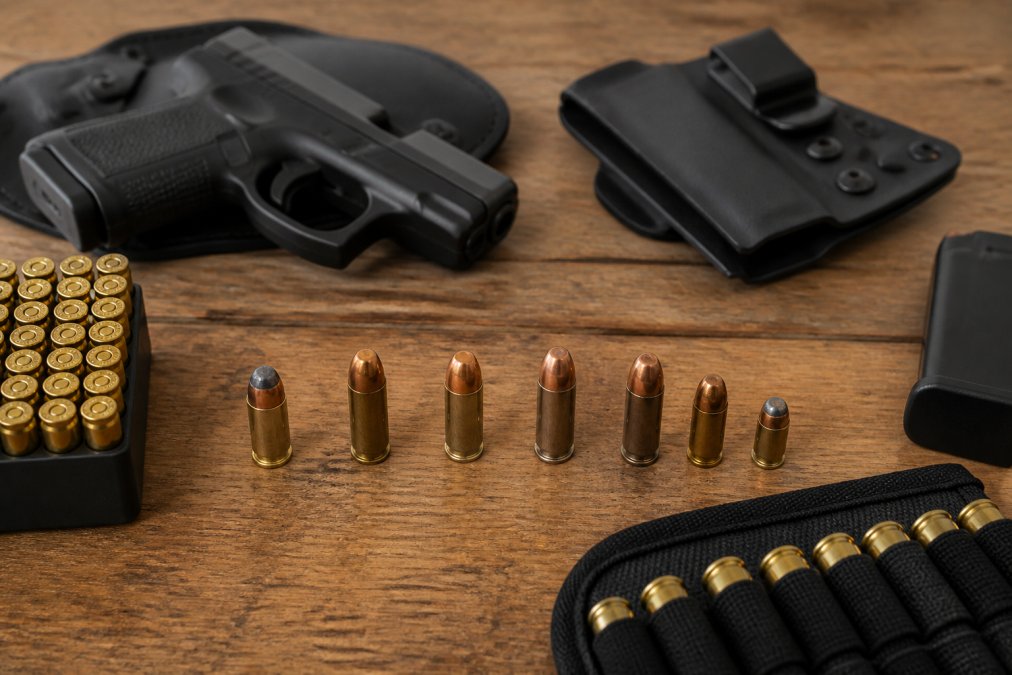
The honest answer is that 9mm and .380 ACP sit in different roles rather than competing directly. The 9mm delivers more muzzle energy and typically feeds from higher-capacity magazines, while the .380 ACP trades ballistic output for a smaller frame size and lighter recoil impulse that many shooters manage more consistently.
Where a .380 Makes Sense
The .380 ACP is a reasonable choice for shooters with hand strength limitations, arthritis, or small hands who struggle to control a 9mm in a micro-compact frame. The lighter recoil impulse means faster shot recovery time and more confident follow-up shots. A .380 you carry in a pocket holster every day beats a 9mm left at home because it's uncomfortable.
Where 9mm Pulls Ahead
The 9mm wins on capacity, ammunition cost, and versatility. A subcompact 9mm typically holds more rounds than a comparable .380, and practice ammunition costs less per round, which means more training frequency for the same budget. It also spans a wider range of handgun platforms, from micro-compact to full-size, giving you more options to find a frame that fits.
| Factor | .380 ACP | 9mm |
|---|---|---|
| Recoil impulse | Lighter, easier to control | Moderate, manageable with practice |
| Typical magazine capacity | Lower in same frame size | Higher in same frame size |
| Ammo cost | Higher per round | Lower per round |
| Best for | Small hands, deep concealment | Most shooters, duty and range use |
Recoil Management for Defensive Shooting: What Actually Matters
Grain weight also shifts felt recoil. Heavier bullets generally produce a softer push, while lighter, faster loads snap harder. Try two or three defensive loads in your chosen caliber before settling on one.
The Best Self-Defense Ammo for Concealed Carry
The best self-defense ammo for concealed carry is a modern hollow point load that feeds reliably in your specific pistol and meets accepted penetration standards in ballistic gel testing. Brand matters less than function: a premium round that jams in your gun is worse than a mid-tier round that cycles every time.
Look for three things when selecting a defensive load:
- Consistent expansion across a range of barriers, including heavy clothing
- Penetration depth within the range defensive shooting instructors consider effective
- Reliable feeding and extraction in your exact handgun platform
Capacity, Cost, and Availability by Caliber
Capacity, cost, and availability all tend to favor the 9mm for most shooters, but the gap is smaller than the internet suggests once you account for frame size, magazine design, and how often you actually train. The table below compares the four cartridges most commonly carried for self-defense.
| Caliber | Typical subcompact capacity | Relative practice-ammo cost | Availability pattern |
|---|---|---|---|
| .380 ACP | 6-8 rounds | Highest per round of the four | Widely stocked, but thinner selection of defensive loads |
| 9mm | 10-13 rounds | Lowest per round | Broadest selection and deepest stock |
| .40 S&W | 9-11 rounds | Moderate | Common, but shrinking shelf space as agencies move to 9mm |
| .45 ACP | 6-8 rounds in subcompact | Higher per round | Widely stocked, especially in full-size loads |
A few things that table does not capture:
Bulletproof EZ-MAG Pistol Speed Loader →
- Capacity is a function of frame, not just caliber. A micro-compact 9mm and a micro-compact .380 can hold similar round counts because the magazine body is the limiting factor. The 9mm advantage shows up most clearly in mid-size and compact frames.
- Practice cost compounds over a year. If you shoot 200 rounds a month, the per-round difference between 9mm and .380 adds up to real money by December. That money is training you either do or do not get.
- Availability is cyclical. During the ammunition shortages of 2020-2021, 9mm, .40 S&W, and .45 ACP were the first to disappear from shelves, while .380 and revolver cartridges lingered longer in some regions. The lesson is not 'buy the oddball', it is 'keep a reserve of your carry load and a separate reserve of practice ammo.'
- Defensive loads are a separate supply chain. Practice ammo and duty-grade hollow points are not interchangeable on the shelf. Confirm your carry load is in stock before you standardize on it.
Physical Limitations, Holster Integration, and Legal Realities
Most caliber guides stop at ballistics tables. The three factors below decide whether you actually carry the gun you bought, and they are the areas where generic advice fails hardest.
Physical limitations and medical considerations
Hand size, grip strength, wrist and elbow condition, and vision all shape how a given caliber behaves in your hands. A few concrete patterns worth knowing:
- Arthritis and joint pain. Shooters with osteoarthritis in the hands or wrists often find the sharper, snappier impulse of a lightweight 9mm harder to manage than a heavier .380 or a mid-weight 9mm. Gun weight and grip design can matter more than the cartridge itself.
- Grip strength. If you cannot reliably rack the slide or manage the trigger reach on a given pistol, the caliber debate is academic. A double-action revolver in .38 Special remains a legitimate choice for shooters whose hand strength rules out a semi-auto.
- Hand size. Shooters with smaller hands frequently shoot better with single-stack or micro-compact frames, which often means .380 or a slim 9mm. Shooters with larger hands may find micro-compacts harder to control than a compact or subcompact with a full grip.
- Recoil sensitivity after injury. A prior wrist fracture, carpal tunnel surgery, or shoulder injury can change felt recoil for years. Rent before you buy, and shoot at least 50 rounds, not five.
Holster and carry method integration
Caliber choice and carry method are not independent decisions. The frame size a caliber pushes you toward determines which holsters and positions are realistic:
- Pocket carry. Favors micro-compact .380s and slim 9mms. A pocket holster must fully cover the trigger guard and break up the gun's outline; a larger frame simply will not fit.
- Appendix inside-the-waistband (AIWB). Works with compact and subcompact 9mms and .40 S&W. A longer slide and grip can actually aid concealment by tucking the grip into the body, but a heavier gun demands a sturdier belt and holster.
- Outside-the-waistband (OWB). The most forgiving for larger calibers like .45 ACP, but the hardest to conceal under a tucked shirt. Usually a cold-weather or open-carry-adjacent option.
- Ankle and off-body carry. Lighter is better. A micro-compact .380 or slim 9mm is the practical ceiling; a steel .45 ACP on the ankle is a chore, not a habit.
Legal and liability implications of caliber choice
Every defensive shooting is reviewed under the law of the jurisdiction where it occurs, and self-defense statutes vary by state. Two things are worth separating:
- Justification for the use of force is the legal question. Caliber choice is rarely the issue in a criminal or civil proceeding. What matters is whether you reasonably believed deadly force was necessary and whether your conduct fit the applicable self-defense statute.
- Prosecutorial and civil perception is a secondary concern. Some trainers and attorneys argue that a heavily modified gun or an unusual caliber can be used by opposing counsel to paint a shooter as eager for violence. There is no settled case law that establishes caliber itself as a liability, but the practical guidance from most defensive-shooting instructors is to carry a factory-standard firearm with a common defensive load and to document your training.
Conclusion: Pick the Caliber You Will Actually Carry
The concealed carry caliber debate has a boring, correct answer: pick the largest round you can shoot accurately, control under stress, and afford to practice with. For most shooters in 2026, that's a 9mm. For shooters with physical limitations or a need for deep concealment, a .380 ACP remains a legitimate, defensible choice.
Frequently Asked Questions
What is the best concealed carry caliber for self-defense?
There is no single best caliber, but 9mm is the most common choice for concealed carry self defense because it balances manageable recoil, magazine capacity, and widely available hollow point ammunition. The .380 ACP works for shooters who need a lighter recoil impulse, and .45 ACP remains popular with those who prioritize larger bullet diameter. The caliber you can shoot accurately under stress matters more than the number on the barrel.
Is a .380 enough to stop an attacker?
Modern .380 ACP hollow point ammunition has improved significantly. With proper shot placement and adequate penetration depth, a .380 can be effective for self-defense. The trade-off is less muzzle energy and often less penetration than 9mm. If you shoot a .380 more accurately than a 9mm because of lower recoil, that accuracy advantage can matter more in a defensive shooting scenario.
How does recoil affect my ability to shoot accurately in a self-defense situation?
Recoil impulse directly affects shot recovery time and follow-up shots. A caliber with heavy recoil can slow your second shot and pull you off target. Lighter calibers like .380 and standard-pressure 9mm generally allow faster shot recovery. Training frequency and grip technique matter as much as caliber. If you cannot control the recoil, you cannot place shots where they need to go.
Should I prioritize magazine capacity or caliber size for concealed carry?
Most defensive shooting incidents involve a small number of rounds, but magazine capacity still matters because it reduces reload pressure. A micro-compact 9mm often holds 10 to 13 rounds, while a comparable .45 ACP might hold 6 to 8. Higher capacity with a caliber you shoot well is generally the better trade. Caliber versatility and ammo availability also favor 9mm for most carriers.