 how-to
Common Mistakes When Loading Handgun Magazines
Table of Contents
- Why Common Mistakes When Loading Handgun Magazines Matter
- How to Load a Pistol Magazine the Right Way
- Using a Pistol Magazine Loader to Prevent Mistakes
- Common Pistol Magazine Malfunctions Caused by Loading Errors
- Magazine Spring and Follower Problems You Should Catch Early
- Safety-First Checklist for Loading and Verifying a Handgun Magazine
- When Not to Use a Magazine: Damage, Wear, and Incompatibility
- Conclusion
- Frequently Asked Questions
Last Updated: October 15, 2026
Why Common Mistakes When Loading Handgun Magazines Matter
A magazine that seats wrong or feeds badly can turn a good range day into a bad one. Most failures we hear about trace back to simple loading errors, not broken guns.
Learning to load a handgun magazine correctly takes minutes. The payoff lasts every time you pull the trigger. A backward round, a half-seated cartridge, or a crushed spring can cause a jam when it counts.
So here is the practical part most guides skip: a loaded magazine is only as good as the last round you seated. Below, we break down the mistakes, the fixes, and a checklist you can run before every session.
How to Load a Pistol Magazine the Right Way
Here is the short version: orient every round the same way, hold the magazine firmly, and seat each cartridge until it stops. Speed comes later.
Most people rush. The result is a tilted round or a magazine that looks full but is not.
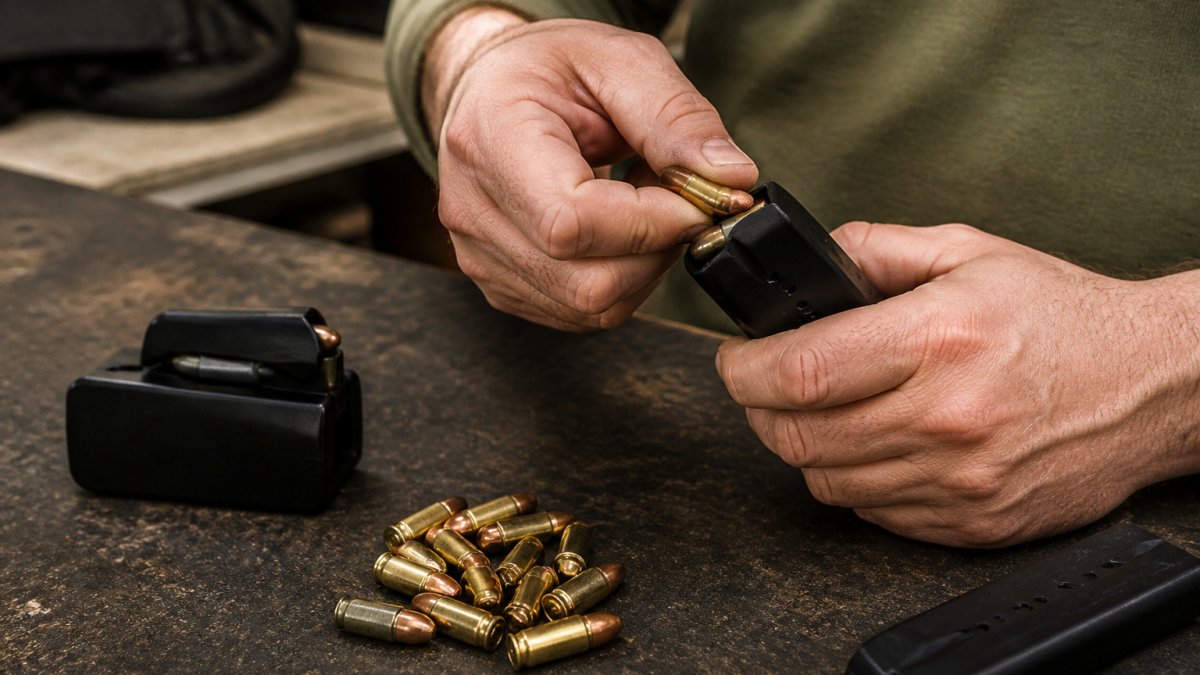
Step 1: Orient Each Cartridge and Grip the Magazine
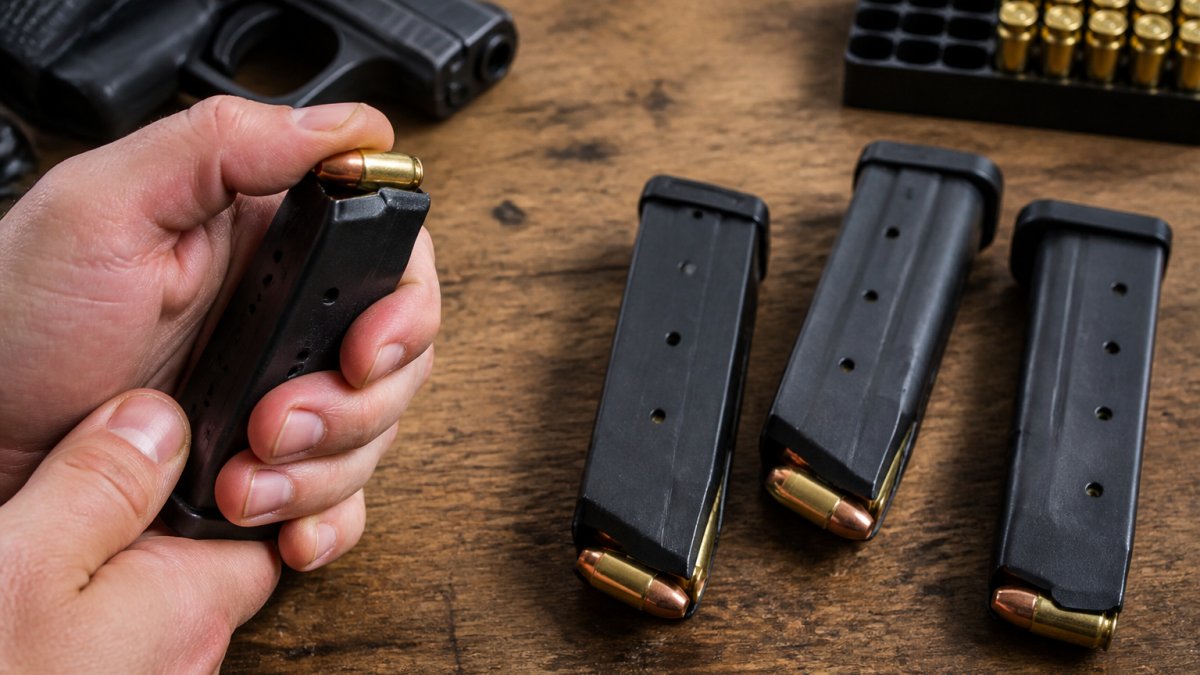
The bullet tip must face the open, front end of the magazine. The flat base sits against the follower. Get this wrong and the round goes in backward, which jams the whole stack.
Grip the magazine body in your non-dominant hand. Keep the feed lips pointed away from your palm. A steady grip stops the magazine from twisting as you push.
Step 2: Seat Each Round Fully Without Excessive Force
Press each cartridge down and back until it clicks into place under the feed lips. Then slide the next round in behind it.
Push until the round stops. Do not slam it. Steady pressure seats the round; brute force bends the feed lips and damages the casing.
- Load one round at a time until it feels natural
- Keep the stack even, not tilted
- Stop if a round will not seat
- Check the top round sits flat before you continue
Using a Pistol Magazine Loader to Prevent Mistakes
A pistol magazine loader removes most of the human error from the process.
This is where a good loader earns its place in your range bag. Our Bulletproof Pistol Speed Loader loads a magazine in two steps: insert the magazine, then feed and push.

For high-volume range days, the COMBAT model handles the same job in a compact, durable polymer frame. If you want an anodized aluminum lever and mag release button, the TACTICAL model adds that hardware.


The main thing a loader fixes: hand fatigue. Sore thumbs cause sloppy loading, and sloppy loading causes jams.
Common Pistol Magazine Malfunctions Caused by Loading Errors
Feeding failures, double feeds, and failure-to-lock-back almost always trace to the load. A tilted round, a backward cartridge, or a partially seated round will stop the gun cold.
Here is how the mistakes map to the symptoms:
| Loading Mistake | What Happens | The Fix |
|---|---|---|
| Round loaded backward | Fails to feed, jams the stack | Unload, reorient, reload |
| Round not fully seated | Nose-dives into the feed ramp | Seat each round until it stops |
| Tilted stack from rushing | Failure to feed on the next round | Load evenly, one at a time |
| Feed lips bent by force | Rounds sit loose or bind | Inspect lips, retire the magazine |
| Overfilled past capacity | Magazine will not seat in the well | Load to rated capacity only |
A failure to feed is when the slide cannot push the next round into the chamber. A double feed is when two rounds try to enter at once. Both start in the magazine.
Magazine Spring and Follower Problems You Should Catch Early
The magazine spring pushes the follower, and the follower pushes the rounds up. When either wears out, the magazine stops feeding reliably. The hard part is not knowing that springs wear, it is telling normal resistance apart from a real problem before it costs you a range session.
Normal Resistance vs. a Problem
Normal spring resistance feels firm and even as you load. It gets progressively stiffer toward the top of the magazine because you are compressing more coils. A new magazine may feel stiff at first. That is expected, not a defect.
A problem feels different in kind, not just degree:
- Normal: even resistance that increases smoothly from the first round to the last.
- Problem: a sudden hard stop, a gritty or scraping feel, or a spot where the follower binds and then releases.
- Normal: the follower rises smoothly and sits level when you unload.
- Problem: the follower tilts, sticks, or fails to reach the top of the magazine body.
- Normal: rounds sit snug with slight side-to-side play.
- Problem: rounds rattle loosely, sit at an angle, or drop free when you tilt the magazine.
If the resistance changes character partway through loading, stop. Do not push through it. A bound follower or a bent feed lip will not fix itself with more force.
The Final-Round Problem
A magazine that feeds the first several rounds but fails on the last one or two is showing a classic pattern. Springs lose tension over time, and the last rounds get the least push.
This is also where capacity matters. Loading to the rated capacity compresses the spring fully. Some magazines are designed with a small amount of extra compression at full capacity, and some are not.
Bulletproof Pistol Speed Loader →
A practical test: load to rated capacity, let the magazine rest for a few days, then unload and inspect. If the top rounds have taken a set or the follower hesitates, the spring is the likely cause.
Rotation and Storage
Rotate your magazines. Let loaded magazines rest between range sessions so the spring is not compressed for months on end. This is not a cure for a worn spring, but it slows wear and gives you a chance to notice changes.
Inspect the follower and spring every time you clean your gear. Look for:
- A spring that feels weak or spongy near full capacity
- A follower that tilts or sticks instead of rising smoothly
- Rounds that rattle loosely instead of sitting snug
- A magazine that feeds the first few rounds but fails near the end
If a magazine fails the same way twice after a proper reload, stop using it. Set it aside, mark it, and replace it. Do not keep a bad magazine in your carry rotation.
Safety-First Checklist for Loading and Verifying a Handgun Magazine
Run this before every session. It takes under a minute and catches the mistakes that cause range failures.
- Clear the firearm and keep it pointed in a safe direction
- Keep your finger off the trigger and outside the guard
- Check every round faces the same direction before loading
- Seat each round fully with steady pressure
- Load to the magazine's rated capacity only
- Tap the back of the magazine to settle the stack
- Confirm the top round sits flat under the feed lips
- Insert the magazine and confirm it locks in place
- Rack the slide and confirm the first round chambers
- Keep the muzzle pointed downrange at all times
Trigger discipline and safe handling come before speed. A fast reload means nothing if the gun is pointed the wrong way.
When Not to Use a Magazine: Damage, Wear, and Incompatibility
Some magazines should come out of rotation for good. Knowing when to stop using one protects your gun and your safety. The trick is separating a magazine that needs cleaning from one that needs to be retired.
Stop-Use Checklist
Retire a magazine if you see any of these:
- Cracked or bent feed lips
- A cracked or split magazine body
- A follower that will not move freely
- A spring that has lost its tension
- Rust or heavy corrosion on the spring
- A magazine that will not lock into the well
- A magazine that fails the same way twice after a proper reload
If a magazine fails the same way twice, stop using it. Set it aside, mark it, and replace it. Do not keep a bad magazine in your carry rotation.
Capacity and the Final-Round Loading Problem
Loading to the rated capacity is not always the same as loading to the maximum the magazine will physically accept. Some magazines will take an extra round if you force it.
A magazine that will not seat with light pressure is overfilled or misaligned. Forcing it damages the magazine catch and the well. Load to the rated capacity only, and if the magazine will not seat, remove one round and try again.
The final-round problem is related. If your magazine only fails on the last round or two, the spring is the likely cause. Springs lose tension over time, and the last rounds get the least push.
Incompatibility and Model Differences
Incompatibility is its own problem. An aftermarket magazine may fit one model but not another. A magazine built for a compact frame will not seat in a full-size gun. Always match the magazine to your exact handgun model.
Loading feel also varies by design. Double-stack magazines feel different from single-stack magazines because the rounds sit in a staggered column.
If you are unsure whether a magazine is compatible, check the manufacturer's documentation for your exact model. Do not modify parts to make a magazine fit. A magazine that requires modification to seat is the wrong magazine.
Conclusion
Loading a handgun magazine correctly is a skill you build, not a step you rush. The mistakes are small, but the results are not.
At BULLETPROOF SPEED LOADERS, we build gear for shooters who load under pressure. Our EZ-MAG pistol speed loader seats every round squarely, saves your thumbs, and comes with a lifetime repair, replace, or refund warranty backed by US-based support. Pair it with the COMBAT or TACTICAL model for high-volume range days.
Get started with BULLETPROOF SPEED LOADERS and load with confidence every time.
Frequently Asked Questions
What are common mistakes when loading handgun magazines?
The most frequent mistakes include inserting cartridges backward, not seating each round fully, using excessive force that bends feed lips, loading to full capacity when a magazine is stiff or new, and ignoring spring tension that feels wrong. Each of these can cause feeding problems, jams, or damage to the magazine. Loading one round at a time and checking each round sits flush against the previous one prevents most of these issues.
Why is the last round difficult to load into a handgun magazine?
The magazine spring compresses tighter as you add rounds, so the final round requires the most force. A stiff or new magazine makes this worse. If the last round will not seat with firm, steady thumb pressure, stop. Forcing it can damage the follower or spring. A pistol magazine loader compresses the spring evenly and removes the thumb strain, which is why many shooters keep one in their range bag.
How can a magazine loader help prevent loading mistakes?
A magazine loader holds the magazine stable and pushes each round straight down, which keeps cartridges aligned and fully seated. That reduces backward rounds, bent feed lips, and sore thumbs. The Bulletproof Pistol Speed Loader ($34.95) fits Glock 17, 19, 22, 26, 27, 34, and many other models in 9mm, .40 S&W, and some .380, and it works with most major brands. It loads in two steps: insert the magazine, then feed and push.
Can loading a handgun magazine incorrectly cause a malfunction?
Yes. A round that is not fully seated can sit at the wrong angle and fail to feed when the slide cycles. Cartridges loaded backward will not feed at all. Overloading a stiff magazine can stress the spring and follower, leading to weak spring tension over time. These are common pistol magazine malfunctions, and most trace back to how the magazine was loaded and handled before it reached the firearm.