 ultimate-guide
Concealed Carry Firearm Maintenance for Reliability
Table of Contents
- How Often to Clean Your Carry Gun
- Step-by-Step Cleaning for Concealed Carry Firearm Reliability
- Lubrication Points That Keep Your Pistol Running
- Preventing Rust on Concealed Carry Firearms
- Best Gun Cleaning Kits for Pistols
- How Often to Rotate Self-Defense Ammo
- Troubleshooting Common Reliability Issues
- Frequently Asked Questions
Last Updated: September 13, 2026
How Often to Clean Your Carry Gun
The honest answer is that your carry gun needs cleaning more often than your range gun, and most owners clean far too rarely. A concealed carry firearm lives against your body, collects lint, sweat, and dust, and gets exposed to humidity every single day. That environment is harder on a pistol than a hundred rounds at the range.
A practical schedule for most carriers:
- Wipe-down: Every 1-2 weeks, especially in summer
- Full clean: Every 200-300 rounds, or monthly if you carry daily and shoot little
- Deep inspection: Every 1,000 rounds or twice a year
If you sweat heavily, work outdoors, or live in a humid climate, shorten those intervals. The goal isn't a spotless gun. It's a gun that fires when you need it to.
NRA guide to firearm maintenance and safety
Step-by-Step Cleaning for Concealed Carry Firearm Reliability
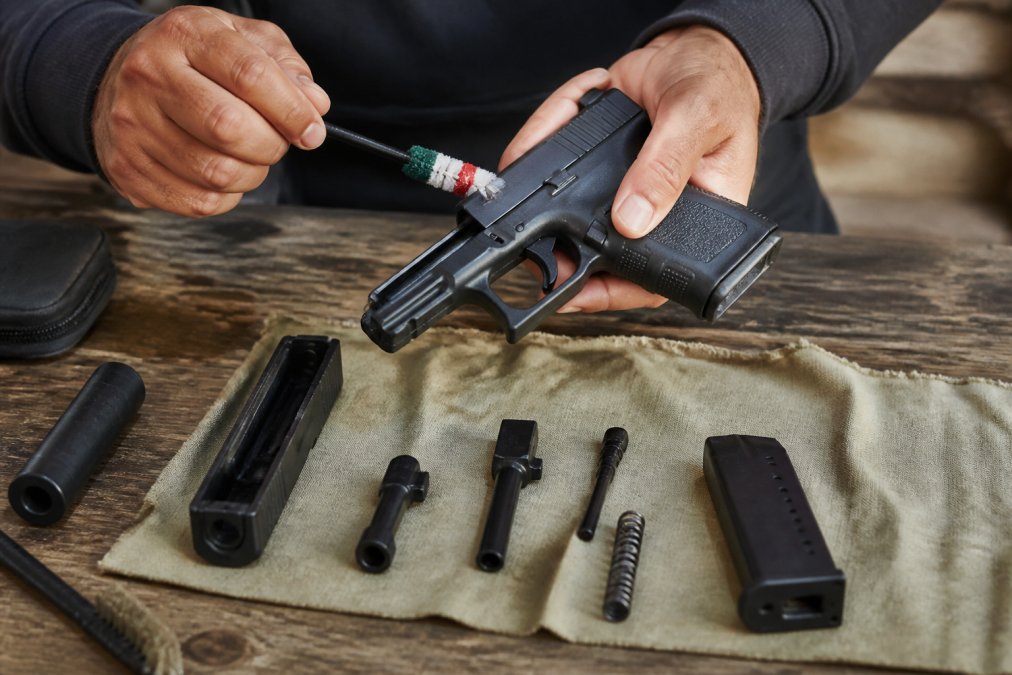
Cleaning a carry pistol takes about 20 minutes once you know the routine. The order matters: strip first, inspect before you clean, then work from the bore outward.
Field Strip and Inspect
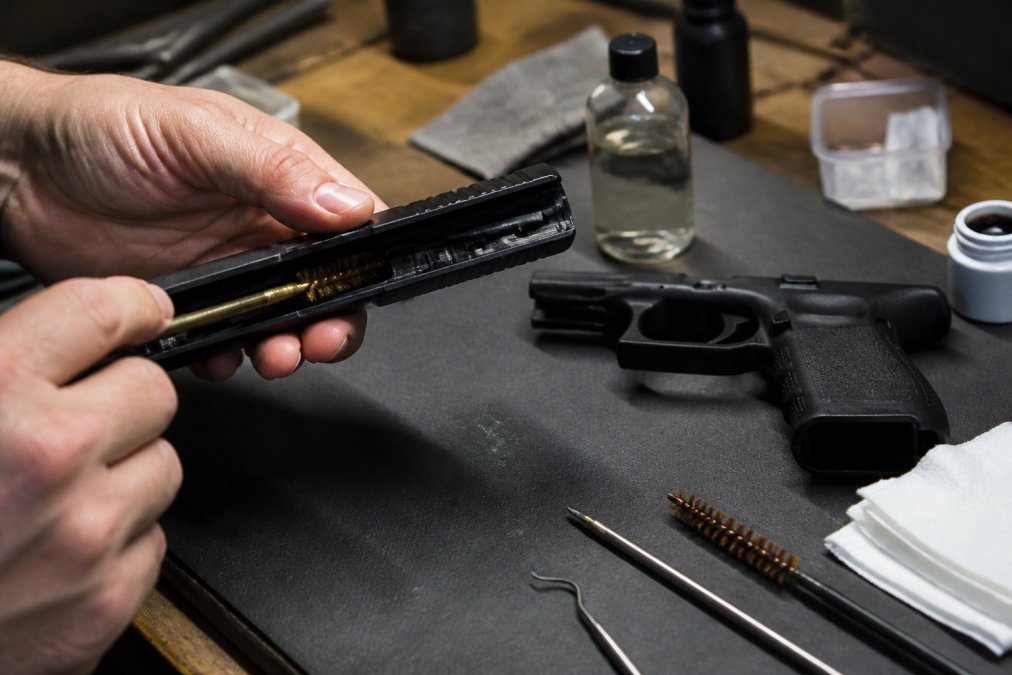
Field strip the pistol according to your owner's manual, then look before you scrub. Check the feed ramp for copper fouling, the extractor claw for chips, and the recoil spring for kinks or flat spots. A worn spring is one of the most common causes of feeding failures, and it's easy to miss if you only ever clean and never inspect (nra.org).
Clean the Barrel, Slide, and Frame
Run a solvent-soaked patch through the bore, let it sit a few minutes, then brush and patch until they come out clean. Wipe the slide rails, breech face, and frame with a solvent-dampened cloth. A common mistake is drowning the firing pin channel in oil. Solvent and oil belong on metal surfaces, not inside the striker or firing pin assembly, where they attract grit and can cause light strikes.
Lubrication Points That Keep Your Pistol Running
A carry pistol needs lubrication, but the right amount in the right places. Over-oiling is more common than under-oiling, and it collects the exact lint and dust you're trying to keep out.
Where to Apply Oil vs Grease
Use oil on the slide rails, barrel hood, and barrel exterior where it contacts the slide. Use a light grease on high-load surfaces if you shoot a lot, since grease stays put longer than oil under heat. Keep oil off the striker channel, the magazine well, and the grip.
Preventing Rust on Concealed Carry Firearms
Rust is the quiet killer of carry guns because it starts under the grip panel and inside the slide, where you rarely look. Sweat is the main culprit. A carry pistol pressed against your body every day sees more moisture than a safe queen ever will.
Prevention comes down to three habits:
- Wipe the exterior with a silicone cloth after handling
- Remove grip panels monthly and check the frame underneath
- Use a corrosion-inhibiting wipe on the slide and barrel
Stainless steel resists rust but isn't immune. Blued and parkerized finishes need more attention. If you carry in a leather holster, check it often. Leather holds moisture against the finish and is a common source of surface rust on the slide.
Best Gun Cleaning Kits for Pistols
A good kit doesn't need to be expensive. It needs the right pieces for a pistol, not a rifle kit with a pistol rod thrown in. Look for a caliber-specific bore brush, a cleaning rod long enough for your barrel, cotton patches, a quality solvent, and a dedicated lubricant.
What most guides miss is that a universal kit often fits nothing well. A rod that's too short won't push a patch through a 4-inch barrel cleanly, and a brush in the wrong caliber won't scrub the bore. Match the kit to your pistol's caliber and barrel length.
At BULLETPROOF SPEED LOADERS, we build carry gear for people who run their equipment hard.
How Often to Rotate Self-Defense Ammo
Rotate your carry ammo every six months, or sooner if it's been chambered repeatedly. Every time you load a round into the chamber, the bullet can be pushed slightly deeper into the case, a condition shooters call setback. Enough setback raises pressure and can cause a malfunction at the worst possible moment (saami.org).
A simple rotation system:
| Action | Frequency | Why It Matters |
|---|---|---|
| Swap chambered round | Every 1-2 weeks | Prevents bullet setback |
| Rotate full magazine | Every 3 months | Reduces spring fatigue |
| Replace carry ammo | Every 6-12 months | Ensures reliable ignition |
Shoot your old carry ammo at the range when you rotate it. That confirms it still feeds and fires, and it's cheaper than trusting ammo that's been riding in a magazine for two years.
Troubleshooting Common Reliability Issues
Most carry-gun failures trace back to three things: fouling, lubrication, or worn parts. Work through them in that order before you blame the gun.
- Failure to feed: Check the feed ramp for fouling, inspect the magazine spring, and confirm the recoil spring isn't worn.
- Failure to eject: Look at the extractor claw and the ejector. A dirty extractor is a frequent cause.
- Light primer strikes: Clean the striker channel and remove any oil or grit inside it.
- Failure to return to battery: Lubricate the slide rails and check for a weak recoil spring.
A reliable concealed carry firearm comes down to a routine: clean it on schedule, lubricate it correctly, watch for rust, rotate your ammo, and fix small issues before they become failures. BULLETPROOF SPEED LOADERS builds combat-ready gear for carriers who take that seriously, from our EZ-MAG pistol speed loader to our tactical wallets and accessories, all engineered for durability and precision.
Frequently Asked Questions
How often should you clean your concealed carry firearm?
Most concealed carry firearm owners should clean their pistol at least once a month, even if it has not been fired. Carrying daily exposes the gun to lint, dust, sweat, and humidity that build up inside the action. If you shoot your carry gun at the range, clean it within 24 hours of that session. A good rule: clean after every range trip, and do a quick wipe-down and re-lube monthly between trips.
What are the signs that your carry pistol needs maintenance?
Watch for a gritty or heavy trigger pull, failure to fully return to battery, light primer strikes, or visible rust on the slide or frame. A magazine that no longer drops free or feels stiff when loading is another sign. If your pistol has not been cleaned in over a month of daily carry, or you notice lint packed around the firing pin channel, it is time for a full cleaning and lubrication.
Should I lubricate my carry gun differently than a range gun?
Yes. A concealed carry firearm runs in a dirtier environment than a range gun, so use less oil and more grease on high-friction points like the slide rails and barrel hood. Excess oil attracts lint and dust, which can gum up the action. A light film on the barrel and a small dab of grease on the rails is enough. Wipe off any oil that collects near the firing pin channel.
How often should I rotate my self-defense ammunition?
Rotate your self-defense ammunition every six months if you carry daily. Chambering the same round repeatedly can push the bullet deeper into the case, a condition called setback, which raises pressure and can cause a malfunction. Mark the top round in your magazine with a small dot, and when it has been chambered more than three or four times, move it to the bottom of the magazine or fire it at your next range session.
Your carry gun is only as reliable as the maintenance behind it, and small hands or heavy daily use shouldn't force a compromise in your gear. BULLETPROOF SPEED LOADERS makes tactical equipment built for the way you actually carry, with combat-ready speed loader models, specialized pistol speed loading technology, and durable construction for daily use. Add BULLETPROOF SPEED LOADERS gear to your loadout and keep your setup ready when it counts.