 blog
9 Travel Comfort Mistakes With Concealed Carry Holsters
Quick Summary
The most comfortable concealed carry holster for travel is one that stays put and stays comfortable while seated for hours, not just for the first minutes. Test it in 30-minute sitting blocks with your travel clothing and seat belt, and adjust cant or ride height to avoid hip and thigh pressure.
- Seated pressure matters more than material or price for long trips.
- Run a 30-minute seated test in the exact clothing you will travel in.
- Check for pressure where the lap belt crosses the holster body.
- Adjust cant or ride height one variable at a time, then re-test.
- A comfortable holster does not make air or vehicle travel legal.
Table of Contents
- Why Travel Changes What a Comfortable Holster Means
- Best Concealed Carry Holster Types for Travel Comfort
- Finding the Most Comfortable Concealed Carry Holster for Long Sitting
- Concealed Carry Holster for Long Drives: Cant, Clothing and Access
- Choosing a Concealed Carry Holster by Body Type
- Air Travel, Vehicle Storage and Traveling Lawfully
- Test Your Travel Holster Before the Trip
- Frequently Asked Questions
Why Travel Changes What a Comfortable Holster Means
Last Updated: November 1, 2026
Choosing a concealed carry holster for a long day at home is one thing. Choosing one for an airport, a rental car and a six-hour drive is another.
A concealed carry holster is a device that secures a handgun to the body or clothing so it stays concealed and accessible.
Most people focus on the holster's material and price. That matters, but it is the wrong starting point for travel.
Best Concealed Carry Holster Types for Travel Comfort
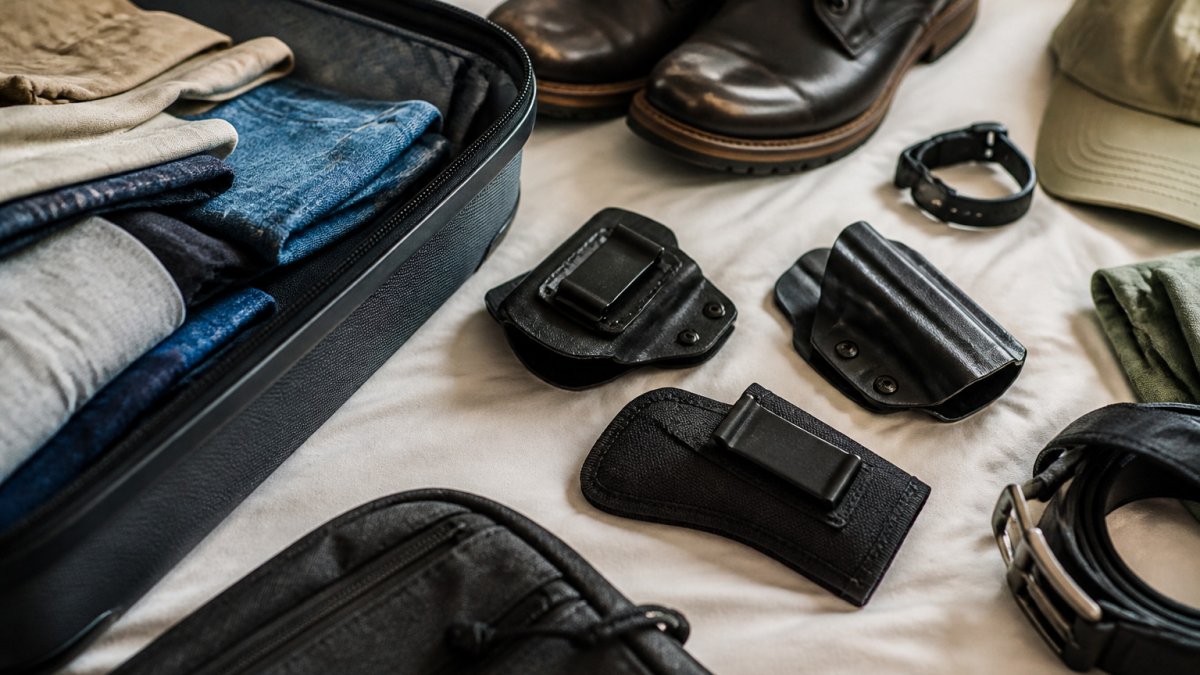
The holster type you choose sets the baseline for comfort. Inside-the-waistband (IWB) holsters sit between your pants and your body. Outside-the-waistband (OWB) holsters ride on the outside of the belt. Pocket holsters and hybrid designs fill specific niches.
IWB Holsters for All-Day Carry
IWB holsters are the most common choice for concealed carry because they keep the firearm close and hidden. For travel, the concern is pressure. A thin, unpadded holster can dig into your hip when you sit. Look for a padded backing and a wider clip or loop that spreads the load across the belt.
Outside-the-Waistband and Pocket Options
OWB holsters are more comfortable for some people and can be easier to draw from, but they require a jacket or overshirt to conceal. That can be a problem in warm weather or on a flight. Pocket holsters avoid waistband pressure entirely, though they limit which firearms you can carry and how fast you can access them.
Finding the Most Comfortable Concealed Carry Holster for Long Sitting
Sitting is the hardest test a travel holster faces, and the one most buyers never run before a trip. Standing, your belt line sits roughly level and the holster hangs against soft tissue. Seated, your hip flexes, your waistband rides up in back, and the rear edge of the holster can be driven into the iliac crest or the crease of the thigh.
Where seated pressure actually lands
Seated pressure tends to concentrate in a few zones. Knowing them can help you assess a holster:
- Iliac crest (hip bone). The top rear corner of a strong-side IWB holster presses here when you lean back. A lower ride height or a rear clip moved forward usually fixes it.
- Thigh crease. Appendix and forward-of-hip carry rigs rotate into the crease when the hip flexes past about 90 degrees. A shorter holster body or a higher cant reduces the contact.
- Lower back. A holster that rides too far rearward contacts the seat back and gets pushed forward as you settle, which shifts the whole rig.
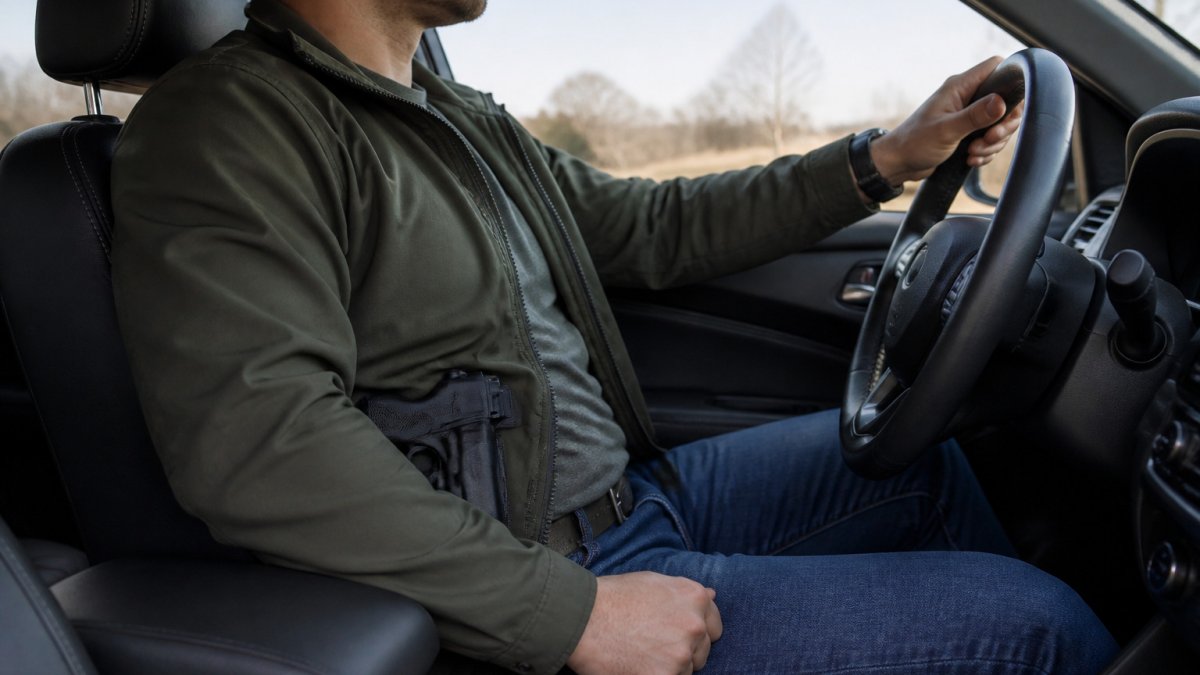
- Belt line under the seat belt. The lap belt crosses the holster and adds a second pressure line. This is the one travel-specific pressure point most everyday-carry guides never mention.
A repeatable seated comfort test
A structured test at home before you pack can show how a holster performs while seated.
- Dress for the trip. Wear the exact pants, belt, undershirt, and cover garment you plan to travel in. A holster tested in gym shorts tells you nothing about a 6-hour drive in jeans.
- Sit in 30-minute blocks. Use a kitchen chair, then a car seat, then a soft couch. Each surface loads the holster differently.
- Log the clock. Note the minute a hot spot first appears. A pressure point at 20 minutes will be a genuine problem at hour four.
- Change position on purpose. Cross and uncross your legs, lean forward to reach a cup holder, twist to check a blind spot. Travel is constant small movement against a fixed holster.
- Re-check concealment when you stand. Printing often appears after sitting because the cover garment has ridden up. Look in a mirror immediately after standing.
- Repeat with the lap belt on. Buckle a seat belt over the rig and sit for another 15 minutes. If the belt crosses the holster body, you have found the pressure line that will define your drive.
Materials as they behave when seated
Kydex holds its shape and retention well, but a rigid shell concentrates pressure at its edges, so a full-length sweat guard or body-side pad makes a real difference over hours.
Adjusting for the seated position
Cant and ride height are the two adjustments that change seated comfort most. Increasing forward cant on a strong-side rig rotates the rear of the holster up and away from the hip crease. Lowering ride height reduces rib and hip-bone contact but can cost you a clean draw.
The seated test below lists the steps and timing that show how a holster performs over a long trip.
Bulletproof Concealed Carry Tactical Wallet →
| Step | What to do | Time or frequency |
|---|---|---|
| Dress for the trip | Wear the exact pants, belt, undershirt and cover garment you will travel in | Before testing |
| Sit in blocks | Sit on a kitchen chair, car seat, then soft couch | 30-minute blocks |
| Log hot spots | Note the minute a hot spot first appears | Throughout each block |
| Change position | Cross legs, lean forward, twist to check blind spot | During sitting |
| Re-check concealment | Look in a mirror right after standing | Immediately after standing |
| Repeat with lap belt | Buckle a seat belt over the rig and sit | Another 15 minutes |
Concealed Carry Holster for Long Drives: Cant, Clothing and Access
Long drives create their own problems. Seated, the firearm can rotate or ride higher on the belt, changing how it sits against your body and how easily you reach it.
Clothing also plays a role. Loose, untucked shirts can hide a holster well, but they can also shift and expose it when you reach for a seatbelt or a bag.
Choosing a Concealed Carry Holster by Body Type
Body type affects how a holster sits. A person with a larger midsection may find an IWB holster rides high or presses into the ribs when seated. A person with a slimmer build may find the same holster slides down or shifts during a long day.
Test different positions before you travel. Carry with the clothing you plan to wear, sit for an extended period, and check for comfort, concealment and access.
Air Travel, Vehicle Storage and Traveling Lawfully
This is the section most concealed-carry holster articles skip, and it is the one that matters most on a trip. A holster does not make air travel compliant, and it does not override state or local storage rules. Treat the holster as one part of a lawful travel plan, not a substitute for one.
Flying with a firearm: what the rules actually require
The Transportation Security Administration (TSA) publishes guidance on traveling with firearms, and airlines may add their own requirements. The core rules are consistent and worth knowing before you pack:
- No firearms at the checkpoint. Firearms are not permitted in carry-on bags or on your person through security screening. A holster worn or packed in a carry-on does not change that.
- Checked baggage only, declared. Firearms must travel in checked baggage and be declared to the airline at check-in. The declaration step is not optional and is not the same as simply locking a case.
- Hard-sided, locked container. The firearm must be unloaded and packed in a hard-sided, locked container. Many travelers use a hard case inside a locked suitcase; confirm current TSA and airline wording, because locking and access specifics can change.
- Ammunition rules differ. Check your specific airline's policy on carrying ammunition.
Vehicle storage: the part that varies most by jurisdiction
Vehicle storage is where lawful travel gets genuinely complicated, because the rules are set at the state and often local level and they do not travel with you. A storage method that is fine at home may be restricted in the next state on your route. Before a road trip:
- Map every state you will pass through, not just your destination. Transit states count.
- Check storage-specific rules, which are often separate from carry-permit rules. Some jurisdictions require a locked container; some restrict leaving a firearm in an unattended vehicle at all; some treat a glove box or console differently from a locked case.
- Use a lockbox or hard case that is out of sight and secured to the vehicle where permitted. A cable-secured lockbox under a seat is a common pattern, but confirm it satisfies local rules.
- Plan for the places you cannot carry. Post offices, federal facilities, schools, and many private venues restrict firearms. A secure vehicle lockbox is often the practical answer, provided local law allows it.
Carry permits and reciprocity across state lines
Concealed carry laws vary by state, and reciprocity arrangements differ. Confirm the current requirements for each destination with the relevant state authorities before you travel.
A pre-trip lawful-travel checklist
- Confirm TSA and airline firearms policy if flying.
- Confirm permit recognition and restricted locations for every state on the route.
- Confirm vehicle storage rules for each state and for any locality where you will park overnight.
- Confirm hotel policy on firearms if you plan to leave one in a room.
Test Your Travel Holster Before the Trip
Test your holster before you rely on it. Wear it for a full day at home with the clothing you plan to take.
Check the holster's fit and retention as well. Confirm the firearm stays secure when you bend, reach and sit. Inspect for wear, loose stitching or a weakened clip, and replace any part that no longer holds firmly.
Frequently Asked Questions
What type of concealed carry holster is most comfortable for travel?
For most people traveling by car or plane, an inside-the-waistband holster with a padded or contoured backing tends to be the most comfortable choice, because it keeps the grip close to the body and spreads pressure across the belt line. Outside-the-waistband holsters can be comfortable too but usually need a longer shirt or jacket to conceal. Test any holster while seated for at least 30 minutes before relying on it on a trip, since comfort while standing and comfort while sitting often differ.
Can I wear a concealed carry holster while sitting for long periods?
Yes, but sitting changes how a holster sits against your body. Seated, the grip can press into the side or hip and the holster may ride higher or lower than when standing. Look for adjustable cant and ride height, and consider a holster that keeps the firearm slightly rearward for a more comfortable seated position. Check that the firearm is secure and that the holster does not shift when you stand up and sit down again.
How can I safely store a firearm when I cannot carry it while traveling?
When you cannot carry, store the firearm unloaded in a locked, hard-sided case, separate from ammunition, and keep it out of the passenger compartment and out of reach. Check the laws of your departure and destination states before you travel, because rules on transport and storage vary by state and by airport, and airlines have their own declaration and packing requirements for checked firearms.
What should I look for in a travel-friendly concealed carry holster?
Prioritize retention that holds the firearm securely when you sit, bend and get in and out of a vehicle, plus a low-profile shape that conceals under travel clothing. Check that the holster fits your exact firearm model, that it has a stable belt attachment, and that the backing does not dig in during long wear. Wearing it on a practice drive before your trip will show you how it performs in real use.