 blog
5 Best Belt Setups for USPSA Competition in 2026
Table of Contents
- What Makes a Belt Setup Match-Ready for USPSA
- Quick Comparison: 5 Belt Setups for USPSA Competition
- How to Assemble a Competition Belt: Inner, Outer, and Hardware
- 1. Double-Alpha Academy Premium Belt: Best Overall Rigidity
- 2. Safariland ELS Competition Belt: Best Modular System
- 3. Black Scorpion Gear Pro Competition Rig: Best Budget Rig
- 4. CR Speed Hi-Torque Belt: Best for Open Division
- 5. Ghost Hydra P+ Belt: Best for Carry Optics and Production
- Frequently Asked Questions
Last Updated: September 26, 2026
What Makes a Belt Setup Match-Ready for USPSA
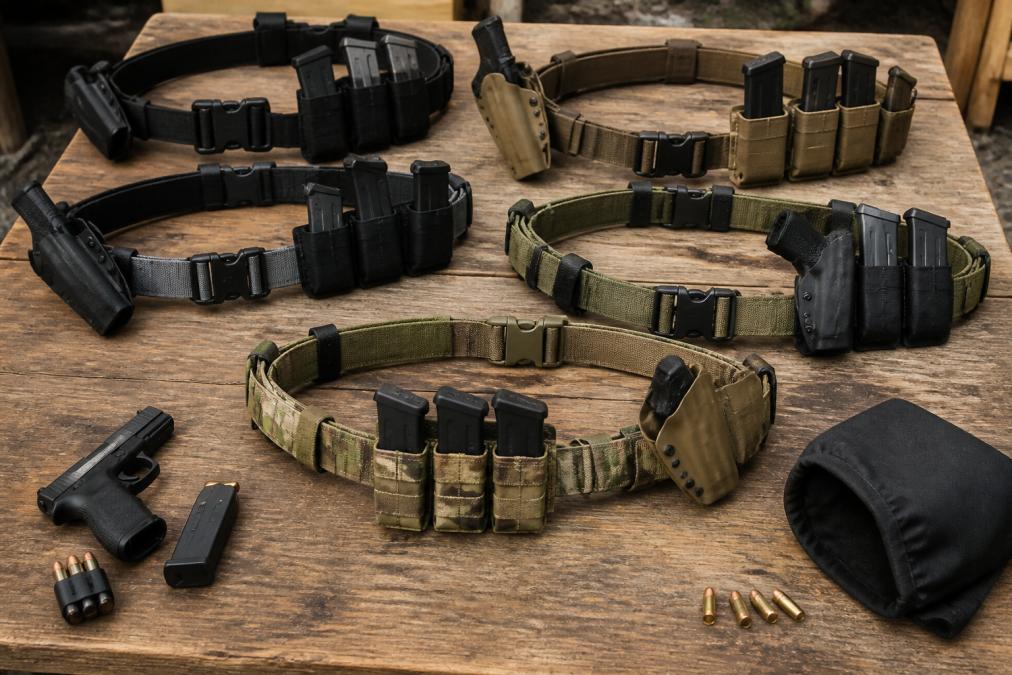
A match-ready belt setup is a two-belt system that holds your holster and magazines in the exact same spot on every draw, with enough stiffness to stop the rig from shifting when you move fast. A match-ready belt setup is a two-belt system that holds your holster and magazines in the exact same spot on every draw, with enough stiffness to stop the rig from shifting when you move fast. The fix starts with the belt, not the holster.
The best belt setups for USPSA competition share three traits: a rigid outer belt that resists flex, a Velcro inner belt that locks the rig to your waist, and hardware positioned so your draw stroke and reloads repeat without thought. Everything else is preference.
If you're building your first rig, the sections below break down what to buy, how to assemble it, and which setup fits your division.
Quick Comparison: 5 Belt Setups for USPSA Competition
The table below summarizes the best belt setups for USPSA competition by division, stiffness, and adjustability. Use it to narrow your shortlist before reading the full reviews.
| Setup | Best For | Belt Style | Adjustability |
|---|---|---|---|
| Double-Alpha Academy Premium | Overall rigidity | Double belt | Limited |
| Safariland ELS | Modular gear swaps | Double belt | Moderate |
| Black Scorpion Gear Pro | Budget builds | Double belt | Moderate |
| CR Speed Hi-Torque | Open division | Double belt | Wide range |
| Ghost Hydra P+ | Carry Optics and Production | Double belt | Wide range |
How to Assemble a Competition Belt: Inner, Outer, and Hardware
Assembling a competition belt takes about 15 minutes once you have your components, but the details decide whether the rig stays put on a 30-round field course or shifts on the first sprint. The process is the same across every rig: thread the inner belt through your pant loops, then attach the outer belt to it with hook and loop.
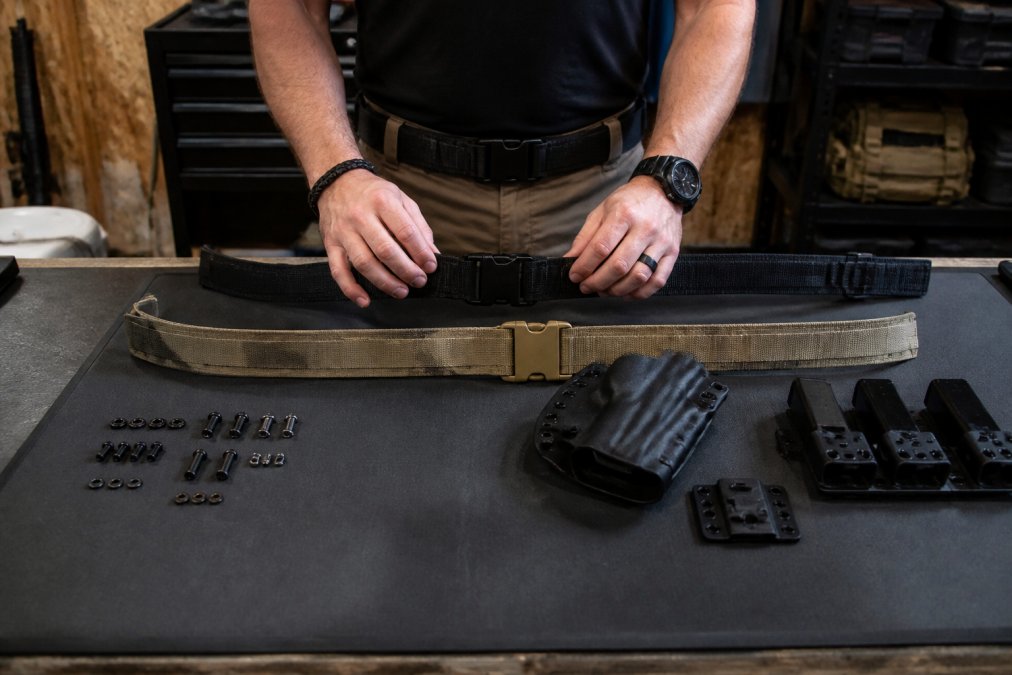
Measuring for the Right Belt Size
Measure your waist over your range pants and the inner belt you plan to wear, not your bare waist and not over a thin dress belt. Run a flexible tape around your natural waistline, roughly at or just above the top of your hip bones, and keep the tape level all the way around. A common pattern is that shooters measure two to four inches smaller than they should because they measure bare, then discover the outer belt overlaps the inner belt by only an inch or two.
Threading the Inner Belt
The inner belt is the loop side of the hook-and-loop pair on most double-belt systems, though a few rigs reverse it. Thread it through your pant loops so the loop surface faces outward. Keep the buckle or closure off to your non-dominant side so it does not sit under the holster hanger. Fasten it snug, snug enough that it does not rotate when you push on it, but not so tight that it digs in when you crouch into a shooting position.
Positioning the Outer Belt
Slide the outer belt on so the hook surface faces inward and engages the inner belt. The holster should sit at your dominant-side hip, with the muzzle oriented so the draw stroke travels straight up and slightly back. Magazine pouches go on the opposite side, angled so the magazine comes out with a natural wrist rotation. Press the outer belt down firmly along its full length, hook-and-loop only holds when the two surfaces are fully mated, and a partial engagement is the most common cause of a rig that shifts mid-stage.
Mounting Hardware and Hangers
Most competition holsters attach through a hanger or drop-and-offset plate. Tighten hanger screws with a driver, not by hand, and check them after the first few dry draws, new hardware settles. Use blue threadlocker on any screw that threads into metal, and skip it on screws that thread into polymer, where it can attack the plastic. Magazine pouches mount the same way: set the pouch angle, tighten the mounting screws, then confirm the pouch does not rotate when you pull a magazine at speed.
Dry-Fire Check Before Your First Match
Do a few dry draws and reloads to confirm nothing shifts. Then check three things: that the outer belt has not rotated relative to the inner belt, that the holster hanger screws are still tight, and that magazine pouches return to the same angle after a reload. If any of those move, fix it before you load live ammunition.
1. Double-Alpha Academy Premium Belt: Best Overall Rigidity
The Double-Alpha Academy Premium is the stiffest belt in this lineup, and that stiffness is the point. It resists flex even with a heavy Open rig hanging off it, which keeps your holster in the same spot draw after draw.
2. Safariland ELS Competition Belt: Best Modular System
The Safariland ELS belt wins on modularity. The ELS system lets you clip holsters and pouches on and off without tools, which matters if you shoot multiple divisions or share gear with a range partner.
3. Black Scorpion Gear Pro Competition Rig: Best Budget Rig
The Black Scorpion Gear Pro is the value pick. It delivers a proper double-belt system with hook and loop retention at a price that leaves budget for mag pouches and a holster.
4. CR Speed Hi-Torque Belt: Best for Open Division
The CR Speed Hi-Torque is built for Open division shooters running heavy, wide-body rigs. The belt's stiffness handles the weight of large magazine pouches and a race holster without sagging.
5. Ghost Hydra P+ Belt: Best for Carry Optics and Production
The Ghost Hydra P+ is the pick for Carry Optics and Production shooters, and the reason is rule-driven as much as it is ergonomic. Both divisions restrict how far your gear can sit from your body and where it can sit on your waist, so a belt that is too stiff or too wide can push your holster outside the allowed position even when the belt itself is legal.
What Production and Carry Optics Rules Require
In Production and Carry Optics, the holster and magazine pouches must be worn behind the front of the hip bones, and the belt must be worn at waist level. The holster body must cover the trigger guard, and the gun must be fully holstered before the start signal. Magazine pouches cannot be positioned forward of the hip bones either.
Why the Hydra P+ Fits These Divisions
The Hydra P+ is lighter than the Open-focused belts while staying stiff enough to keep your rig stable. That lighter build matters because Production and Carry Optics shooters typically run a shorter holster hanger and fewer magazine pouches than Open shooters, so a heavy belt adds weight without adding stability you can use. The micro-adjustment system is the standout feature.
Setting It Up for Compliance
Start with the holster hanger set as close to the body as the hardware allows, then position the outer belt so the holster sits just behind the front of your dominant-side hip bone. Mount magazine pouches behind the front of the opposite hip bone, angled so the magazine comes out with a natural wrist rotation. Do a dry draw and a dry reload, then check that neither the holster nor any pouch has drifted forward.
Where It Falls Short
The lighter build means it's not the right choice for a heavy Open rig. Match it to a Carry Optics or Production loadout and it performs. If you shoot both Open and a restricted division, you will likely want two belts rather than trying to make one belt serve both rule sets.
Frequently Asked Questions
What makes a good USPSA competition belt?
A good USPSA competition belt is stiff enough to hold holster and mag pouches without sagging during a stage run. Look for a double-belt design: a stiff outer belt with hook-and-loop lining and a thin inner belt that threads through your pants loops. The outer belt should resist flexing when you draw or reload. Rigidity, secure fastener systems, and a wide adjustment range matter more than brand name for match performance.
Do I need an inner and outer belt for USPSA?
Yes, most competitive shooters use a double-belt system. The inner belt threads through your pant loops and stays in place. The outer belt, which carries your holster and mag pouches, attaches to the inner belt using hook-and-loop fastener. This lets you put on or remove your entire rig quickly at the range. A single stiff belt can work for casual practice, but double-belt setups dominate USPSA matches for good reason.
How should I position my holster and mag pouches on a competition belt?
USPSA rules require the holster to sit behind the centerline of the body, with the front edge of the holster at or behind the hip bone. Mag pouches go on the opposite side, positioned for a natural reach during reloads. Place your first pouch about one hand-width from your belt buckle, then space remaining pouches evenly. Test your draw stroke and reloads with an empty gun before your first match to dial in placement.
Are stiff belts better for USPSA competition?
Stiffer belts reduce flex during the draw and reload, which helps with consistency. A belt that bends under the weight of a loaded magazine or a holster will shift your gear position mid-stage. Most top competitors use belts with a stiff polymer or laminated core. That said, a belt that is too stiff can dig into your waist on long match days. Find a balance between rigidity for performance and comfort for all-day wear.