 blog
Field Strip vs Deep Clean: Gun Cleaning Frequency
Table of Contents
- Field Strip vs Deep Clean: What's the Difference?
- Gun Cleaning Frequency by Round Count
- Your Firearm Maintenance Schedule: Monthly and Annual Tasks
- How to Clean a Gun Bore at Home
- Best Gun Cleaning Solvents and Lubricants
- Signs Your Firearm Needs Immediate Attention
- Common Cleaning Mistakes and When to See a Gunsmith
- Frequently Asked Questions
Last Updated: September 30, 2026
Field Strip vs Deep Clean: What's the Difference?
Field strip vs deep clean frequency comes down to two different jobs. A field strip is a quick takedown for routine cleaning; a deep clean is a full teardown that reaches parts a field strip never touches. This guide from BULLETPROOF SPEED LOADERS breaks down when to do each one.
What a Field Strip Covers
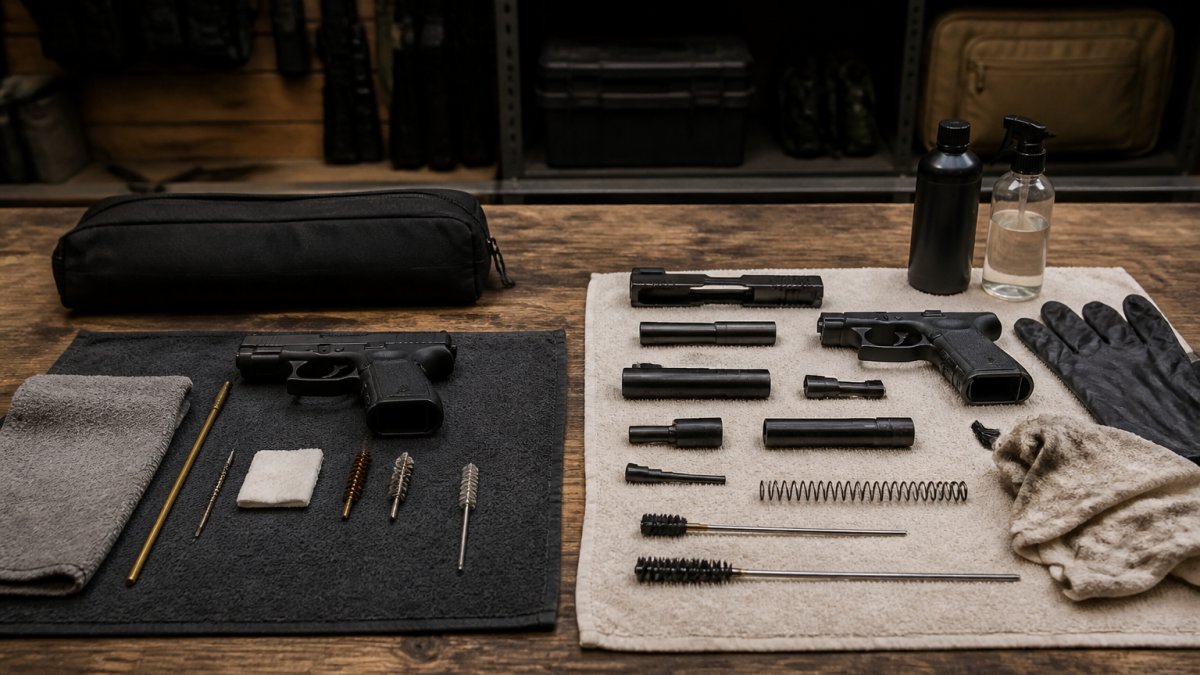
A field strip is a basic disassembly that separates the main groups of a firearm for routine cleaning, on most pistols, the slide, barrel, recoil spring, and frame. It takes a few minutes once you know the steps.
A field strip lets you reach:
- The bore and chamber
- The slide rails and frame rails
- The barrel hood and feed ramp
- The exterior of major parts
What a Deep Clean Adds
A deep clean goes past the field strip with a detail strip, or at least partial disassembly of the slide and frame components, clearing the gunk that causes real problems.
A deep clean adds:
- Firing pin and channel cleaning
- Extractor and plunger service
- Trigger group inspection
- Magazine disassembly and cleaning
- Full re-lubrication to spec
Gun Cleaning Frequency by Round Count
Round count is the single best way to set gun cleaning frequency. Time matters too, but rounds fired drive the wear and fouling. Here is a practical baseline.
| Firearm Type | Field Strip | Deep Clean |
|---|---|---|
| Carry pistol | Every 200-300 rounds | Every 1,000-1,500 rounds |
| Range pistol | Every 300-500 rounds | Every 2,000-3,000 rounds |
| Rifle (centerfire) | Every 200-400 rounds | Every 1,000-2,000 rounds |
| Shotgun | Every 200-300 shells | Yearly or 1,500+ shells |
| Rimfire (.22) | Every 500-1,000 rounds | Yearly |
Handguns, Rifles, and Shotguns
Handguns tolerate fouling better than most people think, a quality 9mm can run hundreds of rounds between cleanings. Rifles are less forgiving, since copper fouling and carbon buildup affect accuracy faster, especially in precision rifles.
Carry Guns and Range-Only Firearms
A carry gun lives in a harsh environment. Lint, dust, sweat, and body heat all work against it. Even if you fire few rounds, a carry pistol should get a field strip and light re-lube every few weeks.
Your Firearm Maintenance Schedule: Monthly and Annual Tasks
A written firearm maintenance schedule removes the guesswork, but a calendar alone is not enough. The ammo you shoot and where the gun lives can move your deep-clean interval by hundreds of rounds.
Monthly Tasks
- Field strip and wipe down carry guns
- Check for rust or corrosion, especially under grips and inside the slide
- Verify lubrication on slide rails and contact points
- Function check: rack the slide, dry fire, confirm the trigger resets
- Inspect magazines for cracked feed lips and compressed springs
- Confirm the safe or storage area is holding the humidity level you expect
Annual Tasks
- Full deep clean or detail strip
- Replace recoil springs on high-round-count guns
- Inspect the extractor and firing pin
- Check night sights if equipped
- Review your ammo storage for moisture
- Reassess your desiccant or dehumidifier setup if the gun lives in a safe
A common mistake is skipping the monthly check because the gun "was just cleaned." Carry guns pick up debris fast. A two-minute wipe-down beats a rusted slide.
How Ammo Type Changes the Schedule
Most cleaning-frequency guides treat all ammunition as equal. It is not. Two ammo variables should override your round-count schedule:
- Corrosive primers. Surplus and some imported ammunition uses corrosive primer compounds. The salts left in the bore and gas system attract moisture and begin etching steel within hours. A gun fired with corrosive ammo needs a water-based flush of the bore, chamber, bolt face, and gas system the same day, followed by a normal solvent clean and re-lube. This is not a field strip you can put off until the weekend.
- Steel-cased ammunition. The cases are typically polymer- or lacquer-coated, and that coating can leave residue in the chamber and extractor area. Steel cases also do not expand and seal the chamber the way brass does, so more carbon blows back into the action. Shorten the field-strip interval by roughly a third when shooting steel-cased ammo, and pay extra attention to the extractor and chamber.
- Lead and unjacketed bullets. These foul the bore faster than jacketed rounds and often need a dedicated lead-removal solvent.
- Heavy copper-jacketed rifle loads. Copper fouling builds in layers and affects accuracy before reliability, so precision rifles benefit from a copper-specific clean well before the general field-strip threshold.
How Storage Environment Changes the Schedule
Fouling does not worsen while a gun sits in the safe, but corrosion does. Humidity is the silent driver of deep-clean frequency for stored firearms.
- High-humidity environments. Coastal areas, basements, and garages push relative humidity above the range where steel begins to rust. There, a stored gun should be inspected monthly and treated with a corrosion-inhibiting protectant, even if unfired. A deep clean that includes the firing pin channel and extractor becomes more important because condensation can carry contaminants into those spaces.
- Safe storage with desiccant. A rechargeable desiccant canister or goldenrod-style dehumidifier holds humidity down and stretches the interval between deep cleans. Recharge the desiccant on the same monthly cadence as your inspection.
- Foam-lined cases. Open-cell foam holds moisture against the finish and is a common cause of surface rust. If a gun lives in a foam case, move it to a safe with controlled humidity or accept a shorter inspection interval.
- Air-conditioned living space. A climate-controlled interior is the mildest storage environment. Guns kept there and fired rarely can follow the annual deep-clean baseline.
Putting It Together
Use the round-count table as your baseline, then adjust:
- Shorten the interval for corrosive or steel-cased ammo, high humidity, or foam cases.
- Extend it slightly for brass-cased ammo, a climate-controlled safe, and low round counts.
- Never extend the monthly inspection. It costs two minutes and catches corrosion before it becomes pitting.
How to Clean a Gun Bore at Home
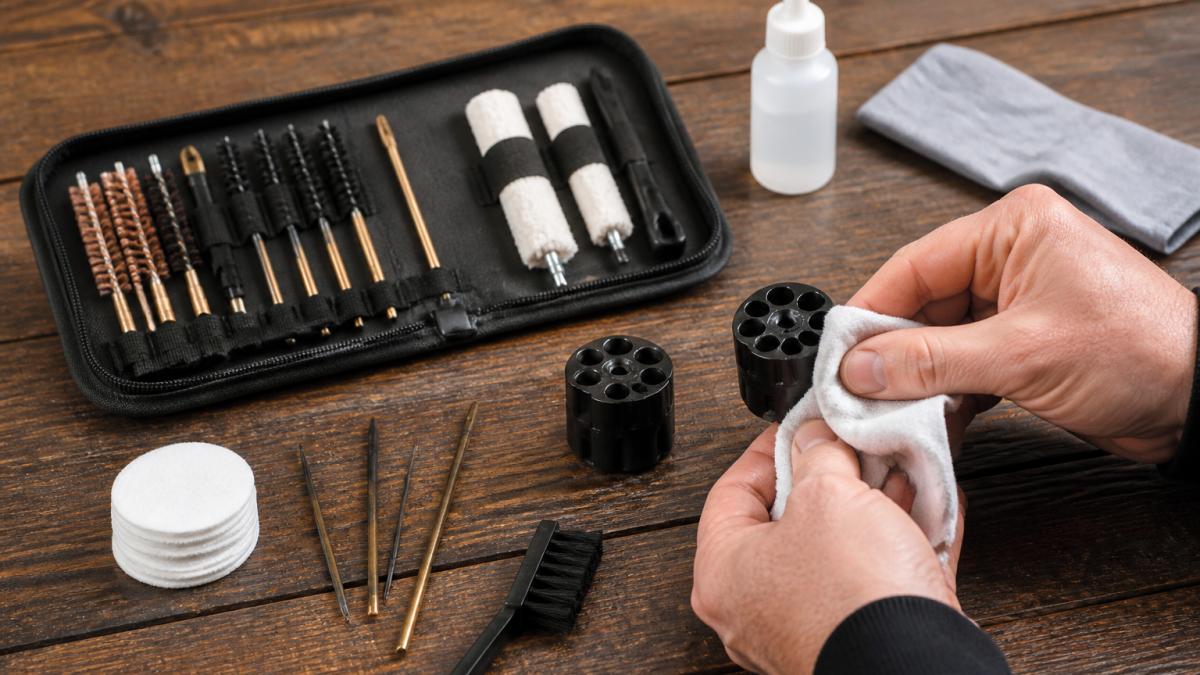
Learning how to clean gun bore at home is the core skill of firearm maintenance. The bore is where accuracy lives, and it needs the right tools and a steady hand.
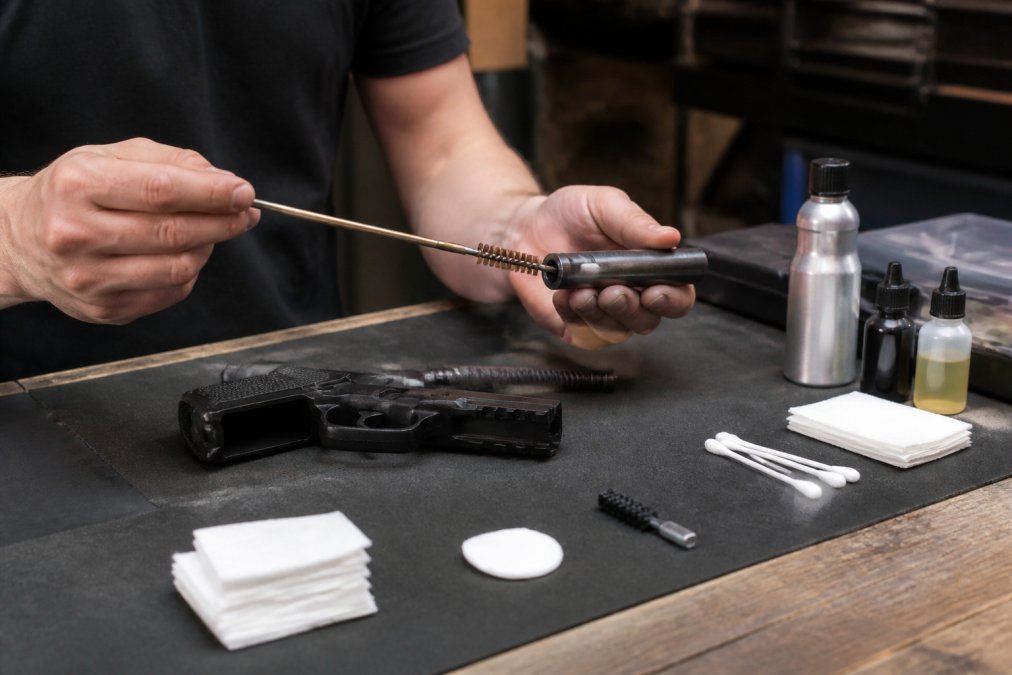
What you need:
- Cleaning rod sized to your caliber
- Bore brush in the correct caliber
- Cleaning patches
- Bore solvent
- Lubricant
- A clean work surface
Steps:
- Confirm the firearm is unloaded and the magazine is removed
- Field strip the firearm and separate the barrel
- Run a solvent-soaked patch through the bore
- Push the bore brush through in one direction, then back
- Repeat several passes to break up fouling
- Run clean patches until they come out mostly white
- Apply a light coat of lubricant to the bore and exterior
Best Gun Cleaning Solvents and Lubricants
The best gun cleaning solvents and lubricants do specific jobs: solvent breaks down carbon and fouling, lubricant reduces friction and protects against corrosion. One product for both rarely works well.
Pick based on the job:
- Carbon and powder fouling: general-purpose bore solvent
- Copper fouling: copper-specific solvent for rifles
- Lead fouling: a dedicated lead-removal solvent, not a general-purpose one
- Corrosive primer residue: a water-based flush first, then a normal solvent
- Everyday lubrication: light gun oil for rails and contact points
- Long storage: a thicker protectant grease or oil
- Carry guns: a dry or low-viscosity lube that will not attract dust
Match the Chemistry to the Material
This is where most guides stop, and where most damage happens. The right solvent for a legacy steel revolver can be the wrong solvent for a modern polymer-framed striker pistol.
- Legacy steel and blued finishes. These tolerate stronger solvents, but blued finishes and some older nickel plating can be damaged by ammonia-heavy copper removers if left on too long. Follow the label's dwell time.
- Stainless steel. More corrosion-resistant than carbon steel, but still subject to galling on sliding surfaces if run dry. Stainless wants lubrication, not just cleaning.
- Polymer frames. Many strong solvents will discolor, craze, or weaken polymer. Check the label for polymer compatibility. When in doubt, clean the metal parts off the frame and wipe the frame with a mild cleaner.
- Modern coatings (nitride, cerakote, DLC). Generally solvent-tolerant but can be damaged by abrasive scrubbing. Use patches and soft brushes, not metal brushes.
- Aluminum frames and trigger guards. Avoid ammonia-based solvents, which attack aluminum.
The Over-Oiling Trap
Too much oil collects dust and carbon and can seep into the firing pin channel, causing light strikes. On a striker-fired pistol, oil in the striker channel is one of the most common causes of unreliable primer ignition. The fix is less oil, applied to the right points. Lubricate the contact points the manufacturer specifies, then wipe off the excess.
Go/No-Go: When a Field Strip Is Not Enough
Before you reach for solvent, run a quick visual inspection. These criteria tell you a field strip will not solve the problem:
- Firing pin channel: shine a light in. Visible carbon or gummy oil means a detail strip is required; a field strip will not reach it.
- Extractor: look for carbon packed behind the hook. If the hook cannot move freely, feeding and extraction problems follow.
- Trigger group: a gritty or inconsistent pull usually means carbon has migrated into the trigger group. Field stripping does not reach it.
- Magazine: disassemble and check for carbon on the follower and compressed springs. A dirty magazine causes feeding problems that look like gun problems.
- Bore: if patches keep coming out dark after several passes, or accuracy has degraded, you are past routine cleaning and into copper or lead fouling removal.
Signs Your Firearm Needs Immediate Attention
Some problems wait for your next scheduled cleaning. Others do not. Watch for these signs and act right away.
- Accuracy degradation: groups open up for no clear reason
- Failure to feed or extract: a sign of fouling or a worn extractor
- Light primer strikes: often a dirty or over-oiled firing pin channel
- Rough or gritty trigger: carbon in the trigger group
- Visible rust: corrosion has already started
- Slide sluggishness: dry rails or a weak recoil spring
- Unusual noise or drag: a part is rubbing or loose
Common Cleaning Mistakes and When to See a Gunsmith
Most cleaning damage comes from good intentions. Here are common mistakes.
- Over-cleaning: scrubbing a bore that does not need it wears the crown and rifling
- Over-oiling: excess lube grabs dust and fouls the firing pin channel
- Wrong-sized brushes: an oversized brush can damage the bore
- Skipping the magazine: dirty mags cause feeding problems
- Ignoring the firing pin channel: a top cause of light strikes
- Reversing the brush mid-bore: wears the brush and the crown
- Using the wrong solvent on polymer: can discolor or weaken the frame
When to see a gunsmith:
- A part is worn, cracked, or missing
- You cannot safely complete a detail strip
- Accuracy or reliability problems persist after cleaning
- You need spring replacements or sight work
- You are unsure how to reassemble a firearm correctly
Frequently Asked Questions
How often should you field strip a gun?
Field strip your firearm after every range session, or roughly every 200-500 rounds for handguns and 300-500 for rifles. Carry guns should be field stripped weekly to remove lint and dust. A field strip lets you inspect the barrel, slide rails, and receiver for fouling without a full disassembly. If the gun was fired, clean it the same day to prevent corrosion and carbon buildup from hardening.
What is the difference between a field strip and a deep clean?
A field strip separates the firearm into its main groups, typically the slide, barrel, recoil spring, and frame, so you can clean the bore, slide rails, and breech face. A deep clean goes further with a detail strip that removes the firing pin, extractor, and trigger group. Deep cleans address carbon buildup and fouling in areas a field strip cannot reach, and most shooters only need one every 1,000-2,000 rounds or once a year.
How does ammunition type affect gun cleaning frequency?
Ammunition type changes how fast fouling builds up. Lead round nose and unjacketed lead loads leave heavy lead deposits in the bore, so you may need to clean every 100-200 rounds. Full metal jacket rounds foul more slowly. Corrosive surplus ammo requires cleaning the same day because residue attracts moisture and causes corrosion. Match-grade ammo often burns cleaner, letting you stretch intervals between cleanings.
Does over-cleaning a firearm cause unnecessary wear?
Yes, over-cleaning can cause mechanical wear. Repeated disassembly stresses spring tension, wears slide rails, and risks cross-threading screws. Aggressive bore brushing erodes rifling faster than fouling ever will. Over-oiling is a related problem: excess lubricant attracts dust and carbon, creating a gritty paste that accelerates wear. Clean on a schedule tied to round count, not daily, and use the right amount of solvent and lubricant for the job.
Keeping a firearm reliable comes down to one habit: clean it on a schedule, not on a feeling. BULLETPROOF SPEED LOADERS builds gear for shooters who take that seriously, from the EZ-MAG pistol speed loader to combat-ready tactical models. Our loaders cut loading time and reduce finger fatigue, so you spend your range sessions shooting instead of reloading. Add a BULLETPROOF SPEED LOADERS speed loader to your range bag and keep your focus where it belongs.