 how-to
How to Choose a Durable Pistol Speed Loader
Table of Contents
- What Makes a Pistol Speed Loader Durable
- Durable Magazine Loader Materials and Construction
- Pistol Speed Loader Compatibility: Verifying Fit Before Purchase
- Ergonomic Pistol Speed Loader Design for Hand Comfort
- Speed Loader for Range Practice: Performance Testing Checklist
- Durability Evaluation Checklist: Before You Buy
- Frequently Asked Questions
Last Updated: October 20, 2026
What Makes a Pistol Speed Loader Durable
A durable pistol speed loader withstands thousands of loading cycles without cracking, losing tension, or failing to retain cartridges properly. Durability isn't just about surviving a few range trips, it's about reliability when you need it most, whether you're training hard or carrying for defense.

The difference between a loader that lasts and one that fails comes down to three factors: material choice, design simplicity, and how well it handles real-world stress. At BULLETPROOF SPEED LOADERS, we've engineered our models to excel in all three areas.
The Two Main Loader Categories: Revolver vs. Magazine Loaders
Understanding the loader type you need is the first durability decision.
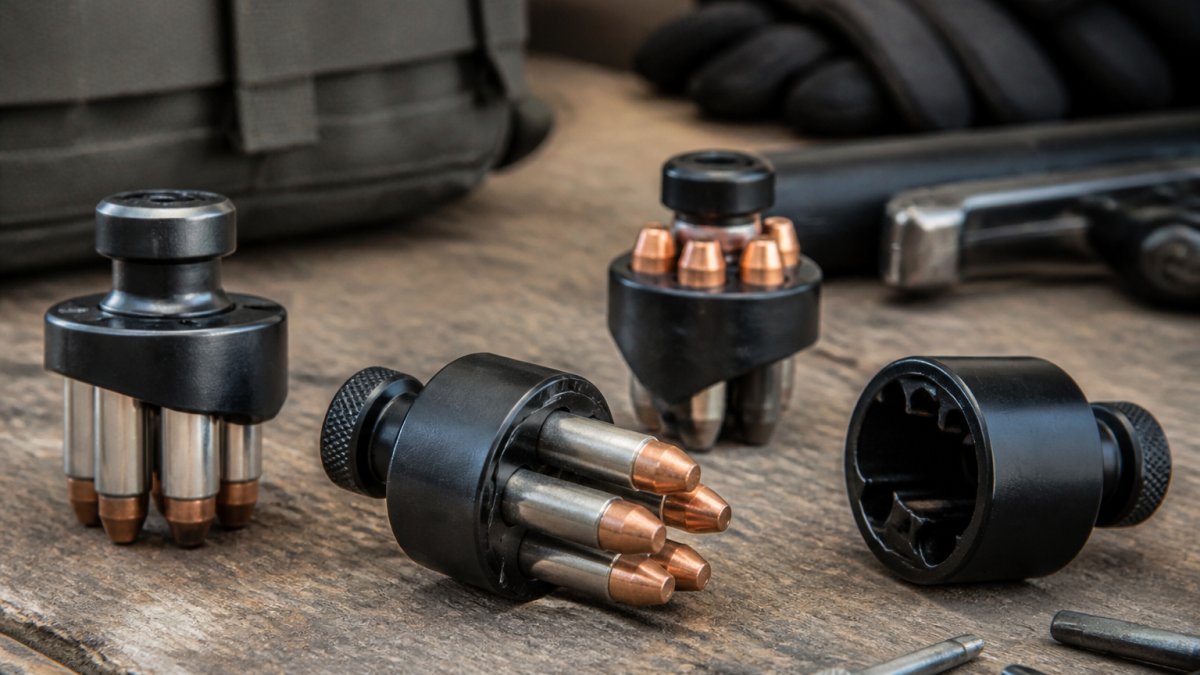
Revolver speedloaders push all six cartridges into the cylinder simultaneously, then a collar or lever releases them. These devices experience intense spring tension and must resist deformation over time.
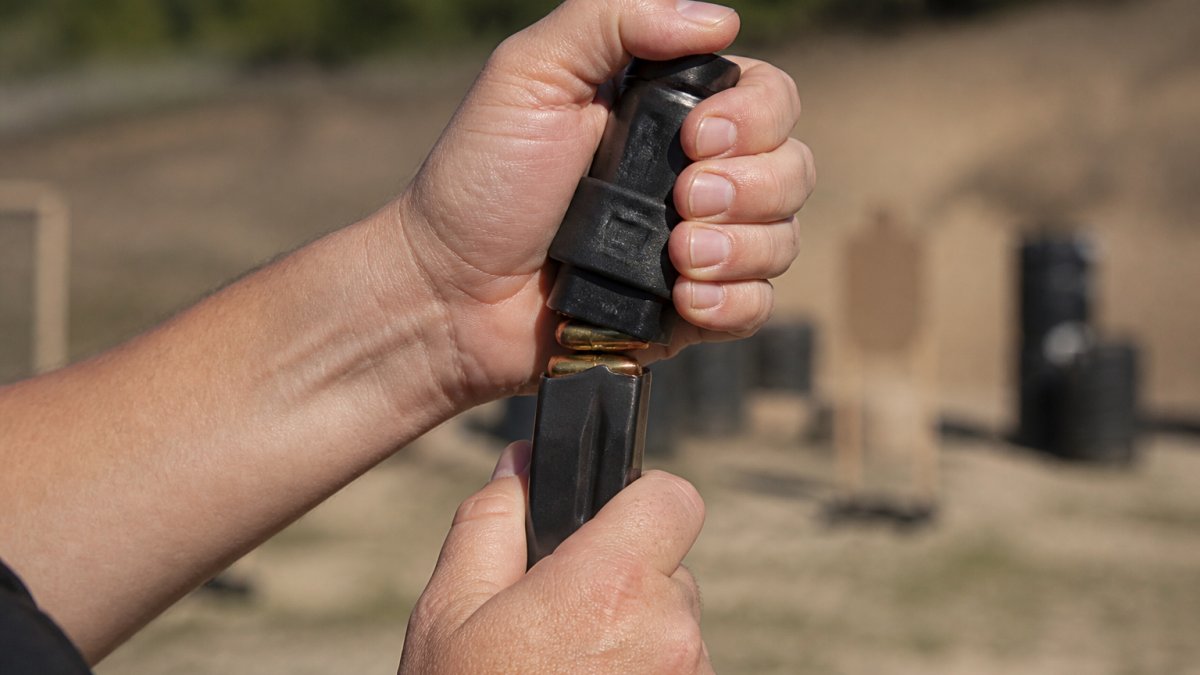
Magazine loaders compress the magazine's spring and feed cartridges one at a time into the stack. They work with semiautomatic pistols and high-capacity magazines.
The durability profiles are different. Revolver loaders fail when the release collar cracks or the spring loses tension. Magazine loaders fail when the compression lever bends, the cartridge guide wears, or the polymer body develops stress fractures from repeated pushing.
Durability Under Real-World Conditions
Range use is where durability gets tested. Competitive shooters fire hundreds of rounds per session. Law enforcement and security professionals train regularly under demanding conditions. Concealed carry holders need loaders that work reliably every time they practice.
Real-world durability means the loader performs identically on round one and round five hundred. The cartridge retention stays firm. The release mechanism doesn't stick or become sluggish. The grip doesn't crack from repeated hand pressure. The construction materials don't fade, become brittle, or lose their structural integrity.
This is where material choice and design philosophy separate durable loaders from disposable ones. A loader that works great for a month but fails after six months of regular use isn't durable, it's just cheap.
Durable Magazine Loader Materials and Construction
Magazine loaders built for durability use specific material combinations that resist wear, impact, and environmental stress. The choice between polymer and aluminum, and how these materials are combined, determines how long your loader will serve you.
Polymer vs. Aluminum: Durability Trade-Offs
Polymer construction offers several durability advantages when engineered correctly. High-quality polymer resists scratches, corrosion, and UV degradation. It doesn't dent or bend under normal use. Polymer loaders are lightweight and compact, making them ideal for range bags and concealed carry loadouts.
Aluminum components add durability where stress concentrates most. Aluminum levers, release buttons, and catch mechanisms resist deformation and wear better than polymer alone. Anodized aluminum resists corrosion and scratches. The trade-off is weight and cost. An all-aluminum loader is heavier and more expensive than a pure polymer design.
The most durable approach combines both materials strategically. Our TACTICAL Model uses durable polymer for the main body with anodized aluminum Lever, Mag Release Button, and Catch.

Wear Points and Long-Term Maintenance
Even the most durable loaders experience wear. Understanding where wear happens first helps you evaluate durability before you buy and maintain your loader over years of use.
The release mechanism takes the most abuse. Whether it's a collar on a revolver loader or a lever on a magazine loader, this part cycles thousands of times.
The cartridge guide or compression surface wears from repeated contact with ammunition. Scratches and small dents are normal.
The grip area can develop stress cracks from hand pressure, especially if the design concentrates force in one spot. A well-designed grip distributes pressure across a larger surface.
Long-term maintenance is minimal but important. Clean your loader occasionally with a dry cloth. Store it in a dry environment, moisture can degrade polymer and cause corrosion on metal components.
Pistol Speed Loader Compatibility: Verifying Fit Before Purchase
A durable loader is worthless if it doesn't fit your magazines. Compatibility failures are common because magazine designs vary widely across manufacturers and calibers. Before you buy, verify that the loader will actually work with your specific setup.
Caliber and Magazine Capacity Limits
Magazine loaders work within specific caliber ranges and capacity limits. A loader designed for 9mm and .40 S&W may not work with .45 ACP magazines because the cartridge diameter is larger and the spring compression required is greater.
Check the manufacturer's specifications for your exact caliber and magazine capacity. If you own multiple calibers, you may need different loaders. Our Bulletproof Pistol Speed Loader works with 9mm.40 S&W, and some .380 ammunition, and fits magazines from Glock, Sig, Springfield, Ruger, CZ, Beretta, and many other major brands.
High-capacity magazines present a specific challenge. The spring tension is stronger, requiring more force to compress. Some loaders simply can't push the spring down far enough. If you shoot high-capacity magazines, test the loader with your actual magazines before committing to it.
Bulletproof Pistol Speed Loader →
Testing Fit with Your Specific Models
Compatibility specs are a starting point, not a guarantee. Magazine design variations within the same caliber mean a loader might work with one Glock 19 magazine and not another. The only way to be certain is hands-on testing.
Before purchasing, ask if the seller allows returns or has a compatibility guarantee. Load a few rounds with the loader and your magazine. The loader should grip the cartridges firmly, compress the spring smoothly, and release cleanly.
If you're ordering online, check customer reviews for your specific firearm model. Buyers often mention compatibility issues in detail. If you own a less common platform, contact the manufacturer before ordering. BULLETPROOF SPEED LOADERS offers a Legendary Lifetime Hassle-Free RRR warranty, Repair, Replace, or Refund, so if compatibility turns out to be an issue, you're covered.
Ergonomic Pistol Speed Loader Design for Hand Comfort
A durable loader that causes hand fatigue or pain isn't actually durable for your workflow. Ergonomics determine whether you'll use the loader consistently or abandon it for faster but more painful alternatives.
Grip, Button Placement, and Finger Fatigue
The grip design controls how much force your hand must apply and where that force concentrates. A wide grip spreads pressure across your palm and fingers, reducing fatigue.
Button placement matters equally. If the mag release button sits where your thumb naturally rests, you can release cartridges with minimal extra motion.
Small hands present a specific challenge. A loader designed for average or large hands may be too wide to grip securely, forcing smaller-handed shooters to contort their grip or sacrifice control.
Test the loader in your hand before buying. Does it feel natural? Can you operate the release mechanism without shifting your grip? Can you load a full magazine without hand fatigue?
Speed Loader for Range Practice: Performance Testing Checklist
Range performance separates loaders that work in theory from ones that work under real conditions. Before you commit to a loader, test it during an actual practice session. Here's what to evaluate.
Cartridge Retention and Release Mechanism
Load the magazine fully and invert it. Cartridges should stay firmly in place. Shake it gently, nothing should rattle or shift. If cartridges fall out, the retention is inadequate.
Now test the release. Press or flip the release mechanism. All cartridges should drop cleanly into the magazine without binding, sticking, or requiring extra force. The release should feel smooth and consistent across all rounds. If some rounds release easily and others require extra pressure, the mechanism is wearing unevenly or the design is flawed.
Test retention and release at least fifty times during your session. Early failures are common, but if the loader continues to perform identically after fifty cycles, it's likely durable for extended use.
Loading Speed and Consistency Across Rounds
Time yourself loading a magazine with the loader, then without it. The loader should noticeably speed up your reloads. More importantly, loading speed should remain consistent. If rounds 1-5 load quickly but round 6 slows down, the loader is losing tension or the design is wearing.
Load multiple magazines back-to-back. Does the loader feel the same after five magazines as it did on the first? Fatigue in your hand is normal, but fatigue in the loader itself is a durability red flag.
| Evaluation Point | What to Test | Pass Criteria |
|---|---|---|
| Cartridge retention | Invert loaded magazine; shake gently | No cartridges fall out |
| Release mechanism | Press release; observe cartridge drop | All rounds release smoothly without binding |
| Consistency | Load 50+ rounds; observe performance change | Performance remains identical throughout |
| Loading speed | Time magazine loads with and without loader | Loader provides measurable speed improvement |
| Hand fatigue | Load 5+ magazines consecutively | Loader feels comfortable; no pain or cramping |
| Material integrity | Visual inspection after 50+ cycles | No cracks, deformation, or visible wear |
Durability Evaluation Checklist: Before You Buy
Use this checklist to evaluate any loader before purchase. A durable loader should pass every item.
Hands-On Testing at the Range
- Load a full magazine and invert it, cartridges stay firmly in place
- Test the release mechanism fifty times, it feels smooth and consistent every time
- Load five magazines consecutively, your hand doesn't cramp or fatigue
- Inspect the release mechanism, grip, and cartridge guide, no cracks, bending, or deformation
- Test with your specific magazines, the loader compresses the spring fully and releases all cartridges cleanly
- Verify loading speed, the loader noticeably faster than loading by hand
Warranty and Long-Term Support
A manufacturer that stands behind their product is more likely to have engineered durability correctly. Check the warranty terms. Does it cover defects? How long? What's the claim process?
BULLETPROOF SPEED LOADERS backs every product with a Legendary Lifetime Hassle-Free RRR warranty, Repair, Replace, or Refund for life. If your loader fails for any reason, we replace it or refund your money. No questions asked. US-based customer support is available 24/7. That level of confidence reflects our durability standards.
Choosing a durable pistol speed loader comes down to material quality, design simplicity, real-world testing, and manufacturer confidence. BULLETPROOF SPEED LOADERS offers three proven models, the Pistol Speed Loader ($34.95), COMBAT Model ($69.95), and TACTICAL Model ($89.95), each engineered for durability and backed by our lifetime warranty.

Frequently Asked Questions
What should I look for in a durable pistol speed loader?
Look for a loader with reinforced polymer or aluminum construction, especially at wear points like the release button and lever. Test the cartridge retention mechanism to ensure rounds stay secure without jamming the magazine feed lips. Verify compatibility with your specific caliber and magazine capacity before purchase. Check the warranty, Bulletproof Speed Loaders offers a lifetime Repair, Replace, Refund guarantee, which signals manufacturer confidence in durability. Hands-on testing at the range reveals how well the loader handles repeated use and whether it maintains consistent loading speed over time.
How do I know whether a speed loader fits my pistol magazines?
Compatibility depends on your firearm model, caliber, and magazine capacity. The Bulletproof Pistol Speed Loader fits Glock 17, 19, 22, 23 and many others in 9mm and .40 S&W, plus Sig P320, P365, Springfield XD, Beretta 92, and most single-stack magazines. High-capacity .45 ACP magazines may require a loader with stronger spring compression. Before buying, verify your specific magazine dimensions and contact the manufacturer with your model number. Many loaders have universal designs, but fit can vary, test the loader with your actual magazines at the range before committing to heavy use.
Are polymer or metal pistol speed loaders more durable?
Polymer loaders are lighter, corrosion-resistant, and sufficient for most recreational and competitive use. Metal components (aluminum lever, release button) at high-stress points improve durability under heavy law enforcement or tactical training loads. The Bulletproof TACTICAL Model combines durable polymer with anodized aluminum parts for extended wear resistance. Polymer alone holds up well if reinforced at wear points; hybrid designs offer the best balance of weight, cost, and longevity. Your use case matters, daily range practice favors polymer, while high-round-count training benefits from aluminum reinforcement.
Can a pistol speed loader damage a magazine?
A poorly designed loader can strip feed lips or dent the magazine body if it applies uneven pressure or misaligns cartridges. Quality loaders like the Bulletproof Pistol Speed Loader use a 2-step design that feeds rounds flawlessly and loads magazines with ease, avoiding damage. Test the loader on an older magazine first to observe how it handles cartridge alignment and release pressure. If a loader jams rounds or requires excessive force, stop using it, that signals misalignment or incompatibility. Proper fit and smooth operation mean no damage; rough loading or resistance indicates a mismatch between loader and magazine.