 how-to
How to Improve Range Efficiency With Magazine Speed Loaders
Last Updated: November 4, 2026
Quick Summary
Magazine speed loaders improve range efficiency by cutting the time you spend reloading, so more of your session is spent shooting. Gold Trigger's 2026 guide reports they can load magazines up to 3x faster than manual methods. They also reduce thumb strain during long sessions.
- Magazine speed loaders can load magazines up to 3x faster than manual methods, per Gold Trigger's 2026 guide.
- Some users report reload time cut by about 50%, according to a 2024 user-reported range experience discussion.
- Repetitive hand loading strains the thumb and wrist, so switch to a loader if you feel a dull ache.
- Pre-load magazines before reaching the line and use full, smooth lever strokes to spread the force.
- Clean the loader's guide channel and plunger after each session to keep it from binding.
Table of Contents
- Why Loading Speed Limits Your Range Time
- How Magazine Speed Loaders Work
- Preventing Thumb Fatigue at the Range
- Universal vs Caliber-Specific Mag Loaders
- How to Load Magazines Faster: Step-by-Step
- Common Mistakes That Slow Down Loading
- Booking Your Next Upgrade for Faster Range Sessions
- Frequently Asked Questions
Why Loading Speed Limits Your Range Time
Magazine speed loaders can load magazines up to 3x faster than manual methods, according to Gold Trigger's 2026 guide comparing manual loading and speed loader efficiency. At BULLETPROOF SPEED LOADERS, we see the same pattern: the minutes you lose reloading are minutes you never get back on the line.
Think about a typical range session. You fire a magazine, then load another, then fire again. If loading takes most of your time, you spend more time with your hands on magazines than on the trigger.
Some users report that speed loaders can cut reload time by about 50%, according to a user-reported range experience discussion from 2024. Results vary by magazine and shooter, but the direction is clear.
Common reasons loading slows you down:
- Stiff springs in high-capacity magazines
- Tired thumbs after a long session
- Fumbling rounds into the feed lips
- Starting from scratch with every magazine
Federal law enforcement training standards stress proficiency through lots of practice, so efficient magazine loading matters there too, as noted by Gold Trigger's 2026 analysis of speed loaders in professional training.
How Magazine Speed Loaders Work
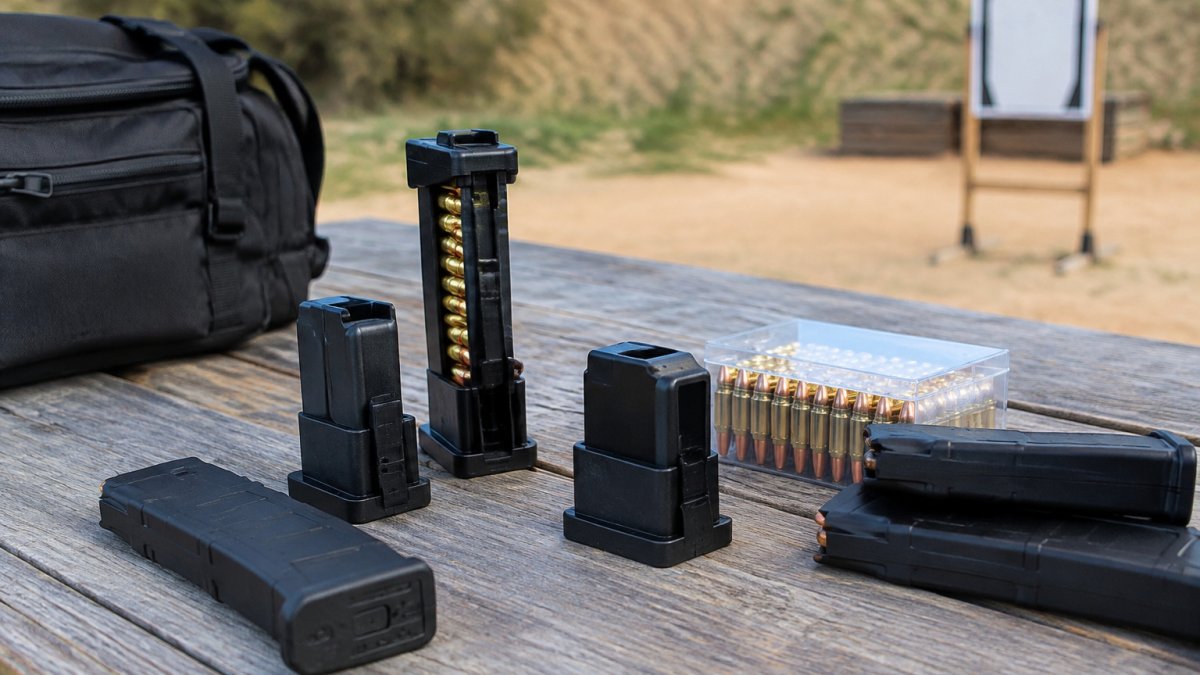
A magazine speed loader is a tool that holds an empty magazine in place while you push rounds down into it. It uses a set of guides and a lever or plunger to compress the spring for you.
You set the magazine in the loader, drop each round in, and then the tool does the hard part: it pushes the spring down so you can seat the next round. Most loaders need only a few steps once you get the hang of them.
The Bulletproof Pistol Speed Loader (EZ-MAG) is built this way. It is made from superior polymer materials and fits many common handgun magazines. You can book a pistol speed loader to see how it fits your own magazines.

What to look for in a loader:
- Fit with your magazine model
- Smooth action on the lever or plunger
- Sturdy construction that handles range use
- Easy-to-clean parts
Preventing Thumb Fatigue at the Range
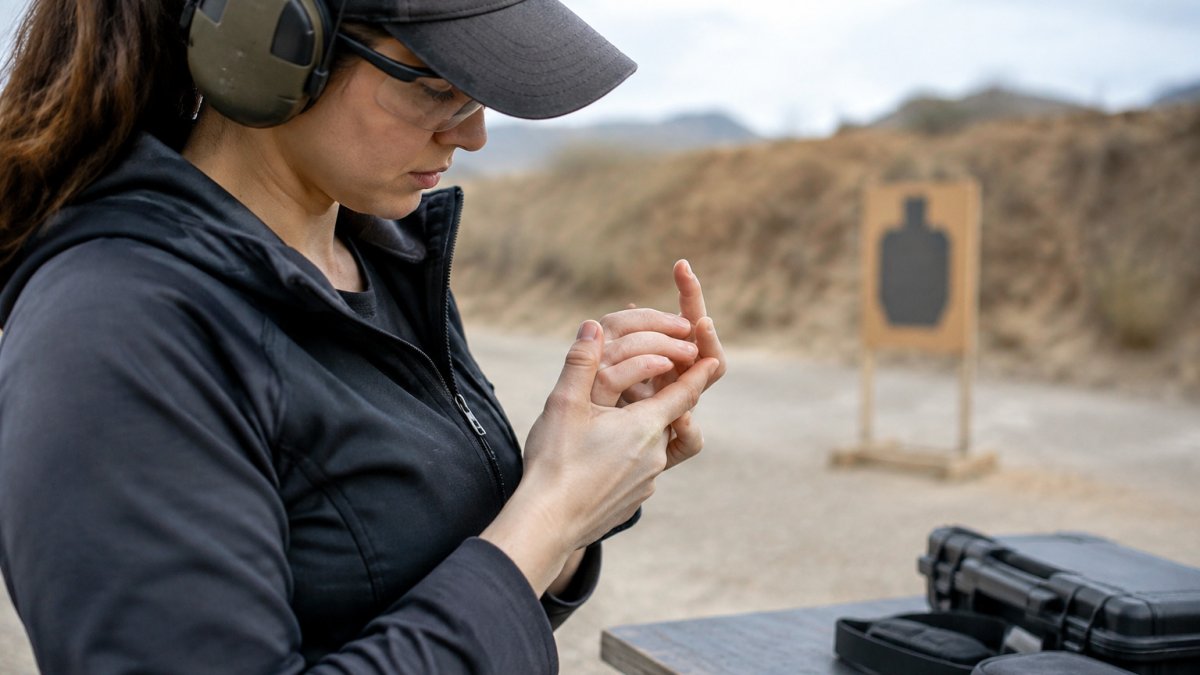
Repetitive loading wears on your thumbs and fingers. Multiple sources point to thumb strain and finger fatigue as a main reason shooters switch to speed loaders, as described in Speed Beez's 2026 overview of loader benefits.
What repetitive loading actually stresses:
- The thumb interphalangeal joint and the carpometacarpal joint at the base of the thumb, which absorb the pressing force
- The flexor pollicis longus tendon, which runs through a narrow sheath and can become irritated with repeated forceful pressing
- The pad of the thumb, which loses grip sensitivity as it fatigues, making rounds slip and bind
- The wrist, which compensates when the thumb can no longer press evenly
A loader changes the load path.
Warning signs to watch for during a long session:
- A dull ache at the base of the thumb that persists between magazines
- Reduced grip strength when you pick up the next magazine
- Rounds that start seating crooked or hanging on the feed lips
- A clicking or catching sensation in the thumb joint when you press
If any of those show up, stop loading by hand and switch to the loader for the rest of the session.
How to structure a session to protect your hands:
- Pre-load your magazines before you go to the line rather than loading one at a time between strings. Batching the work lets you use the loader in a stable, seated position instead of rushing at the bench.
- Alternate hands if your loader allows it, or at least alternate between loading and shooting so no single group of muscles works continuously.
- Keep magazines clean where the manufacturer allows it.
- Use the loader's full lever travel instead of short, choppy presses. A smooth full stroke spreads the force over more of your hand.
- Take a short break every few magazines. Fatigue accumulates quietly, and a 30-second pause resets your grip.
Watch out: if you feel a sharp pain rather than a dull ache, stop and rest your hand. If the pain persists, check with a doctor.
Repetitive loading strains the thumb and wrist, and the article lists the signs to watch for and how to pace a session.
| Warning sign | What it may mean | What to do |
|---|---|---|
| Dull ache at thumb base | Joint and tendon strain building | Stop hand loading and switch to the loader |
| Reduced grip strength | Muscle fatigue from pressing | Rest and reset your grip |
| Crooked or hanging rounds | Fatigued thumb pressing unevenly | Slow down and seat each round square |
| Clicking in the thumb joint | Joint irritation under load | Stop and rest the hand |
| Sharp pain | Possible injury | Stop, rest, and see a doctor if it persists |
Universal vs Caliber-Specific Mag Loaders
Universal loaders fit a range of magazines and calibers. Caliber-specific loaders are made for one cartridge or magazine type. The trade-off is not just price; it is fit tolerance, and fit tolerance is what determines whether a loader saves you time or costs you time.
Bulletproof Pistol Speed Loader →
How the two designs differ in practice:
- Universal loaders use adjustable guides or a wide throat that accepts many magazine widths. They save money if you shoot several calibers, but the looser fit means the magazine can shift slightly as you press, and that shift is where crooked rounds and jammed followers come from.
- Caliber-specific loaders are machined or molded around one magazine footprint. They often feel smoother and fit more securely, which matters with stiff springs, because the magazine cannot rock out of alignment mid-stroke.
For most shooters with one or two platforms, a model matched to those magazines is the better buy. If you rotate many calibers, a universal design keeps your kit simple, but plan to spend a few minutes confirming fit before you trust it at the range.
Compatibility troubleshooting before you buy
Most loader problems trace back to a mismatch between the loader and the magazine, not to a defective tool. Check these points against your actual magazines:
- Feed lip geometry. Single-stack and double-stack magazines present the top round differently. A loader designed for a double-stack stack angle can push a single-stack round past the feed lips instead of seating it. Compare the loader's guide channel to the width and angle of your magazine's feed lips.
- Magazine body width and taper. Some magazines taper toward the top, and a loader that grips the body lower down may not hold the magazine square when the follower reaches the top rounds.
- Spring tension at full capacity. A loader that works fine at five rounds may bind at the last two on a high-capacity magazine. Test at full capacity, not just partially loaded.
- Follower design. Polymer followers with a raised shelf can catch on a plunger that is sized for a flat metal follower. If the plunger hangs up, the follower is usually the reason.
- Baseplate and floorplate shape. Extended baseplates and rubber bumper pads can prevent the magazine from seating fully in the loader's cradle.
A quick fit test: seat an empty magazine in the loader, press the lever through its full travel with no rounds, and watch for any rocking or binding. Then load three rounds and check that each one sits flat against the one below it. If either step feels rough, the loader is not matched to that magazine.
Maintaining the loader itself
No ranking article covers this, and it is the reason many loaders start binding after a few months of range use. The tool collects carbon, case lube, and grit just like the magazine does.
- Wipe the guide channel and plunger face with a dry cloth after each session. Carbon dust from cases packs into the channel and increases friction.
- Use a dry-film lubricant or a very light application of a manufacturer-approved lubricant on the lever pivot only. Wet lubricants attract grit and make the problem worse.
- Inspect polymer guide edges for burrs or cracks. A cracked guide will seat rounds crookedly and can damage feed lips.
- Store the loader dry and unloaded. Leaving a magazine seated in the loader for months can take a set out of the guide or the magazine spring.
Watch out: if a loader that used to run smoothly starts requiring noticeably more force, clean it before you press harder. Forcing a gritty loader is the fastest way to crack a polymer guide or bend a plunger.
How to Load Magazines Faster: Step-by-Step
Most shooters can get faster with a few simple habits. The steps below work with most speed loaders.
Step 1: Prepare Your Loader and Magazine
Set your loader on a flat, stable surface like a shooting bench. Check that the magazine fits the loader's guides before you start.
Clean out any grit from the magazine body and feed lips. Dirt makes the spring fight you.
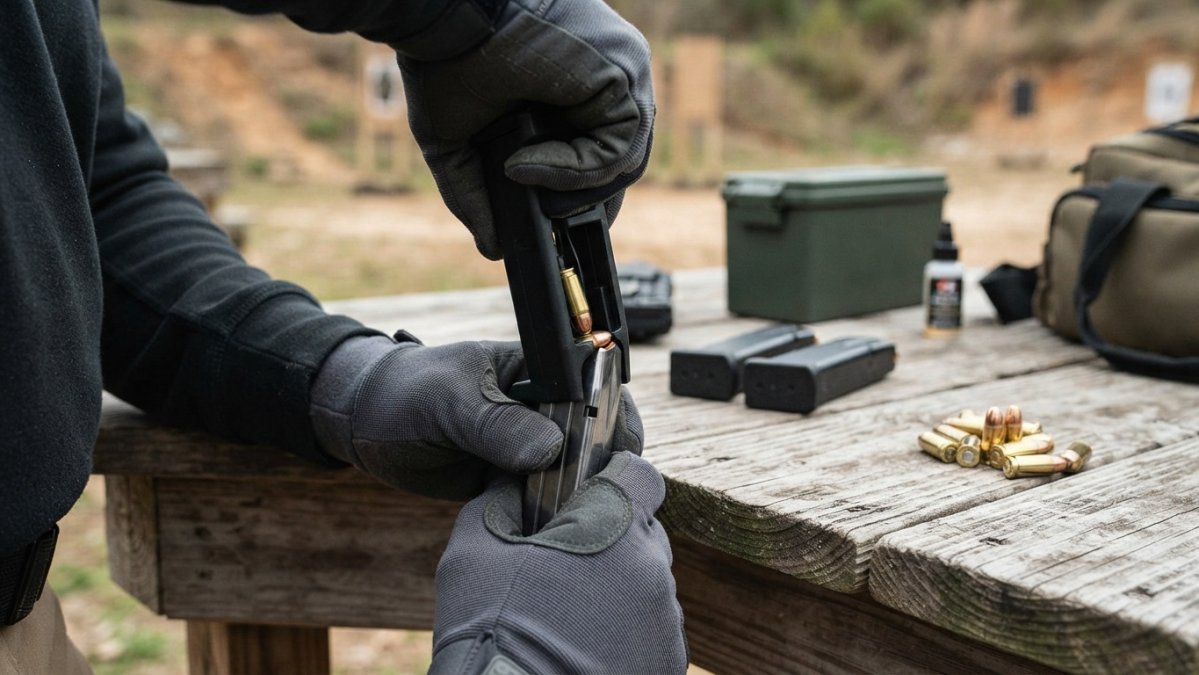
Step 2: Seat the Magazine and Feed Rounds
Seat the magazine firmly in the loader. Then drop each round into the magazine with the bullet pointing toward the front.
Press the lever or plunger to compress the spring, then let the next round slide into place. Repeat until the magazine is full.
Check the count when you finish. A full magazine should hold the number of rounds it is rated for, with no gaps.
Common Mistakes That Slow Down Loading
Small errors add up fast at the range. Here are the ones we see most often.
- Forcing the lever. Pushing too hard can bind the loader. Let the tool do the work with steady pressure.
- Skipping the fit check. A loader that does not match your magazine wastes time and can damage it.
- Loading dirty magazines. Grit slows the spring and wears the feed lips.
- Rushing the last rounds. Speed comes from a smooth rhythm, not from jamming rounds in.
Loading problems often come back to one of these, so check the basics first.
Booking Your Next Upgrade for Faster Range Sessions
Faster loading gives you more time on target and less strain on your hands. The right loader for your platform makes that gain real.
If you shoot a 9mm pistol, the Bulletproof Pistol Speed Loader is a practical place to start at $34.95. For AR-15 shooters who want a premium option, the Bulletproof TIER-1 Model is built for heavy use at $199.95.

Frequently Asked Questions
Do magazine speed loaders damage magazines?
A well-made speed loader that fits the magazine correctly should not damage it. Problems usually come from loaders that do not match the magazine or that are forced to compress springs beyond their intended range. Check that the loader fits your model, load with steady pressure rather than force, and inspect feed lips periodically. Polymer loaders like the Bulletproof Pistol Speed Loader are made from superior polymer materials.
Are speed loaders worth the investment for casual shooters?
For casual shooters who load a few magazines per trip, the time savings may be modest. The benefit grows with session length and round count. The Bulletproof Pistol Speed Loader is priced at $34.95, which is a low entry point for trying one out.
How much time can a speed loader save during a range session?
Manufacturer and reviewer claims vary. Actual savings depend on the magazine, the loader, and your technique, so time a few reloads yourself to measure your own gains.
What is the difference between a universal speed loader and a caliber-specific loader?
Universal loaders are designed to accept multiple magazine types and calibers through adjustable or interchangeable components, while caliber-specific loaders are built for one platform or cartridge. Caliber-specific designs often load more smoothly for their intended magazine. Choose a universal loader if you shoot several firearms; choose a dedicated loader if you run one platform heavily. The Bulletproof TIER-1 Model, at $199.95, is built for the AR-15 platform and loads 5.56 NATO, .223 REM, 300 BLACKOUT, 7.62x39MM and 6MM ARC ammunition.