 how-to
Load .45 ACP Magazines Easily: Techniques That Actually Work
Table of Contents
- Why Loading .45 ACP Magazines Feels Harder Than 9mm
- Manual Loading Techniques: Cross Method vs. Pez Method
- How to Prevent Thumb Pain When Loading Magazines
- Speed Loaders: The Best Magazine Speed Loader for 1911 Platforms
- Troubleshooting .45 ACP Feeding Issues During Magazine Loading
- Load .45 ACP Magazines Easily: Step-by-Step Process
- Magazine Maintenance to Keep Loading Smooth
- Conclusion
Last Updated: August 15, 2026
Why Loading .45 ACP Magazines Feels Harder Than 9mm
The .45 ACP cartridge is significantly larger and heavier than 9mm ammunition, requiring magazine springs to work harder to compress and hold rounds in place. This increased spring tension makes manual loading more demanding on your hands and thumbs, especially during extended range sessions or competitive shooting where you're loading multiple magazines back-to-back.
Single-stack .45 ACP magazines hold fewer rounds than double-stack 9mm magazines, but the cartridge's diameter and weight create more friction as you seat each round. The wider case mouth requires precise alignment to avoid jamming or misfeeding. Many shooters report thumb pain and hand fatigue after loading just a few magazines manually, which is why understanding proper technique and investing in the right tools makes such a difference.
Manual Loading Techniques: Cross Method vs. Pez Method
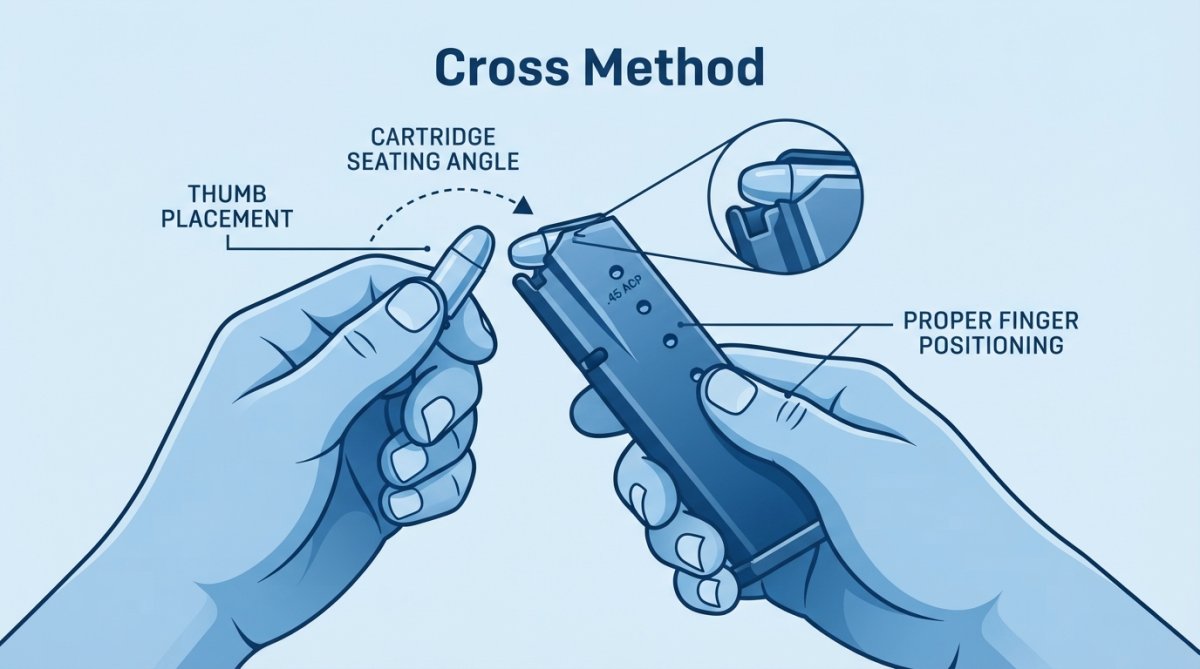
The Cross Method for Maximum use
The cross method delivers superior mechanical advantage when you load .45 ACP magazines easily. Hold the magazine vertically with your non-dominant hand, keeping your fingers wrapped around the body for stability. Position your dominant thumb on top of the follower and press downward while simultaneously pushing the cartridge slightly forward and to the side, creating a crossing angle that distributes pressure across your entire thumb pad rather than concentrating force on a single point.
This motion reduces fatigue during high-round-count loading sessions by engaging different muscle groups and preventing repetitive strain. Competitive shooters often prefer this method because the crossing angle helps ensure each cartridge seats fully and aligns properly for feeding.
The Pez Method for Speed and Consistency
The Pez method gets its name from the candy dispenser it resembles. Hold your magazine at approximately 45 degrees with the top tilted slightly away from you. Roll cartridges into the magazine from the side, letting gravity assist the loading process rather than fighting spring tension head-on. The cartridge naturally seats as the magazine's angle changes, and the spring does much of the work for you.
This method is faster once you develop the rhythm and reduces the peak force required on any single thumb press. However, it doesn't always produce the rock-solid seating that competitive shooters demand. For casual range trips, the Pez method is efficient. For precision work where every round must feed perfectly, the cross method's control advantage usually wins out.
How to Prevent Thumb Pain When Loading Magazines
Thumb pain when loading magazines is preventable through technique adjustment and strategic breaks. The pain typically comes from excessive pressure concentration on a single point of your thumb, repetitive stress from identical movements, or loading with cold, stiff muscles.
Vary your loading position, don't load 10 magazines in identical posture. Rotate between sitting, standing, and leaning against a bench. Change which hand you use as your primary loader every few magazines. Apply pressure with your entire thumb pad, not just the tip, spreading force across a larger surface. Warm up before loading sessions with gentle thumb circles and finger flexing. Take micro-breaks between magazines, load one, set it aside, shake out your hands for 10 seconds, then continue. For competitive shooters preparing 50+ magazines before a match, these breaks prevent the cumulative fatigue that affects shooting performance.
Speed Loaders: The Best Magazine Speed Loader for 1911 Platforms
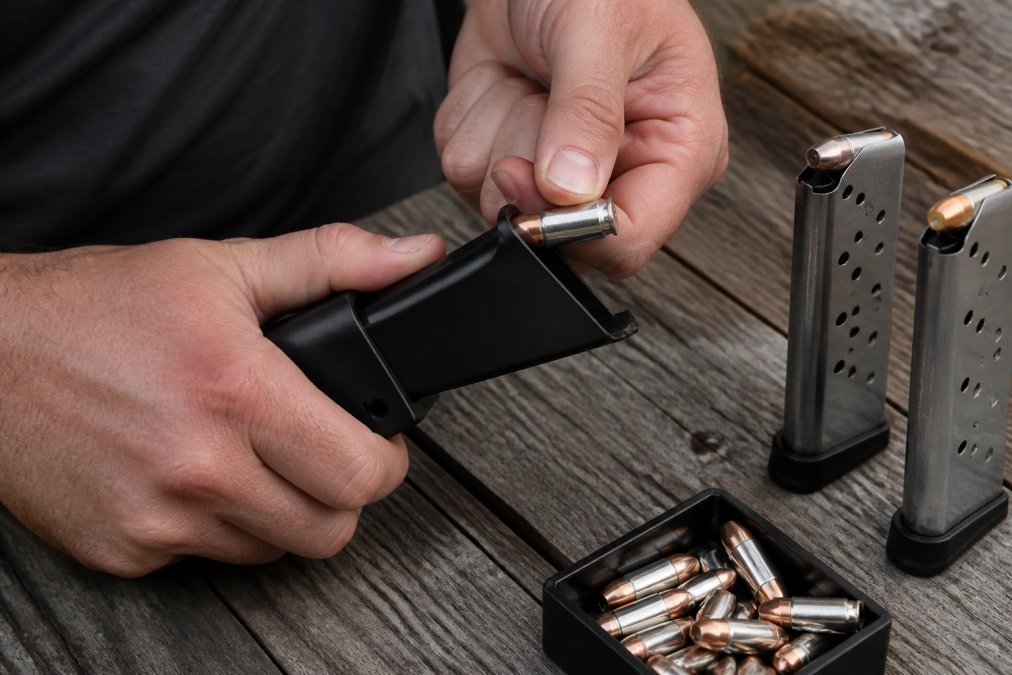
A speed loader transforms .45 ACP magazine loading from a hand-intensive chore into a quick, consistent process. The best magazine speed loader for 1911 platforms combines reliable spring compression, durable construction, and ergonomic design that works for shooters with varying hand sizes and strength levels.
BULLETPROOF SPEED LOADERS offers several models designed specifically for .45 ACP and single-stack magazines. The EZ-MAG Pistol Speed Loader ($34.95) uses a simple two-step design that works for most shooters. The COMBAT Model ($69.95) offers enhanced use and smoother operation under high-volume loading. The TACTICAL Model ($89.95) adds anodized aluminum components for durability in harsh conditions, while the DELTA Model ($179.95) uses aircraft-grade aluminum construction for maximum reliability in professional or law enforcement environments.

Single-Stack Magazine Compatibility and Spring Tension
Not all speed loaders work equally well with every single-stack magazine design. The spring tension in your magazine directly affects which loader you need. A speed loader must compress the spring enough to create sufficient clearance for the cartridge to seat without jamming, but not so aggressively that it deforms the magazine body or follower.
Test your loader with your actual magazines before relying on it in a match or critical situation. Load 5-10 rounds with the tool, then manually load 5-10 rounds. Compare how the rounds sit and how smoothly they feed from the magazine. If the speed-loader-loaded rounds sit lower or at a different angle than manually-loaded rounds, your loader isn't compressing the spring adequately for your specific magazines.
Choosing the Right Speed Loader for Your Needs
For recreational shooters loading magazines occasionally: The EZ-MAG Pistol Speed Loader provides excellent value and handles standard spring tension in most modern .45 ACP magazines.
For competitive shooters loading 30+ magazines per session: Invest in the COMBAT or TACTICAL Model. The enhanced use means faster cycling and less hand fatigue during high-volume loading.
For law enforcement or professional users: The DELTA Model's aircraft aluminum construction provides the durability needed for daily carry and frequent training cycles.
Troubleshooting .45 ACP Feeding Issues During Magazine Loading
Feeding reliability depends on proper cartridge seating and alignment during the loading process. Many feeding issues that appear to be magazine problems actually originate from how rounds were loaded.
Cartridge Seating and Proper Alignment
Proper cartridge seating means each round sits fully in the magazine with its case mouth aligned with the magazine's feed lips. Press downward with steady, even pressure until you feel the round settle into place. You'll notice a slight "click" or resistance change as the round fully seats. Don't stop at the first point of resistance; continue pressing until the cartridge is fully home.
Check alignment by looking at your loaded magazine from the side. All visible cartridges should sit at the same angle, with their noses pointing in the same direction. If you see rounds at different angles, unload those rounds and reload them using the cross method, which provides better directional control.
Case Mouth Flaring and Jamming Prevention
If you're experiencing frequent jams with factory ammunition, the problem is likely magazine-related rather than ammunition-related. Check that your magazine's feed lips are parallel and properly spaced. Damaged feed lips cause rounds to sit at incorrect angles, leading to jams. If your magazine has visible damage, retire it, feed lip damage is not repairable.
When loading, ensure each cartridge's case mouth is fully seated in the magazine before moving to the next round. A cartridge that's only partially seated can shift during handling, causing misalignment and jamming.
Load .45 ACP Magazines Easily: Step-by-Step Process
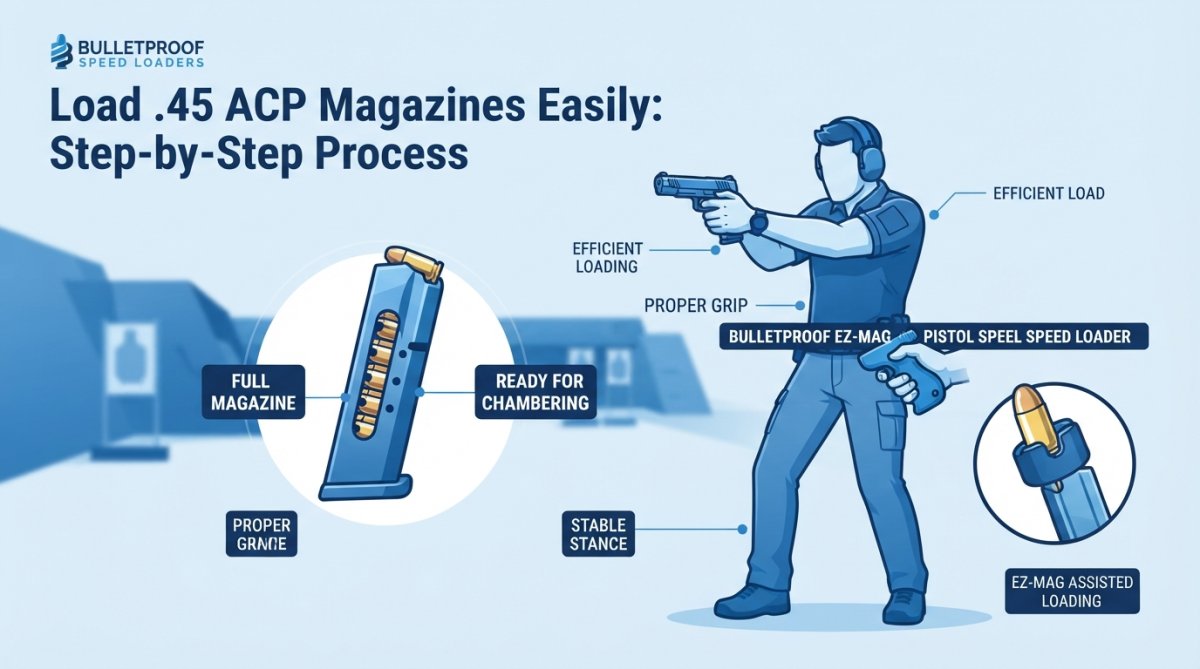
Step 1: Prepare your workspace. Clear a flat surface where you can work comfortably without dropping rounds. Have all your ammunition within arm's reach and your speed loader assembled and ready.
Step 2: Warm up your hands. Spend 30 seconds doing gentle thumb and finger stretches. Warm muscles load more comfortably and efficiently.
Step 3: Load the first cartridge. Pick up a round, nose-forward, and position it on top of the magazine's follower. Using your chosen technique (cross or Pez method), press downward with steady pressure until the round seats fully.
Step 4: Load subsequent rounds. Continue with the same motion and pressure for each cartridge. Maintain consistent technique to ensure uniform seating and prevent alignment problems.
Step 5: Verify full loading. Once your magazine is full, verify that the top round is fully seated and aligned with the others. Look at the magazine from the side, all visible cartridges should sit at the same angle.
Step 6: Function check. Manually rack the slide slowly while observing how the round strips from the magazine. It should come cleanly without binding. If the round catches or jams, unload the magazine and reload using the cross method with more careful alignment.
Step 7: Store loaded magazines. Keep loaded magazines in a cool, dry location. Magazine springs maintain tension indefinitely, so loaded magazines can be stored for months without affecting reliability.
Magazine Maintenance to Keep Loading Smooth
Magazine maintenance directly affects how easily you load and how reliably your ammunition feeds. Inspect your magazines monthly if you use them frequently. Look for visible dirt, corrosion, or damage to the feed lips. Wipe the exterior with a dry cloth and use a small brush or compressed air to remove powder residue and debris from the interior.
Check the spring tension periodically. A magazine that feels noticeably easier to load than others might have a weakened spring. Inspect the feed lips for damage, they must be parallel and undamaged to ensure proper cartridge alignment. If you see bent, cracked, or deformed feed lips, retire the magazine.
Replace followers and springs if they show signs of wear or damage. These inexpensive components extend your magazine's service life. Store magazines unloaded if you won't be using them for several months to remove stress from the spring and extend its lifespan.
Loading .45 ACP magazines easily is achievable through proper technique, appropriate tools, and consistent practice. Whether you prefer manual loading methods or invest in a speed loader, the key is understanding how spring tension, cartridge alignment, and seating pressure work together. BULLETPROOF SPEED LOADERS' EZ-MAG and COMBAT models eliminate hand fatigue while ensuring reliable feeding, making them essential tools for any serious .45 ACP shooter. Start with proper technique, add the right speed loader to your range bag, and you'll transform magazine loading from a frustrating chore into a quick, comfortable process that keeps you focused on accurate shooting.
| Technique | Best For | Difficulty | Speed |
|---|---|---|---|
| Cross Method | Precision and consistency | Moderate | Medium |
| Pez Method | Speed and high volume | Easy | Fast |
| Speed Loader (EZ-MAG) | Casual range use | Easy | Very Fast |
| Speed Loader (COMBAT/TACTICAL) | Competitive shooting | Easy | Very Fast |
Frequently Asked Questions
Why are .45 ACP magazines so hard to load compared to 9mm?
.45 ACP cartridges are larger in diameter and require more spring tension to seat properly in single-stack magazines. The increased friction between the round and the magazine feed lips, combined with stronger spring compression, creates greater resistance. As you load more cartridges, the follower sits lower, and the spring tension increases exponentially. This is mechanical reality, not a flaw. Speed loaders and proper technique reduce the force needed by distributing pressure across the cartridge base rather than relying on thumb pressure alone.
How can I load .45 ACP magazines without thumb pain?
Switch from direct thumb pressure to mechanical advantage techniques. The cross method uses your palm and fingers to distribute force, reducing thumb strain. Speed loaders eliminate thumb work entirely by compressing the spring with a lever mechanism. If you have arthritis or limited hand strength, a speed loader like the Bulletproof EZ-MAG eliminates pain by handling spring compression for you. Take breaks between magazines, and avoid loading to absolute maximum capacity if pain persists.
What's the difference between a speed loader and manual loading?
Manual loading relies on your hand strength to compress the magazine spring and seat each cartridge. Speed loaders use a mechanical lever system to handle spring compression, allowing you to focus on cartridge alignment. Speed loaders are faster, reduce fatigue, and work for shooters with limited hand strength. The Bulletproof TACTICAL and DELTA models are engineered specifically for .45 ACP single-stack magazines, providing reliable compression without damaging feed lips or cartridge rims.
How do I fix .45 ACP rounds jamming during magazine loading?
Jamming usually occurs from improper cartridge seating or case mouth flaring. Ensure the cartridge base is centered in the magazine well before applying downward pressure. Verify that flat base bullets sit flush against the follower. If the case mouth is flared from reloading, use a speed loader to guide the round straight down, preventing the flare from catching the feed lips. Check that your magazine spring isn't weakened by inspecting for rust or damage to the follower. If jamming persists, the magazine may need cleaning or the feed lips may need professional inspection.
This article was written using GrandRanker
Frequently Asked Questions
Why are .45 ACP magazines so hard to load compared to 9mm?
.45 ACP cartridges are larger in diameter and require more spring tension to seat properly in single-stack magazines. The increased friction between the round and the magazine feed lips, combined with stronger spring compression, creates greater resistance. As you load more cartridges, the follower sits lower, and the spring tension increases exponentially. This is mechanical reality, not a flaw. Speed loaders and proper technique reduce the force needed by distributing pressure across the cartridge base rather than relying on thumb pressure alone.
How can I load .45 ACP magazines without thumb pain?
Switch from direct thumb pressure to mechanical advantage techniques. The cross method uses your palm and fingers to distribute force, reducing thumb strain. Speed loaders eliminate thumb work entirely by compressing the spring with a lever mechanism. If you have arthritis or limited hand strength, a speed loader like the Bulletproof EZ-MAG eliminates pain by handling spring compression for you. Take breaks between magazines, and avoid loading to absolute maximum capacity if pain persists.
What's the difference between a speed loader and manual loading?
Manual loading relies on your hand strength to compress the magazine spring and seat each cartridge. Speed loaders use a mechanical lever system to handle spring compression, allowing you to focus on cartridge alignment. Speed loaders are faster, reduce fatigue, and work for shooters with limited hand strength. The Bulletproof TACTICAL and DELTA models are engineered specifically for .45 ACP single-stack magazines, providing reliable compression without damaging feed lips or cartridge rims.
How do I fix .45 ACP rounds jamming during magazine loading?
Jamming usually occurs from improper cartridge seating or case mouth flaring. Ensure the cartridge base is centered in the magazine well before applying downward pressure. Verify that flat base bullets sit flush against the follower. If the case mouth is flared from reloading, use a speed loader to guide the round straight down, preventing the flare from catching the feed lips. Check that your magazine spring isn't weakened by inspecting for rust or damage to the follower. If jamming persists, the magazine may need cleaning or the feed lips may need professional inspection.