 how-to
Magazine Loader Maintenance and Cleaning Tips
Table of Contents
- Why Magazine Loader Maintenance Matters
- How to Clean a Magazine Speed Loader
- Magazine Speed Loader Cleaning Tools You Need
- Magazine Loader Lubrication Best Practices
- Inspecting Your Loader for Wear and Damage
- Magazine Loader Storage Tips
- Troubleshooting Common Loader Issues
- Preventive Maintenance Schedule
- Frequently Asked Questions
Last Updated: October 21, 2026
Why Magazine Loader Maintenance Matters
A magazine loader that works flawlessly today can jam tomorrow if you skip basic maintenance. Dirt, debris, and wear accumulate fast, especially with regular shooting or field training, but preventive care takes minutes and keeps your loader performing when it matters.
A slow or stuck loader defeats the purpose of owning one, binding and forcing extra pressure that cancels out its ergonomic advantage.
A loader with worn feed lips or a bent catch can strip the feed lips on your magazines, causing unreliable feeding and a potential safety issue downrange.
Regular inspection and cleaning catch small problems before they become big ones.
How to Clean a Magazine Speed Loader
Cleaning your magazine speed loader takes under ten minutes with basic tools. The process breaks into three steps: inspect, wipe, and clean interior components.

Step 1: Inspect for Visible Debris
Before cleaning, tilt the loader under good light and rotate it slowly, looking for dirt, dust, lint, or fuzz, especially at the catch, spring area, and magazine body contact points.
Check crevices, the base plate area, and gaps where the spring connects; if you've shot in dusty conditions or dropped the loader, you'll likely see crud buildup.
This thirty-second inspection tells you how much cleaning you need: light dust needs a wipe-down, heavy field debris needs thorough work.
Step 2: Wipe Down the Exterior
Wipe the exterior top-down with a clean, dry cloth, focusing on the catch, lever, and magazine body contact area.
For stubborn dirt, brush gently with the grain using a soft-bristle brush, which removes dust and lint without scratching polymer or aluminum.
After gun solvent or wet conditions, wipe residue with a slightly damp cloth and dry immediately; never let solvents sit on polymer or aluminum.
Step 3: Clean the Interior Components
Most debris accumulates inside, around the spring, follower, and internal catch mechanism.
Hold the loader upside down and spray short bursts of compressed air into the opening to dislodge dust and lint.
For stubborn debris, agitate the spring and internals with a small soft-bristle brush, then blast again with compressed air.
For visible residue, clean the interior with a soapy-water-dampened cloth (wrap a thin cloth around a small brush for tight spaces) and dry thoroughly.
Magazine Speed Loader Cleaning Tools You Need
You don't need expensive equipment to maintain your magazine speed loader. Most shooters already have these items.
Compressed air costs a few dollars, lasts dozens of sessions, and clears debris from tight spaces a brush can't reach.
A clean, lint-free cloth is mandatory; microfiber is best since it doesn't leave fuzz like cotton, and paper towels shed fibers into your loader.
Gun solvent is optional for routine maintenance but useful for stubborn residue.
Soapy water works for basic cleaning: warm water with a little dish soap removes light residue without harsh chemicals.
Here's what a basic maintenance kit looks like:
- One soft-bristle brush (dedicated gun brush or old toothbrush)
- One can of compressed air
- Three microfiber cloths (one for wet cleaning, two for dry wiping)
- One bottle of light gun solvent (optional but recommended)
Keep these items in a small bag in your range bag. Total cost is under twenty dollars, and you'll use them for years.
Magazine Loader Lubrication Best Practices
Lubrication is where many shooters make mistakes, either over-lubricating or using the wrong lubricant. Both cause problems.
Your magazine speed loader should be lightly lubricated, not drenched. The goal is reducing friction on moving parts, not creating a slick surface that attracts dirt.
A light gun oil or general-purpose light machine oil works well. Avoid heavy grease or thick lubricants, which attract dust and debris and defeat the purpose of cleaning.
Apply a light coat after every cleaning session. If you shoot frequently, lubricate every two to three weeks; if casually, once a month is sufficient.
Never over-lubricate. Too much oil makes the loader sticky when dust settles, leaving a gritty, sluggish loader worse than a dry one.
Inspecting Your Loader for Wear and Damage
Regular inspection catches problems before they affect performance. Set aside five minutes monthly to check for wear, cracks, dents, and component damage.
Checking the Magazine Body and Catch
The magazine body is the main housing of your loader. Look for dents, cracks, or deformation. Light surface dents don't affect function, but deep dents or cracks can cause binding or failure to release magazines.
The catch is the part that grips and releases the magazine. Inspect it closely for wear, bending, or corrosion.
Push and release a magazine several times. The catch should grip firmly and release smoothly; if it feels loose, gritty, or sticks, it may be damaged or dirty.
If you see visible cracks in the magazine body or catch, the loader may need replacement. Small cracks can grow with use and eventually cause failure.
Examining the Spring and Follower Movement
The spring pushes the follower, which pushes the rounds. A weak spring or stuck follower makes loading slow and difficult.
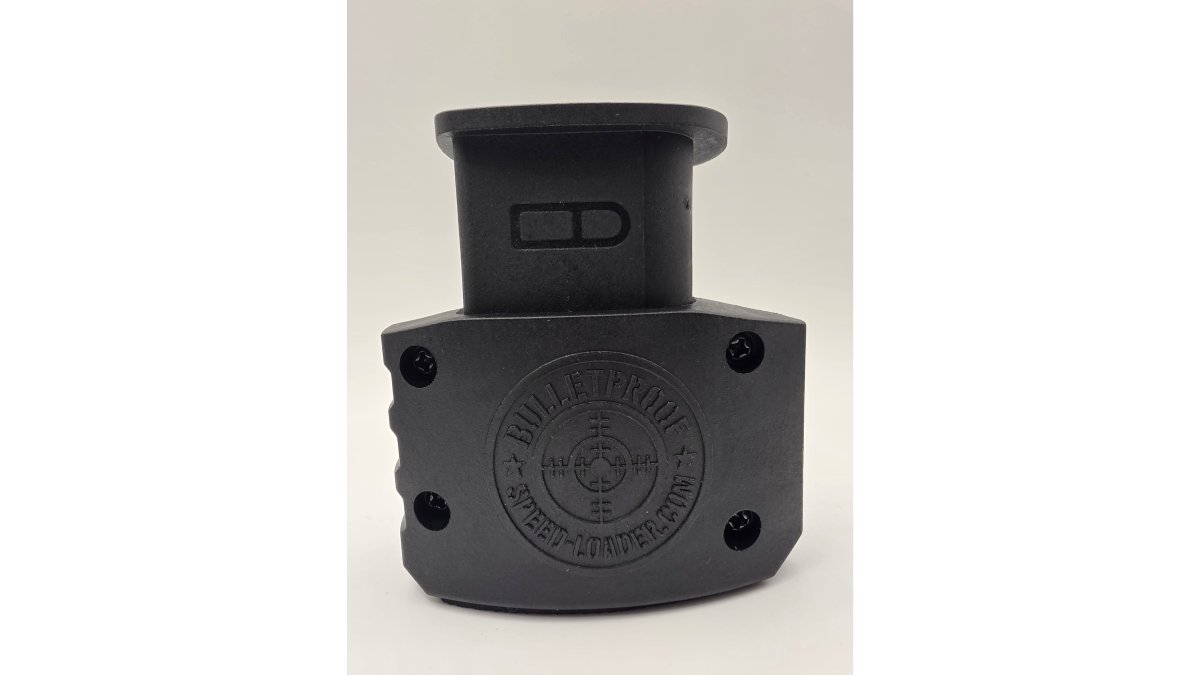
Bulletproof Speed-Loader COMBAT Model →
Press down on the follower by hand.
Look for corrosion on the spring. Light surface corrosion is normal, but heavy corrosion can weaken the spring and reduce tension. If the spring is severely corroded, replacement is the safest option.
Check that the follower isn't cracked or deformed. A damaged follower won't push rounds smoothly. If you see cracks or warping, replacement is needed.
The spring tension should feel consistent. If the spring feels weak or loses tension partway through compression, it's time to replace it. A weak spring makes loading slow and unreliable.
Magazine Loader Storage Tips
How you store your loader affects how long it lasts and how well it performs. Proper storage prevents corrosion, wear, and damage.
Store your loader in a dry environment. Moisture causes corrosion on metal components and promotes mold growth on polymer surfaces.
Keep your loader away from extreme heat. High temperatures can warp polymer and affect spring tension.
Store your loader unloaded. Don't leave magazines loaded in the loader for weeks or months. The constant spring compression weakens the spring over time.
If you store your loader in a range bag with other gear, wrap it in a cloth to protect it from impacts and scratches.
For long-term storage (months without use), apply a light coat of oil to metal components to prevent corrosion.
Troubleshooting Common Loader Issues
Most loader problems are caused by dirt, wear, or improper use. Many can be fixed with cleaning and basic maintenance.
Difficult Loading or Slow Feed
If your loader feels stiff or loads slowly, the first step is cleaning. Dust and debris in the spring or catch area create friction and resistance.
Clean the interior thoroughly using compressed air and a soft brush. Remove any visible dirt or lint. Lubricate the spring and catch with a light coat of oil.
If cleaning doesn't help, the spring may be weak or the catch may be worn. Test the spring tension by pressing down on the follower. It should move smoothly and return with firm pressure.
Check the catch for wear or damage. If it feels loose or doesn't grip magazines firmly, it may be bent or worn. Inspect it closely under good light.
Stripped Feed Lips or Magazine Damage
Stripped feed lips on your magazines indicate that your loader's catch is worn, bent, or misaligned. When the catch is damaged, it applies uneven pressure to the magazine, which damages the feed lips.
Stop using the loader immediately if you notice stripped feed lips on multiple magazines. This is a sign that the loader is damaging your magazines, which creates a safety issue.
Inspect your loader's catch closely. Look for bending, wear, or misalignment. If the catch is bent, it may be repairable if it's aluminum, but polymer catches should be replaced.
If the catch looks fine but magazines are still being damaged, the loader may be misaligned internally. This requires replacement or professional repair.
| Problem | Likely Cause | Solution |
|---|---|---|
| Stiff or slow loading | Dirt buildup, weak spring | Clean interior, lubricate, test spring tension |
| Magazine slips out | Worn or bent catch | Inspect catch, replace if necessary |
| Stripped feed lips | Damaged catch | Stop using, inspect catch, replace loader |
| Spring feels weak | Age, corrosion, fatigue | Replace spring or entire loader |
| Difficult magazine release | Dirt in catch area | Clean catch area, lubricate |
Preventive Maintenance Schedule
Consistency is the key to reliable performance. Follow a simple maintenance schedule based on how often you shoot.
After every range session: Inspect for visible debris. Wipe down the exterior with a dry cloth.
Every two weeks (if you shoot regularly): Do a full cleaning as described above.
Every month (regardless of use): Do a thorough inspection.
Every three months: Deep clean the loader. Use gun solvent or soapy water to remove stubborn residue. Inspect all components carefully.
Every six months: Full inspection and maintenance.
Annually: Consider replacing the spring as preventive maintenance if you shoot frequently.
This schedule keeps your loader in top condition year-round.
Magazine loader maintenance isn't complicated, but it's essential for reliable performance.
BULLETPROOF SPEED LOADERS builds loaders designed to handle tough conditions, but even the best equipment needs care. Our COMBAT and TACTICAL models are engineered for durability, and proper maintenance keeps them running smoothly for years. The Bulletproof Pistol Speed Loader works great with most major magazine brands, and routine maintenance ensures consistent performance every time you use it. Shop BULLETPROOF SPEED LOADERS and get a loader built to last.

Frequently Asked Questions
How often should you clean a magazine speed loader?
Clean your magazine loader every 500-1000 rounds or after range sessions in dusty conditions. A quick wipe-down after each use removes surface debris and extends component lifespan. For loaders used daily in professional settings, inspect and clean weekly. Loaders stored long-term should be cleaned before use. Environmental conditions matter: frequent outdoor use or exposure to dirt and moisture requires more frequent maintenance than indoor range use.
What should you use to clean a magazine loader?
Use a soft cloth, small brush, and gun solvent for deep cleaning. Start with a dry cloth to remove dust and lint. For stubborn crud, apply gun solvent sparingly and brush gently around the catch, spring, and follower. Avoid excessive solvent on polymer bodies. Finish with a dry cloth to prevent corrosion. For polymer loaders like the Bulletproof Speed-Loader COMBAT Model, mild soapy water works well for exterior cleaning. Never soak the entire loader or submerge metal components.
Should you lubricate a magazine loader?
Light lubrication improves spring tension and component movement, but apply sparingly. Use a light gun oil on the spring and lever pivot points only, never on the catch or magazine contact surfaces, which could attract dust. A single drop is sufficient. Over-lubrication causes dirt and debris to stick, degrading performance. For polymer loaders, lubrication is optional unless you notice stiff movement. Test the loader's feeding reliability after any lubrication to ensure smooth operation.
How do you inspect a magazine loader for wear or damage?
Check the magazine body for dents, cracks, or deformation that could affect feeding. Inspect the feed lips for damage or corrosion. Press the catch and lever to ensure smooth movement without binding. Verify the spring maintains tension and the follower moves freely. Look for cracks in polymer bodies, especially around stress points. Test the loader on an unloaded magazine to confirm it grips and releases properly. If you notice stripped feed lips, corrosion, or cracked components, discontinue use and consider replacement.