 how-to
Magazine Loader Spring Compression Guide
Table of Contents
- Understanding Magazine Loader Spring Compression
- How Magazine Loaders Preserve Spring Life
- Step-by-Step Speed Loader Operation
- Magazine Spring Replacement Interval and When to Replace
- How to Clean Magazine Springs for Optimal Performance
- Magazine Spring Tension Test: Checking Your Spring Health
- Common Mistakes to Avoid When Loading Magazines
- Conclusion
Last Updated: August 11, 2026
Understanding Magazine Loader Spring Compression
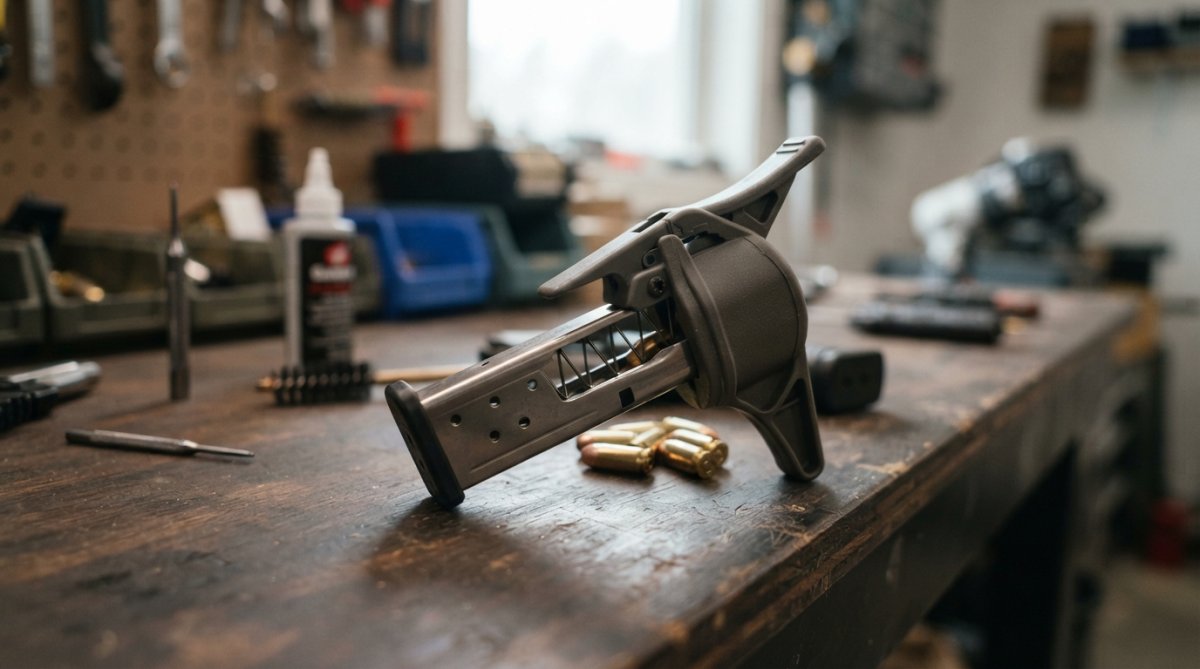
Magazine loader spring compression is the mechanical process of applying controlled force to compress a magazine's helical spring, reducing its free length and increasing its load capacity temporarily so rounds can be inserted efficiently. A quality magazine loader compresses that spring for you, protecting both the magazine and your hands from the fatigue of fighting against spring tension.
The core principle is straightforward: the harder a spring resists, the more force you need to overcome it. A magazine loader applies that force mechanically rather than asking your fingers to do it. This matters because repeated manual loading creates cumulative stress on your hands, wrists, and fingers, especially during high-volume range sessions where you might load hundreds of rounds in a single day.
At BULLETPROOF SPEED LOADERS, we've engineered our speed loader models to handle the full range of spring tensions you'll encounter. Understanding how your loader interacts with your magazine's spring geometry is essential. The spring index, the ratio between the coil diameter and wire diameter, determines how easily that spring compresses. Your loader needs sufficient mechanical advantage to overcome this resistance consistently, across different ammunition types and magazine brands.

How Magazine Loaders Preserve Spring Life
Magazine springs fail prematurely when they're repeatedly compressed beyond their elastic limit or subjected to stress relief conditions that reduce their working height. A speed loader actually extends spring life by distributing compression force evenly across the coils rather than letting your fingers apply point pressure that causes permanent deformation.

When you load manually, you're typically applying force to just one or two coils near the top of the spring stack. This creates uneven stress distribution and accelerates fatigue in those specific coils. A well-designed loader compresses the entire spring assembly uniformly, spreading the load across more coil surface area and reducing stress concentration.
Spring fatigue is cumulative. Each loading cycle creates microscopic stress on the wire material. A magazine loaded 500 times with a mechanical loader will retain significantly more of its original spring tension because the force distribution was optimized from the start.
Lubrication also matters more than most shooters realize. A dry magazine spring experiences higher friction during compression, which means more force is needed and more stress remains in the material afterward. Light lubrication on the spring coils reduces this friction and allows the spring to cycle more freely, extending its service life considerably.
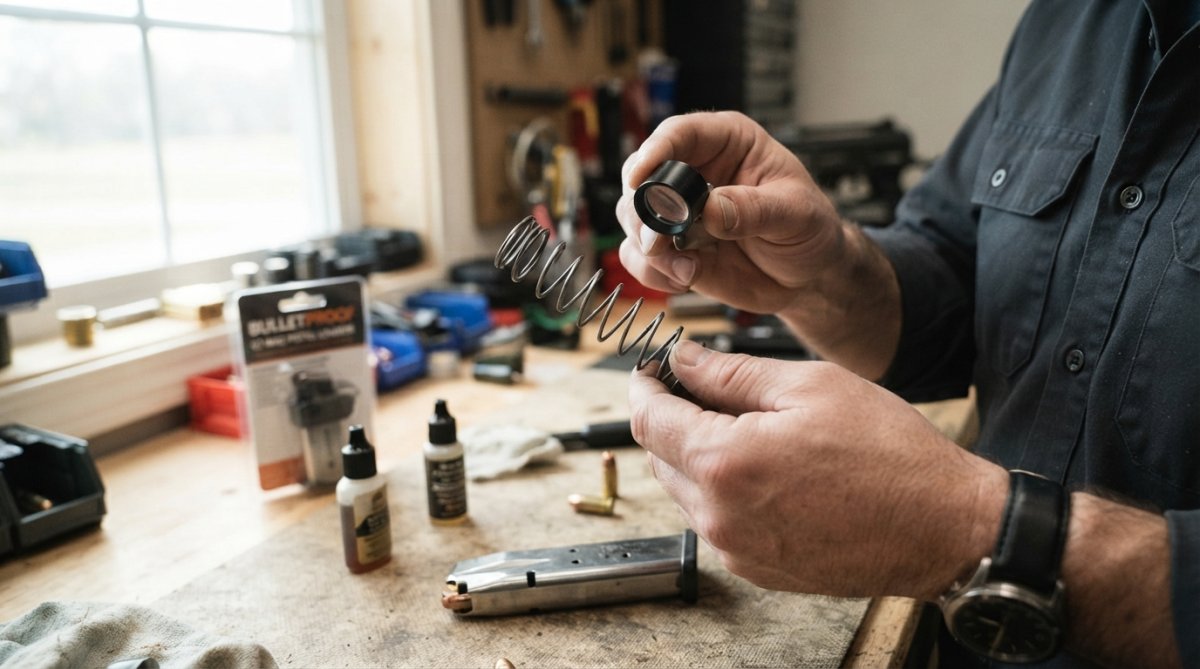
The material integrity of the spring itself determines its cycle life. Springs made from music wire or stainless steel handle repeated compression better than lower-grade materials. A loader that compresses efficiently with minimal wasted motion is gentler on your springs than one that requires excessive force or awkward angles.
Step-by-Step Speed Loader Operation
Using a speed loader correctly is a learned motion, not an intuitive one. The sequence matters because it determines whether you're compressing the spring efficiently or fighting against the magazine's geometry.
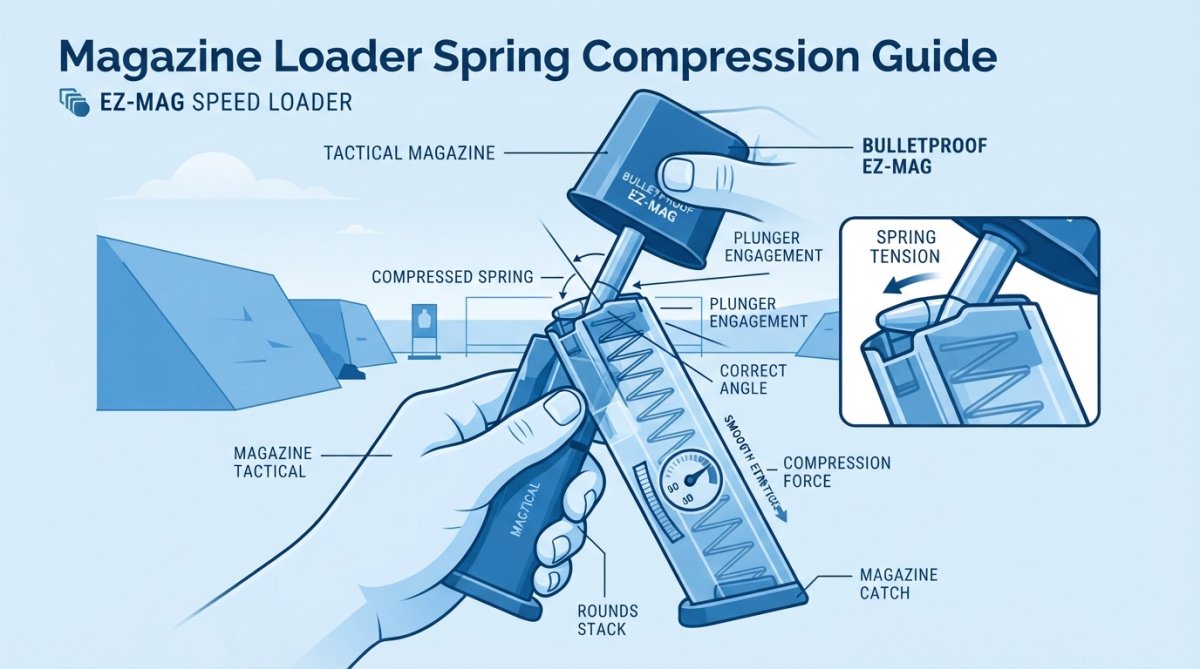
Step 1: Insert the magazine into the loader's catch mechanism. The magazine should sit firmly in the loader's grip, with the feed lips secured in the designed position. If the magazine sits too high or too low, the compression force won't align with the spring axis, and you'll get uneven compression that can damage feed lips.
Step 2: Engage the compression lever or button. Most loaders use either a lever arm or a push-button mechanism. The lever provides more mechanical advantage and works better for high-capacity magazines and stiff springs. Apply steady, controlled pressure rather than jerky force. Smooth compression is easier on both the loader and the magazine.
Step 3: Insert rounds into the compressed magazine. As you compress, the spring height decreases, creating space above the topmost round. Insert your rounds at a slight angle, then press them down into the compressed stack. A 15-20 degree angle works better for most magazine designs than straight vertical insertion.
Step 4: Release the compression mechanism gradually. Don't snap the lever back or release the button suddenly. Let the spring re-extend under control. Controlled release takes an extra second but protects your equipment.
Step 5: Remove the loaded magazine from the loader. Once the spring is fully re-extended, lift the magazine straight up out of the loader's catch. Verify that rounds are seated properly by cycling it by hand a few times.
The entire process should take 3-5 seconds per magazine once you've practiced it. Speed comes from smooth, practiced motion, not from rushing.
Magazine Spring Replacement Interval and When to Replace
Most quality magazine springs maintain functional load capacity for 500-1,000 loading cycles before you'll notice measurable degradation. A recreational shooter who loads 200 rounds per session monthly might load 2,400 rounds per year, meaning a magazine should serve 2-5 years before spring replacement becomes necessary. A competitive shooter loading 1,000+ rounds per week will need to replace springs every 6-12 months.
Visual inspection is your first indicator. Remove the magazine and look at the spring coils. If you see permanent flattening on the coils, the spring has developed compression set and is losing tension. If the free length of the spring is noticeably shorter than when new, replacement is overdue.
A functional test is more reliable than visual inspection alone. Load the magazine fully and press down on the top round with your thumb. A healthy spring will push back with firm resistance. A fatigued spring will feel mushy or offer less resistance than you remember.
Some shooters replace springs on a schedule regardless of condition, every 18 months or after every 10,000 rounds. Magazine spring replacement kits are inexpensive and take 5 minutes to install. The cost of a replacement spring is far less than the cost of a failure at a critical moment.
How to Clean Magazine Springs for Optimal Performance
Magazine springs accumulate dirt, powder residue, and dried lubricant over time. This buildup increases friction and forces the spring to work harder during each compression cycle. Cleaning your springs extends their life and improves loader performance.
Remove the spring from the magazine by disassembling it according to the manufacturer's instructions. Soak the spring in a degreaser or light solvent for 10-15 minutes to soften stubborn residue. Use an old toothbrush or soft brass brush to gently scrub the coils. Don't use a wire brush, it can scratch the spring material and create stress concentration points.
Rinse the spring thoroughly with clean water or a final solvent wash. Pat it dry with a clean cloth and allow it to air dry completely before reassembly. Once dry, apply a light coat of lubricant. The goal is a thin film that reduces friction without creating sticky buildup. Wipe away excess lubricant with a clean cloth.
Reassemble the magazine and test it. A cleaned spring should feel noticeably more responsive, and your loader should require less force to achieve full compression. This simple maintenance step, performed every 1,000-2,000 rounds or every 6 months, keeps your magazines and loaders performing at peak efficiency.
Magazine Spring Tension Test: Checking Your Spring Health
A magazine spring tension test is a simple hands-on evaluation that tells you whether your spring is still within acceptable working parameters. Load the magazine to full capacity and press down firmly on the top round with your thumb, applying steady downward force. A healthy spring should resist this pressure with noticeable force.
For a more precise test, use a scale. Place a loaded magazine on a scale and press down on the top round until it's compressed 1 inch. A magazine with good spring tension typically requires 8-15 pounds of force to compress 1 inch, depending on caliber and magazine design. If you're only seeing 4-6 pounds of resistance, the spring is fatigued.
Compare the feel of a new magazine to your current magazines. The difference in spring resistance is immediately obvious. Another test is the function test: load a magazine and cycle it through a firearm. If rounds feed smoothly and consistently, the spring is still functional. If you notice sluggish feeding or occasional failures to feed, the spring tension has dropped below reliable levels.
Keep a log of which magazines show declining spring tension. This helps you identify patterns and replace springs before they fail.
Common Mistakes to Avoid When Loading Magazines
The most common mistake is applying force unevenly or at the wrong angle. When you insert rounds at a steep angle or apply compression force off-axis, you create stress concentration on specific coils or feed lips. Always compress straight down along the magazine's central axis, and insert rounds at a shallow angle.
Forcing a round into a magazine that isn't fully compressed is another frequent error. Wait until the spring is fully compressed, then insert the round smoothly. Overcompressing the spring is less common but still happens. Some loaders apply more force than necessary, compressing the spring past its working height into the solid height range, which creates permanent deformation and coil binding.
Neglecting spring lubrication is a silent killer. Dry springs wear faster and require more force to compress. A light annual lubrication takes 30 seconds and extends spring life by months. Using the wrong loader for your magazine type is another error. Match your loader to your magazines for optimal results.
Storing loaded magazines in compressed state creates permanent compression set. The spring never fully re-extends, and it loses tension faster. Load magazines fresh for each session, or store them unloaded. Finally, many shooters don't inspect their magazines regularly. A monthly visual inspection of your magazines catches problems early before they affect reliability.
Magazine loader spring compression is a mechanical skill that becomes second nature with practice, but understanding the physics behind it makes you a better steward of your equipment. Your magazines are precision tools, and they deserve the care that comes from knowing how springs work and how to preserve their functionality.
The difference between a shooter who replaces springs every year and one who gets three years of service from the same magazines isn't luck, it's proper compression technique, regular maintenance, and using the right loader for the job. BULLETPROOF SPEED LOADERS' EZ-MAG and COMBAT models are engineered specifically to compress springs efficiently while protecting your magazines and your hands. Whether you're training for competition or carrying for duty, the right loader makes every loading session faster, easier, and gentler on your equipment. Get started with a Bulletproof speed loader and experience the difference that precision engineering and mechanical advantage bring to your reloading routine.

Frequently Asked Questions
How does spring compression affect magazine reliability?
Proper spring compression ensures consistent round feeding and prevents magazine failures. When you use a magazine loader to compress the spring correctly, you maintain the spring's tension and load capacity, which directly affects how reliably rounds feed into the chamber. Over-compression or improper handling can reduce spring tension, leading to feeding failures or rounds not seating properly in the magazine.
Do magazine loaders cause excessive spring wear?
Quality magazine loaders actually reduce spring wear compared to manual thumb-loading. Speed loaders like the Bulletproof EZ-MAG distribute compression force evenly across the spring, preventing stress concentration that occurs with finger-loading. This even distribution protects spring geometry and extends cycle life. Cheap loaders with poor design can cause uneven stress, but engineered loaders preserve spring integrity.
How often should you replace magazine springs?
Magazine springs typically last 5,000 to 10,000 rounds of regular use, though competitive shooters and law enforcement may need replacement sooner due to heavy cycling. Replace springs when you notice reduced tension, feeding failures, or visible deformation. Regular tension tests help identify when replacement is needed before reliability issues occur during critical shooting.
Can over-compressing a magazine spring damage it?
Yes, excessive compression beyond the spring's solid height can cause permanent deformation and compression set, reducing the spring's ability to return to its original working height. This reduces load capacity and feeding reliability. Proper magazine loaders are designed to compress springs safely within their elastic limit, preventing this damage while maintaining optimal tension for reliable performance.
This article was written using GrandRanker
Frequently Asked Questions
How does spring compression affect magazine reliability?
Proper spring compression ensures consistent round feeding and prevents magazine failures. When you use a magazine loader to compress the spring correctly, you maintain the spring's tension and load capacity, which directly affects how reliably rounds feed into the chamber. Over-compression or improper handling can reduce spring tension, leading to feeding failures or rounds not seating properly in the magazine.
Do magazine loaders cause excessive spring wear?
Quality magazine loaders actually reduce spring wear compared to manual thumb-loading. Speed loaders like the Bulletproof EZ-MAG distribute compression force evenly across the spring, preventing stress concentration that occurs with finger-loading. This even distribution protects spring geometry and extends cycle life. Cheap loaders with poor design can cause uneven stress, but engineered loaders preserve spring integrity.
How often should you replace magazine springs?
Magazine springs typically last 5,000 to 10,000 rounds of regular use, though competitive shooters and law enforcement may need replacement sooner due to heavy cycling. Replace springs when you notice reduced tension, feeding failures, or visible deformation. Regular tension tests help identify when replacement is needed before reliability issues occur during critical shooting.
Can over-compressing a magazine spring damage it?
Yes, excessive compression beyond the spring's solid height can cause permanent deformation and compression set, reducing the spring's ability to return to its original working height. This reduces load capacity and feeding reliability. Proper magazine loaders are designed to compress springs safely within their elastic limit, preventing this damage while maintaining optimal tension for reliable performance.