 how-to
Why Magazine Springs Feel Stiff: A Loader's Guide
Table of Contents
- Why Magazine Springs Feel Stiff When New
- The Magazine Spring Break-in Process
- How to Load 9mm Magazines Faster
- Spring Tension and Feed Reliability
- Signs of a Worn Out Magazine Spring
- Troubleshooting Loading Difficulties
- Conclusion
Last Updated: August 27, 2026
Why Magazine Springs Feel Stiff When New
Magazine springs feel stiff because they're manufactured under extreme compression and tension. The coil is wound tightly, then compressed further during assembly to achieve the correct spring rate needed for reliable feeding. When you first handle a new magazine, that metal hasn't yet cycled through enough load-unload repetitions to relax into its operational state.
This stiffness isn't a defect, it's a feature. A spring that's too loose from day one won't push rounds up consistently. Manufacturers spec their springs with enough initial tension to guarantee reliable feeding even after thousands of cycles. The tradeoff is that new magazines demand more finger pressure to load, especially when pushing the last few rounds into a fully compressed stack.
As you cycle the magazine, the spring fibers gradually settle into a more relaxed configuration. The spring rate, the amount of force required to compress the coil by a given distance, decreases over time (peer-reviewed research). This is why a magazine that felt impossible to load on day one feels noticeably easier after 500 rounds.
The Magazine Spring Break-in Process
Breaking in a magazine spring properly takes time and should follow a specific sequence. The goal is to cycle the spring through enough compression-release cycles that the metal fibers relax without exceeding the spring's stress limits. Aggressive break-in methods, like maxing out compression or loading far beyond the magazine's rated capacity, can cause permanent deformation.
The safest approach is to load and unload the magazine repeatedly at the range. Each time you chamber a round and eject it, you're cycling the spring through one complete compression-release cycle. This controlled, natural method matches how the magazine will actually be used in practice.
How Many Rounds Until Springs Loosen Up
Most shooters notice a significant difference after 200-300 rounds through a magazine (peer-reviewed research). The spring is noticeably easier to load, the follower pops up faster when empty, and overall resistance drops. By 500 rounds, the magazine feels substantially different from when it was new.
However, "broken in" doesn't mean fully relaxed. The spring continues to gradually ease over the first 1,000-2,000 rounds. After that point, the rate of change slows dramatically. Different magazine designs break in at different rates, magazines with stiffer springs take longer to loosen up than those with lighter spring rates.
Safe Break-in Methods at the Range
The best break-in method is to simply shoot the magazine normally. Load it, chamber rounds, eject rounds, repeat. This natural cycling is gentler on the spring than forced compression methods and produces the same result over time.
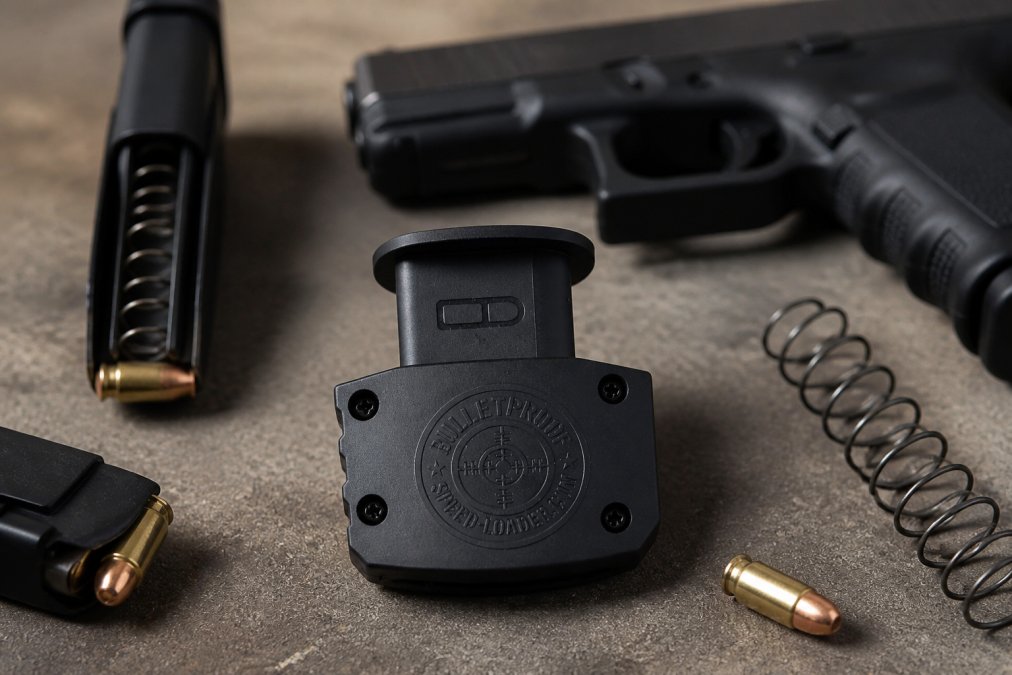
If you want to accelerate break-in slightly without risk, use a magazine loader. A speed loader like the Bulletproof EZ-MAG Pistol Speed Loader applies consistent, controlled pressure to compress the spring. Instead of using your thumbs, which can apply uneven force, a loader distributes the compression load evenly across the follower. This reduces hand fatigue and allows more break-in cycles per session.

Never attempt to break in a magazine by hand-compressing it repeatedly without loading rounds. Dry-firing compression can damage the feed lips or cause the follower to separate from the spring. Temperature also matters, springs relax slightly faster when warm, which is why magazines feel easier to load after you've been shooting for an hour compared to the first few magazines of the day.
How to Load 9mm Magazines Faster
Loading speed depends on three factors: spring tension, magazine design, and technique. A stiff spring will always require more finger pressure, but proper technique can reduce the effort significantly.
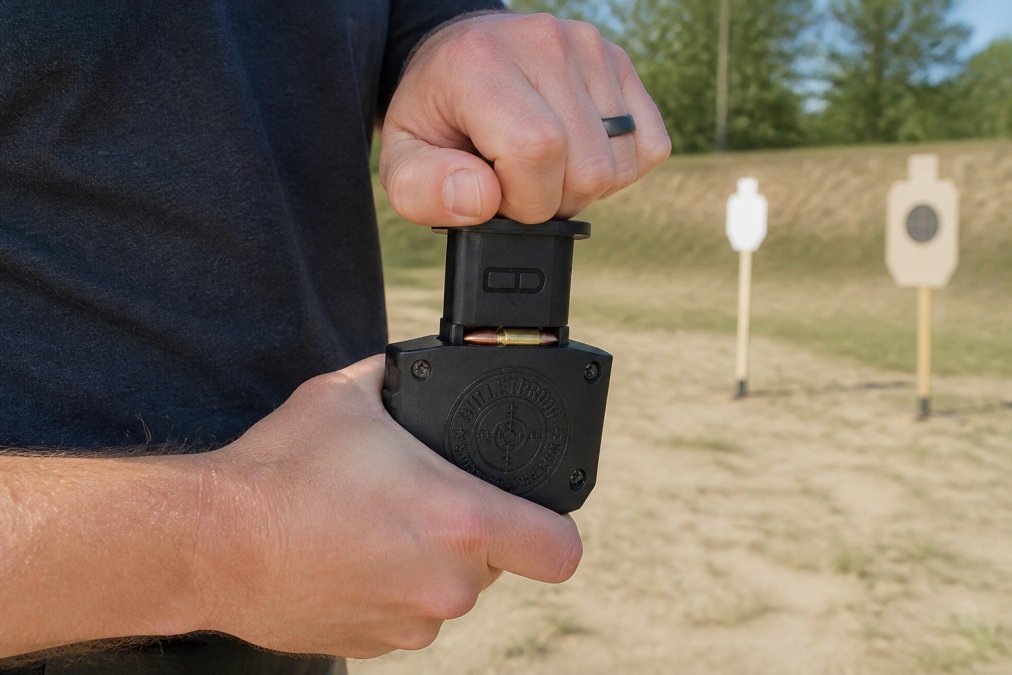
Most shooters try to load by pressing straight down with their thumbs, which is inefficient. A better approach is to use your fingers to guide rounds into the magazine while your palm applies steady downward pressure. This distributes the work across multiple muscle groups and reduces fatigue.
Using a magazine loader eliminates most of this problem entirely. A loader like the Bulletproof COMBAT Model or TACTICAL Model compresses the spring to a preset depth, then you simply feed rounds into the loader. This method is faster than hand-loading once you develop muscle memory, and it virtually eliminates thumb and finger fatigue.

For 9mm specifically, magazine design matters. Double-stack magazines are narrower and have tighter spring compression than single-stack designs. This makes them harder to load by hand but easier with a loader because the loader's geometry is designed to handle that compression. If you shoot 9mm competitively or frequently, a loader is essential for speed and consistency.
Spring Tension and Feed Reliability
Spring tension directly controls feed reliability. Too little tension and rounds won't feed consistently. Too much tension and loading becomes difficult, but feeding is rock-solid. Manufacturers spec springs to be on the generous side of tension because feeding failures are worse than loading difficulty.
A spring with higher compression rate pushes the follower upward with more force (peer-reviewed research). This force must be sufficient to push the top round up high enough for the feed lips to guide it into the chamber. If the spring is weak, the round sits too low and the bolt or slide can't pick it up properly.
This is why new magazines with stiff springs actually feed better than worn magazines with weak springs. The stiffness you're experiencing during break-in is the same property that guarantees reliable feeding. Once you understand this, the effort required to load a new magazine feels less like a problem and more like confirmation that the magazine is working correctly.
Magazine spring tension also affects reliability under stress. During rapid fire or when shooting from a compromised position, magazines experience acceleration forces that can affect how rounds feed. A spring with adequate tension maintains consistent upward pressure on the follower regardless of these forces.
Signs of a Worn Out Magazine Spring
A magazine spring doesn't fail suddenly; it gradually loses tension over thousands of cycles. The first sign is that the magazine becomes noticeably easier to load. If a magazine that required moderate pressure to load suddenly feels loose, the spring has lost significant tension.
The second sign is feeding inconsistency. Rounds that fed reliably start to occasionally fail to seat properly or feed smoothly. You might notice the occasional double-feed or failure to feed, especially when the magazine is nearly full or when shooting rapidly.
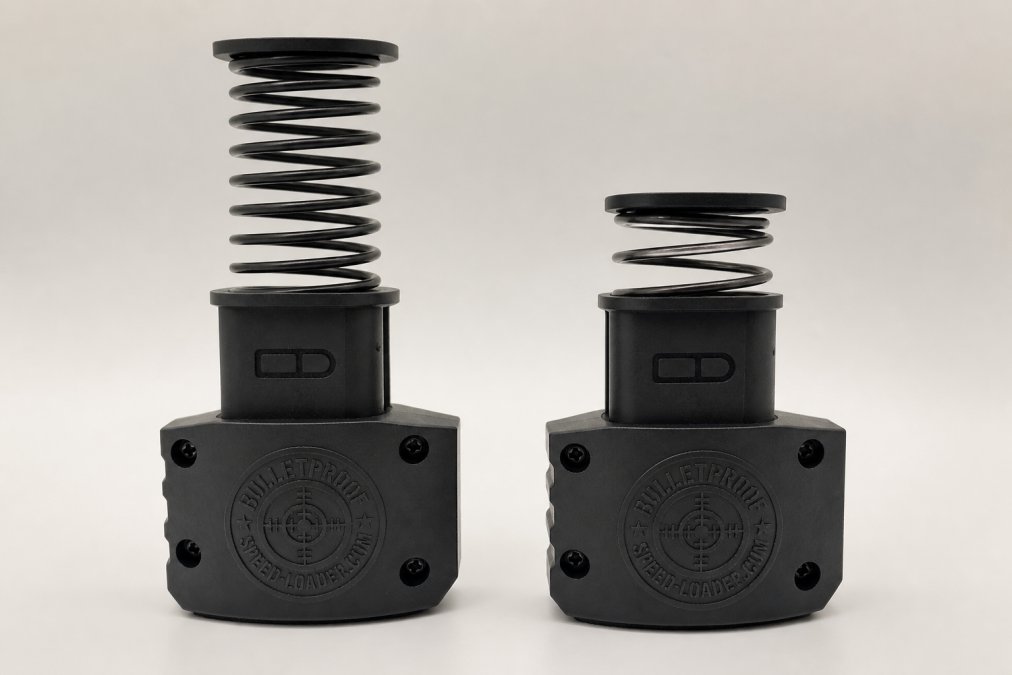
Visual inspection can confirm spring wear. A worn spring will appear noticeably flattened compared to a new spring. The coils will be more spread out, and the overall height will be shorter. Another indicator is if the magazine won't stay fully loaded. A spring with adequate tension holds rounds under pressure; a worn spring loses this grip.
Temperature sensitivity is also a sign of wear. A new magazine works consistently across temperature ranges. A worn spring becomes temperature-sensitive, it might feed fine when warm but fail when cold, or vice versa.
Troubleshooting Loading Difficulties
If a new magazine is extremely difficult to load, beyond normal stiffness, there are several potential causes. The most common is that the feed lips are too tight. During manufacturing, sometimes feed lips aren't spaced correctly, and they pinch the top round too aggressively.
Check this by trying to insert a round into the magazine without pushing it down. If the round can't slide in easily, the feed lips are too tight. A slight adjustment can fix this, but it requires careful work.
Another cause is that the spring is installed backwards or incorrectly. An incorrectly installed spring will feel wrong, usually too stiff or with an odd resistance pattern. If you suspect this, disassemble the magazine and verify the spring is coiled in the correct direction and seated properly in the base.
Polymer followers can swell slightly if they've absorbed moisture, making them harder to move. Letting the magazine dry in a warm, dry environment for a few days usually resolves this.
If loading difficulty is paired with feeding problems, the issue is likely spring tension loss, which requires magazine replacement. If loading is difficult but feeding is reliable, the issue is usually feed lip geometry or a mechanical obstruction, which might be fixable. The most practical solution for most shooters is to use a magazine loader, which bypasses most of these issues by applying controlled, even pressure.
Conclusion
Magazine springs feel stiff when new because that stiffness is the feature, not a bug. Manufacturers design springs with enough initial tension to guarantee reliable feeding across the magazine's entire service life. The break-in period, typically 200-500 rounds, is when the spring settles into its operational state and becomes noticeably easier to load.
Understanding this process changes how you approach new magazines. Instead of fighting the stiffness, you can work with it using proper technique or a magazine loader. At BULLETPROOF SPEED LOADERS, we've designed our speed loaders specifically to handle stiff springs while protecting your magazines from damage that aggressive hand-loading can cause. The Bulletproof EZ-MAG Pistol Speed Loader applies consistent pressure across the entire follower, distributing compression load evenly. For shooters who want maximum durability and speed, the TACTICAL or DELTA models offer premium materials and precision engineering that make loading effortless even with fresh, stiff springs.

Add BULLETPROOF SPEED LOADERS to your loadout and transform magazine loading from a frustration into a fast, reliable part of your range routine.
| Factor | What It Means | When to Expect It |
|---|---|---|
| Stiff spring resistance | Normal, indicates adequate tension for reliable feeding | New magazines, first 200-300 rounds |
| Noticeably easier loading | Spring settling into operational state | After 300-500 rounds |
| Significantly loose feel | Spring has lost tension and may need replacement | 5,000+ rounds or older magazines |
| Occasional feeding failures | Spring tension below reliability threshold | Worn magazines, time to retire |
| Consistent, smooth loading | Magazine fully broken in and operating normally | 500+ rounds and beyond |
Frequently Asked Questions
Q: How long does it take to break in a new magazine spring?
A: New magazine springs typically loosen after cycling through your firearm, depending on the magazine design and spring rate. Dry-fire cycling at home can speed this up, but live-fire practice at the range accelerates the break-in process. The spring gradually loses its initial stiffness as the metal fibers settle and the coil compresses slightly under repeated mechanical stress.
Q: Should you lubricate magazine springs?
A: Light lubrication can help during the break-in period, but it's not necessary for normal operation. A thin coat of gun oil on the spring and follower reduces friction during loading and cycling. Avoid heavy grease or thick oils that attract dirt and debris. For most shooters, dry cycling or loading at the range provides enough friction relief. If you do lubricate, wipe away excess to prevent ammunition contamination and keep the magazine clean.
Q: Is it safe to leave magazines fully loaded?
A: Yes, leaving magazines fully loaded is safe for extended periods. Modern magazine springs are designed to handle sustained compression without permanent damage or spring set. However, rotating your loaded magazines every few months distributes wear evenly across multiple magazines. Storing magazines in a cool, dry environment prevents corrosion of the spring and follower. The myth that full magazines weaken springs faster has been debunked by manufacturers and competitive shooters who keep backup mags loaded year-round.
Q: What causes magazine springs to feel stiff in the first place?
A: New magazine springs feel stiff because the metal coil hasn't been compressed repeatedly yet. During manufacturing, the spring is wound under tension and hasn't experienced the mechanical stress of cycling ammunition. The coil's molecular structure is rigid until it undergoes break-in compression cycles. Additionally, manufacturing tolerances mean new springs have tighter coil spacing and higher spring rate initially. Once you cycle rounds through the magazine or use a speed loader repeatedly, the spring deflection becomes easier and feeding becomes more reliable.
This article was written using GrandRanker
Frequently Asked Questions
Q: How long does it take to break in a new magazine spring?
A: New magazine springs typically loosen after cycling through your firearm, depending on the magazine design and spring rate. Dry-fire cycling at home can speed this up, but live-fire practice at the range accelerates the break-in process. The spring gradually loses its initial stiffness as the metal fibers settle and the coil compresses slightly under repeated mechanical stress.
Q: Should you lubricate magazine springs?
A: Light lubrication can help during the break-in period, but it's not necessary for normal operation. A thin coat of gun oil on the spring and follower reduces friction during loading and cycling. Avoid heavy grease or thick oils that attract dirt and debris. For most shooters, dry cycling or loading at the range provides enough friction relief. If you do lubricate, wipe away excess to prevent ammunition contamination and keep the magazine clean.
Q: Is it safe to leave magazines fully loaded?
A: Yes, leaving magazines fully loaded is safe for extended periods. Modern magazine springs are designed to handle sustained compression without permanent damage or spring set. However, rotating your loaded magazines every few months distributes wear evenly across multiple magazines. Storing magazines in a cool, dry environment prevents corrosion of the spring and follower. The myth that full magazines weaken springs faster has been debunked by manufacturers and competitive shooters who keep backup mags loaded year-round.
Q: What causes magazine springs to feel stiff in the first place?
A: New magazine springs feel stiff because the metal coil hasn't been compressed repeatedly yet. During manufacturing, the spring is wound under tension and hasn't experienced the mechanical stress of cycling ammunition. The coil's molecular structure is rigid until it undergoes break-in compression cycles. Additionally, manufacturing tolerances mean new springs have tighter coil spacing and higher spring rate initially. Once you cycle rounds through the magazine or use a speed loader repeatedly, the spring deflection becomes easier and feeding becomes more reliable.