 how-to
Preventing Spring Fatigue in Pistol Magazines
Table of Contents
- Understanding Spring Fatigue vs. Normal Spring Wear
- How Compression and Decompression Affect Magazine Springs
- Best Practices for Storing Pistol Magazines Loaded
- Recognizing Symptoms of a Weak Magazine Spring
- How to Clean Pistol Magazines and Inspect for Damage
- When to Replace Magazine Springs and Followers
- Reducing Hand Fatigue During Magazine Loading
- Frequently Asked Questions
Last Updated: October 6, 2026
Understanding Spring Fatigue vs. Normal Spring Wear
Spring fatigue is the gradual loss of spring tension from a magazine spring remaining compressed for extended periods or cycling repeatedly through loading and unloading. Normal spring wear is the gradual softening of the spring material over its service life.
The distinction matters because it changes how you store and maintain magazines. A spring under constant compression loses elasticity incrementally, while normal wear happens regardless of storage method. This helps you decide whether to unload or rotate magazines during storage.
Spring fatigue develops through two mechanisms: sustained compression causes the spring to lose its ability to return to full height, and repeated cycling fatigues the metal at the molecular level. Modern springs handle both, but aren't immune to either.
How Compression and Decompression Affect Magazine Springs
Loading a magazine fully compresses the spring, which pushes back to feed rounds into the chamber. Every load, unload, or shot stresses it, and repeated cycles can reduce its ability to maintain consistent pressure.
Modern magazine springs withstand substantial compression: a quality spring compressed for six months straight typically performs as well as one cycled regularly. Problems emerge with low-quality springs or extreme conditions like heat, cold, or moisture.
Decompression matters equally. When you remove rounds, the spring expands; if a stuck follower or damaged magazine prevents full expansion, the spring never fully recovers, harder on it than sustained compression.
High-frequency cycling, like in competitive shooting or law enforcement training, stresses the spring more than static compression. A magazine left loaded for a year sees less cumulative stress than one loaded and unloaded fifty times a month.
Best Practices for Storing Pistol Magazines Loaded
You can store quality pistol magazines fully loaded for extended periods without significant spring degradation. Modern springs tolerate static compression well; build quality, storage environment, and use matter more.
But "store it loaded" isn't a complete answer, since duty, carry, and range magazines have different reliability needs.
Duty and defensive-use magazines. Keep these loaded and ready.
Everyday carry magazines. Keep your carry magazine loaded. Rotate ammunition periodically so the top round isn't repeatedly chambered and set back, and inspect the magazine when you rotate ammo.
Range and training magazines. These see the most cycling and wear fastest. Leave them loaded or unload them between sessions; cycling, not storage, drives wear.
Long-term storage magazines. For magazines stored long-term, such as a spare set in a safe, leave them loaded and inspect periodically, or leave them unloaded and load when needed.
Here is what actually impacts spring life during storage:
- Temperature stability, extreme heat accelerates spring fatigue; keep magazines between 50-85°F
- Humidity control, moisture causes follower sticking and corrosion; store in dry conditions
- Magazine quality, budget magazines fail faster than quality ones, regardless of storage method
- Rotation (optional), unloading and reloading magazines every 6-12 months can extend spring life, but it is not required for quality magazines
For frequently cycled range magazines, rotating them every few months and letting the spring rest is sensible but optional.
The worst storage scenario is a hot vehicle, high humidity, and a cheap magazine; the best is a cool, dry location with a quality magazine.
Recognizing Symptoms of a Weak Magazine Spring
A weakened magazine spring shows specific signs before it fails completely. Spotting them prevents failures when you need the magazine most.
The most obvious sign is sluggish feeding: rounds don't push up into the chamber with authority. The top round may sit lower than it should, or the magazine feels "soft" when you press the follower.
Double-feeds and failures to feed often indicate spring weakness. The spring can't push the round high enough to align with the chamber, so the next round tries to feed before the first clears. This is dangerous and means the magazine needs replacement immediately.
Visible spring damage is straightforward, look for rust, corrosion, or permanent deformation. If the spring no longer sits flush against the magazine body or looks bent, it's done.
Follower sticking isn't always a spring problem, but it prevents proper function. If the follower binds partway up the tube, the spring can't push effectively. Clean and inspect the follower and magazine walls for debris or damage.
Loss of tension is harder to detect without comparison. If you have an identical new magazine, load both and press on the followers. The weak spring offers noticeably less resistance.
| Symptom | What It Means | Action |
|---|---|---|
| Sluggish feeding | Spring force declining | Test with dummy rounds; replace if unreliable |
| Double-feeds | Spring too weak to position round | Replace magazine immediately |
| Visible rust or bending | Physical damage | Replace magazine |
| Follower sticking | Spring can't move follower freely | Clean; replace if sticking persists |
| Noticeably soft resistance | Spring elasticity lost | Compare to new magazine; replace if questionable |
How to Clean Pistol Magazines and Inspect for Damage
Cleaning and inspecting magazines takes 10 minutes each and catches problems before they cause failures.
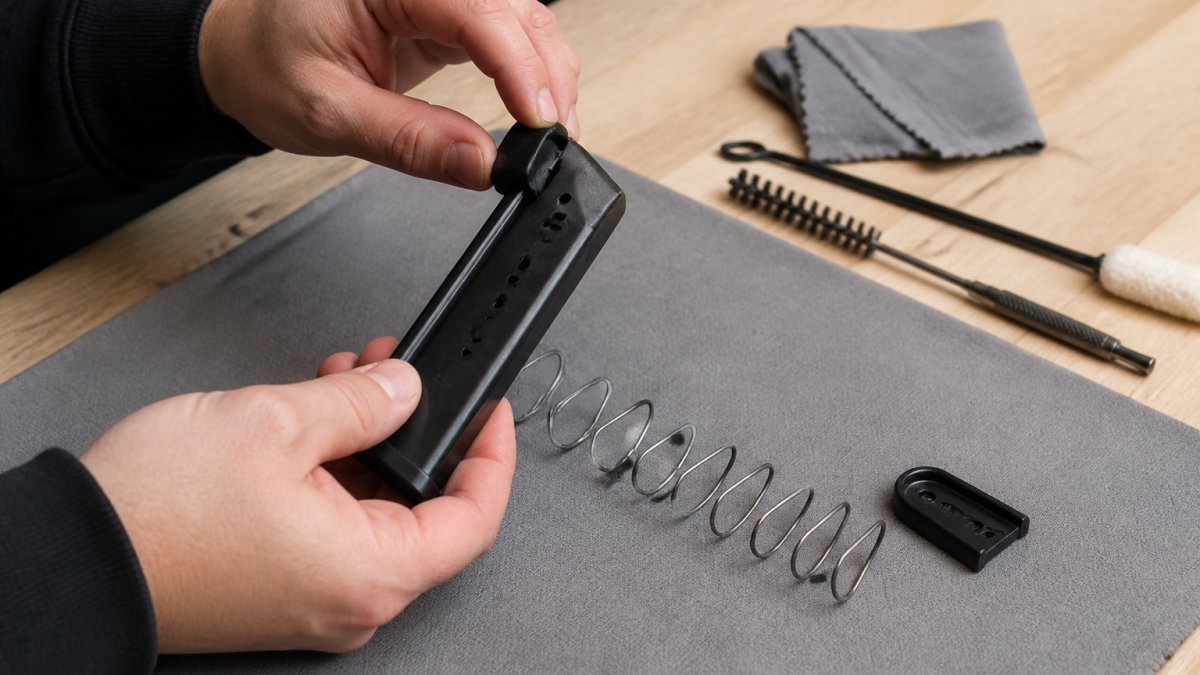
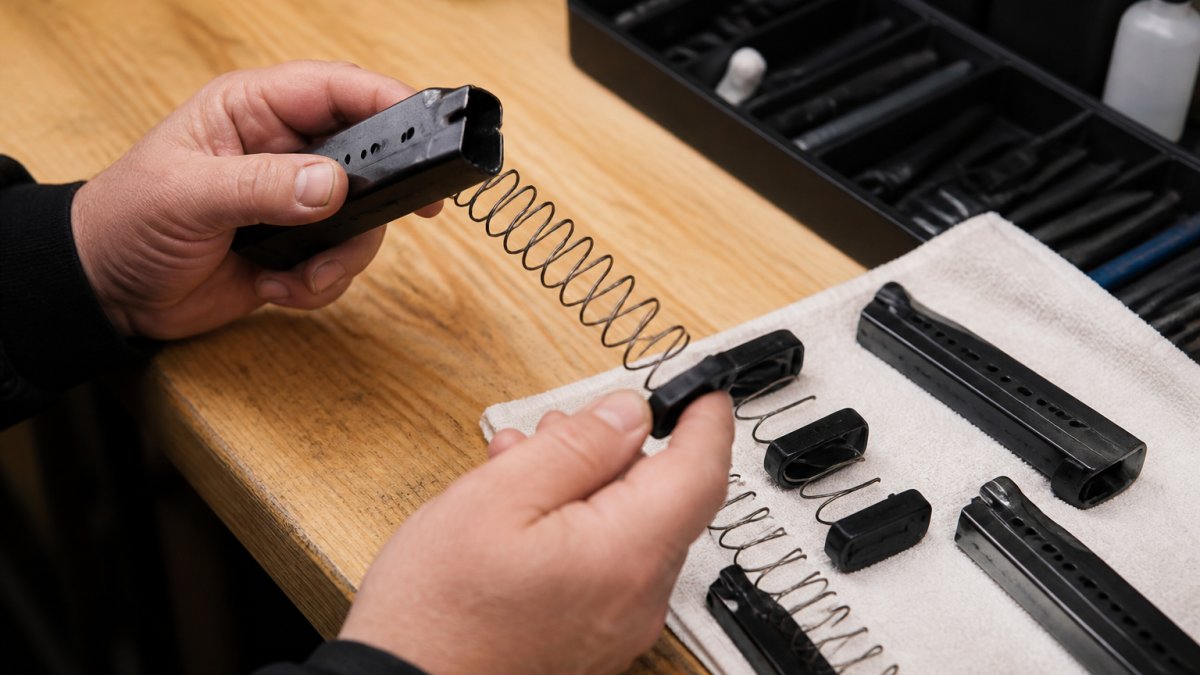
Step 1: Disassemble the magazine. Remove all rounds. Push the follower up and slide the spring out carefully. Set each component on a clean work surface.
Bulletproof Pistol Speed Loader →
Step 2: Inspect the spring. Look for rust, corrosion, permanent bending, or visible cracks. Run your finger along its length; it should be smooth and symmetrical.
Step 3: Clean the magazine tube. Wipe the inside walls with a dry cloth to remove dirt, powder residue, or debris.
Step 4: Inspect the follower. Check for cracks, warping, or wear on the feed lips contact points. The follower should be smooth and symmetrical. If it's cracked or severely worn, replace it.
Step 5: Check the feed lips. Look at the top of the magazine body where rounds sit. The feed lips should be parallel, undamaged, and properly spaced.
Step 6: Reassemble and function test. Put the spring and follower back in. Load the magazine with dummy rounds (snap caps work well). Press the follower down and release it.
Clean your magazines every 500-1000 rounds fired, or every six months if you don't shoot frequently. This simple maintenance catches problems early.
When to Replace Magazine Springs and Followers
Magazine springs and followers don't last forever, but they last longer than most shooters expect. A quality spring under normal use functions reliably for years; the trick is knowing when to replace rather than guessing.
Start with the manufacturer's guidance. Recommendations vary by design, material, and intended use, so a duty magazine may have a different service interval than a range magazine. Check your firearm's owner's manual and any magazine documentation; if the maker publishes a round-count or time-based recommendation, follow it. If not, use the inspection and troubleshooting steps below.
Inspection-to-action troubleshooting path
- Inspect the spring. Look for rust, corrosion, permanent bending, or visible cracks. Run your finger along the spring's length. It should be smooth and symmetrical. If it is discolored, pitted, or deformed, plan to replace it.
- Check follower movement. Push the follower down with a dummy round or a punch and release it. It should travel smoothly and return to the top without binding. If it sticks or moves sluggishly, clean the magazine tube and follower first, then retest.
- Compare against a known-good magazine. If you have an identical new magazine, load both and press on the followers. A weak spring offers noticeably less resistance, the simplest field test for lost tension.
- Function-test with dummy rounds. Load the magazine with snap caps or dummy rounds and cycle them by hand. Rounds should feed smoothly and consistently. Any sluggishness, double-feed tendency, or failure to lift the next round points to a spring or follower problem.
- Decide. If the spring passes inspection and function testing, keep it in service and recheck on your next maintenance interval. If it fails any step, replace the spring, the follower, or both.
Replace the spring when:
- It no longer returns to full height after compression
- Rounds feed sluggishly or inconsistently
- You see visible rust or permanent deformation
- The magazine has been exposed to extreme heat or moisture damage
- The manufacturer's recommended service interval has passed
- You are preparing a magazine for duty or competition and want zero doubt
Replace the follower when:
- It is cracked or visibly damaged
- It binds or sticks inside the magazine tube
- The contact surfaces are severely worn
- It is deformed and no longer sits flat on the spring
What to do after a failure. If a magazine fails at the range, don't just reload it and hope. Set it aside, mark it, and inspect it before returning it to service. Treat any magazine that caused a double-feed or failure to feed as suspect until it passes the inspection and function test above. If it fails again, retire it; reliability matters more than the cost of a magazine.
The good news: replacement springs and followers are inexpensive, typically $5-15 per component, and replacing them takes five minutes. If you rely on a magazine, keeping a spare spring and follower on hand is smart insurance.
Reducing Hand Fatigue During Magazine Loading
Loading magazines by hand, especially high-capacity or stiff springs, causes finger and thumb fatigue. A quality speed loader makes a real difference.
Manual loading compresses the spring against your thumb and fingers, and stiff springs require significant pressure.
A speed loader does the compression work for you. The Bulletproof Pistol Speed Loader uses a mechanical advantage to compress the spring with minimal hand effort. You insert the magazine, feed rounds into the loader, and push.

The difference is dramatic: loading 10 magazines manually might take 20 minutes and leave your thumbs sore, while a quality speed loader takes 8-10 minutes with minimal fatigue.
The Bulletproof loader works with most common pistol magazines, Glock, SIG, Springfield, Ruger, and others. It's designed to load without stripping feed lips or damaging the magazine.
Preventing spring fatigue in pistol magazines comes down to quality magazines, proper storage, and regular maintenance. Modern springs tolerate loaded storage, repeated cycling, and years of use without failing, as long as the magazine is well-made.
The real risk isn't spring fatigue from storage. It's using cheap magazines and ignoring warning signs until they fail when you need them most.
Frequently Asked Questions
Will keeping my magazines loaded weaken the spring?
Modern, well-made magazine springs tolerate long-term compression without permanent damage. However, spring fatigue occurs through repeated cycling, loading and unloading rounds, rather than static compression alone. Keeping a magazine fully loaded for extended periods causes minimal wear compared to active use. The real risk is from cycles: each compression and decompression stresses the spring material. If you store loaded magazines for months without use, rotation and periodic unloading reduce cumulative fatigue.
What are the symptoms of a weak magazine spring?
A weakened magazine spring shows specific feeding issues: rounds fail to feed reliably, the follower sits too low in the magazine body, or the spring no longer pushes rounds upward with force. You may notice difficulty chambering the final rounds in a magazine, or rounds tilting instead of feeding straight. During inspection, compare spring length and tension to a known good magazine. A weak spring feels noticeably softer when compressed by hand. If rounds drop too far into the magazine, feeding reliability suffers.
How often should I rotate or unload my pistol magazines?
Manufacturer guidance varies, so check your magazine's specifications.
Does repeatedly loading and unloading a magazine wear out the spring?
Yes. Repeated cycling, compressing and decompressing the spring, causes fatigue failure over time. Each cycle stresses the spring material and can contribute to permanent set, where the spring loses its original length and tension. High-volume shooters and competitive shooters experience faster wear because they cycle magazines hundreds of times per session. Quality magazine springs designed with modern materials and proper elastic limits handle thousands of cycles before failure. Using a speed loader like the Bulletproof Pistol Speed Loader reduces hand fatigue and finger strain during loading, which helps maintain consistent technique and magazine care over long sessions.