Signs of Repetitive Strain Injury From Shooting
Table of Contents
- What Is Repetitive Strain Injury From Shooting
- Common Causes and Repetitive Movements in Shooting
- Recognizing Repetitive Strain Injury Symptoms in Your Hands and Wrists
- Shooting-Related Wrist Pain: Distinguishing RSI From Acute Injury
- RSI Recovery Time and What to Expect
- Preventing Repetitive Strain Injury: Technique and Equipment Adjustments
- Red Flags: When to Seek Medical Assessment
- Frequently Asked Questions
Last Updated: October 17, 2026
What Is Repetitive Strain Injury From Shooting
The signs of repetitive strain injury from shooting include a gradual overuse condition affecting muscles, tendons, and nerves in the hands, wrists, and forearms caused by repeated firing motions. Unlike acute injuries that happen suddenly, RSI develops slowly over weeks or months as cumulative stress builds on the same tissues.
Firing repeatedly stresses the same muscle groups: each trigger pull, reload, and grip adjustment causes inflammation, micro-tears, and nerve irritation that compound over time.
Unlike a single incident, RSI creeps up: you shoot 200 rounds, feel fine, then notice soreness days later. Next trip, the discomfort lingers longer until pain affects performance or daily life.
Many shooters miss early RSI symptoms, attributing soreness to normal fatigue. Knowing what distinguishes RSI from muscle fatigue is your first defense against a chronic condition.
Common Causes and Repetitive Movements in Shooting
Shooting loads the same tissues through several mechanisms. The trigger pull, grip, reload, and recoil cycle each stress different structures, so the cause of your soreness often points to the fix.
Grip pressure and forearm stabilizers. Holding a firearm steady is isometric work: the forearm flexors and extensors contract continuously to keep the muzzle from drifting.
Recoil management. Recoil pushes the firearm back and up, absorbed through the wrist, elbow, and shoulder.
Reloading and magazine handling. Manual reloads involve repeated finger and thumb pinches, palm pressure on floorplates, and wrist deviation.
Sustained positions and support-hand load. Rifles and shotguns add a support-hand and shoulder dimension: the support arm holds weight while the shoulder and neck stabilize the stock.
Volume and progression. The biggest cause is a sudden jump in volume.
Technique and equipment fit. A death grip, bent wrist during recoil, stretched trigger reach, or a speed loader requiring excessive force all raise load per repetition.
Recognizing Repetitive Strain Injury Symptoms in Your Hands and Wrists
The signs of repetitive strain injury from shooting develop gradually in predictable patterns. Early signs feel like normal soreness; as the condition progresses, symptoms persist longer and interfere with grip strength or range of motion.
Catching RSI early is key, ignoring warning signs lets inflammation become chronic, and recovery then takes significantly longer.
Pain, Aching, and Tenderness
Pain is the most obvious RSI symptom: a dull ache in the forearm after shooting, often localized in the wrist, the base of your fingers, or along the inner forearm where tendons attach to bone.
RSI aching feels like post-workout muscle soreness, typically starting during shooting or within hours after. Early pain often improves with rest but returns the next time you shoot.
Tenderness appears when you press affected areas, the inside of your wrist, the base of your index finger, or your forearm. Gripping objects, holding a pen, or steering a wheel may trigger discomfort.
Stiffness, Tightness, and Reduced Mobility
Stiffness is a hallmark symptom: your wrist or fingers feel tight, especially in the morning or after rest, improving with movement but returning after shooting.
Loss of motion happens when inflammation limits how far you can bend or extend your wrist. Your grip feels weaker, making a full fist becomes difficult, and extending fingers fully requires conscious effort.
Forearm tightness feels knotted or contracted; stretching gives temporary relief, but the tightness returns.
Tingling, Numbness, and Weakness
Tingling indicates nerve involvement, pins-and-needles in the index and middle fingers, often during or after shooting but sometimes persisting all day.
Numbness suggests more advanced nerve irritation: parts of your hand feel "asleep," indicating significant nerve compression that requires attention.
Grip weakness is a serious RSI sign: hands tire quickly, holding the firearm steady gets harder, and recoil management feels harder even though your technique hasn't changed.
Shooting-Related Wrist Pain: Distinguishing RSI From Acute Injury
Not all wrist pain from shooting is RSI. Distinguishing gradual overuse from acute injury changes how you respond.
Acute shooting injuries happen suddenly. You fire a shot and immediately feel sharp pain, a malfunction, unexpected recoil, or dropped firearm causes immediate, often severe pain.
RSI develops gradually over days or weeks. You can't pinpoint when it started; pain builds slowly, and soreness lingers longer after each range trip.
Acute injuries often involve visible swelling, bruising, or deformity, and you can pinpoint exactly when they occurred. RSI rarely shows obvious external signs; swelling may be minimal or absent.
Pain location differs too. Acute injuries often cause sharp, localized pain at the injury site.
Recovery timelines help distinguish them. Acute injuries improve predictably over days or weeks as swelling decreases. RSI symptoms plateau or worsen if you continue shooting without modification.
The practical distinction matters because treatment differs. Acute injuries often need immediate rest and possible medical evaluation. RSI requires activity modification, technique adjustment, and gradual return to shooting.
RSI Recovery Time and What to Expect
Recovery from shooting-related RSI varies based on severity and how quickly you address it. Early-stage RSI caught within weeks of symptom onset typically improves in 2-4 weeks with modified activity. Established RSI that's progressed for months might require 6-12 weeks of consistent management.
The recovery process isn't linear. Some days feel better than others. You might have good weeks followed by setbacks if you overdo activity.
Rest is fundamental to recovery. Your tissues need time without repetitive stress to heal. Complete rest isn't necessary, activity modification works better. You can shoot, but with reduced volume and proper technique adjustments.
Gradual return to normal activity prevents re-injury. Don't jump back to full volume after symptoms improve. Increase shooting volume slowly, adding perhaps 25% more rounds per week. Watch for symptom return. If pain increases, reduce volume again.
Consistency matters more than intensity. Regular, moderate activity with proper technique beats occasional intense sessions. Shooting 100 rounds twice weekly with good form heals faster than shooting 500 rounds once weekly with poor technique.
Preventing Repetitive Strain Injury: Technique and Equipment Adjustments
Prevention is far more effective than treating established RSI. Small technique changes and equipment choices prevent most shooting-related overuse injuries.
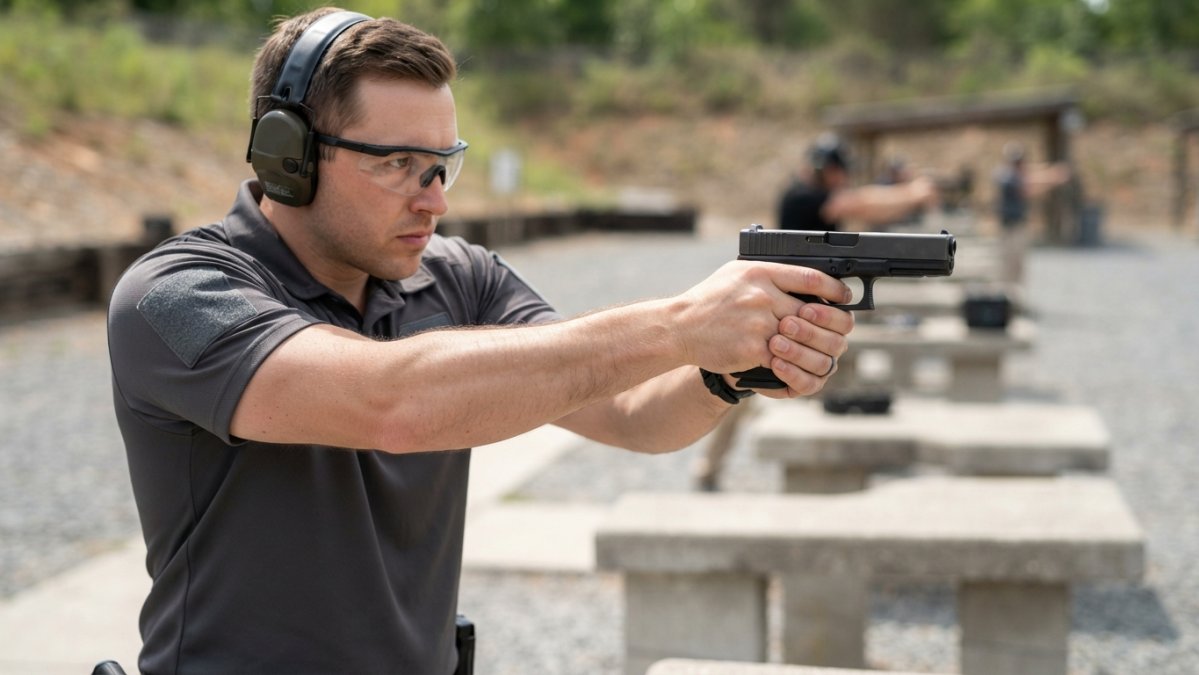
Grip pressure control is the single most important technique adjustment. A death grip creates excessive forearm tension.
Wrist alignment prevents strain on stabilizer muscles. Keep your wrist neutral, not bent backward or forward.
Trigger control matters more than most shooters realize. Jerking the trigger creates sudden hand tension. Smooth, straight-back trigger press distributes force more evenly.
Magazine reloading creates significant repetitive stress. Using a quality speed loader reduces hand strain during reloads.
Shooting volume management prevents overuse. Gradual increases in training volume allow your tissues to adapt.
Rest between sessions allows tissue recovery. Shooting hard three days in a row creates cumulative stress. Spacing sessions with rest days prevents overload.
Conditioning and stretching build resilience. Forearm and hand strengthening exercises prepare tissues for shooting stress. Stretching maintains mobility and reduces tightness.
Cold weather requires extra precautions. Cold reduces blood flow and increases muscle tension. Wear gloves to maintain hand warmth.
Red Flags: When to Seek Medical Assessment
Most shooting-related overuse symptoms improve with activity modification, but some signs mean you should stop guessing and get a professional assessment. The challenge is that RSI is a broad term, and symptoms overlap with other conditions such as tendonitis, nerve compression, and joint problems. A clinician can assess the cause, and the guidance below helps you decide how quickly to act.
A practical symptom check before you decide
Before you call a provider, spend a few days noting five things: where the symptom is, when it starts relative to shooting, how severe it is on a 0-10 scale, what triggers it, and how long it takes to settle after activity. A simple log works:
- Location: index finger, base of thumb, inner wrist, outer elbow, shoulder, or neck.
- Timing: during shooting, hours after, or the next morning.
- Severity: rate it at rest and during activity.
- Triggers: grip pressure, reloads, recoil, or sustained positions.
- Recovery: does it settle with a rest day, or does it linger for several days?
This log gives a clinician concrete information and helps you see whether symptoms are trending better or worse. It also separates gradual overuse patterns from a sudden injury.
Routine evaluation: schedule an appointment
See a healthcare provider on a routine basis if you have:
- Symptoms that persist beyond two to four weeks despite rest and activity modification.
- Numbness or tingling that comes and goes but does not fully resolve between sessions.
- Pain that limits your grip strength or your ability to perform daily tasks such as opening jars or holding a pen.
- Symptoms that return each time you shoot even at reduced volume.
- Swelling or tenderness that persists for more than a few days.
A routine visit can include a physical exam, range-of-motion and strength testing, and a review of your shooting volume and technique. Imaging such as X-ray or ultrasound may be ordered if structural issues are suspected.
Prompt care: seek assessment quickly
Get prompt medical attention if you have:
- Sudden, severe pain during or immediately after a shot, especially with a pop or snap.
- Visible deformity, bruising, or rapid swelling after a recoil event or a dropped firearm.
- Progressive numbness or weakness that spreads up the arm or affects multiple fingers.
- Inability to move a finger, wrist, or elbow through its normal range.
- Symptoms accompanied by fever, redness, or warmth, which can suggest infection rather than overuse.
- Chest pain, shortness of breath, or pain radiating into the jaw or arm, which requires emergency evaluation.
Urgent or emergency care
Go to urgent care or call emergency services for a sudden injury with deformity, uncontrolled bleeding, signs of fracture, or any symptom that suggests a serious medical event. Do not try to shoot through severe acute pain to test whether it improves.
What to expect from an assessment
A clinician will typically ask about your shooting volume, technique, equipment, and other repetitive activities, then examine strength, sensation, and range of motion. The goal is to distinguish overuse from other causes and to rule out nerve compression or joint injury. Early assessment is not a sign of weakness; it is the fastest way to get an accurate answer and a plan that keeps you shooting.
Frequently Asked Questions
How do I know if I have repetitive strain injury from shooting?
Repetitive strain injury from shooting typically develops gradually over weeks or months, not suddenly. Look for persistent pain, aching, or tenderness in your hands, wrists, or forearms that worsens during or after shooting sessions. Other signs include stiffness that improves with rest, tingling or numbness in your fingers, and reduced grip strength. If symptoms appear after a single shooting session, you likely have muscle soreness rather than RSI. RSI symptoms persist and intensify with continued shooting activity.
What's the difference between muscle soreness and repetitive strain injury?
Muscle soreness from shooting typically appears within 24-48 hours, feels like general muscle fatigue, and improves within a few days of rest. Repetitive strain injury develops gradually over weeks, causes specific pain in joints or tendons rather than muscles, and persists or worsens with continued shooting. RSI also involves symptoms like tingling, numbness, or stiffness that muscle soreness does not. If your pain follows a pattern tied to shooting frequency and doesn't resolve after a week of rest, RSI is more likely.
How long does repetitive strain injury from shooting take to heal?
RSI recovery time varies based on severity and how quickly you address it. Mild cases with early intervention may improve in 2-4 weeks with activity modification and rest. Moderate RSI typically requires 4-12 weeks of consistent treatment and reduced shooting frequency. Severe cases can take 3-6 months or longer, especially if you continue the triggering activity. The key is stopping the repetitive motion early, delaying treatment extends recovery significantly. Professional physical therapy speeds healing in most cases.
Can I prevent repetitive strain injury while shooting competitively or frequently?
Yes. Focus on proper grip technique: keep your wrist neutral (not bent forward or backward) and avoid gripping too tightly. Use equipment designed to reduce hand fatigue, such as ergonomic speed loaders that minimize finger strain during magazine loading. Take regular breaks during practice sessions, alternate between different shooting positions, and gradually increase training volume rather than jumping to high round counts. Strengthen your forearms and hands with targeted exercises, and stretch before and after shooting. These adjustments reduce injury risk while maintaining your competitive edge.