 how-to
How to Fix a Jammed Pistol Speed Loader
Table of Contents
- Why Pistol Speed Loaders Jam: Common Causes
- Step 1: Unload and Clear the Loader Safely
- Step 2: Disassemble and Inspect for Debris or Damage
- Step 3: Clear a Stuck Cartridge or Obstruction
- Step 4: Fix Spring Tension and Follower Alignment
- How to Prevent Jams: Pistol Magazine Loading Tips
- Common Speed Loader Malfunctions and Their Fixes
- Maintenance: How to Clean Gun Bore at Home and More
- Frequently Asked Questions
Last Updated: September 7, 2026
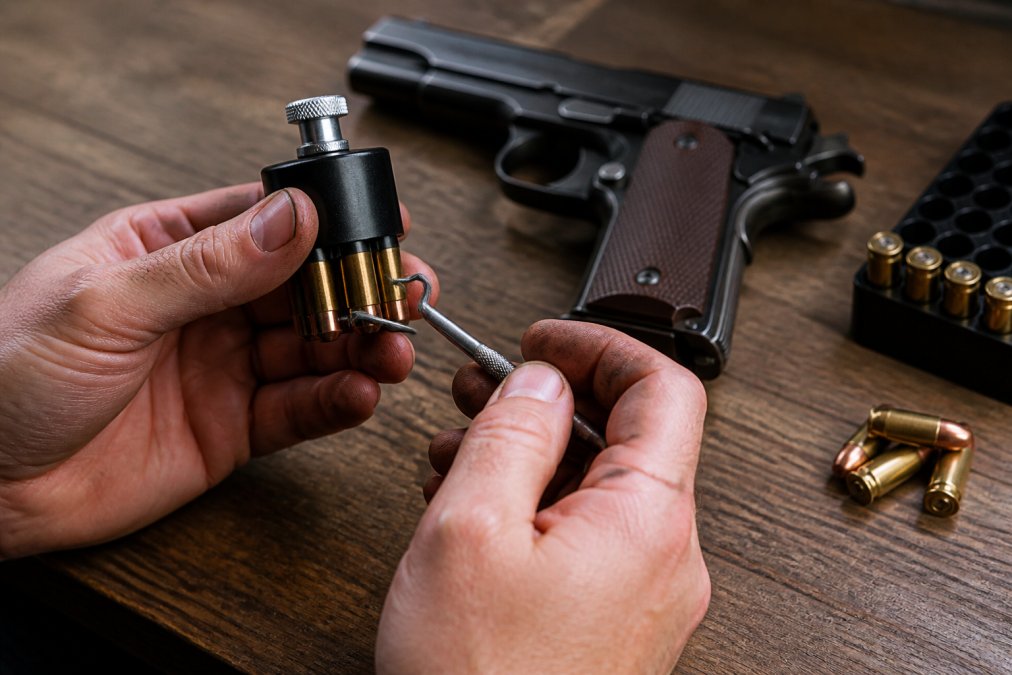
A jammed pistol speed loader usually fails because of debris, a misaligned follower, or a cartridge seated at the wrong angle. The fix is almost always mechanical, not a sign that the loader is ruined. At BULLETPROOF SPEED LOADERS, we build combat-ready equipment. This guide walks you through clearing the jam, diagnosing the root cause, and preventing it from returning.
The most important rule before doing anything: treat the loader as if it were loaded. Even if you believe it is empty, keep the feed end pointed in a safe direction. A pistol speed loader compresses magazine springs, and releasing that tension unexpectedly can send a cartridge flying. Below, we show you exactly how to clear the jammed pistol speed loader, inspect its internals, and fix common malfunctions.
Why Pistol Speed Loaders Jam: Common Causes
A jammed pistol speed loader is rarely a mystery. The mechanism fails for one of three reasons: a physical obstruction, a mechanical misalignment, or a spring tension problem. Identifying which category you are in before prying saves time and prevents damage.
Obstruction-Based Jams
The most common obstruction is unburnt powder and carbon fouling. Case rims scrape against the feed lips and follower track, leaving a fine, abrasive film that increases friction. On a hot day, this film can become tacky, causing the follower to stick mid-stroke. Lint from a range bag or pocket is another culprit; polymer loaders generate static electricity, attracting fabric fibers into the follower channel.
Misalignment-Based Jams
User error is the second leading cause. The most frequent mistake is not seating the cartridge rim fully under the loader's retention claws before pressing down. This cants the case forward, so the bullet nose digs into the magazine's feed ramp while the rim binds against the loader's feed lips, a cross-locked jam that is purely a technique issue. Tilting the loader even five degrees off-axis will also cause the follower to bind against the magazine's internal walls.
Tension-Based Jams
A less obvious cause is spring fatigue. A spring that has lost its temper will not push the follower up with enough force to seat the top round fully, leaving the last round sitting proud of the magazine lips. Conversely, a spring that is too strong, common on aftermarket 'upgraded' loaders, can overpower the release mechanism, causing it to skip or bind.
Visual Troubleshooting Guide
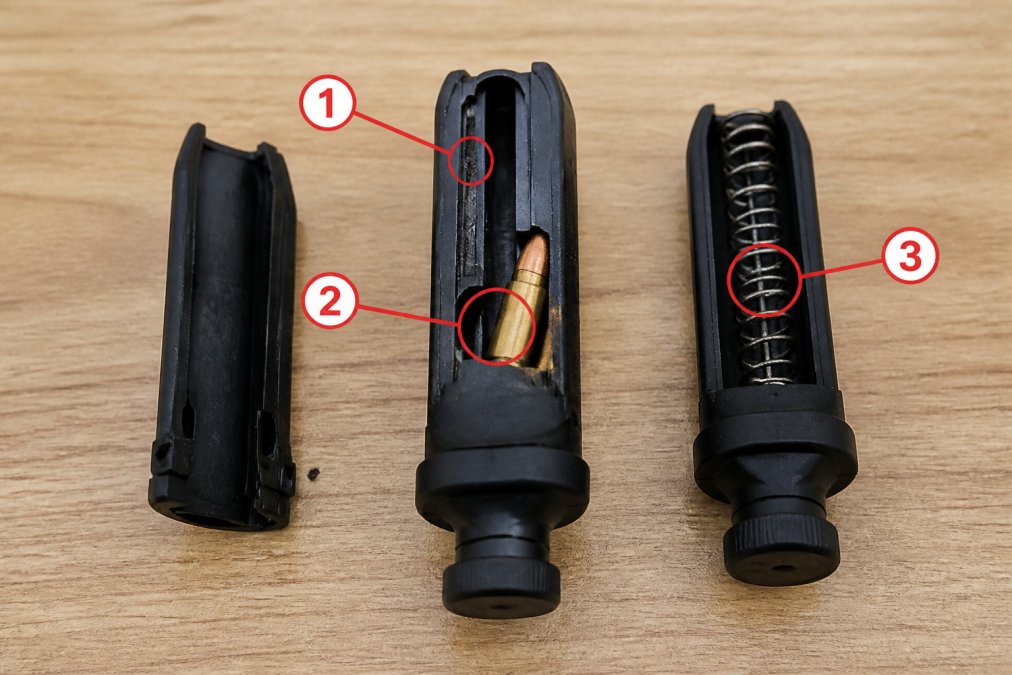
To diagnose your jam quickly, use this visual check:
- Look at the feed lips. If you see a cartridge tilted at an angle, it is a misalignment jam. Do not force it.
- Look at the follower position. If the follower is stuck halfway down the track and not returning, suspect debris or a damaged spring.
- Listen to the release. If the release button clicks but the jaws do not open, suspect a lubrication failure or a broken return spring.
Step 1: Unload and Clear the Loader Safely
Point the loader in a safe direction and remove any magazine from the loading chamber before repairs. This removes spring tension and prevents accidental discharge.
Press the release button or catch to open the loading jaws. If seized, apply steady pressure while gently wiggling the magazine free. Do not force it; prying against a bound follower can bend the feed lips and permanently warp the unit.
Once the magazine is out, verify the loader is completely empty. Tip it over a clear surface and visually confirm no cartridges remain. A loaded speed loader stores significant spring energy you do not want releasing while working on the internals.
Step 2: Disassemble and Inspect for Debris or Damage
Most pistol speed loaders come apart with a single retaining pin or screw. Consult your owner's manual for the exact sequence, since forcing the housing apart on a pinned model can crack the shell.
Lay the components out in order on a clean workbench. Examine the follower for wear, check the feed lips for nicks, and roll the spring on a flat surface to confirm it has not gone out of square. A spring that has lost tension or developed a kink will cause the follower to bind at the same point in every cycle.
Look specifically for debris packed into the corners where the follower travels, the area most guides miss. Carbon and lint accumulate there, hidden inside the housing, until the loader starts failing consistently.
Step 3: Clear a Stuck Cartridge or Obstruction
If a cartridge is wedged in the channel, grip the loader with the feed end facing up and use a plastic tool to push the round back toward the follower. This reverses the jam and relieves the pressure holding it in place.
Work the cartridge side to side with gentle pressure rather than forcing it straight out. A stuck round is usually canted, so wiggling it back to perpendicular frees it without damaging the feed lips. Once it moves freely, slide it out and inspect the channel for debris.
For obstructions like a broken primer, use compressed air to blow out the channel before reassembling. If lodged behind the follower, remove the retaining pin to access it fully. Do not attempt to clear a deep obstruction through the feed opening, as this risks bending the follower arm.
Step 4: Fix Spring Tension and Follower Alignment
Spring tension and follower alignment are the two most misunderstood aspects of speed loader maintenance. Most shooters assume these components are sealed or non-adjustable. In reality, most quality loaders, including the BULLETPROOF EZ-MAG and COMBAT models, use a captive spring system that can be tuned or replaced.

Understanding Your Spring System
There are two common spring designs in pistol speed loaders:
- Captive Coil Spring: This is the most common design. The spring is enclosed in a guide rod or housing. It is not user-serviceable without full disassembly. The tension is fixed at the factory.
- Exposed Torsion Spring: Found on some high-end loaders, this spring wraps around a pivot pin. It often has a tension adjustment screw or a series of shims that change the preload.
Adjusting Tension (If Your Model Allows It)
If your loader has an adjustment screw, it is usually on the underside of the housing or near the pivot pin. Turn it clockwise to increase tension, counterclockwise to decrease it, in quarter-turn increments only. After each adjustment, test with a single, empty magazine. The goal is the minimum tension required to seat a round fully without the follower binding. Over-tightening masks a dirty track and accelerates wear on the feed lips.
Replacing a Fatigued Spring
If your loader has no adjustment screw and you suspect spring fatigue, replacement is the only option. Contact the manufacturer directly. When ordering, you will need the model number and caliber; springs are caliber-specific because the force required to compress a 9mm magazine spring differs from a .45 ACP spring.
Follower Alignment: The Tilt Problem
A follower that tilts is more serious than a weak spring. The follower has two guide tabs that ride in channels on either side of the housing. If one tab wears down or the channel deforms, the follower tilts, presenting the top round at an angle that catches on the magazine's feed lips.
To check alignment, remove the spring and follower. Place the follower on a flat, known-square surface like a glass tabletop. If it rocks, it is warped. If it sits flat, the issue is in the housing channel. Inspect the channel for burrs or wear; a burr can be removed with a fine file or 600-grit sandpaper. If the channel is deformed, the housing is compromised and the loader should be replaced.
A Note on Polymer vs. Metal Springs
Do not use grease on the spring or follower track; it attracts carbon and dust, becoming a grinding paste. Use a dry-film lubricant or a single drop of light oil (like CLP) on the follower track only. Leave the spring dry, an oiled spring collects debris and can cause the follower to stick.
If your loader is a budget model with a fully sealed housing, do not attempt to pry it open. Sealed loaders are not designed for repair; forcing the housing apart will crack the polymer shell. For these models, spring and follower issues are not fixable; replacement is the only option.
How to Prevent Jams: Pistol Magazine Loading Tips
Proper loading technique prevents most speed loader malfunctions. The single biggest mistake shooters make is rushing the loading cycle and forcing rounds into the magazine at an angle.
Load cartridges one at a time, seating each round fully against the follower before pressing down. Confirm the round is level and flush with the feed lips before applying pressure. This takes an extra second per round but eliminates the canted-cartridge jams that account for most failures.
Match the loader to your magazine type. A loader designed for single-stack magazines will not align correctly with double-stack feed lips, and forcing it damages both components. Check your magazine capacity and profile before purchasing a loader, and verify the loader accepts your specific caliber. For high-volume shooters, the USCCA's guide to efficient magazine loading and range safety recommends practicing the loading cycle slowly until the motion is consistent, then building speed.
| Common Mistake | What It Causes | The Fix |
|---|---|---|
| Rushing the loading cycle | Canted cartridge jams | Seat each round flush before pressing |
| Ignoring the first sign of resistance | Fully seized mechanism | Clear debris immediately with air |
| Using the wrong loader for the magazine | Feed lip damage and misalignment | Verify caliber and stack compatibility |
| Skipping regular lubrication | Friction buildup on the follower track | Apply light lubricant every few sessions |
Common Speed Loader Malfunctions and Their Fixes
The most frequently reported speed loader malfunctions fall into three categories: the follower sticks halfway, the release mechanism fails to engage, and rounds feed crooked.
A follower that sticks halfway usually points to debris in the track or a damaged spring. Clean the track thoroughly, inspect the spring for kinks, and lubricate lightly before reassembly. If the problem persists, the spring has fatigued and needs replacement.
A release mechanism that fails to engage is typically a lubrication issue. The catch relies on smooth movement to lock and unlock, and dried lubricant causes it to bind. Apply a drop of light oil to the pivot point and cycle the mechanism several times to work it in.
Rounds feeding crooked indicate a follower alignment problem or worn feed lips. Inspect the feed lips for spreading or nicks. Feed lips that have spread will not hold the top round at the correct angle, causing it to catch on the magazine body during the loading cycle. SAAMI's technical standards for ammunition and firearm components notes that dimensional tolerances matter at every stage of the feeding process, and speed loaders are no exception.
Maintenance: How to Clean Gun Bore at Home and More
Speed loader maintenance follows the same principles as cleaning a firearm bore: remove fouling, inspect for wear, and apply the right lubricant. You do not need specialized equipment.
Disassemble the loader and wipe down all components with a dry cloth. Use a nylon brush and solvent to clean the follower track and feed lips, then dry thoroughly. Apply a single drop of light gun oil to the follower track and release mechanism. More is not better; excess oil attracts dust and creates a paste that causes friction.
For the bore of your pistol, a basic cleaning rod, bronze brush, and patches are sufficient for home maintenance. Run a solvent-soaked patch through the bore, brush to loosen carbon, then follow with dry patches until they come out clean. Finish with a light coat of oil to prevent rust. ATF's safety and storage recommendations for firearm owners reminds owners that regular maintenance is part of responsible storage and handling.
A speed loader that jams mid-reload costs you time at the range and confidence in your gear. Most failures trace back to preventable causes: debris in the track, a canted cartridge, or a follower that has drifted out of alignment. Regular cleaning and proper loading technique solve the problem before it starts. When you need a loader built to handle heavy use without binding, BULLETPROOF SPEED LOADERS offers the EZ-MAG pistol speed loader with a two-step loading action and durable polymer construction, plus the COMBAT and TACTICAL models for high-volume training and duty use. Get started with BULLETPROOF SPEED LOADERS and keep your reloads smooth round after round.
Frequently Asked Questions
Why does my pistol speed loader keep jamming?
A jammed pistol speed loader usually comes from debris, damaged parts, or a misaligned cartridge. Check the feed lips and follower for dirt or burrs. Ensure the magazine is seated properly before each round. If the spring tension is off, rounds can tilt and catch. Regular cleaning and proper technique resolve most issues.
How do I safely clear a cartridge jam in a speed loader?
First, point the loader in a safe direction, away from people. Remove the magazine from the loader if possible. Use a non-marring tool like a plastic punch to gently push the stuck cartridge free. Never use excessive force. If the round is wedged, disassemble the loader to relieve pressure before removal.
Can debris cause a speed loader to malfunction?
Yes. Dust, lint, and spent powder residue can build up in the loading channel and on the follower, creating friction and causing jams. A quick wipe-down after each range trip and a deeper clean periodically will keep the mechanism operating smoothly.
How often should I clean my speed loader to prevent jams?
Wipe down your speed loader after each use to remove surface debris. Perform a more thorough cleaning, including disassembly and lubrication, every few months or after heavy use. If you notice resistance or a jammed pistol speed loader, clean it before your next session.