 how-to
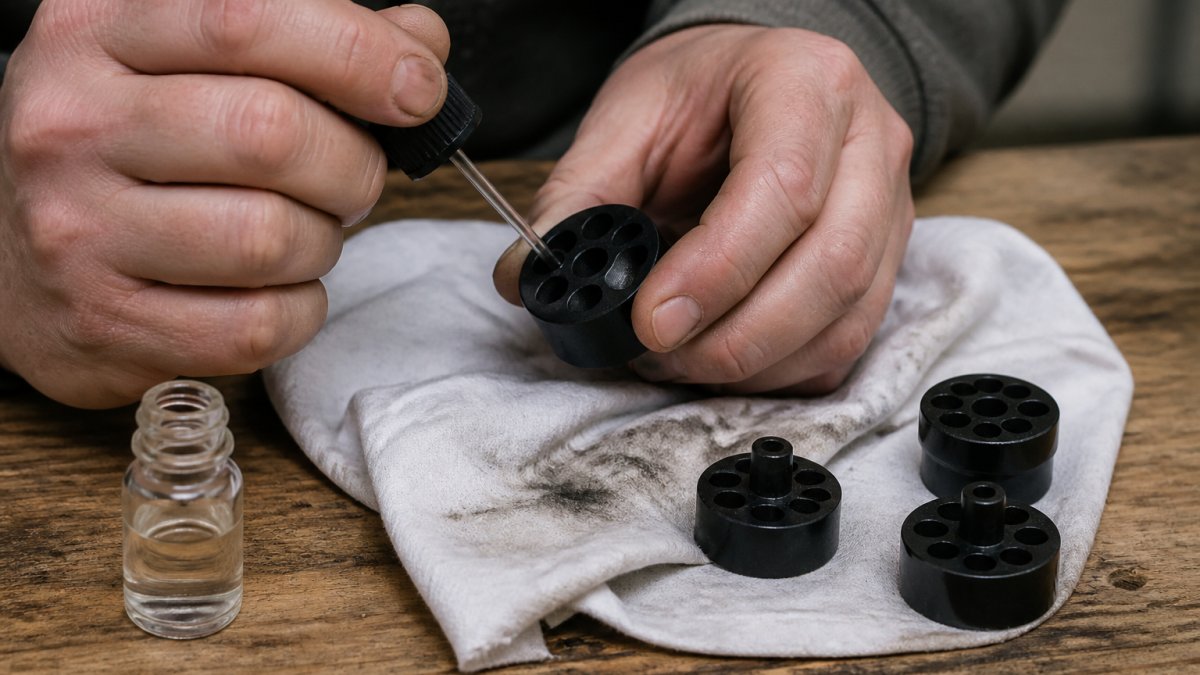
Lubricate Speedloaders Without Attracting Debris
Table of Contents
- Why Lubrication Matters for Speedloader Performance
- How to Clean a Pistol Magazine Speedloader Before Lubricating
- Dry Lubricant for Speedloaders: Your Best Option
- Best Lubricant for Magazine Speedloaders: Oil vs. Dry Film
- Step-by-Step Lubrication Process for Speedloaders
- How Often to Lubricate a Speedloader
- Reducing Friction Without Inviting Contamination
- Troubleshooting Common Lubrication Issues
- Frequently Asked Questions
Last Updated: October 4, 2026
Why Lubrication Matters for Speedloader Performance
A speedloader is only as good as its moving parts. Lubrication reduces friction so the loading tray slides smoothly and the release button clicks without resistance. But excess lubricant attracts dirt and debris, making performance worse. The real skill is finding the balance when you lubricate speedloaders debris stays away: enough lubricant for smooth operation, but so little that contamination is prevented. This guide from BULLETPROOF SPEED LOADERS covers exactly how to do that.

How to Clean a Pistol Magazine Speedloader Before Lubricating
Never lubricate a dirty speedloader. Debris trapped under fresh lubricant becomes permanent contamination.
What you'll need:
- Soft brush or old toothbrush
- Lint-free cloth or microfiber towel
- Compressed air (optional but helpful)
Cleaning steps:
-
Disassemble completely. Remove any removable parts per your speedloader's manual. Most pistol speedloaders have a loading tray, release button, and spring assembly.
-
Brush away loose debris. Use a soft brush to scrub the internal tray and contact surfaces. Pay special attention to corners and crevices where dust collects.
-
Wipe with a dry cloth. A lint-free cloth removes residual dust and old lubricant buildup.
-
Use compressed air if available. A quick burst dislodges particles hiding in tight spaces. Don't overdo it, just enough to clear the mechanism.
-
Let it air dry completely. Any moisture will mix with new lubricant and create a paste. Wait at least 30 minutes before applying anything.
Dry Lubricant for Speedloaders: Your Best Option
Dry lubricant wins for speedloaders. Oil-based lubricants are sticky and attract dirt and dust within a week. Dry lubricant coats moving surfaces without attracting contamination and stays clean in dusty environments.
Graphite-Based Dry Lubricants
Graphite powder creates a slippery coating that reduces friction without wetness. It's the oldest dry lubricant option and it works.
Pros:
- Very affordable
- Minimal debris attraction
- Easy to apply with a brush
Cons:
- Messy to handle (black powder stains hands and clothes)
- Requires reapplication every few months
- Can leave visible residue inside your loader
Application method: Brush graphite powder onto moving surfaces and contact points. Wipe away excess with a dry cloth. The goal is a light gray coating, not black powder.
Teflon-Based Dry Film Sprays
Teflon (PTFE) spray lubricants are cleaner than graphite and last longer. They're the better choice for tactical or competitive use.
Pros:
- Clean application (no mess)
- Long-lasting (6-12 months typically)
- Professional appearance
Cons:
- Slightly more expensive than graphite
- Requires ventilation when spraying
- Can't be applied in tight spaces easily
Application method: Spray a light, even coat from 6-8 inches away. Let it dry completely (15-30 minutes). Apply a second thin coat if needed. Multiple light coats beat one heavy coat.
Best Lubricant for Magazine Speedloaders: Oil vs. Dry Film
The choice between oil and dry lubricant is not universal. It depends on your speedloader's construction materials and your shooting environment.
Understanding Speedloader Materials
Most pistol speedloaders combine three material types, and each responds differently to lubricants:
Polymer or plastic components (loading tray, body, release button housing)
- Dry lubricants: Safe. Teflon and graphite do not degrade polymer.
- Light mineral oils: Generally safe, but some synthetic oils can soften plastic over time.
- Avoid: Aggressive solvents, acetone-based products, and heavy gear oils.
Metal springs and contact points (tension springs, pivot pins, metal detents)
- Dry lubricants: Effective for friction reduction but provide no corrosion protection in humid environments.
- Light oils: Excellent for corrosion protection and friction reduction.
- Avoid: Heavy grease or thick oils. They attract debris and slow spring action.
Elastomer seals and gaskets (if present)
- Dry lubricants: Safe and preferred.
- Petroleum-based oils: Can soften rubber seals over time.
- Silicone-based oils: Generally compatible with elastomers.
Material-Specific Lubrication Strategy
For all-polymer speedloaders with no metal springs: Use a Teflon-based dry film spray exclusively. Polymer components have no corrosion risk, and dry lubricant eliminates debris attraction entirely. Reapply every 6-12 months.
For metal-spring speedloaders (most common): This is where the decision matters. You have two paths:
Path 1: Dry lubricant + occasional inspection Apply Teflon dry film to all surfaces. Inspect springs every 3-4 months in humid climates for rust.
Path 2: Minimal oil on springs, dry lubricant elsewhere Apply light gun oil only to metal springs and pivot points using a cotton swab. Apply Teflon dry film to the polymer tray and release mechanism.
Environmental Factors That Override Material Considerations
Humid or coastal environments: Light oil on springs prevents rust. Store in a protective pouch.
Desert or sandy conditions: Dry lubricant is mandatory. Oil becomes an abrasive paste when mixed with sand.
Indoor or controlled-environment use: Light gun oil is acceptable on all components with minimal debris risk.
Checking Your Speedloader's Material Composition
Consult your speedloader's manual or manufacturer website. Most modern speedloaders list materials for each component. If you've lost the manual, examine the loader:
- Flexible, slightly translucent body = polymer (safe for dry lubricant)
- Rigid, metallic-looking tray = likely metal or reinforced polymer (check for rust risk)
- Visible coil springs = metal (needs corrosion protection consideration)
Our Recommendation
For the majority of shooters with metal-spring speedloaders: Use a Teflon-based dry film spray as your primary lubricant on the polymer tray and release mechanism. Apply a minimal amount of light gun oil (a single drop on a cotton swab) to metal springs and pivot points only.
For all-polymer speedloaders: Dry film spray exclusively. No oil needed. Reapply every 12 months or when you notice sluggish loading.
Step-by-Step Lubrication Process for Speedloaders
The process matters as much as the product. Sloppy application creates problems. This section walks you through lubrication with built-in checkpoints to confirm you've applied the right amount.
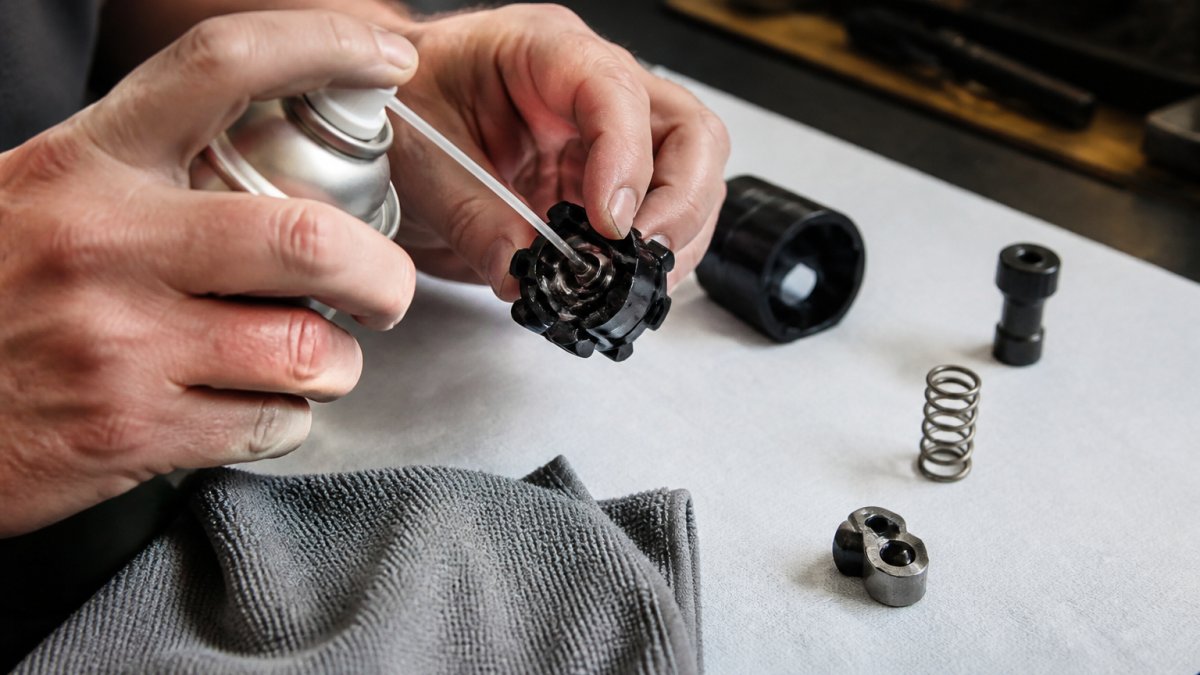
Step 1: Disassemble and Inspect
Take your speedloader apart completely. Most pistol speedloaders break down into a loading tray, spring assembly, and release button or lever. Check your manual for the exact breakdown sequence.
Inspection checklist:
- Look for cracks in plastic parts. Hairline cracks can worsen under pressure.
- Check springs for rust, discoloration, or loss of tension.
- Verify all small parts are present.
Step 2: Clean Internal Surfaces Thoroughly
Never apply fresh lubricant over old residue.
Bulletproof Speed-Loader COMBAT Model →
For the loading tray: Wipe all internal surfaces with a lint-free cloth, paying special attention to where rounds sit.
For contact points: Use a slightly damp cloth with rubbing alcohol (70% isopropyl).
For tight crevices: Use a soft brush to dislodge particles, followed by a short burst of compressed air.
Final drying step: Let everything air dry completely for at least 30 minutes.
Step 3: Apply Lubricant Sparingly, With Measurement Guidance
This is where most people fail. They apply too much. Here's how to apply the right amount.
For Teflon-based dry film spray:
- Hold the can 6-8 inches from the speedloader.
- Apply one light, even coat to all moving surfaces. The speedloader should look slightly damp for 5-10 seconds, then dry to a barely visible sheen.
- Wait 15 minutes for the first coat to dry completely.
- Apply a second thin coat if needed. Most speedloaders need only one coat.
- If you can see a visible coating or feel tackiness after 20 minutes, you applied too much.
For graphite powder:
- Use a small brush with a light gray tint of powder.
- Apply to moving surfaces and contact points with gentle, short strokes.
- Wipe away excess with a dry cloth immediately. The goal is a barely visible gray tint, not a dark coating.
- If you can see black powder after wiping, you applied too much.
Checkpoint: The "Invisible Lubricant" Test
After your lubricant dries completely, hold the speedloader up to light and inspect it. You should barely see the lubricant. If it's visible as a coating, sheen, or residue, you applied too much. Wipe it down with a clean, dry cloth and let it dry again.
Step 4: Wipe Down and Functional Test
After lubricant dries, wipe the entire speedloader with a clean, dry cloth. Remove any visible excess or residue. This prevents debris from sticking to wet lubricant.
Functional test sequence:
- Load and unload a magazine 5-10 times with an empty magazine. The action should be smooth and fast with no grinding or resistance.
- Listen for the release button click. It should click cleanly. A muffled click suggests too much lubricant.
- Feel for resistance. The tray should slide smoothly with minimal finger pressure.
- Check for sticking. Load and unload quickly several times. The mechanism should not stick or bind.
If anything feels wrong:
- Stiff or sluggish action: You applied too much lubricant. Wipe thoroughly with a dry cloth and let sit 24 hours. If stiffness persists, disassemble, clean with rubbing alcohol, dry 60 minutes, and relubricate with much less product.
- Grinding or rough feeling: This indicates mechanical wear or damage, not a lubrication problem. Check for cracks, rust, or bent springs.
- Uneven action: Lubricant may be pooling. Wipe and apply a more even coat next time.
Step 5: Reassemble and Store Properly
Once the functional test passes, reassemble your speedloader carefully. Ensure all springs are seated correctly and the release button moves freely.
Store the speedloader in a protective pouch or case between uses to prevent dust and debris from settling on fresh lubricant. Keep it in a cool, dry place, not in a hot car or exposed to moisture.
How Often to Lubricate a Speedloader
Frequency depends on how much you shoot and your environment.
Light use (monthly range trips): Lubricate every 12 months.
Regular use (weekly range trips): Reapply every 6 months.
Heavy use (competitive shooting or training): Reapply every 3-4 months.
Harsh environments (desert, sandy, humid): Check every 2-3 months.
The real test is function. If your speedloader loads smoothly and clicks without resistance, the lubricant is still working. When you feel stiffness or hear grinding, it's time to clean and relubricate.
Reducing Friction Without Inviting Contamination
The solution is dry lubricant. It's slippery while dry.
Environmental best practices:
For range use, your speedloader sits in a bag or holster between sessions.
For desert or sandy environments, dry lubricant is non-negotiable. Oil-based lubricants become sandpaper in those conditions.
For humid conditions, dry lubricant also wins. Oil gets sticky in heat and humidity.
Storage matters too. Keep your speedloader in a cool, dry place.
Troubleshooting Common Lubrication Issues
Problem: Speedloader feels stiff after lubrication
You applied too much lubricant. Remove the speedloader and wipe it thoroughly with a dry cloth.
Problem: Debris accumulates despite lubrication
This means you used oil or applied lubricant too heavily. Switch to a Teflon-based dry film spray. Apply only a light mist.
Proper lubrication keeps your speedloader running fast and reliable. Clean first. Use dry lubricant. Apply sparingly. Test before you need it.
The BULLETPROOF SPEED LOADERS lineup includes models designed for different shooting styles and magazine types. Whether you're using the BULLETPROOF Pistol Speed Loader for 9mm or the BULLETPROOF COMBAT Model for tactical work, the lubrication principles remain the same: minimal product, maximum performance.

Frequently Asked Questions
Do pistol magazine speedloaders need lubrication?
Yes, speedloaders benefit from lubrication to reduce friction in moving parts and maintain smooth operation. However, lubrication must be applied carefully and sparingly. Excess lubricant attracts dirt, dust, and debris, which can cause sticking, feed issues, and premature wear. The key is using the right type of lubricant, dry film or a very light coat of oil, and keeping the application minimal.
What's the best lubricant for magazine speedloaders?
Dry lubricants are the best choice for speedloaders because they reduce friction without attracting contamination. Graphite-based products and Teflon-based dry film sprays create a protective coating that prevents buildup of dirt and grit. If you use oil, apply only a light coat to contact points and internal trays. Gun oil works, but it's more prone to attracting debris than dry alternatives, especially in range or desert use environments.
How often should you lubricate a speedloader?
The frequency depends on your usage and environment. Competitive shooters or those using speedloaders in harsh conditions may need more frequent maintenance. Always inspect for residue and buildup before reapplying lubricant. If you notice sticking or sluggish loading cycles, clean and lubricate immediately rather than waiting for your scheduled maintenance window.
Can you use dry lubricant on a speedloader?
Absolutely. Dry lubricant is ideal for speedloaders and strongly preferred over wet oil. Dry film sprays and graphite products eliminate friction on moving surfaces and contact points without leaving sticky residue that traps dust and grit. Apply a light coat to the loading mechanism and internal surfaces, then wipe down excess. Dry lubricant is especially effective in dusty or sandy environments where debris buildup is a concern.