 how-to
Storing Firearm Accessories to Prevent Corrosion
Table of Contents
- Why Corrosion Happens to Stored Firearm Accessories
- Best Rust Prevention for Gun Safes and Storage Environments
- How to Use Desiccant for Firearm Storage
- Cleaning Tactical Gear Before Storage
- Protective Coatings and Lubrication Strategies
- Long-Term Storage vs. Short-Term Protection Methods
- Inspection and Maintenance Schedules for Stored Accessories
- Frequently Asked Questions
Last Updated: October 1, 2026
Why Corrosion Happens to Stored Firearm Accessories
Moisture is the enemy of metal. Storing firearm accessories to prevent corrosion requires understanding how water vapor in the air attacks exposed steel and aluminum surfaces. The result is rust, oxidation, and permanent damage to gear you depend on.
Oxygen and moisture break down protective finishes. Temperature swings worsen the problem: a safe warming during the day and cooling at night creates condensation that accelerates oxidation on your speed loaders, magazines, and tactical accessories.
Humid climates, basements, garages, and outdoor storage are especially risky. Even a sealed gun safe offers limited protection without environmental management.
Corrosion starts invisibly; by the time you see rust, damage is done. Prevention is far cheaper than replacement.
Best Rust Prevention for Gun Safes and Storage Environments
The foundation of corrosion prevention is climate control. Your storage space needs to stay dry and stable.
Control humidity levels:
- Target relative humidity below 50 percent
- Use a dehumidifier in damp spaces
- Check humidity with a hygrometer (inexpensive and accurate)
- Empty dehumidifiers regularly or use continuous drainage
Maintain steady temperature:
- Avoid spaces that heat up and cool down rapidly
- Basements stay more stable than attics
- Keep safes away from exterior walls
- Don't store accessories in vehicles exposed to sun
Seal your storage case or safe:
- Airtight safes reduce moisture infiltration
- Check door seals for gaps
- Use weatherstripping if needed
- Keep the safe closed except when accessing gear
A sealed safe in a humid room still traps moisture inside. You need both environmental control and active desiccants working together.
Start with humidity management. It's the most cost-effective layer of protection. Add desiccants on top of that for maximum security.
How to Use Desiccant for Firearm Storage
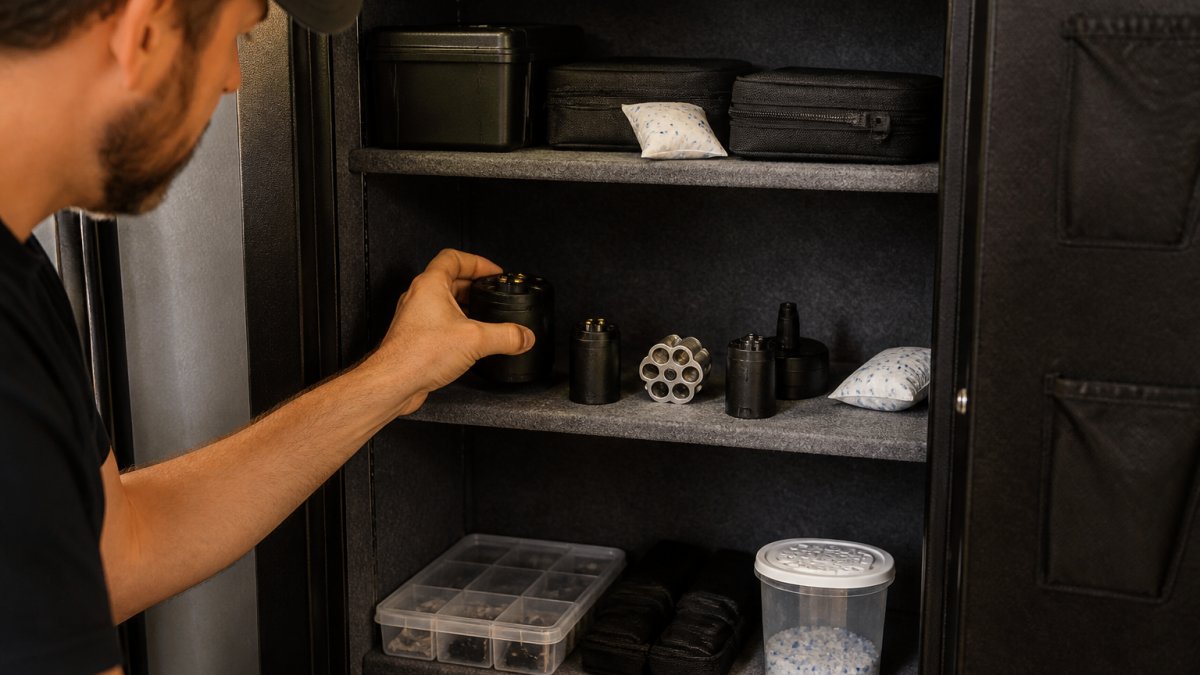
Desiccants absorb moisture before it reaches your gear. Silica gel is the most practical option for most shooters.
Setting up desiccant properly:
- Place desiccant packets throughout the safe, not just in one corner
- Use multiple small packets rather than one large container
- Position them near the door where moisture enters first
- Replace packets every 6-12 months depending on humidity
How much desiccant do you need?
- Small safe (under 20 cubic feet): 2-3 pounds of silica gel
- Medium safe (20-50 cubic feet): 4-6 pounds
- Large safe (over 50 cubic feet): 8-10 pounds
Silica gel comes in loose form or sealed packets. Loose silica can be recharged by heating in an oven. Sealed packets are convenient but cost more over time.
VCI (Volatile Corrosion Inhibitor) technology offers another approach. VCI products release protective vapor that coats metal surfaces. They work well for long-term storage of specific items like barrels or springs. For general accessory storage, silica gel remains the standard.
A practical setup combines both methods. Use silica gel for overall humidity control. Add VCI paper or packets around your most valuable or sensitive components.
Check desiccant regularly. When silica gel turns pink or saturated, it's no longer working. Swap it out immediately. Wet desiccant can actually increase humidity inside the safe.
Cleaning Tactical Gear Before Storage
Dirt and residue trap moisture and accelerate corrosion. Proper pre-storage cleaning removes the specific contaminants that cause hidden damage.
Understanding what causes corrosion in stored gear:
Powder residue (hygroscopic), primer residue (corrosive compounds), and sweat salts are the main culprits. Sweat salts especially lower the corrosion threshold, even in low-humidity safes.
Pre-storage cleaning protocol:
Step 1: Dry wipe and visual inspection
- Wipe all metal surfaces with a dry, lint-free cloth
- Inspect feed lips, springs, joints, and areas where metal parts meet for visible residue
Step 2: Mechanical debris removal
- Use a soft brass brush on metal surfaces to dislodge powder particles
- For tight spaces, use a soft nylon brush or old toothbrush
- Avoid compressed air; use wooden or plastic scrapers, never metal tools
Step 3: Wet cleaning for contaminated items
- Use lukewarm water and mild dish soap for items with visible primer residue or heavy powder buildup
- Submerge for 5-10 minutes, scrub gently, rinse thoroughly, and air-dry for 30 minutes
Step 4: Tactical gear and non-metal components
- Wipe with a damp cloth and mild soap; do not soak
- Pay attention to seams where salt deposits accumulate
- Air-dry completely (2-4 hours) before storage
- If mold or mildew is present, wash with one part white vinegar to three parts water, then air-dry
Step 5: Final inspection before storage
- Inspect under bright light for discoloration, residue, or moisture
- Address any starting corrosion with fine steel wool or brass brush, then reapply protective oil
- Do not store items with active corrosion
Identifying hidden contamination:
Before storage, check for white powder on springs (early steel oxidation), discoloration on aluminum (white or gray spots), sticky mechanical movement (internal corrosion), or pitting (advanced corrosion requiring replacement).
Cleaning schedule before long-term storage:
Protective Coatings and Lubrication Strategies
The choice of lubricant and coating matters significantly. Not all oils work equally in sealed storage, and some degrade surrounding materials.
Understanding lubricant types and their storage lifespan:
Chemical compatibility with storage materials:
Applying protective coatings correctly:
Light protective oil (short-term storage, under 12 months):
- Apply a thin, even coat using a lint-free cloth
- Wipe away all excess, pooled oil attracts dust and can gum mechanical components
- Reapply every 6 months if the safe is opened frequently
- Best for speed loaders, magazines, and tactical gear you'll use seasonally
Cosmoline and heavy protective coatings (long-term storage, 1-5+ years):
- Cosmoline provides nearly foolproof protection but is thick and requires careful removal before use
- Apply in a thin, even layer; excess cosmoline hardens and becomes difficult to clean
- Wrap coated items in kraft paper or VCI paper to prevent transfer to other stored goods
- Reserve for backup accessories or items you won't access for years
- Removal requires warm water, mild soap, and patience, plan 30-60 minutes of cleaning per item
VCI (Volatile Corrosion Inhibitor) technology:
VCI products release protective vapor that coats metal surfaces without direct contact. They work exceptionally well for:
- Barrels and springs (high-corrosion-risk components)
- Ammunition stored alongside accessories
- Items you want to access without removing heavy coatings
Protective sleeves and wrapping:
Gun socks, kraft paper, and VCI-treated wrapping add a physical barrier against moisture and dust:
- Wrap individual items or group related accessories together
- Ensure items are completely dry and lightly oiled before wrapping
- Avoid plastic wrap or non-breathable materials, which trap condensation
- Check wrapped items every 3 months for moisture inside the wrapping
- Replace wrapping if it shows signs of moisture or deterioration
Matching protection to your timeline:
Long-Term Storage vs. Short-Term Protection Methods
Your storage timeline determines which methods make sense.
Short-term storage (under 12 months):
- Focus on humidity control with desiccants
- Light gun oil on metal surfaces
- Standard gun safe with sealed door
- Monthly visual inspections
Long-term storage (1-5 years):
- Heavy-duty desiccants replaced every 6 months
- Protective coatings like cosmoline
- VCI paper or packets around sensitive items
- Sealed storage case or safe in climate-controlled space
- Quarterly inspections
Extended storage (5+ years):
- Cosmoline or equivalent heavy protective coating
- Multiple layers of VCI protection
- Vacuum-sealed wrapping for critical items
- Storage in climate-controlled indoor space
- Annual inspections and recoating if needed
The difference matters. A speed loader stored for three months needs basic protection. A backup magazine stored for five years needs aggressive corrosion prevention.
Inspection and Maintenance Schedules for Stored Accessories
Stored gear needs attention. Regular checks catch problems early.
Monthly inspections:
- Open the safe and look for visible corrosion
- Check desiccant color (replace if saturated)
- Wipe down any moisture on safe interior
- Verify door seals are intact
Quarterly maintenance:
- Remove accessories and inspect them individually
- Wipe metal surfaces with a dry cloth
- Reapply light protective coating if needed
- Check for any rust spots or discoloration
- Replace desiccants if they show saturation
Annual deep maintenance:
- Remove all accessories from storage
- Clean each item thoroughly
- Inspect for corrosion or damage
- Reapply protective coatings
- Replace desiccants
- Check safe seals and hinges
What to look for:
- Surface discoloration or white powder (early oxidation)
- Rust spots or pitting
- Sticky or rough mechanical components
- Moisture inside wrapping or cases
- Desiccant saturation
A simple inspection log helps. Note the date, what you checked, and any issues found. This creates a record you can reference.
Frequently Asked Questions
What is the best way to store firearm accessories to prevent rust?
Store accessories in a climate-controlled environment with relative humidity below 50%, use desiccants like silica gel to absorb moisture, apply a protective lubricant before storage, and keep items in sealed containers or gun safes. Regular inspection every 30 days helps catch early corrosion. Avoid areas prone to temperature swings, and consider using VCI (Volatile Corrosion Inhibitor) products designed specifically for metal preservation in storage environments.
Do silica gel packets actually prevent corrosion on metal gear?
Yes. Silica gel works by absorbing moisture from the air, which is essential because corrosion requires moisture to form on metal surfaces. By maintaining low humidity levels around your stored accessories, silica gel packets significantly slow oxidation and rust formation. Replace packets when they become saturated (typically every 3-6 months depending on storage conditions). Monitor humidity with a hygrometer to confirm levels stay below 50% relative humidity.
How often should I inspect stored tactical equipment for rust?
Inspect stored firearm accessories every 30 days, especially during high-humidity seasons. Check for surface discoloration, pitting, or white corrosion powder on metal parts. Speed loaders, springs, and metal components are most vulnerable. If you notice early corrosion, clean the item immediately with a soft cloth and gun oil, then return it to storage with fresh desiccants. In dry climates, monthly checks may reveal slower corrosion progression; in coastal or humid regions, increase frequency to every 2-3 weeks.
Should I oil my firearm accessories before long-term storage?
Yes, a light coat of gun oil or protective lubricant creates a barrier against moisture and environmental contaminants. Apply a thin, even layer to metal surfaces, then wipe away excess to prevent sticky buildup. Oil-based protective coatings work best for items stored longer than 3 months. For speed loaders and springs, ensure the oil doesn't interfere with mechanical function. Pair oiling with desiccants and low-humidity storage for maximum corrosion protection.