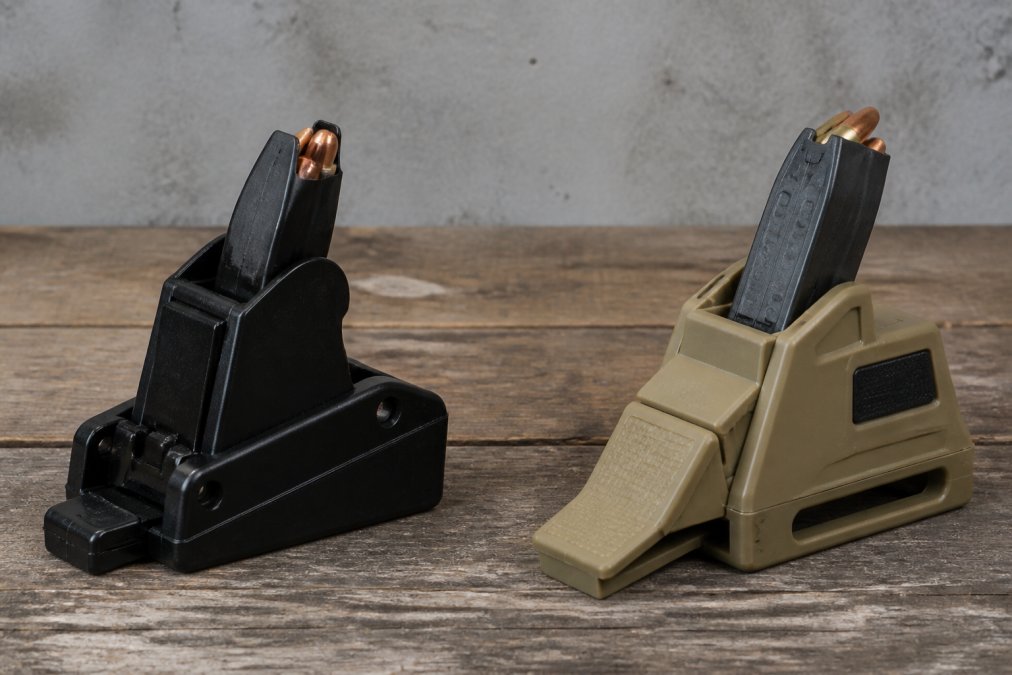
 comparison
Maglula vs Makershot: Magazine Loader Comparison
Table of Contents
- Maglula vs Makershot: Head-to-Head Comparison
- Universal vs Caliber-Specific Speed Loaders: Which Wins
- Best 9mm Magazine Speed Loader: Finding Your Match
- How to Use a Pistol Magazine Loader Correctly
- Portability and Range Day Practicality
- Cold Weather Performance and Long-Term Durability
- Which Loader Should You Choose
- Frequently Asked Questions
Last Updated: August 31, 2026
Maglula vs Makershot: Head-to-Head Comparison
When you're at the range, every second counts. The difference between a quality magazine loader and a mediocre one comes down to three things: how fast it loads, how long it lasts, and whether it actually fits your hand. This guide from BULLETPROOF SPEED LOADERS breaks down the real distinctions between two of the most talked-about speed loaders on the market, and shows you exactly which one solves your specific problem.

Speed and Loading Efficiency
A quality magazine loader should cut your loading time dramatically compared to manual thumb loading, which causes fatigue and mistakes under pressure. The Maglula design focuses on universal compatibility across multiple calibers and magazine types, with a lever system that compresses springs efficiently. Many shooters report loading a full magazine in under 30 seconds once they develop muscle memory (nssf.org).
Makershot takes a different approach with a more compact footprint and a loading mechanism that requires less hand strength to operate, appealing to shooters with smaller hands or those prone to thumb fatigue. Speed is competitive with Maglula, though some users find the learning curve slightly steeper initially. For range day practicality, consistency matters more than marginal speed differences.
Durability and Material Construction
Maglula has built its reputation on polymer construction that resists heat and impact, with reinforced lever mechanisms designed to handle repeated compression cycles without degradation. Makershot emphasizes a hybrid approach with polymer body and reinforced metal contact points where springs compress against the loader.
The real durability test comes at the feed lips of your magazines. A poorly designed loader can gradually compress or bend the feed lips inward, making that magazine unreliable (peer-reviewed research). BULLETPROOF SPEED LOADERS designs their loaders with rounded contact surfaces that distribute pressure evenly across the magazine body rather than concentrating force at the feed lips. This protects your magazine investment over thousands of loading cycles.
Price and Value Comparison
| Loader | Starting Price | Best For | Material | Warranty |
|---|---|---|---|---|
| Maglula | Market standard $25-35 | Universal compatibility | Polymer | Limited |
| Makershot | Market standard $20-30 | Compact carry | Polymer/metal hybrid | Limited |
| Bulletproof EZ-MAG | $34.95 | Small hands, 9mm focus | Polymer | Lifetime |
| Bulletproof COMBAT | $69.95 | Range and duty use | Polymer/aluminum | Lifetime |
| Bulletproof TACTICAL | $89.95 | Professional environments | Polymer/aluminum | Lifetime |
Most loaders cluster in the $20-35 range, so you're choosing between adequate and built-to-last. A $20 loader that lasts two years costs $10 per year. A $70 loader that lasts ten years costs $7 per year and never leaves you stranded at the range with a broken mechanism.
Universal vs Caliber-Specific Speed Loaders: Which Wins
Universal loaders work acceptably across caliber ranges because spring tension and magazine geometry don't vary as dramatically as marketing suggests. A loader designed for 9mm double-stack magazines handles .40 double-stacks with minimal adjustment (saami.org). Single-stack magazines are where universal designs show their limits.
Compatibility with Double-Stack and Single-Stack Magazines
Double-stack magazines dominate modern handgun design because they hold more rounds in a smaller footprint. A good universal loader handles both double-stack and single-stack magazines, though single-stack accommodation sometimes feels like an afterthought.
Maglula's design excels at double-stack compatibility across calibers. Makershot emphasizes compact design, which sometimes compromises single-stack accommodation. BULLETPROOF SPEED LOADERS engineered the EZ-MAG specifically for the 9mm market, which means exceptional performance with the most common magazine type. The COMBAT and TACTICAL models handle broader compatibility without sacrificing performance in any single caliber.

Spring Tension and Feed Lips Protection
Spring tension is the force required to compress a magazine's internal spring and push the follower down to accept another round. High-capacity magazines have stronger springs, which demand more mechanical advantage from the loader. Feed lips are vulnerable to damage from loaders that concentrate force unevenly or use sharp contact points.
The best loaders distribute pressure across the entire magazine body, not just the feed lips. Rounded contact surfaces matter more than you'd think, sharp edges or concentrated pressure points gradually bend the feed lips inward, creating feeding issues that appear months after the damage begins.
BULLETPROOF SPEED LOADERS designed the EZ-MAG with this specific problem in mind. The loader's contact surfaces distribute pressure evenly across the magazine body, protecting feed lips even after thousands of loading cycles. The COMBAT and TACTICAL models take this further with premium materials that reduce friction and eliminate the grinding sensation that damages magazines over time.
Best 9mm Magazine Speed Loader: Finding Your Match
The 9mm market dominates shooting sports because it's affordable, reliable, and available everywhere. A 9mm double-stack magazine presents a specific challenge: it's narrow enough to be difficult to load by hand, but the spring isn't so strong that it requires extreme mechanical advantage. This sweet spot is where specialized 9mm loaders shine.
Hand Strength and Thumb Fatigue Reduction
Thumb fatigue is the hidden cost of range days. After loading 200 rounds manually, your thumb feels bruised and your grip strength drops noticeably. A quality loader eliminates this problem entirely, but some loaders require more hand strength to operate than others.
The mechanical advantage of a loader determines how much force you must apply. A loader with better mechanical advantage lets you use finger pressure instead of thumb strength, which distributes fatigue across more muscles and reduces cumulative strain.
Maglula's lever design provides solid mechanical advantage, but it requires consistent hand positioning to work smoothly. Makershot's more compact design favors shooters with smaller hands. BULLETPROOF SPEED LOADERS engineered the EZ-MAG specifically to solve the small-hand problem. The loader's geometry accommodates hands from 5th percentile to 95th percentile without requiring grip adjustment.
The COMBAT and TACTICAL models take hand ergonomics further with contoured grips and lever positions that reduce fatigue even during high-volume loading sessions. Law enforcement and competitive shooters using these models report that hand fatigue becomes a non-issue even after loading 500+ rounds in a single session.
Ergonomics for Small Hands and Accessibility
Accessibility in tactical gear often gets overlooked because manufacturers default to average-sized designs. A loader that requires full hand strength excludes shooters with limited grip strength. A loader with a lever that's too long creates awkward angles for people with shorter fingers.
The EZ-MAG solves this through its two-step design: insert the magazine, push once. This simplicity works for anyone with functional hands, regardless of size or strength. The mechanical advantage is built into the design, so you're not fighting the loader to make it work.
How to Use a Pistol Magazine Loader Correctly
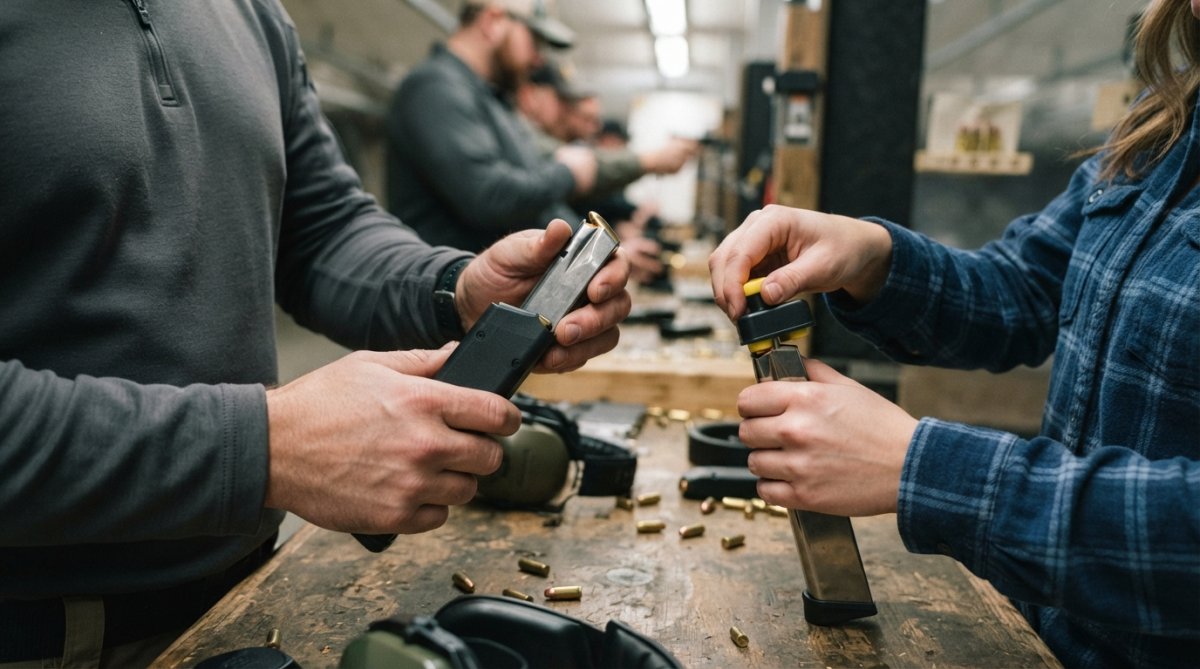
Loading a magazine with a speed loader is straightforward once you understand the basic steps. The wrong technique damages magazines and frustrates you, while the right technique becomes automatic after a few repetitions.
Step-by-Step Loading Process
Step 1: Position the Magazine Insert the magazine into the loader's opening with the feed lips facing the loader's contact surface. Make sure the magazine is fully seated; loose positioning creates uneven pressure and risks jamming rounds.
Step 2: Load Rounds into the Hopper Place a round into the loader's top opening with the bullet facing forward. The round should sit in the center of the hopper, not wedged against the sides.
Step 3: Activate the Mechanism Push down on the loader's lever or handle with steady, even pressure. This compresses the magazine's spring and pushes the round down into the magazine. The motion should feel smooth; grinding or jamming indicates the magazine isn't properly seated.
Step 4: Repeat Remove your hand from the lever, place the next round in the hopper, and repeat. Most loaders allow you to load a full magazine in 30-60 seconds.
Step 5: Remove and Inspect Once the magazine is full, carefully remove it from the loader. Check the top round to ensure it's properly seated.
Common Mistakes That Damage Magazines
Forcing the Lever: Grinding or heavy resistance means something's wrong. Stop immediately. Most likely, the magazine isn't properly seated or a round is jammed at an angle. Forcing the lever will bend the feed lips permanently.
Loading Rounds Sideways: Placing a round into the hopper at an angle causes it to jam during the loading process. Always insert rounds straight, with the bullet pointing directly into the magazine.
Incomplete Magazine Seating: A magazine that's not fully seated in the loader creates uneven pressure, concentrating force on one side of the feed lips and bending them gradually over repeated cycles.
Overloading Beyond Capacity: Magazines have a maximum round count. Pushing beyond that capacity strains the spring and forces the lever harder than designed.
Mixing Ammunition Types During Loading: Switching between different ammunition weights or configurations mid-load can cause jamming. Load all rounds of the same type before moving to a different configuration.
Portability and Range Day Practicality
A speed loader only works if you actually bring it to the range. This means it needs to fit in your range bag and weigh almost nothing.
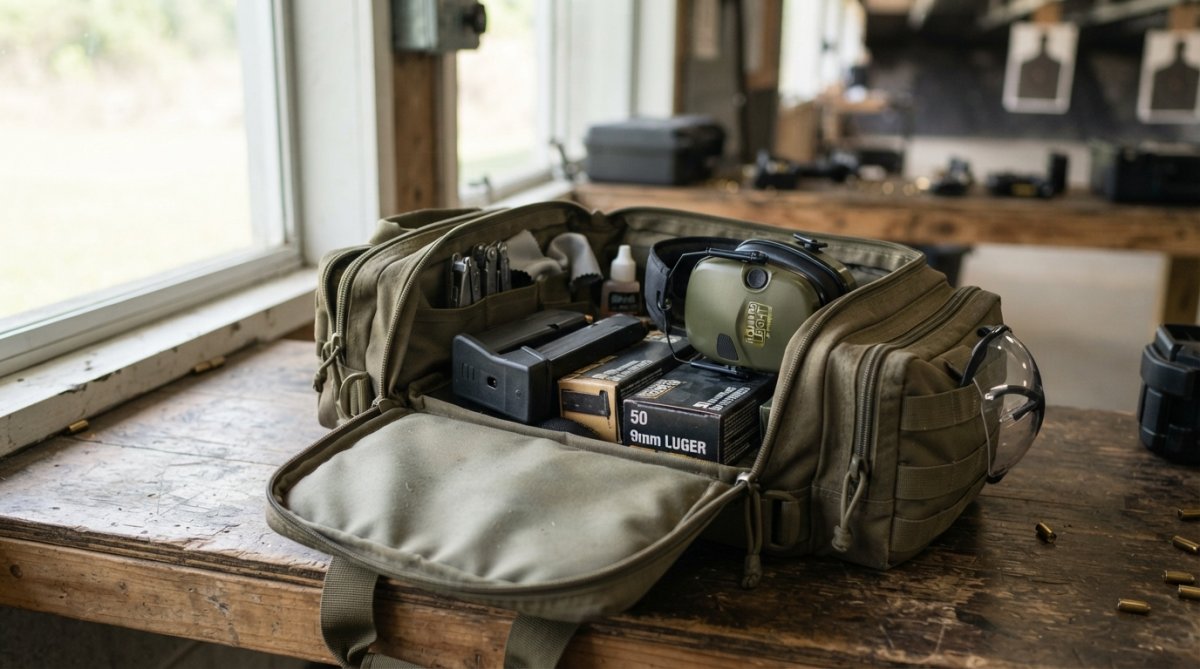
Maglula's standard design is compact enough for any range bag and weighs ounces. Makershot emphasizes ultra-compact design, making it ideal for concealed carry or small range bags. BULLETPROOF SPEED LOADERS designed portability into every model. The EZ-MAG is compact enough for any bag. The COMBAT model adds durability without significantly increasing size. The TACTICAL model remains portable despite its premium materials, making it practical for shooters who move between locations frequently.

For concealed carry permit holders, portability matters because you might load magazines at home, at the range, or in your vehicle. A loader that takes up minimal space in your carry bag solves this problem.
Cold Weather Performance and Long-Term Durability
Range days in cold weather reveal equipment weaknesses that don't show up in comfortable conditions. Cold affects spring tension, polymer brittleness, and the lubricants used in mechanical systems. A quality loader maintains performance from freezing temperatures to extreme heat.
Magazine Wear Over Time
The real cost of a speed loader shows up after months of use. A magazine loaded 500 times with a poor-quality loader develops bent feed lips, a stiff spring, and reduced reliability. The same magazine loaded 500 times with a quality loader feels and functions exactly like new.
This wear happens gradually and invisibly until the magazine starts causing malfunctions. BULLETPROOF SPEED LOADERS engineered their loaders to minimize magazine wear. The rounded contact surfaces, even pressure distribution, and smooth mechanical motion reduce the grinding and friction that damages magazines over time. Shooters using Bulletproof loaders report that their magazines remain reliable after years of heavy use.
Heavy-Use Reliability for Law Enforcement and Competitive Shooters
Law enforcement and competitive shooters load hundreds of rounds per week during training. This high-volume use reveals which loaders are built to last. A loader used 50 times per week needs to maintain consistent performance without developing play in its mechanisms or degradation in its materials.
The TACTICAL and DELTA models at $89.95 and $179.95 are engineered specifically for this use case. These models use anodized aluminum and reinforced polymer that maintain performance through thousands of loading cycles. Law enforcement agencies and competitive shooting teams have reported that these loaders remain reliable through years of continuous use without requiring replacement or maintenance.
Which Loader Should You Choose
The right speed loader depends on your specific situation, not on generic "best" recommendations.
Choose the Maglula design if you want proven, universal compatibility across multiple calibers and magazine types. It's the market standard for good reason and works reliably for most shooters in most situations.
Choose the Makershot design if you prioritize compact size and have smaller hands. The loader's footprint is genuinely tiny, making it ideal for concealed carry or minimal range bag space.
Choose the BULLETPROOF EZ-MAG at $34.95 if you shoot primarily 9mm and want a loader engineered specifically for that caliber. The two-step design eliminates hand fatigue, works for all hand sizes, and includes a lifetime warranty.
Choose the BULLETPROOF COMBAT at $69.95 if you shoot multiple range sessions per week and want durability that outlasts cheaper alternatives. The polymer and aluminum construction handles heavy use without degradation.
Choose the BULLETPROOF TACTICAL at $89.95 if you're law enforcement, military, or competitive shooter who loads hundreds of rounds per week. The premium materials and engineering support professional-grade reliability through years of continuous use.
The speed loader you choose becomes part of your range routine and your tactical loadout. A poor choice creates frustration every time you use it. The right choice becomes invisible because it works so well you stop thinking about it. BULLETPROOF SPEED LOADERS designs loaders that disappear into your workflow, handling the mechanical work while you focus on marksmanship and performance. Start with the EZ-MAG and experience the difference that engineering specifically for your needs makes compared to universal designs that compromise across multiple use cases.
Frequently Asked Questions
What's the actual difference between Maglula and Makershot magazine loaders?
Maglula and Makershot differ primarily in ergonomic design, material construction, and price point. Maglula emphasizes universal compatibility across multiple calibers and magazine types, while Makershot focuses on model-specific loaders with tailored spring tension. Maglula loaders typically cost $20-35, while Makershot models range higher. Both reduce thumb fatigue and protect feed lips, but Maglula's mechanical advantage design favors shooters with smaller hands, whereas Makershot suits high-volume competitive shooters prioritizing speed and durability under extreme range conditions.
Is a universal or caliber-specific speed loader better for 9mm?
For 9mm shooters, the best choice depends on your use case. Universal loaders work across 9mm, .40 S&W, .45 ACP, and other calibers if you own multiple handguns, offering flexibility and portability. Caliber-specific loaders apply exact spring tension optimized for 9mm magazines, reducing wear on feed lips during heavy range sessions. For casual shooting, a universal loader saves money and space. For competitive shooters or law enforcement running high-volume training, a caliber-specific model prevents long-term magazine degradation and delivers faster loading efficiency.
How do I know a magazine loader won't damage my magazines or jam them?
Quality magazine loaders use precisely engineered mechanical advantage to compress springs without grinding or friction against feed lips. Avoid cheap loaders with loose tolerances. When selecting a loader, verify it's designed for your specific magazine follower type and spring tension. Before committing to heavy use, load 10-20 rounds and inspect the feed lips under good light for scratches. Proper technique matters too: insert rounds smoothly, don't force the magazine into the loader, and release pressure gradually.
Can a universal magazine loader handle high-capacity .45 ACP magazines with stiff springs?
Not all universal loaders compress heavy spring tension equally. High-capacity .45 ACP magazines require substantial mechanical advantage to load efficiently. Before buying, confirm the loader's spring compression range matches your magazine type. Some universal models struggle with double-stack .45 ACP because the spring tension exceeds their design limits, causing incomplete loading or forcing. Model-specific loaders for .45 ACP handle this better. If you shoot .45 ACP regularly, a dedicated loader prevents frustration and protects magazine longevity. Test the loader with your actual magazines before relying on it at matches or during training.
Will a magazine loader actually help if I have arthritis or hand weakness?
Yes. Magazine loaders dramatically reduce hand strength requirements by using mechanical advantage instead of thumb force. For users with arthritis, tendonitis, or hand injuries, a quality loader transforms range day from painful to enjoyable. Loaders with ergonomic handles and low-friction design minimize strain on joints. Bulletproof EZ-MAG models are specifically engineered for accessibility, requiring minimal hand strength while loading full magazines. Law enforcement and competitive shooters with repetitive strain injuries report significant relief. If hand fatigue prevents you from shooting, a loader is not optional, it's essential gear that extends your shooting life.
This article was written using GrandRanker
Frequently Asked Questions
What's the actual difference between Maglula and Makershot magazine loaders?
Maglula and Makershot differ primarily in ergonomic design, material construction, and price point. Maglula emphasizes universal compatibility across multiple calibers and magazine types, while Makershot focuses on model-specific loaders with tailored spring tension. Maglula loaders typically cost $20-35, while Makershot models range higher. Both reduce thumb fatigue and protect feed lips, but Maglula's mechanical advantage design favors shooters with smaller hands, whereas Makershot suits high-volume competitive shooters prioritizing speed and durability under extreme range conditions.
Is a universal or caliber-specific speed loader better for 9mm?
For 9mm shooters, the best choice depends on your use case. Universal loaders work across 9mm, .40 S&W, .45 ACP, and other calibers if you own multiple handguns, offering flexibility and portability. Caliber-specific loaders apply exact spring tension optimized for 9mm magazines, reducing wear on feed lips during heavy range sessions. For casual shooting, a universal loader saves money and space. For competitive shooters or law enforcement running high-volume training, a caliber-specific model prevents long-term magazine degradation and delivers faster loading efficiency.
How do I know a magazine loader won't damage my magazines or jam them?
Quality magazine loaders use precisely engineered mechanical advantage to compress springs without grinding or friction against feed lips. Avoid cheap loaders with loose tolerances. When selecting a loader, verify it's designed for your specific magazine follower type and spring tension. Before committing to heavy use, load 10-20 rounds and inspect the feed lips under good light for scratches. Proper technique matters too: insert rounds smoothly, don't force the magazine into the loader, and release pressure gradually.
Can a universal magazine loader handle high-capacity .45 ACP magazines with stiff springs?
Not all universal loaders compress heavy spring tension equally. High-capacity .45 ACP magazines require substantial mechanical advantage to load efficiently. Before buying, confirm the loader's spring compression range matches your magazine type. Some universal models struggle with double-stack .45 ACP because the spring tension exceeds their design limits, causing incomplete loading or forcing. Model-specific loaders for .45 ACP handle this better. If you shoot .45 ACP regularly, a dedicated loader prevents frustration and protects magazine longevity. Test the loader with your actual magazines before relying on it at matches or during training.
Will a magazine loader actually help if I have arthritis or hand weakness?
Yes. Magazine loaders dramatically reduce hand strength requirements by using mechanical advantage instead of thumb force. For users with arthritis, tendonitis, or hand injuries, a quality loader transforms range day from painful to enjoyable. Loaders with ergonomic handles and low-friction design minimize strain on joints. Bulletproof EZ-MAG models are specifically engineered for accessibility, requiring minimal hand strength while loading full magazines. Law enforcement and competitive shooters with repetitive strain injuries report significant relief. If hand fatigue prevents you from shooting, a loader is not optional—it's essential gear that extends your shooting life.