 how-to
Reduce Muzzle Flip: Proper Stance for Better Control
Table of Contents
- Why Stance Matters for Reducing Muzzle Flip
- Proper Handgun Shooting Stance: Foundation Setup
- Weaver Stance vs. Isosceles Stance: Which Controls Recoil Better
- Handgun Grip for Recoil Control and Muzzle Rise
- Pistol Shooting Fundamentals for Beginners: Safe Stance Setup
- Diagnosing and Correcting Stance-Related Muzzle Flip
- Dry-Practice and Live-Fire Drills to Master Recoil Control
- Adapting Your Stance to Body Type and Shooting Context
- Frequently Asked Questions
Last Updated: October 18, 2026
Why Stance Matters for Reducing Muzzle Flip
Reduce muzzle flip stance is foundational to shooting accuracy and speed. Your stance controls how your body absorbs recoil energy.
Muzzle flip happens when recoil forces travel upward through your arms and into your upper body.
Think of your body as a shock absorber. The better your foundation, the less the gun moves.
Your stance is the starting point for everything else, grip, trigger control, and follow-up accuracy all depend on it.
The relationship between stance and recoil control is direct. Better stance equals faster sight recovery.
Proper Handgun Shooting Stance: Foundation Setup
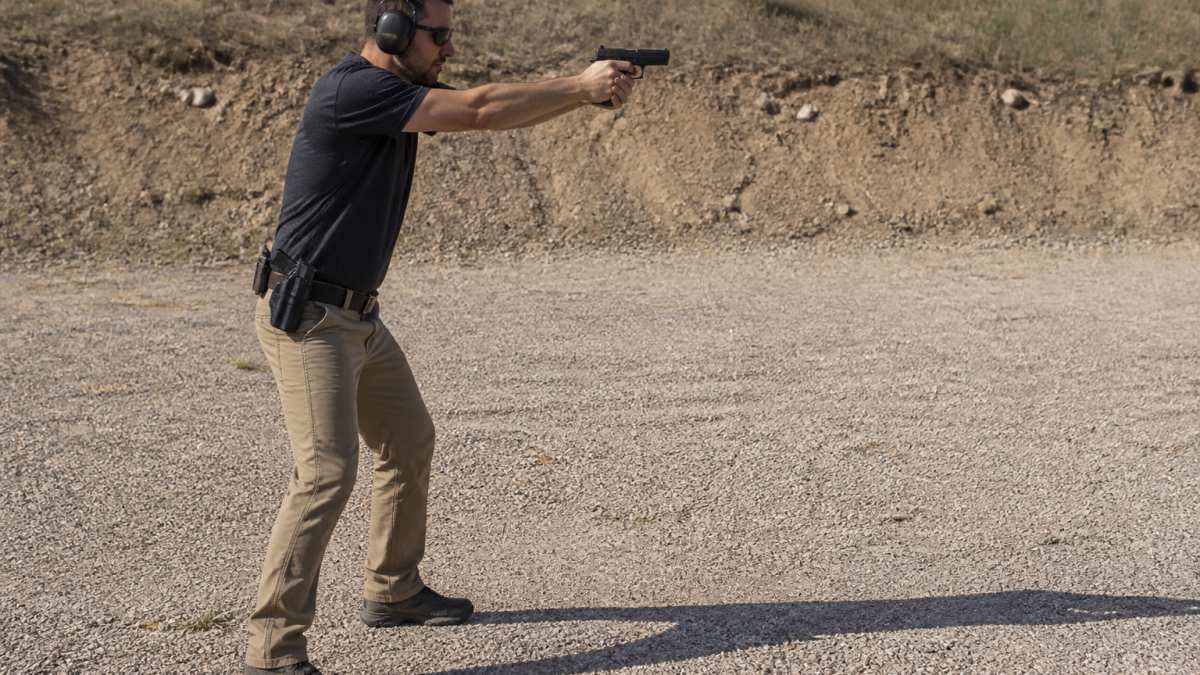
A solid shooting stance starts with your feet. Your foundation determines everything above it. Most beginners skip this step and wonder why their shots climb.
Foot Placement and Balance
Stand with your feet shoulder-width apart. Your dominant foot should be slightly back. This creates a stable base that resists forward and backward movement.
Keep your weight balanced on the balls of your feet, not your heels. Your knees should be slightly bent, not locked. This gives your legs room to absorb recoil energy instead of fighting it.
Your body angle matters. Turn your shoulders slightly toward your target. This opens your chest and lets your arms work naturally. Avoid standing sideways or square-on, both limit your body's ability to manage recoil.
Forward Lean and Weight Distribution
Lean forward slightly from your ankles. Most shooters don't lean enough. A small forward lean, just 5 to 10 degrees, makes a big difference in recoil control.
Your weight should sit 60 percent on your front foot and 40 percent on your rear foot. This forward weight distribution lets your body resist the rearward push of recoil. You stay on target instead of rocking backward.
Keep your hips level. Don't drop one hip or twist your torso. Your entire body should move as one unit, not separate segments.
Upper Body Positioning
Your shoulders should be level and slightly forward. Bring your arms up to shooting position with your elbows bent at roughly 90 degrees.
Your upper back muscles engage when you lean forward and hold this position. These large muscle groups help absorb recoil energy. Weak upper body positioning leaves your arms to handle all the recoil alone, that's why your shots climb.
Keep your chest open to your target. Your arms should form a triangle with your body. This creates a rigid platform that resists movement.
Weaver Stance vs. Isosceles Stance: Which Controls Recoil Better
Both stances work. The choice depends on your body type, mobility, and shooting context.
Weaver Stance for Stability
The Weaver stance uses a bladed body position. Your dominant foot is back. Your non-dominant shoulder points toward the target.
This stance creates a more compact shooting position. Your arms work at different angles, your support arm is slightly extended while your firing arm stays closer to your body. This asymmetry lets you manage recoil through your support-side muscles.
The Weaver works well for shooters with limited shoulder mobility or those shooting from concealment. It's also easier to transition from Weaver into movement or cover.
Isosceles Stance for Speed and Symmetry
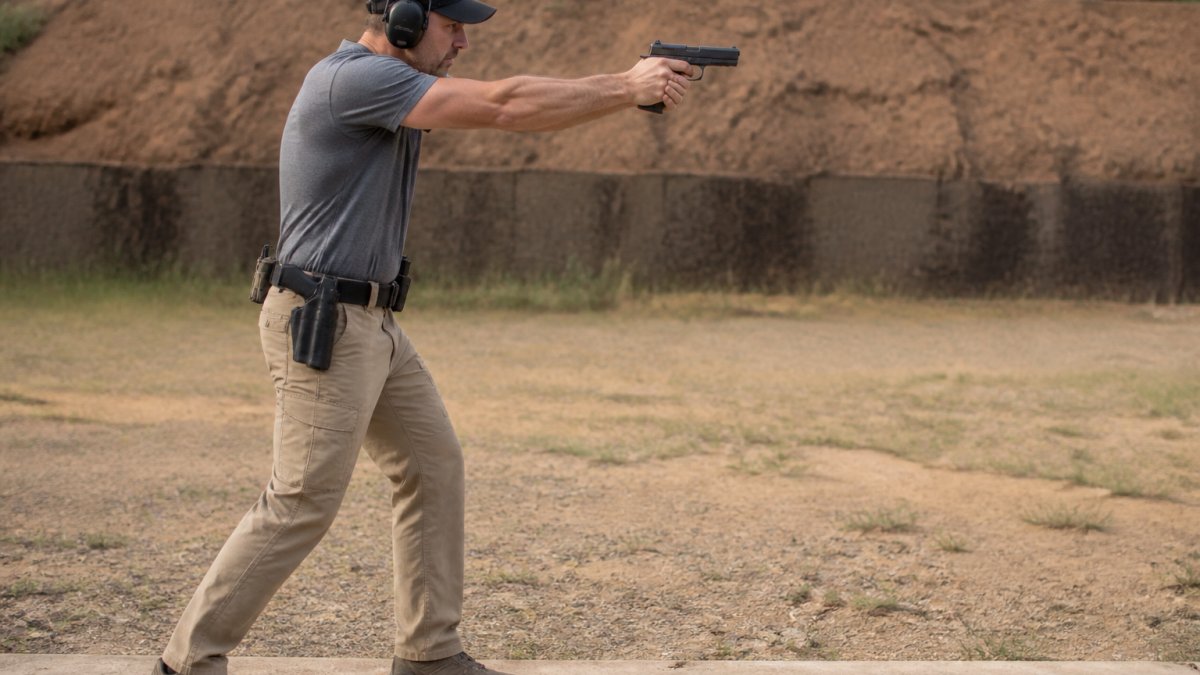
The Isosceles stance uses a squared-up body position. Your feet are shoulder-width apart. Your shoulders face the target directly.
Both arms extend equally. This symmetry lets you recover to your sight picture quickly after recoil. Your body absorbs recoil energy evenly on both sides.
The Isosceles stance favors shooters with good shoulder mobility. It's faster for rapid-fire strings because your sight picture recovery is more consistent. Your arms return to the same position after each shot.
Handgun Grip for Recoil Control and Muzzle Rise
Your grip works with your stance to control muzzle flip. A strong grip alone won't fix a weak stance, but a weak grip will ruin a good stance.
High Grip and Bore Axis Alignment
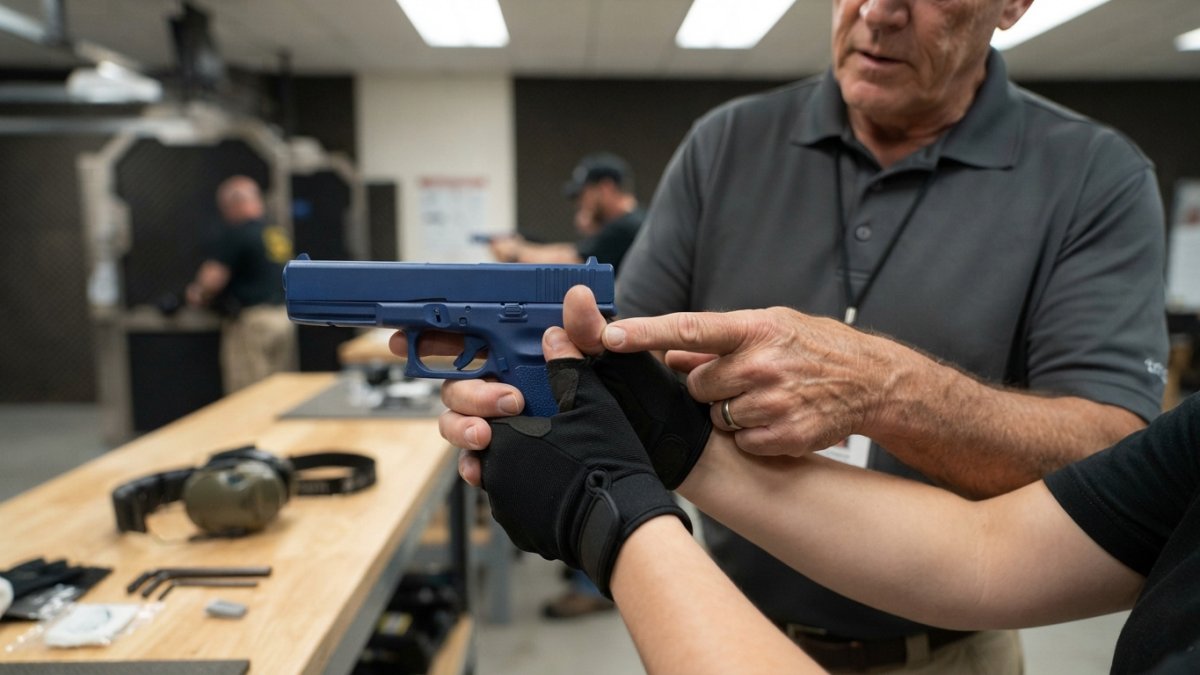
Hold the gun as high as possible on the backstrap. Your web should be up in the crease between your thumb and index finger. This high grip positions your hand closer to the bore axis.
A high grip reduces the distance between your hand and the gun's recoil impulse. Less distance means less use for the gun to rotate upward. Your sights stay lower during recoil recovery.
Your grip should be firm but not tense. Tension in your hands travels up your arms and destabilizes your entire shooting platform.
Support Hand and Push-Pull Pressure
Your support hand does most of the work controlling muzzle rise. Press forward with your support hand while pressing backward with your firing hand. This push-pull pressure creates a locked-in grip that resists rotation.
The pressure should be even and continuous. Most shooters use 60 to 70 percent of maximum grip strength. Stronger isn't better, excessive tension causes your hands to shake and fatigue faster.
Your support hand thumb should press forward on the frame. Your firing hand thumb should press downward. This creates a three-dimensional grip that controls all types of movement.
Pistol Shooting Fundamentals for Beginners: Safe Stance Setup
New shooters often rush through stance setup. Taking 30 seconds to establish proper positioning saves hours of bad habits later.
Step 1: Establish Your Stance Foundation
Start with your feet. Stand naturally with your feet about shoulder-width apart. Your dominant foot should be 4 to 6 inches back from your support foot.
Shift your weight forward onto the balls of your feet. Bend your knees slightly. Your weight should feel balanced but slightly forward. You should be able to shift your weight side to side without losing balance.
Step 2: Align Your Grip and Arms
Bring the gun up to eye level. Your arms should form a V-shape, not a straight line. Your elbows should be bent at roughly 90 degrees.
Your firing-side elbow should be under your wrist. Your support-side arm should be extended slightly more than your firing arm. This creates the classic shooting position where your arms work together.
Apply pressure with both hands. Your support hand wraps around your firing hand. Your thumbs point forward. Your grip pressure should feel firm and stable, not white-knuckle tight.
Step 3: Find Your Natural Point of Aim
Look through your sights at your target. Relax your entire body while keeping your grip firm. Where your sights naturally point is your natural point of aim.
If your sights drift left or right, adjust your feet or shoulders until your sights point naturally at the target. This takes the guess work out of aiming. Your body position does most of the work.
Diagnosing and Correcting Stance-Related Muzzle Flip
Excessive muzzle rise usually comes from one of three sources: weak stance, poor grip, or equipment issues. Identifying which one is your problem saves time and money.
Common Stance Mistakes That Cause Excessive Muzzle Rise
Leaning back is the most common error. Your upper body rocks away from the gun instead of into it.
Locked knees prevent your legs from absorbing downward recoil energy. Your entire body becomes rigid. Recoil has nowhere to go except up.
Weight on your heels shifts your center of gravity backward. You become unstable.
Elbows flared out creates gaps in your shooting platform. Your arms can't work together to manage recoil. Each arm fights the gun independently.
Shoulders hunched up tenses your entire upper body. This tension transfers to your arms and hands.
How to Identify Your Stance Problem
Video yourself shooting from the side. Watch where your upper body moves during recoil. Does it rock backward? Does it twist? Does it stay stable?
Shoot a group of 5 shots slowly. Look at your target. Do your shots climb vertically? That's usually stance or grip. Do they drift left or right? That's usually trigger control or sight alignment.
Ask an experienced shooter to watch you shoot. They spot problems you can't see from your own perspective.
Dry-Practice and Live-Fire Drills to Master Recoil Control
Drills build the muscle memory that makes good stance automatic. Without drills, you'll revert to bad habits under pressure.
Dry-Fire Drills for Stance Stability
Stance hold drill: Assume your shooting stance. Hold it for 30 seconds without moving. Do this 5 times. Your legs should burn slightly. This builds the endurance to hold proper stance during shooting strings.
Sight alignment drill: Assume your stance. Bring the gun up. Focus on your front sight. Keep your sights aligned for 10 seconds without firing. Do this 10 times.
Trigger press drill: Assume your stance. Bring the gun up. Press the trigger slowly while keeping your sights on target. The gun should not move when you press.
Live-Fire Progression Drills
Slow-fire accuracy drill: Shoot 5-shot groups at 7 yards. Take 3 seconds between shots. Focus on sight alignment and trigger control.
speed drill: Shoot 5-shot groups at 7 yards. Take 1 second between shots. Your group should stay under 5 inches.
Bill drill: Fire 6 shots as fast as you can at 7 yards while keeping all shots in an 8-inch circle.
Reload drill: Fire 3 shots. Reload. Fire 3 more shots. Do this 5 times. This trains your stance to remain stable during the reload and transition back to shooting.
Adapting Your Stance to Body Type and Shooting Context
Your body type affects which stance works best. Your shooting context affects which stance is fastest.
Shooters with long arms often favor the Isosceles stance.
Shooters with limited shoulder mobility should start with the Weaver stance. It requires less shoulder rotation.
Your shooting context matters too. Concealed carry shooters often use Weaver because it's easier to draw from a holster and transition into movement.
Law enforcement and security professionals need a stance that works in multiple contexts.
The best stance is the one you practice most. Consistency beats perfection. Pick a stance.
Proper stance is the foundation for everything else in shooting.
Frequently Asked Questions
How does stance affect muzzle flip?
Stance directly controls how your body absorbs recoil and channels it downrange. A squared-up stance with forward lean and locked elbows keeps the handgun aligned with your center of gravity, reducing muzzle rise. Poor stance, leaning back, bent elbows, or unbalanced feet, forces the barrel to climb after each shot, making follow-up shots slower and less accurate. Your stance is the foundation; grip and muscle control build on it.
Should I lean forward when shooting a handgun?
Yes. Forward lean, typically 5-15 degrees from vertical, improves recoil control by positioning your body mass behind the handgun. This posture lowers your center of gravity and lets your legs and core absorb energy rather than your arms and shoulders. Forward lean is especially critical for rapid-fire or high-recoil calibers. Beginners often lean back instinctively; correcting this habit cuts muzzle flip significantly.
What's the difference between Weaver and Isosceles stance for controlling recoil?
Weaver stance (one foot forward, bladed body) creates a lower center of gravity and feels more stable for some shooters, but it requires more upper-body strength to manage recoil. Isosceles stance (feet shoulder-width apart, squared shoulders) distributes recoil more evenly across both sides of your body and is faster to assume, making it preferred in competitive shooting. Both reduce muzzle flip effectively when executed with proper forward lean and grip pressure.
Can I reduce muzzle flip through grip alone, or do I need proper stance too?
Both are essential. Grip alone cannot overcome poor stance. A high grip and firm push-pull pressure manage recoil rise, but without a stable stance, forward lean, and locked elbows, your handgun will still climb. Think of stance as the structure and grip as the control system. Many shooters waste time perfecting grip while standing upright; fixing stance first yields faster, more dramatic improvements in muzzle flip control.