 how-to
How Do You Reload a Revolver for Concealed Carry?
Last Updated: November 2, 2026
Quick Summary
Revolver reloading is the process of emptying spent brass from the cylinder and replacing it with fresh ammunition using a speedloader, moon clip, speed strip, or loose cartridges. Every revolver reload follows the same five steps: open the cylinder, eject spent cases, retrieve spare ammunition, insert cartridges, and close the cylinder. The strong hand stays on the grip throughout while the support hand does all the work.
- Keep the gun in your strong hand and train the support hand to do the fine work.
- Push the ejector rod straight and hard, not gently, to clear expanded spent cases.
- A moon clip in a gun cut for clips is the fastest revolver reload method.
- Speed strips load two rounds at a time and are slower than a speedloader but easier to conceal.
- Practice the reload from the exact carry position and clothing you wear daily.
Table of Contents
- Choosing Your Reload Method Before You Train
- The Step-by-Step Revolver Reload: Open, Eject, Retrieve, Insert, Close
- How to Use a Revolver Speedloader Under Pressure
- Moon Clip Revolver Reloads: Fast, But Not for Every Gun
- Speed Strips and Loose Cartridges: The Compact Backup
- Is This the Fastest Way to Reload a Revolver?
- Concealed-Carry Revolver Practice: Drills That Build Control First
- Building Your Reload Kit With the Right Gear
- Frequently Asked Questions
Choosing Your Reload Method Before You Train
Revolver reloading under pressure starts with one decision: which method fits your gun, carry position, and hands.
Revolver reloading is the process of emptying spent brass from the cylinder and replacing it with fresh ammunition using a speedloader, moon clip, speed strip, or loose cartridges.
Your reload method is not a preference. It is a physical constraint set by your revolver's cylinder and how you carry spare ammo.
Matching the Method to Revolver Size and Ammunition Carrier
Small-frame revolvers with five-shot cylinders pair best with compact speed strips or small speedloaders.
Carry gear matters just as much. A belt pouch keeps ammunition upright and easy to grab; a pocket of loose rounds sounds simple until you are fumbling with cold hands.
If you are still deciding which loader to buy, our guide on how to choose a universal speed loader worth the money walks through the fit and build questions that matter most.
The Step-by-Step Revolver Reload: Open, Eject, Retrieve, Insert, Close
Every revolver reload follows the same five steps, no matter the method. What separates a smooth reload from a fumbled one is how your hands divide the work and where your spare ammunition sits. Learn the sequence with a speedloader first, then adapt it to your chosen carrier.
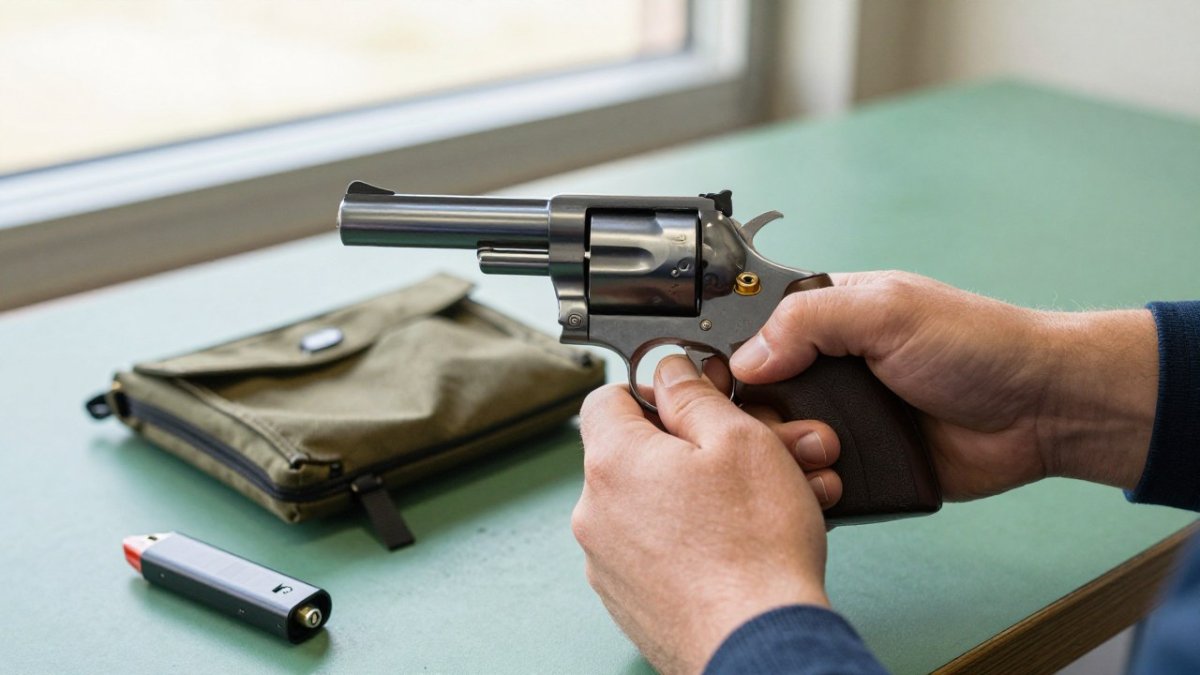
- Open the cylinder with your support hand while keeping the muzzle pointed in a safe direction.
- Eject spent cases by pushing the ejector rod firmly and fully.
- Retrieve spare ammunition from your pouch, pocket, or belt carrier.
- Insert cartridges and align them with the cylinder chambers.
- Close the cylinder and reacquire your grip before you assess the target.
Strong-Hand and Support-Hand Roles
The strong hand stays on the grip through the entire reload. It controls the muzzle direction and holds the gun steady.
New shooters often switch the gun into the support hand and reload with the strong hand. That feels natural at the bench but breaks down from a concealed draw, because the strong hand is already indexed on the grip when the gun clears the holster.
Opening and Orienting the Cylinder
Use your support hand to press the cylinder release and swing the cylinder out. Keep the gun pointed downrange and slightly to your strong side.
Orient the open cylinder so the chambers face you clearly. Tilting the gun too far makes the ejector rod stroke short and leaves brass stuck. The cylinder should sit roughly level or angled slightly muzzle-up, not rolled toward your face.
Ejecting Spent Cases and Retrieving Spare Ammunition
Push the ejector rod straight and hard, not gently. Spent cases that were fired expand against the chamber walls, so they need a firm stroke to clear.
Then bring your support hand to your ammunition carrier in one smooth motion. The retrieve is where beginners lose the most time.
A belt pouch on your support side keeps rounds upright and within the support hand's natural path after ejection.
Aligning Cartridges With the Cylinder Chambers
Line the cartridges up with the chambers before you push them in. With a speedloader, the rounds drop together. With a speed strip, you peel them in two at a time.
Watch out: forcing a misaligned round can bend a case rim or jam the loader. If it does not drop cleanly, back off and realign rather than pushing harder.
Closing and Securing the Cylinder
Close the cylinder with the support hand and give it a light spin or press to confirm it locks. Then return to a two-handed grip before assessing the target. A reload that ends one-handed with sights off target is only half finished.
How to Use a Revolver Speedloader Under Pressure
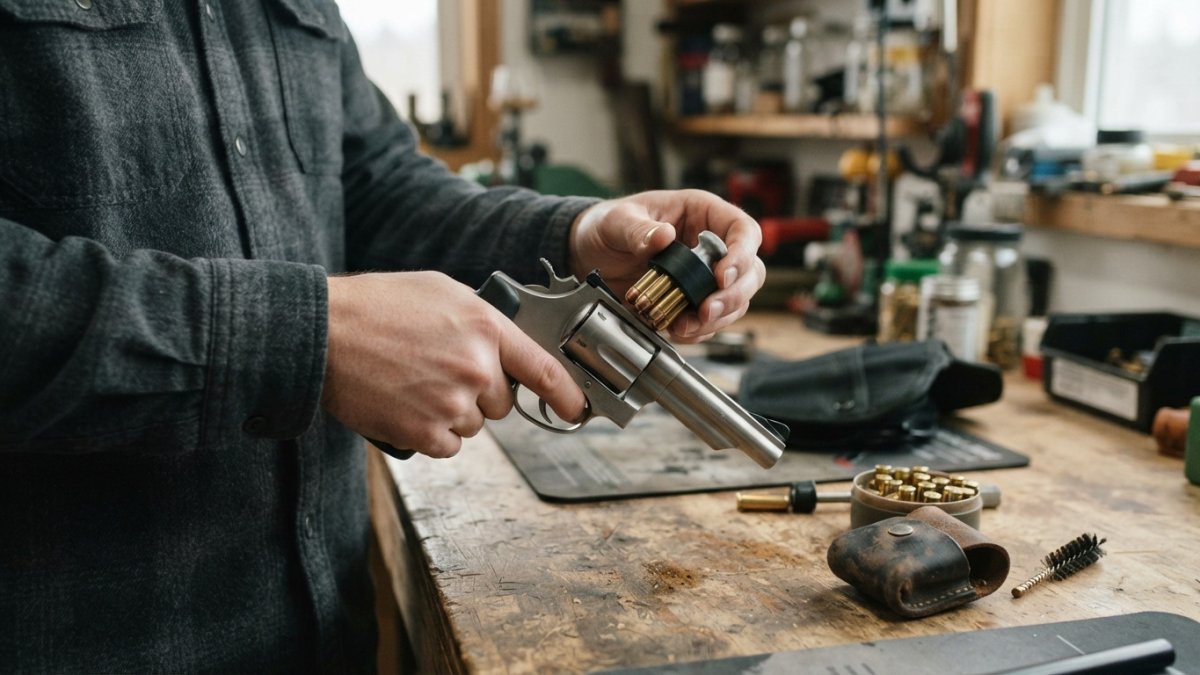
A revolver speedloader holds a full set of rounds in a ring and releases them into the chambers at once.
The technique is simple to describe and hard to do smoothly. Grip the loader body, not the rounds.
Our Bulletproof Speed-Loader COMBAT Model is made from durable polymer and is designed for range trips and harsh conditions. It is compact, easy to carry, and simple to use.

Moon Clip Revolver Reloads: Fast, But Not for Every Gun
A moon clip revolver uses a thin metal clip that holds all rounds as a single unit. You drop the whole clip in, and all chambers fill at once.
This is the fastest revolver reload method available. It is also the least universal.
Bulletproof Speed-Loader COMBAT Model →
Your revolver must be cut for moon clips.
Speed Strips and Loose Cartridges: The Compact Backup
Speed strips are flat rubber or polymer strips that hold rounds in a line. They lie flat in a pocket and disappear under a shirt.
Loading from a strip runs two rounds at a time. You press a pair into two chambers, twist the strip free, then move to the next pair. It is slower than a speedloader but far easier to conceal.
Loose cartridges are the last resort. They work, but they demand fine motor control that fades fast under stress. For everyday carry, a strip beats a pocket of loose rounds every time.
Is This the Fastest Way to Reload a Revolver?
The fastest way to reload a revolver is a moon clip in a gun cut for clips, followed closely by a quality speedloader.
A reload you can perform every time, from your actual carry position, beats a faster method you fumble.
The National Shooting Sports Foundation publishes safety and training resources that reinforce this point. Consistent repetition builds the habit. Speed follows.
Concealed-Carry Revolver Practice: Drills That Build Control First
Concealed-carry revolver practice should build control before it builds speed. Most guides jump straight to a timer. A safer and faster path is a staged progression that starts with an empty gun, adds live fire only after the motion is clean, and always runs from the carry position and clothing you actually wear.
A Beginner-Safe Practice Progression
Work through these stages in order. Do not advance until the current stage is clean and repeatable.
- Bench familiarization, empty gun. With no ammunition in the room, practice opening the cylinder, running the ejector rod, and closing the cylinder until the motion is automatic. Confirm the gun is empty and the ammunition is stored in another room before you start.
- Dry-fire reloads from the carry position. Draw from your holster under a cover garment, reload with dummy rounds or snap caps, and reholster. You can find dry-fire practice routines for permit holders to run at home. Ten clean repetitions per session is a reasonable target.
- Eyes-closed indexing. Find the chambers and the loader by feel alone. This builds the hand-eye mapping that survives stress.
- Live-fire pairs at the range. One shot, one reload, one shot, from a ready position. Keep the gun pointed downrange and follow the range's commands.
- Carry-position live fire. Draw from concealment, fire, reload, and reacquire the target. This is where clothing and holster position start to matter.
- Timed strings. Only after the motion is clean and safe at every prior stage.
Beginners often skip straight to stage five or six because it looks like the real thing. The result is a shooter who can run a fast reload on a square range but fumbles from a seated position, in a jacket, or with cold hands.
Watch out: dry practice with a loaded gun in the room is the most common way beginners have an unintentional discharge.
Supervision and Instruction
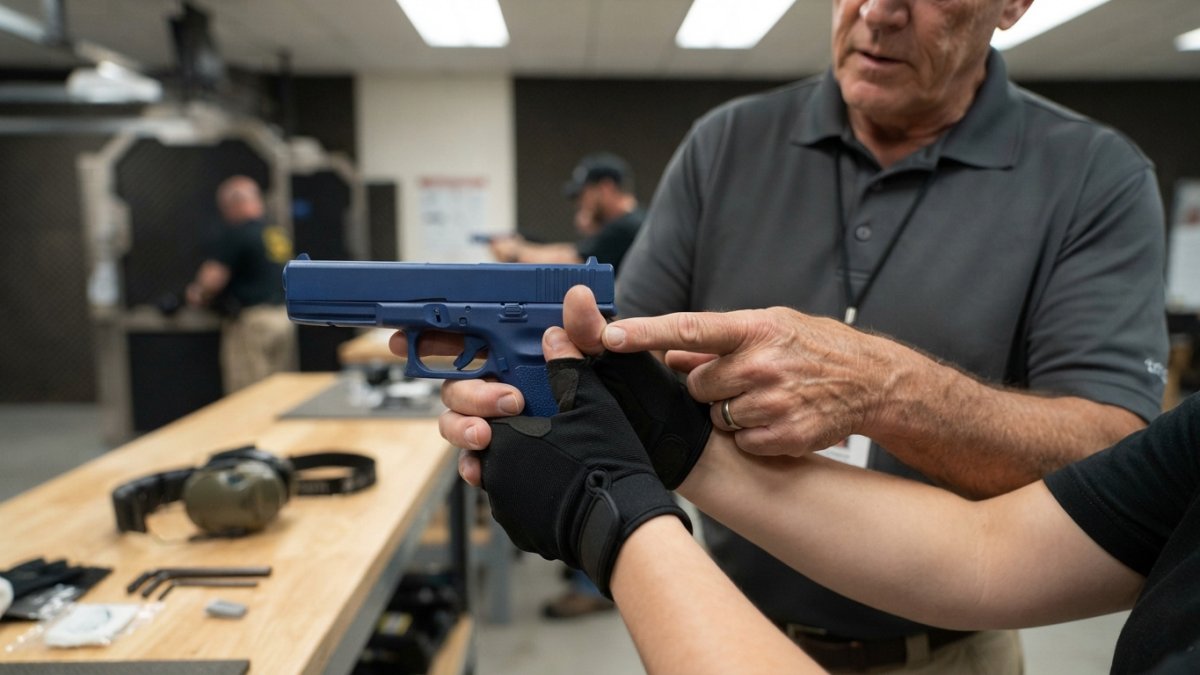
A new shooter benefits from at least a few sessions with a qualified instructor, especially for the first live-fire reloads. Many ranges and gun clubs offer introductory revolver classes, and the National Shooting Sports Foundation publishes safety and training resources that reinforce safe handling habits. An instructor can catch a short ejector stroke or a muzzle sweep that a beginner will not notice alone.
Concealment-Specific Access and Carry Position
Most reloading guides assume the gun and ammunition are on a range bench. Concealed carry adds clothing, holster position, and a cover garment. Practice the reload from the exact setup you carry:
- Strong-side hip holster: the support hand crosses the body to reach a support-side pouch, so practice that cross-body reach until it is smooth.
- Appendix or cross-draw: the support hand's path to spare ammunition changes, and the cover garment has to clear before the draw.
- Pocket carry: the draw and the reload both start from fabric, and cold or gloved hands slow the retrieve.
Run at least some practice reps seated, in a jacket, and with gloves if you carry in cold weather. The reload that works standing still in a t-shirt is not the reload you will need.
Common Beginner Errors and How to Fix Them
| Mistake | Fix | Why It Matters |
|---|---|---|
| Short ejector stroke | Push the rod fully and firmly | Stuck brass stalls the reload |
| Eyes on the gun too early | Retrieve ammo first, then look | Wasted motion costs seconds |
| Death grip on the loader | Hold the body, not the rounds | Rounds bind and drop late |
| Reloading from a pocket | Move ammo to a belt pouch | Cold hands fumble in fabric |
| Chasing the timer | Master clean reps first | Speed without control fails |
| Muzzle sweeping the support side | Orient the cylinder muzzle-up and to the strong side | Safety and consistency |
| Skipping the cover garment | Practice in your daily clothing | The draw and reload both change |
Measuring Progress Without Chasing Speed
Track clean reloads, not fast ones. A simple log of repetitions, clean versus fumbled, and conditions (standing, seated, jacket, gloves) tells you more than a stopwatch early on. Once a stage is clean across conditions, add time as a measurement rather than a goal.
Building Your Reload Kit With the Right Gear
A reload kit is only as good as its weakest piece. Build around your carry position, then add what you actually use.
Start with a belt pouch or carrier that keeps ammo upright. Add a speedloader or strips matched to your cylinder.
For a full list of what belongs in the bag, read what accessories a beginner really needs in a range bag. And before any piece of gear earns a place in your kit, learn how to inspect speedloaders for structural wear so a worn part never fails you when it counts.
Check your gear before every session. Look for cracks, stretched springs, and worn release tabs. Replace anything that looks tired.
Frequently Asked Questions
Are speedloaders or speed strips better for a concealed-carry revolver?
Speedloaders hold a full cylinder's worth of rounds and release them all at once, which makes them faster when you have room to carry one. Speed strips lie flat and disappear into a pocket, so they conceal better but load two rounds at a time. Many carriers use a speedloader as the primary and a speed strip as backup. Your revolver's cylinder size and your carry position should decide the mix, not speed alone.
What is the safest way for a beginner to practice revolver reloading?
Start with an empty revolver and inert dummy rounds, at home, with the gun pointed in a safe direction and ammunition stored in another room. Learn the five steps slowly until your hands know them without looking. Move to live fire at a range only after the empty-gun reps are clean. A rangemaster or instructor watching your first live drills catches grip and muzzle issues you will not notice yourself.
How often should beginners practice revolver reloads?
Short, frequent sessions beat long ones. Ten to fifteen minutes of dry practice three or four times a week builds the habit faster than one hour once a month. Add live-fire reload drills to each range trip, and track clean repetitions rather than raw speed. Once your reload is consistent, timed drills make sense. Chasing a stopwatch before the movements are correct just trains sloppy habits.
How do you reload a revolver with a moon clip?
A moon clip holds a full set of cartridges in a flat metal ring that drops into a cylinder cut to accept it. Open the cylinder, eject the spent clip, and seat the fresh loaded clip in one motion. Not every revolver is cut for moon clips, so check your model first. Clips can bend, so inspect them and carry a loading tool. For carry, a moon clip lies flatter than most speedloaders.
Reloading a revolver under pressure is a skill you build, not a talent you are born with. The shooters who reload cleanly are the ones who practiced the same five steps until they stopped thinking about them. BULLETPROOF SPEED LOADERS builds combat-ready gear for exactly that work, including durable polymer speed loaders and tactical carry accessories made to hold up on the range and beyond. Get started with BULLETPROOF SPEED LOADERS and build a reload you can trust when every second counts.