 how-to
How to Store and Organize Your Range Gear
Last Updated: November 4, 2026
Quick Summary
Store range gear in a dry, secure home base, organize it by use in labeled containers, and pack a separate bag for each trip. Keep firearm storage distinct from transport, use a checklist to track essentials and trip-specific items, and reset the bag after each session by drying, returning, and restocking equipment.
- Keep eye and hearing protection together and accessible near the top of your bag.
- Store cleaning products upright in a separate, leak-resistant container.
- Keep ammunition in its original packaging or a closed ammunition box.
- After each trip, remove trash, dry damp items, and return gear to labeled places.
Table of Contents
- Step 1: Set Up a Home-to-Range Storage System
- Step 2: Build a Range Bag Checklist for Range Bag Essentials
- Step 3: Group and Pack Gear by Category
- Step 4: Store Ammunition, Magazines, and Firearm Accessories Safely
- Step 5: Assemble a Range Bag Tool Kit and Store Gun Parts
- Step 6: Restock and Maintain Range Gear After Each Trip
- Step 7: Choose a Speed Loader for Your Range Setup
- Frequently Asked Questions
Step 1: Set Up a Home-to-Range Storage System
Build the system around three distinct stages: secure home storage, a small gear inventory, and a trip-specific bag. This gives each item a home and makes depleted supplies visible.
1. Choose a home base. Use a dry, secure closet, cabinet, or shelf for non-firearm range equipment. A lidded tote or a few labeled bins can work in a small space; a dedicated range bag is optional. Keep the bag and bins away from direct sunlight, damp floors, and sources of heat. Store cleaning products upright in a separate leak-resistant container, following each product’s label and the manufacturer’s storage instructions.
2. Separate by use and storage needs. Keep eye and hearing protection together, targets and target tools together, and small tools or spare parts in labeled containers. Store optics and other delicate equipment in protective cases, and keep batteries in their packaging or a suitable organizer so loose batteries cannot contact metal objects. Keep documents and training notes in a dry sleeve. Do not leave electronics, optics, or cleaning products loose beside ammunition or tools that could damage or contaminate them.
3. Keep secure storage distinct from transport organization. A range bag is for organizing equipment for a trip; it is not a substitute for secure firearm storage at home. Follow applicable law, the firearm maker’s instructions, and the [ATF’s firearm storage guidance | atf.gov]. Before transport, check the rules that apply to your firearm, ammunition, and destination.
4. Make a simple inventory. Keep a paper checklist inside the storage tote or a note on your phone. Divide it into “always packed” items, such as eye and hearing protection, and “trip-specific” items, such as targets, ammunition, or a timer.
5. Use a repeatable reset. After returning, remove trash and used targets, let damp items dry fully, and return each item to its labeled home. Refill or replace anything the checklist flags, then pack only what the next session requires. This keeps rarely used equipment out of the bag and makes it easier to spot a missing essential.
Watch out: Do not seal damp gear or leaking cleaning products in a closed tote; moisture and residue can damage nearby equipment and make the next inspection harder.
Use these stages to keep storage, inventory, and trip packing distinct.
| Stage | What to do | Key detail |
|---|---|---|
| Secure home storage | Keep non-firearm gear in a dry, secure place | Use a closet, cabinet, shelf, tote, or labeled bins |
| Gear inventory | Track always-packed and trip-specific items | Use a paper checklist or phone note |
| Trip-specific bag | Pack only what the next session requires | Keep transport organization separate from secure firearm storage |
| Post-trip reset | Remove trash, dry damp items, and return gear | Refill or replace items flagged by the checklist |
Step 2: Build a Range Bag Checklist for Range Bag Essentials
A range bag checklist can match your planned activity. Start with safety gear, then add the items you need for practice.
Use this core list, then add or remove items for your range rules and session:
- Eye protection and hearing protection
- Ammunition in secure ammo boxes
- Magazines and a magazine pouch
- Targets, target staples, and a stapler
- First-aid kit and personal items
- Timer and training notes, if needed
Keep earmuffs or earplugs near the top of the bag so you can access them before shooting. Check the [NSSF’s range safety information | nssf.org] for general guidance, and follow the rules posted at your range.
For more accessory ideas, read our range bag accessory guide. The best checklist is specific: a clay thrower session needs different items than a paper-target practice day.
Step 3: Group and Pack Gear by Category
Group range gear by use. Use clear categories, not a pouch for every single object.
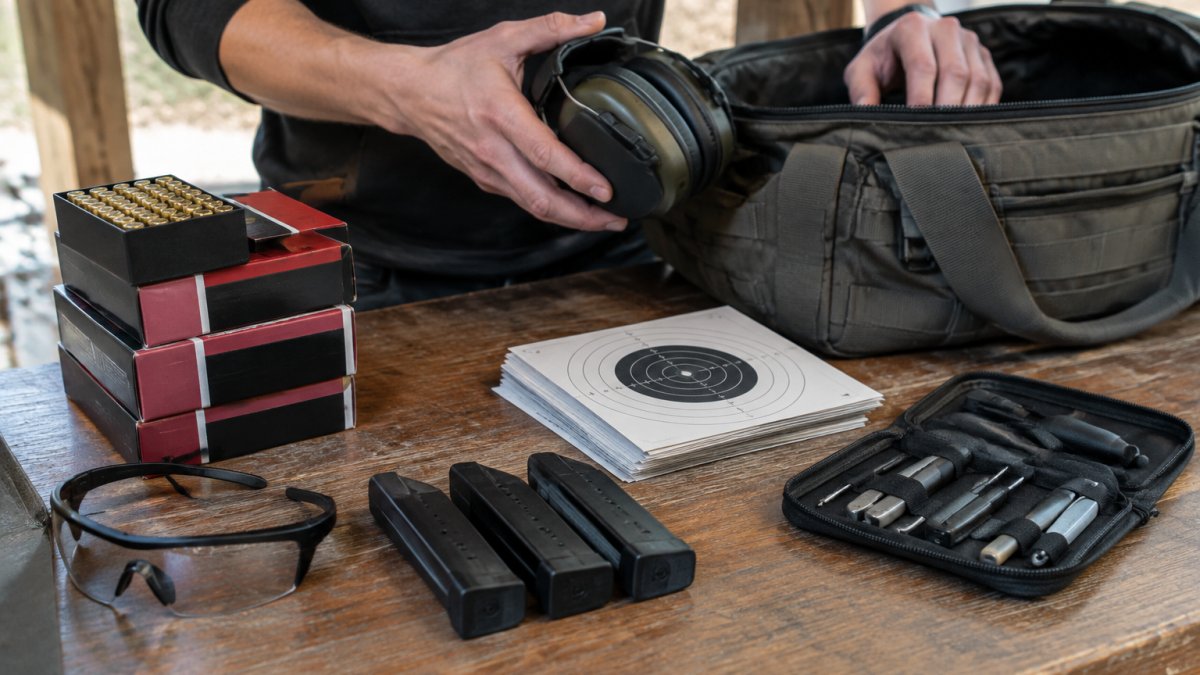
Try these categories:
- Safety: eye protection, earmuffs, earplugs, and first-aid kit
- Shooting: magazines, ammo boxes, and timer
- Targets: paper targets, staples, and stapler
- Tools: cleaning supplies, lubricant, and spare parts
- Personal: water, keys, and training notes
See our carry pouch.

Step 4: Store Ammunition, Magazines, and Firearm Accessories Safely
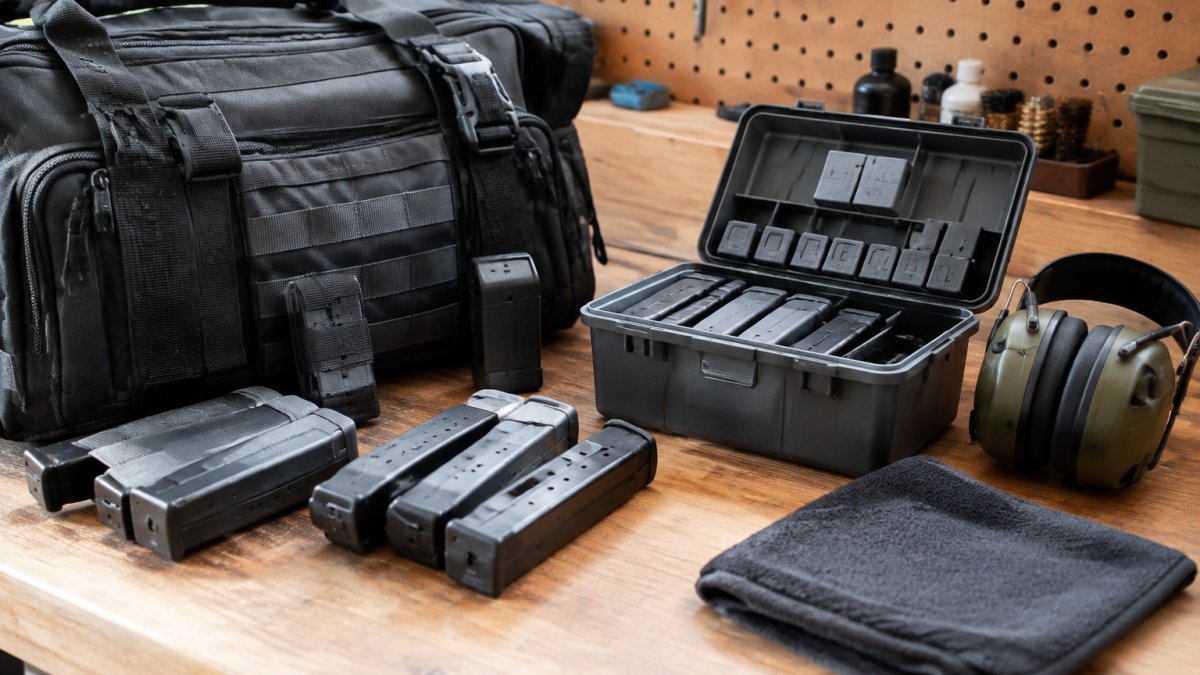
Give ammunition, magazines, and accessories separate, stable places in the bag. The goal is to prevent loose items from spilling, rubbing against one another, or becoming difficult to account for, not to use a range bag as long-term firearm or ammunition storage.
- Ammunition: Keep rounds in their original packaging or a purpose-made, closed ammunition box that keeps them contained during transport. Do not carry loose rounds in an open pocket or mix them with cleaning tools, keys, or small parts. Keep ammunition dry and away from excessive heat, and follow the manufacturer’s storage directions and [SAAMI ammunition safety guidance | saami.org]. Check range rules before packing; some facilities set their own requirements for ammunition and containers.
- Magazines: Use a dedicated pouch or divided compartment so magazines do not slide beneath heavier gear or strike tools. Keep them together by firearm or activity, and check that the pouch closes securely. If you carry magazines for more than one firearm, label the compartments clearly rather than relying on appearance alone.
- Small accessories and parts: Put sights, tools, and other small components in a divided case or labeled pouch. Keep delicate optics in their protective cases, and separate them from hard objects that could scratch lenses or shift during transport. Store batteries so their terminals cannot touch loose metal items; follow the battery maker’s instructions.
- Cleaning products: Keep lubricant and other cleaning supplies upright in a separate, leak-resistant pouch or container. Do not place them in the same compartment as ammunition, optics, documents, or first-aid supplies. Follow product labels for handling and storage.
At home, keep secure firearm storage separate from the convenience of a packed bag. Follow applicable law, the firearm maker’s instructions, and the [ATF’s firearm storage guidance | atf.gov]; a transport pouch or range-bag compartment is not a secure-storage device. For accessory-specific storage choices, see our guide to storing accessories to prevent corrosion.
Before leaving, check that ammunition is contained, magazine pouches are closed, and small parts are accounted for. After the trip, return each category to its labeled place and inspect containers for moisture, residue, or damage.
Watch out: Do not put loose ammunition or small firearm parts in the same pocket as cleaning supplies; a spill can contaminate or obscure items and make it harder to confirm what is present.
Step 5: Assemble a Range Bag Tool Kit and Store Gun Parts
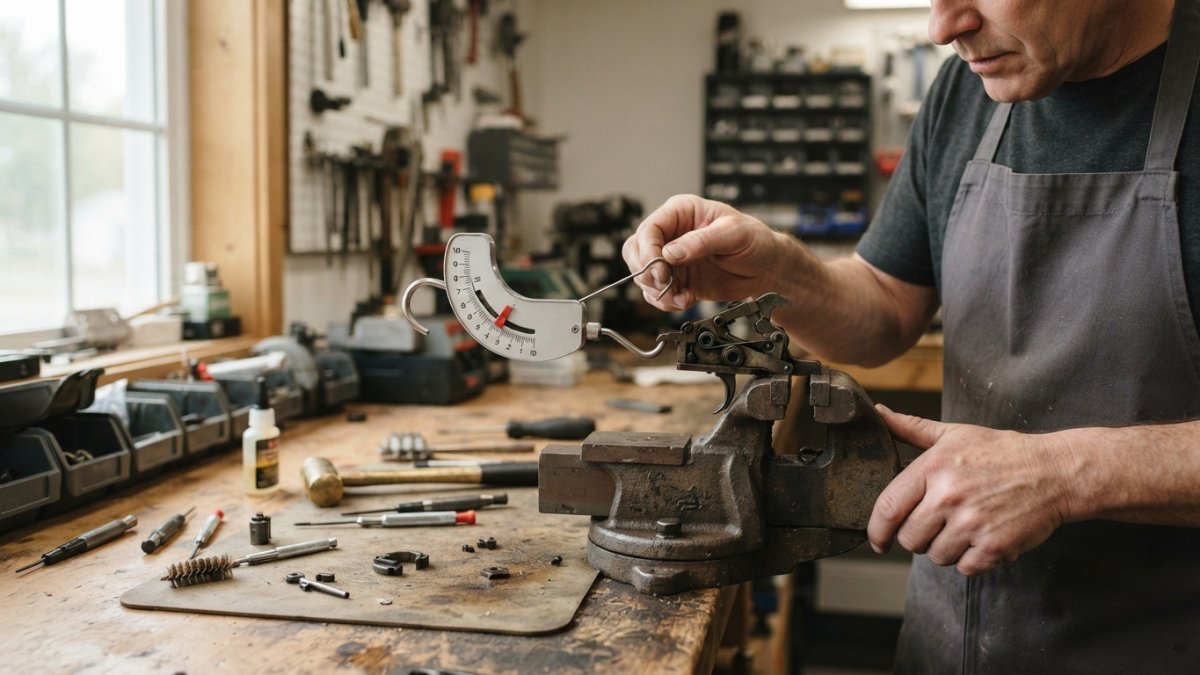
A range bag tool kit should hold only the tools you need for your firearm and planned session. Keep cleaning supplies, a cleaning rod, lubricant, and spare parts in a dedicated pouch, apart from ammunition and safety gear.
Gun parts storage is a way to keep small firearm components together, protected, and easy to find. Use a divided case or small containers, and label each by firearm or part type. A common mistake is mixing loose parts with cleaning tools; small pieces can get lost or coated with residue.
Pack a basic kit based on your equipment:
- Cleaning rod and the right cleaning supplies
- Lubricant suited to your firearm
- Firearm-specific tools and spare parts
- A small cloth for wiping gear
Read our guide to maintenance tools for competitive shooters for help choosing what belongs in a kit. Keep the pouch closed during transport.
Step 6: Restock and Maintain Range Gear After Each Trip
Use a quick post-trip check:
- Unpack items that need cleaning or drying.
- Return magazines, tools, and accessories to their spots.
- Check ammo boxes and replace what you used.
- Add missing items to your range bag checklist.
- Store the packed bag in its secure home spot.
For gear that needs care, follow the maker’s directions. Keep damp items out of closed storage until dry, and check pouches for loose rounds or small parts. The goal is a bag that is ready, not one that hides forgotten gear.
Step 7: Choose a Speed Loader for Your Range Setup
Choose a speed loader based on the listed model details.
BULLETPROOF SPEED LOADERS offers the COMBAT Model, made from durable polymer, and the TACTICAL Model, made from durable polymer with an anodized aluminum lever, mag release button, and catch.
The Bulletproof COMBAT Speed Loader is listed at $69.95. The Bulletproof TACTICAL Speed Loader is listed at $89.95. For help weighing loader features, read our magazine speedloader buyer’s guide.
Get started with BULLETPROOF SPEED LOADERS by adding a COMBAT Model or TACTICAL Model to your range gear.
Frequently Asked Questions
What should you store in a range bag?
Pack the gear needed for your planned range activity: eye and hearing protection, ammunition, magazines, targets and target staples if needed, a stapler, timer, training notes, first-aid kit, and relevant tools.
How should you organize a range bag?
Group items by use and keep frequently used safety gear accessible. Use dedicated pouches or compartments for ammunition, magazines, tools, cleaning supplies, and personal items. Store loose rounds in appropriate ammo boxes rather than letting them move around the bag. A consistent layout makes it easier to check your range gear before departure and return each item to its place afterward.
What is the best way to store gun parts and accessories?
Use small, labeled containers or dedicated pouches to separate gun parts, magazine accessories, and spare parts from cleaning supplies and ammunition. Keep the containers in a secure storage tote or a designated compartment, and record what belongs in each one. These gun parts storage ideas make small items easier to find and help prevent them from mixing with gear used for other tasks.
What tools should you keep in a range bag tool kit?
Build a range bag tool kit around the firearm and activity you plan to use. A compact kit can include the gun tools and spare parts you already use, plus cleaning supplies such as a suitable cleaning rod and lubricant. Keep tools contained in a labeled pouch, separate from ammunition, and check the kit after each range trip so used or missing items are replaced before the next outing.